
Crypto Trading Strategies for Beginners PDF: Practical Guide
It is easy to download a PDF, skim the chart patterns, and skip the page that matters: how much to risk per trade. That page is the difference between a bad week and a wiped account. This guide gives you the rules a good PDF should contain, with worked examples you can check with a calculator. It is educational, not financial advice.
What a Good Beginner PDF Must Contain

Search results for this topic range from academic papers to exchange-branded handbooks. Whatever the source, check that it covers these eight items. If two or more are missing, keep looking.
- A fixed risk limit per trade, stated as a percentage of your account
- A risk/reward target, such as a minimum of 2:1
- A stop-loss rule placed before entry, not after
- Position sizing math, not just "buy the dip"
- Two or three indicators explained with their default settings
- Guidance on fees, since they reduce small-account returns
- A section on emotional discipline
- A publication date, because market structure and exchange features change
Key Finding
Key finding: Survival rules matter more than entry signals. A beginner who risks 1% of the account per trade can absorb a long losing streak. A beginner who risks 20% per trade cannot, even with a better strategy. Sizing comes first, indicators second.
Price levels also move fast. Market data as of November 19, 2026 shows Bitcoin at $62,559, Ethereum at $1,774 and Solana at $73.65. Any price in an older PDF is stale.
Risk Rules: 3-5-7 Rule and Risk/Reward
The 3-5-7 rule explained
The 3-5-7 rule is a retail trading heuristic, not an official standard, and versions differ between sources. The most common version sets three caps:
| Number | Cap | Plain meaning |
|---|---|---|
| 3 | Maximum risk on any single trade | If your stop-loss is hit, you lose no more than 3% of the account |
| 5 | Maximum exposure to one market or asset group | Do not stack several correlated positions, such as three altcoins that move with Bitcoin |
| 7 | Maximum total open risk | All open trades combined should not risk more than 7% if every stop is hit |
Because crypto is more volatile than most markets, many beginners start tighter, at 1% per trade. Treat 3% as a ceiling, not a target.
Risk/reward fundamentals
Risk/reward compares what you could lose with what you aim to gain. If you risk $10 to make $20, the ratio is 1:2. The break-even win rate follows from simple arithmetic: win rate needed = risk / (risk + reward), before fees.
| Risk/reward | Break-even win rate (before fees) |
|---|---|
| 1:1 | 50% |
| 1:2 | 33.3% |
| 1:3 | 25% |
This is why PDFs push a minimum of 1:2. You can be wrong more often than right and still break even. Fees and slippage push the real break-even higher.
Position Size Calculator With Worked Examples
A downloadable calculator is optional. The formula fits in one line:
Position size (units) = (Account size x Risk %) / (Entry price - Stop price)
The examples below are hypothetical, using a $1,000 account, 1% risk ($10) and the prices quoted above.
| Item | Bitcoin example | Ethereum example |
|---|---|---|
| Entry | $62,559 | $1,774 |
| Stop-loss | $60,500 | $1,700 |
| Stop distance | $2,059 | $74 |
| Money at risk | $10 | $10 |
| Position size | about 0.00486 BTC | about 0.1351 ETH |
| Position value | about $304 | about $240 |
| 2:1 target | $66,677 | $1,922 |
Notice that a $1,000 account holds only about $304 of Bitcoin in this trade. That is normal. The stop distance, not your enthusiasm, sets the size. If the position needs to be larger than your account allows, the stop is too wide for your capital. Skip the trade.
Capital Allocation for Small Accounts
Before any trading, split your money into buckets. The percentages below are an example framework, not data-backed recommendations. Adjust them to your income and obligations.
| Bucket | Example share | Purpose |
|---|---|---|
| Emergency fund (outside crypto) | Held before any trading | Rent, food, bills. Never trade this money |
| Long-term crypto holdings | 50% to 70% of crypto budget | Buy-and-hold or dollar-cost averaging |
| Active trading capital | 10% to 20% of crypto budget | The only money you trade with these strategies |
| Cash or stablecoin reserve | 20% to 30% of crypto budget | Dry powder, and a buffer against forced decisions |
7 Beginner Strategies Ranked by Complexity
- Dollar-cost averaging (DCA). Buy a fixed amount on a fixed schedule. No timing needed. It is investing rather than trading, but it is the right baseline.
- Paper trading. Practice your written rules on a demo account or a spreadsheet before using real money.
- Support and resistance trading. Buy near a price floor the market has respected before, with a stop just below it. Works best in sideways markets.
- Trend following with moving averages. Trade in the direction of a rising or falling average, such as the 50-day. Accept that you will be whipsawed in choppy markets.
- Breakout trading. Enter when price closes above resistance on rising volume. False breakouts are common, so a stop is mandatory.
- RSI mean reversion. Look for oversold readings in an established range. Dangerous in strong downtrends, where RSI can stay oversold.
- Swing trading. Hold trades for days to weeks, using the daily chart. It needs fewer decisions than day trading and suits people with jobs. Similar ideas apply in equities, as in our swing trading strategies for beginners.
Day trading and futures with borrowed funds are deliberately missing. Margin magnifies losses as quickly as gains, and no beginner PDF should present it as a starting point.
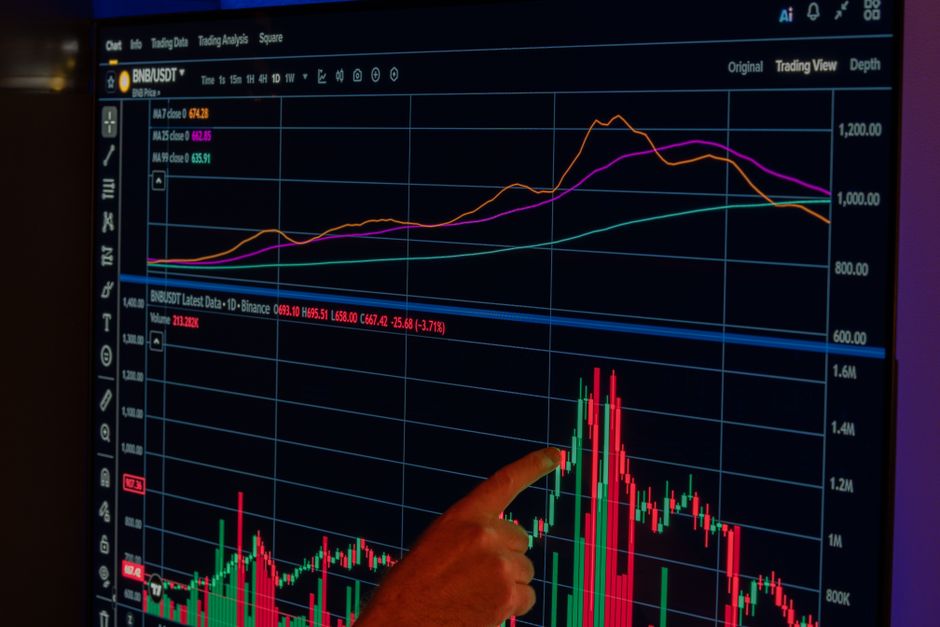
Beginner-Friendly Technical Indicators
| Indicator | Common default | What it shows | Main weakness |
|---|---|---|---|
| Moving average (SMA/EMA) | 50 and 200 periods | Trend direction and dynamic support | Lags price, so signals come late |
| RSI | 14 periods; 70 and 30 as conventional levels | Momentum, possible overbought or oversold | Can stay extreme in strong trends |
| MACD | 12, 26, 9 | Momentum shifts via line crossovers | Noisy on short timeframes |
| Bollinger Bands | 20 periods, 2 standard deviations | Volatility expansion and contraction | Touching a band is not a signal by itself |
| Volume | None | Participation behind a move | Exchange volume figures can differ |
Pick two. A moving average for trend and RSI for momentum is enough. Stacking six indicators usually just produces conflicting signals. To read the price action behind them, start with our guide on how to read candlestick charts.
Sample Entry and Exit Plans
Write the plan before you click buy. These are templates with hypothetical numbers, not signals.
Plan A: Trend pullback (swing trade)
- Condition: Price above the 50-day average and the 50-day above the 200-day
- Entry: Pullback toward the 50-day, then a bullish daily close
- Stop: Below the most recent swing low
- Target: At least 2x the stop distance, or the previous high
- Invalidation: Daily close below the 200-day. Exit regardless of loss size
Plan B: Range trade
- Condition: Price has bounced between the same two levels at least twice
- Entry: Near the lower level with RSI below 40
- Stop: Just under the range low
- Target: Middle of the range for a partial exit, upper level for the rest
- Invalidation: A daily close below the range
Moving your stop further away once a trade goes against you is a quick way for a planned 1% loss to become a 10% loss. Never do it.
Platform Comparison for Beginners
Fees, supported coins and availability vary by country and change often. Confirm each on the official fee schedule before depositing. The table below is qualitative on purpose.
| Platform | Beginner-relevant features | Things to check |
|---|---|---|
| Coinbase Advanced | — | Fee tier schedule, regional availability, spread on the basic app versus the advanced interface |
| Kraken | — | Fee tiers, funding methods in your country, margin features you should leave off |
| Binance | — | Availability depends on region and local entity. Pairs and products vary by jurisdiction |
Pick the platform that is legally available where you live, supports stop orders, and shows fees clearly. For a broader comparison, see the best crypto exchanges for beginners.
Realistic Profit Expectations: The $100/Day Question
Many PDFs and videos imply that $100 a day is a normal goal. The arithmetic shows what it demands.
| Account size | Daily return needed for $100/day |
|---|---|
| $1,000 | 10% |
| $5,000 | 2% |
| $10,000 | 1% |
| $20,000 | 0.5% |
Hitting 10% every day on $1,000 is not a realistic plan. It forces oversized positions, and one bad day erases weeks of gains. Even 1% daily on $10,000 requires extreme consistency. A more honest first-year goal is to follow your rules, keep losses small, and finish with a journal full of data. Treat any income promise in a PDF as a marketing claim.
Psychology and Common Beginner Mistakes
| Mistake | Prevention |
|---|---|
| No stop-loss, or moving it | Place the stop with the entry order. Never widen it |
| Revenge trading after a loss | Set a daily loss limit. When hit, close the platform |
| Chasing a coin after a big green candle | Wait for a pullback or skip it. Missing a trade costs nothing |
| Using borrowed funds too early | Trade spot only until your journal shows consistent rule-following |
| Ignoring fees on small trades | Calculate round-trip fees before entry |
| Trading money you need | Fund the emergency bucket first |
| Overtrading out of boredom | Cap yourself to a set number of trades per week |
Fear of missing out and loss aversion drive most of these errors. Rules written in advance work because they take the decision away from a stressed version of you.
Trading Journal Template and Checklist
Copy these columns into a spreadsheet. A journal turns losses into usable data.
| Column | Example entry |
|---|---|
| Date and time | 2026-11-19, 09:30 |
| Asset and direction | BTC, long |
| Setup name | Trend pullback |
| Entry, stop, target | Written before the trade |
| Risk in dollars and percent | $10, 1% |
| Result in R multiples | +2R, -1R, or 0 |
| Followed the plan? (yes/no) | Be honest |
| Emotion before and after | Anxious, calm, impatient |
Pre-trade checklist:
- Is this setup in my written plan?
- Is the stop placed, and is the risk 1% to 3% or less?
- Is the reward at least twice the risk?
- Do my open trades stay under the total risk cap?
- Have I checked fees?
- Am I calm?
More on tracking is in our crypto trading journal template.
Editor Notes: Where PDFs Go Wrong
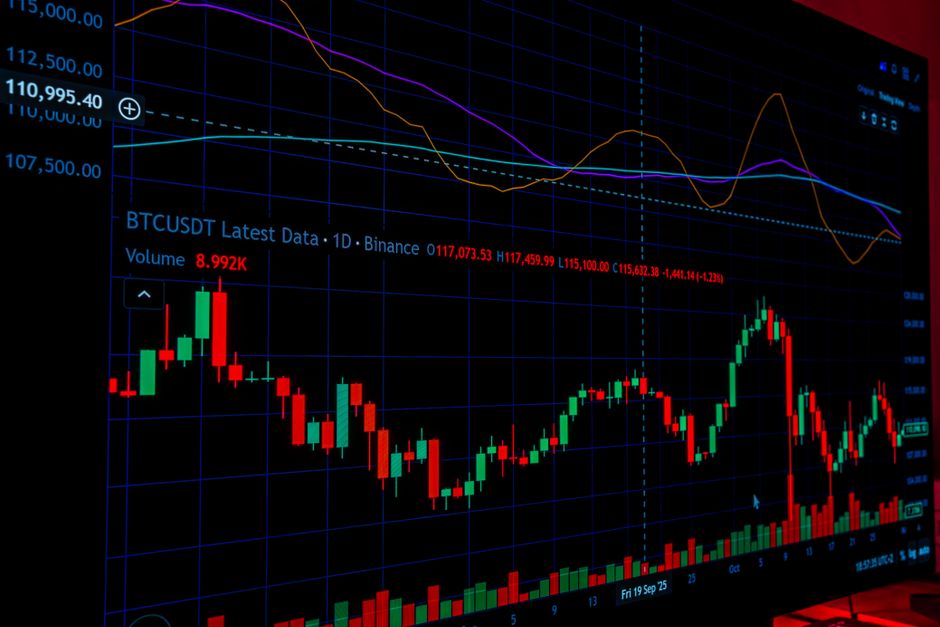
Three practical points separate usable guides from filler. First, stale data: a PDF that quotes Bitcoin or Ethereum prices from an earlier cycle cannot teach you current stop distances, so rely on live quotes and recalculate. Second, "percent" confusion: a 3% account risk is not a 3% price move. With a stop 3.3% below entry (as in the Bitcoin example above), a $304 position risks only $10 on a $1,000 account. Third, order types: a stop-market order can fill below your stop price in a fast market, so a stop-loss limits risk but does not guarantee the exact loss. Check how your exchange handles stop-limit versus stop-market orders before relying on them. Beginners often discover this during their first sharp drop.
A fix for most of these problems is a trial period: run the plan on paper for several weeks, then trade with the smallest size your platform permits. Compare results against your journal, not your feelings. If you want the broader picture of how this fits into portfolio-building, our complete fintech guide hub covers the wider toolkit, and you can browse more trading articles for related tutorials.
FAQ
What is a crypto trading strategies for beginners PDF?
It is a downloadable document that explains how to trade cryptocurrencies using written rules for entries, exits, risk and position size. The best ones include worked examples and a journal template instead of promises of income.
How to build a simple crypto trading plan from a PDF?
Choose one strategy, such as a trend pullback. Define the entry, stop and target in writing. Size the position so a stop-out costs 1% of the account. Practice on paper, then trade with minimal size and record every trade.
Is it safe to trade crypto as a beginner?
It carries real risk. Prices are volatile, and you can lose your entire stake. Safety improves with spot-only trading, small position sizes, stop-losses, regulated exchanges available in your country, and money you can afford to lose.
Why do many beginners lose money in crypto trading?
Common causes are oversized positions, no stop-loss, emotional decisions after losses, and borrowed funds. Fees on frequent small trades also reduce returns. Fixed risk rules and a journal address most of these.
Can I really make $100 a day trading crypto?
Only with enough capital or very high risk. On $1,000 it requires a 10% daily return. On $10,000 it requires 1% daily. Neither is a reasonable expectation for a beginner.
For a complete overview, see our Crypto Trading Strategies Guide.
Disclosure: XPERTRAX (xpertrax.com) is an affiliated platform. Links and pop-ups pointing to xpertrax.com promote it. This article is for information only and is not financial advice.