
Does Crypto Have Demo Account? Free Practice Options
Bitcoin sits at $63,112 and Ethereum at $1,784 in real-time market data as of November 19, 2026, both down on the day. Placing your first live order into a market like that, with real money and no practice, puts your starting capital at real risk. A demo account lets you make those first mistakes for free.
Crypto is not one company, so there is no universal "crypto demo account." Each platform builds its own simulator, and quality varies a lot. This guide covers what exists, how each type works, where demo trading misleads you, and how to move to live trading without carrying bad habits across.
What a crypto demo account actually is
Paper trading is simulated trading that lets you practice buying and selling without committing real money. Crypto demo accounts follow the same idea. You get a virtual balance, usually in a stablecoin-style unit such as USDT or in a fiat-like figure. You place orders against live or near-live prices, and your profit and loss update as though the trades were real.
Three formats exist:
- Exchange demo mode: a switch inside the exchange's own interface that swaps your balance for virtual funds.
- Testnet or sandbox: a separate environment built mainly for developers and API testing, which often needs its own login and keys.
- Charting-platform paper trading: a simulator attached to charts, not to a single exchange.
Key finding
Key finding: Demo access in crypto is common for derivatives and chart-based practice, and patchier for plain spot buying. Whether a given exchange offers it, in which country, and with which products depends on that exchange's current rules. Check the platform's official site before you sign up. A demo teaches you the interface and order types, but it cannot teach you how you will behave when real money is falling.
6 ways to practice crypto trading without risk
The list below names platforms that are commonly associated with a demo, paper or test environment. Features, supported assets and regional access change, so treat each entry as a pointer to verify on the official site, not a guarantee.
-
Bybit Demo Trading
-
Binance Demo Trading and Testnets
If you plan to automate a strategy, the testnet is the safer place to debug it first.
-
OKX Demo Trading
-
Bitget Demo Trading
It suits traders who want to learn how contract positions, margin and liquidation behave before paying for the lesson.
-
Kraken Futures Demo
-
TradingView Paper Trading
TradingView's paper trading feature is a charting-platform simulator that is not tied to one exchange. It is not tied to one exchange, so it suits practicing strategy and chart analysis rather than a specific exchange's interface.
Comparison table: demo types
| Type | Best for | Typical product focus | Main drawback |
|---|---|---|---|
| — | Learning one exchange's interface | Mostly derivatives, varies by exchange | Availability varies by region and account |
| — | Testing bots, API keys and order logic | Spot and futures, varies | Thin, artificial order books; less polished |
| Charting paper trading (TradingView) | Strategy and chart practice | Any supported crypto pair | Not connected to a real exchange's matching engine |
Worked example with current prices
Using real-time market data as of November 19, 2026, here is the kind of practice trade a demo lets you run. The figures are simple arithmetic on the quoted prices, not a forecast.
| Asset | Price | 24h change | Demo position | Position value |
|---|---|---|---|---|
| Bitcoin (BTC) | $63,112 | -2.49% | 0.1 BTC | $6,311.20 |
| Ethereum (ETH) | $1,784 | -1.93% | 2 ETH | $3,568.00 |
| Solana (SOL) | $73.63 | -1.70% | 50 SOL | $3,681.50 |
A 2.49% move on a $6,311.20 Bitcoin position is about $157 in either direction. On a virtual balance, that is a data point. On a live account with a small deposit, it can be a meaningful share of your capital in a single day. Run this sort of position-sizing exercise in demo until you can predict the dollar swing before you click buy. Price data like this is also tracked by aggregators such as CoinGecko, which is useful for cross-checking quotes.
Where demo trading misleads you
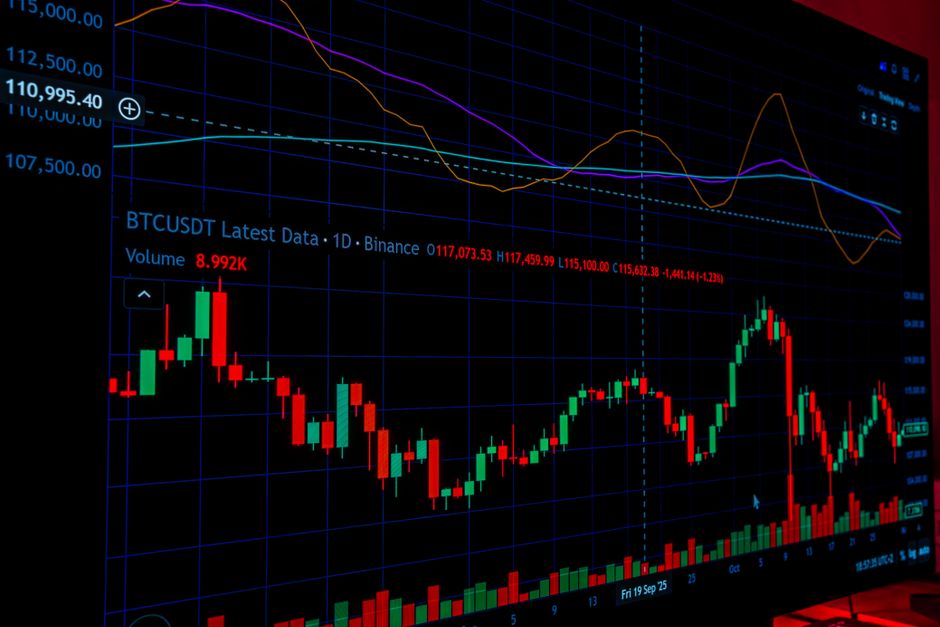
A demo account is a flight simulator, not a flight. These are the gaps that matter most:
| Factor | Demo account | Live account |
|---|---|---|
| Order fills | Often instant and at the quoted price | Subject to slippage and available liquidity |
| Emotions | Little pressure, no real loss | Fear and greed affect decisions |
| Fees | May be simulated or simplified | Real maker, taker and funding costs apply |
| Liquidation and margin calls | Teach mechanics, with no personal consequence | Real capital is lost |
| Balance | Large virtual balance encourages oversized trades | Your actual deposit limits position size |
The biggest trap is the inflated balance. Starting with six figures of play money trains you to size positions you could never afford live. Reset your demo balance to the amount you actually plan to deposit, if the platform allows it, or limit yourself manually.
Step-by-step: how to start
- Pick the product you plan to trade. If you will trade spot Bitcoin, a futures-only demo teaches the wrong skills. Match the simulator to the real thing.
- Open the demo. On exchanges, find the demo or virtual trading toggle in the account or trading menu. On a charting platform, open a chart and connect its paper trading option.
- Set your own capital limit. Decide the real amount you would deposit and cap your demo positions to it.
- Write a one-page plan. Entry rule, exit rule, stop-loss level, and the maximum loss per trade as a share of capital.
- Trade the plan for several weeks. Log every trade, including the ones you break the rules on.
- Review before going live. If the plan loses money in demo, it will not win live. If it wins, start live with a small deposit.
For a deeper walkthrough on simulated orders, see the crypto paper trading guide. If you are still choosing a platform, the best crypto exchanges for beginners comparison covers what to check first.
Editor's notes: common errors and fixes
These are the recurring mistakes with demo trading, based on how the simulators are documented to work and how trading platforms generally behave.
- Mistake: assuming demo and live share the same login. Testnets and some demo sites need separate registration and separate API keys. Fix: keep testnet keys clearly labeled and never paste them into a live bot.
- Mistake: trusting demo fill quality. Simulated order books can be thin or artificial, so a large demo order may fill in a way it never would live. Fix: keep demo orders small and treat results as a test of logic, not of execution.
- Mistake: ignoring fees. Live trading charges trading fees and, on perpetual contracts, funding payments. Fix: look up the fee schedule on the exchange's official page and subtract it from your demo results by hand.
- Mistake: staying in demo forever. Practice is useful, but it cannot test your discipline under real loss. Fix: set a review date and move to a small live deposit once you have a written, tested plan.
- Mistake: chasing a "demo account" from an unknown site. Fake platforms use free practice accounts as a hook to get you to deposit. Fix: use only exchanges and tools you can verify, and never pay to access a "demo."
One more trade-off: a demo that closely copies live conditions is only as good as the market it copies. In a volatile session like today's, when major coins are all down, practicing risk control is more valuable than practicing entries. Learn to size and exit first, then pick entries. For the mechanics behind contract positions, read crypto futures trading basics, and for chart skills see how to read crypto charts.
Source summary
Related reading across categories
- Pillar: Complete crypto guide
- Category hub: More trading articles
- Adjacent: stock market simulator guide for equity practice
FAQ
What is a crypto demo account?
It is a practice account that gives you virtual funds to trade crypto at live or near-live prices. No real money is at risk. It is offered by individual exchanges and by platforms such as TradingView, not by crypto as a whole.
Does crypto have demo account access on major exchanges?
Some exchanges offer demo or test environments. Features and regional availability vary, so confirm on the official site.
How to use a crypto demo account effectively?
Match the demo to the product you plan to trade, cap your position sizes to your real intended deposit, follow a written plan, and log every trade. Subtract live fees from your results manually.
Is it safe to use a crypto demo account?
Yes, on official exchange and platform sites, because no real funds are used. Avoid unknown sites that offer "free demo accounts" and then push you to deposit. Never share live API keys or seed phrases with any demo tool.
Why do demo results differ from live results?
Live trading adds slippage, real fees, funding costs and emotional pressure. Simulated fills are often cleaner than real ones, so demo profits tend to overstate what you would earn live.
Disclosure: XPERTRAX (xpertrax.com) is an affiliated platform. Links and pop-ups pointing to xpertrax.com promote it. This article is for information only and is not financial advice.