
What Is Crypto Analysis in Cyber Security? Explained
A single wallet drain can move millions of dollars in minutes. Every transfer stays on a public ledger. That permanence is what makes crypto analysis possible, and it is also why security teams, exchanges and law enforcement now treat on-chain data as forensic evidence.
What the evidence says
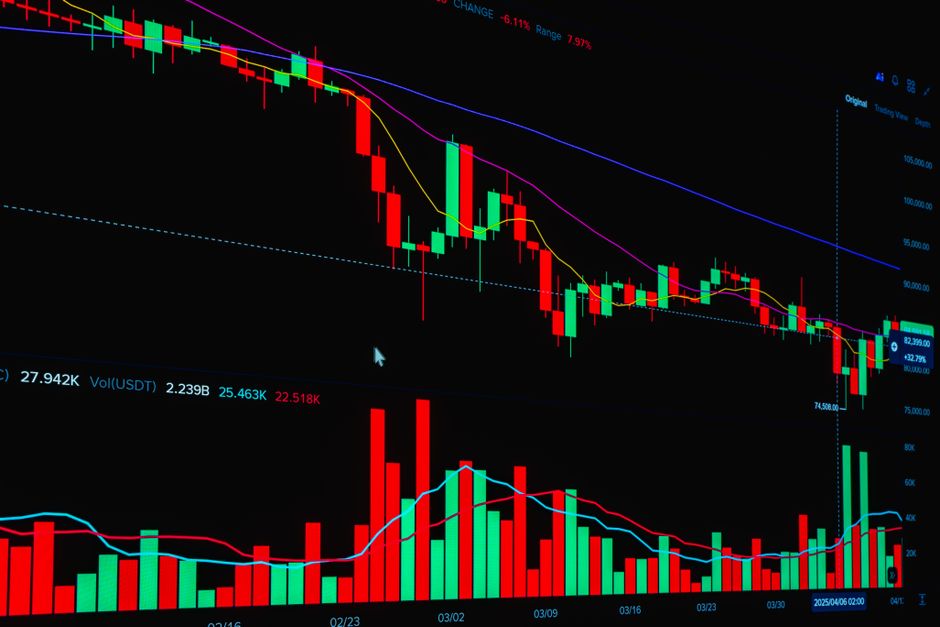
In practice, crypto analysis turns anonymous-looking addresses into evidence trails that investigators, exchanges and compliance teams can act on.
For context on the market these tools monitor, Bitcoin trades at $76,214 (24h: -5.33%) and Ethereum at $2,242 (24h: -7.35%), based on real-time market data as of November 6, 2026 according to CoinGecko. Large price swings do not change how tracing works, but they affect how much value sits in the wallets an investigator may be following.
The two meanings of crypto analysis
The phrase is ambiguous because "crypto" is short for both cryptography and cryptocurrency. Security professionals use the same phrase for different jobs.
| Aspect | Cryptanalysis (cryptography) | Blockchain analysis (cryptocurrency) |
|---|---|---|
| Core question | Can this cipher, hash or protocol be broken? | Who controls these addresses and where did the funds go? |
| Data used | Algorithms, keys, implementations, side channels | Public ledger transactions, exchange and entity labels |
| Typical users | Researchers, standards bodies, security engineers | Exchanges, incident responders, compliance teams, law enforcement |
| Output | Attack proofs, deprecation of weak algorithms | Cluster maps, fund-flow graphs, risk scores |
| Nature of result | Mathematical or practical break, or none found | Probabilistic attribution |
Most searchers asking this question want the second meaning, so the bulk of this guide covers blockchain analysis. The cryptanalysis section follows because the two are linked: a broken algorithm underneath a blockchain would make every transaction analysis question secondary.
Key finding
Key finding: Public blockchains are transparent but not anonymous. Analysis works by linking addresses to real-world entities, usually at exchange on-ramps and off-ramps. It gives investigators strong leads, not courtroom certainty. The cryptography underneath is a separate discipline that asks whether the math itself holds up.
How blockchain analysis works
Every transaction on Bitcoin, Ethereum and similar networks is public. Addresses are pseudonymous strings, not names. Analysts build a picture in three layers.
- Collect. Pull transaction data from full nodes or block explorers, including inputs, outputs, timestamps, contract calls and token transfers.
- Cluster. Group addresses that likely share an owner using behavioral heuristics.
- Attribute. Tie clusters to known entities such as exchanges, mixers, sanctioned parties or scam operations, using labeled datasets built from intelligence, seized-wallet records and public disclosures.
Commercial platforms such as Chainalysis, Elliptic and TRM Labs sell this pipeline as a product. Public explorers such as Etherscan give a smaller free version. A blockchain is a distributed ledger shared across a network, which is the property that makes this tracing possible in the first place.
7 core techniques security teams use
- Common-input-ownership clustering. On Bitcoin, addresses spent together as inputs to one transaction are assumed to be controlled by the same party. It is a widely used heuristic, and privacy tools can break it.
- Change-address detection. A transaction usually returns leftover coins to a new address owned by the sender. Spotting that output keeps the trail connected.
- Fund-flow tracing. Analysts follow stolen funds hop by hop, through peel chains, splitting patterns and consolidation wallets, until they reach a service that holds customer identity data.
- Entity attribution and labeling. Matching clusters against known exchange deposit patterns, scam wallets and hacker addresses turns a graph into a story.
- Sanctions and risk screening. Compliance teams check whether counterparties appear on sanctions lists such as the US Treasury's OFAC list. Tornado Cash was sanctioned in August 2022.
- Smart contract analysis. Static analyzers such as Slither and Mythril, plus fuzzing frameworks such as Foundry, look for exploitable bugs before and after deployment. Incident responders also decode attack transactions to understand the exploit path.
- Behavioral and timing analysis. Activity hours, gas settings, reuse of tooling and bridge choices can link separate wallets to one actor, though this is circumstantial evidence.
| Technique | Best for | Main weakness |
|---|---|---|
| Fund-flow tracing | Hack and fraud response | Cross-chain bridges and swaps add gaps |
| Entity attribution | Compliance and takedowns | Depends on label quality, which varies by vendor |
| Sanctions screening | Exchanges and payment firms | Indirect exposure can generate false positives |
| Contract analysis | DeFi security audits | Automated tools miss logic flaws |
How cryptanalysis protects crypto itself

Cryptanalysis is the older discipline. Researchers attack algorithms to find weaknesses before criminals do. Several milestones show how it shapes security practice:
- MD5 and SHA-1. Both hash functions suffered practical collision attacks. Google and CWI Amsterdam demonstrated a SHA-1 collision in 2017, and the industry moved away from both for security uses.
- Bitcoin's building blocks. Bitcoin relies on SHA-256 hashing and elliptic-curve signatures (secp256k1). Neither has a known practical break today.
- Quantum risk. Shor's algorithm would threaten elliptic-curve signatures on a sufficiently large quantum computer. In August 2024 NIST published its first post-quantum standards: FIPS 203 (ML-KEM), FIPS 204 (ML-DSA) and FIPS 205 (SLH-DSA). Blockchain communities are still debating migration paths.
- Implementation attacks. Most real-world failures are not mathematical breaks. Weak random number generation, leaked private keys and flawed wallet code are common causes of loss.
The practical lesson: strong math does not protect weak operational security. Cryptanalysis tells you the lock is sound. It says nothing about whether someone left the key under the mat.
Practical workflow and common errors
A typical incident response follows a fixed order. First, secure the victim's remaining assets and record the transaction hashes of the theft. Second, map the first few hops: Where did the funds land? Were they split? Did they move to a bridge or a swap contract? Third, look for an exit point at a centralized exchange or stablecoin issuer, which can freeze funds if contacted quickly and given evidence. Fourth, file reports with law enforcement and alert the relevant exchanges' compliance desks. Teams usually export graphs and hashes so the work can be reviewed independently.
Common mistakes are well known to practitioners:
- Treating a cluster as proof. Heuristics produce probable ownership, not certainty. Shared custody services can merge unrelated users into one apparent cluster.
- Confusing an exchange deposit address with a person. Many customers send to addresses controlled by the exchange, so the trail ends at the platform, not at the individual.
- Ignoring chain boundaries. Funds that cross a bridge or get swapped into another asset can look like they vanished. The fix is to decode the bridge or swap transaction and continue on the destination chain.
- Trusting one vendor's labels. Label coverage and accuracy differ between providers. Cross-checking reduces false attributions.
- Acting too slowly. Freezes depend on speed. Long delays make it more likely the funds have been cashed out or run through mixers.
The honest trade-off is that analysis tools are strongest after the fact. They can help recover funds in some cases and mainly raise the cost of laundering. Prevention, meaning hardware wallets, contract audits, multi-signature controls and phishing awareness, remains cheaper than tracing.
Limits and risks
| Limit | Why it matters |
|---|---|
| False positives | Innocent users can be linked to risky addresses through indirect exposure, leading to frozen accounts. |
| Label dependence | Attribution is only as good as the underlying dataset, which is proprietary and varies by vendor. |
| Privacy concerns | Persistent tracking of ordinary users raises legitimate data protection debates. |
| Cross-chain complexity | Bridges, wrapped assets and swaps fragment the trail. |
Is it safe and recommended?
For organizations, yes. Exchanges, wallet providers, DeFi protocols and payment firms use blockchain analysis for compliance and incident response. For individuals, the practical takeaway is different: assume your on-chain activity is traceable. If you receive funds, check the sender's history through a public explorer before moving them to a regulated exchange, since tainted funds can trigger account reviews.
Treat any single analytics output as a lead, not a verdict. Pair it with documentation, human review and legal advice when real money or accusations are involved. For cryptanalysis, rely on published standards from bodies such as NIST rather than home-made schemes. Never design your own cryptography.
FAQ
What is crypto analysis in cyber security?
It covers cryptanalysis, which tests whether encryption and hashing can be broken, and blockchain analysis, which traces cryptocurrency transactions to investigate theft, fraud and sanctions exposure. Most modern usage refers to blockchain analysis.
How does blockchain analysis trace stolen crypto?
Analysts follow transactions hop by hop on the public ledger, cluster addresses likely owned by one party, and look for an exit point such as an exchange that holds identity records. Exchanges can then freeze funds if they act quickly.
Is it safe to use crypto analysis tools?
The tools are legal and widely used for compliance. Risks are mainly about accuracy and privacy: false positives can hurt innocent users, and results should be verified before action is taken.
Why can't privacy coins and mixers be traced as easily?
They are designed to break the links that standard heuristics rely on, such as shared inputs and obvious change outputs. Analysts can sometimes still find patterns, but confidence drops sharply.
How to start learning crypto analysis?
Begin with a public block explorer, trace a few well-documented incidents, and study how address clustering works. Move on to smart contract auditing tools such as Slither for the code side. For cryptography, read NIST standards and published attack papers.
Related reading on Pro Trader Daily
- Pillar guide: complete crypto security and markets guide
- blockchain forensics explained for beginners
- crypto wallet security checklist
- how to spot crypto phishing scams
- Adjacent: smart contract audit explained
- Adjacent: crypto exchange security risk checklist
- Category hub: more crypto analysis articles
Disclosure: Pro Trader Daily and xpertrax.com are operated by the same owner. Links and pop-ups pointing to xpertrax.com promote our own products. This article is for information only and is not financial advice.