
Minimum Amount to Start Crypto Trading: to $500 Guide
You do not need thousands of dollars. You also do not need to buy a whole Bitcoin. At $59,802 per BTC, a $10 purchase gets you 0.000167 BTC, and exchanges sell fractions without any fuss. The real obstacle is not the entry ticket. It is the fee percentage that quietly takes a bigger bite out of small trades, and the temptation to turn $20 into $2,000 by trading aggressively. This guide gives you the exact figures so you can pick a starting amount with open eyes.
What $1 to $500 actually buys today

Crypto is divisible, so the coin's price does not set your minimum. The table below uses real-time market data as of November 24, 2026, and simple division. Prices are falling across the board today (BTC -2.55%, ETH -3.29%, SOL -5.24% over 24 hours), so treat these as a snapshot.
| Amount | BTC at $59,802 | ETH at $1,678 | SOL at $69.17 | XRP at $0.9189 |
|---|---|---|---|---|
| $1 | 0.0000167 | 0.000596 | 0.0145 | 1.09 |
| $10 | 0.000167 | 0.00596 | 0.145 | 10.88 |
| $50 | 0.000836 | 0.0298 | 0.723 | 54.4 |
| $100 | 0.001672 | 0.0596 | 1.446 | 108.8 |
| $500 | 0.00836 | 0.298 | 7.23 | 544.1 |
Exchange minimums compared
According to Investopedia's beginner guide, starting in cryptocurrency with $100 is a realistic entry point for newcomers. The platforms below are ordered from lowest to highest practical minimum. Minimums and fees change, so confirm on the platform's fee page before you deposit.
| Platform | Published minimum | Fee model at the lowest tier | Trade-off |
|---|---|---|---|
| Robinhood Crypto | — | — | Spread is not itemized, so true cost is harder to see |
| Coinbase (standard buy) | $2 | — | Convenient, but small buys carry a high effective fee |
| Coinbase Advanced | Per-pair order minimums | — | Cheaper than standard buy, more order types to learn |
| Binance (spot) | — | — | — |
| Kraken Pro | — | — | Minimums are quoted in coins, so the dollar value moves with price |
Two distinctions trip people up. A minimum deposit is what the platform requires to fund your account. A minimum order is the smallest trade a given pair accepts. Every trading pair has a minimum order size.
Fee drag on small trades
This is where small accounts lose. The table below is plain arithmetic: trade size multiplied by the fee rate. The last row shows a hypothetical flat $1 fee for comparison, since some retail buy flows charge fixed amounts on small orders.
| Fee type | $10 trade | $50 trade | $100 trade | $500 trade |
|---|---|---|---|---|
| — | $0.01 | $0.05 | $0.10 | $0.50 |
| — | $0.04 | $0.20 | $0.40 | $2.00 |
| — | $0.06 | $0.30 | $0.60 | $3.00 |
| Hypothetical flat $1 fee | $1.00 (10%) | $1.00 (2%) | $1.00 (1%) | $1.00 (0.2%) |
Remember that a round trip (buy, then sell) pays the fee twice. At 0.6% each way, you need roughly a 1.2% price rise just to break even, before spreads. On a $100 position, that is $1.20 of movement needed. On a flat-fee venue charging $1 each way, a $10 position would need a 20% rise to break even.
Network withdrawal fees are a separate cost. Moving a tiny balance to a private wallet can cost a meaningful share of it, depending on the chain and congestion. Check the withdrawal fee shown on the exchange before you plan to move funds.
5 starting amounts, ranked by practicality
Ranked from the least to the most practical use of capital, based on fee drag and what the amount lets you do.
- $1: a technical test only. Good for confirming that your account, funding method and identity verification work. Fees can consume a large fraction of it, and the result teaches you nothing about trading.
- $10: a learning budget. You can practice placing market and limit orders and see how spreads work. Treat it as tuition, not an investment. A flat fee will damage it; a 0.1%-0.6% fee will not.
- $50: a workable start for recurring buys. At 0.1%-0.6%, fees run $0.05-$0.30 per trade. Splitting it across two or three assets is possible but thin, so consider holding one.
- $100: the practical floor. Fee percentages become negligible, and you can hold two assets without dust-sized positions. A 10% move is $10, which is enough to feel real without being ruinous.
- $500: room for a plan. You can split between a core holding and a smaller position, or scale in over several weeks. Fee cost on a $500 trade at 0.4% is $2.00, a rounding error next to price volatility.
Realistic returns and timelines
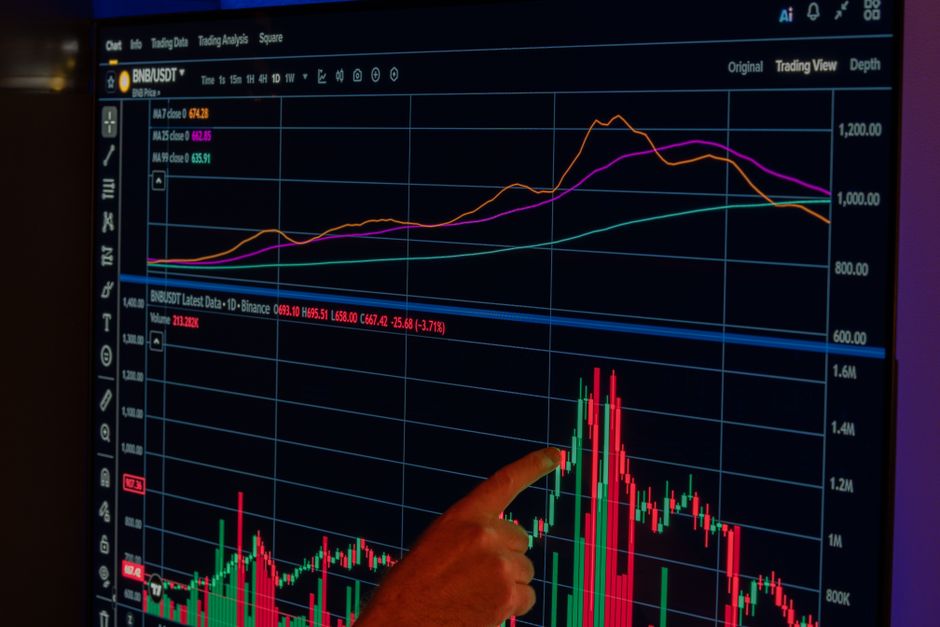
No publication can promise returns, and nobody can forecast crypto prices reliably. What you can do is run the arithmetic on outcomes, so the dollar impact of small accounts is clear. The figures below are hypothetical scenarios, not predictions.
| Starting capital | If it gains 20% | If it falls 40% | If it falls 60% |
|---|---|---|---|
| $50 | +$10 (value $60) | -$20 (value $30) | -$30 (value $20) |
| $100 | +$20 (value $120) | -$40 (value $60) | -$60 (value $40) |
| $500 | +$100 (value $600) | -$200 (value $300) | -$300 (value $200) |
The takeaway is that percentage moves are the same at every size, but dollar outcomes scale with capital. Small accounts do not grow into life-changing sums from price moves alone. Contributions drive the early timeline.
Contribution timeline: where the growth really comes from
| Recurring buy | Contributed after 12 months | Contributed after 36 months |
|---|---|---|
| $25 per week | $1,300 | $3,900 |
| $50 per month | $600 | $1,800 |
| $100 per month | $1,200 | $3,600 |
These totals are deposits only, with zero return assumed. After the first year, the habit and the discipline matter more than the original $100. For a deeper look at spreading buys over time, see our dollar-cost averaging in crypto breakdown.
Risk management and psychology with small capital
As a rule of thumb, some traders limit the risk on a single trade to 1%-2% of the account. On $100, that is $1-$2. In practice, that means active short-term trading with small capital is risky, and fees take a large share of any gains. Position sizing rules need larger balances to function.
Small accounts also invite specific behavior errors:
- "It's only $20" thinking. It leads to oversized bets on low-liquidity coins, and the losses are real money anyway.
- Chasing a rescue trade. After a 30% drop, adding money to win it back is the fastest way to turn a $100 mistake into a $500 one.
- Leverage and futures. Borrowed exposure can wipe out a small balance in a single move. Avoid it until you understand liquidation mechanics.
- Checking prices hourly. With BTC down 2.55% in a day and SOL down 5.24%, a daily swing can erase a whole week of expected gains. Volatility is the product.
Crypto is a speculative and high-risk asset class, which is the correct frame for every dollar here. For a structured approach, read our crypto risk management for beginners guide.
Wallet minimums and tax basics
Custodial vs non-custodial
| Feature | Exchange account (custodial) | Self-custody wallet (non-custodial) |
|---|---|---|
| Minimum to open | None beyond identity verification | None |
| Who holds the keys | The exchange | You |
| Cost of small transfers | Exchange withdrawal fee applies | On-chain network fee applies on every move |
| Practical for $10-$100 | Yes | Possible, but network fees can be proportionally large |
For a first $100, leaving funds on a reputable regulated exchange is usually the simplest path. Move to self-custody as the balance grows. Our how to buy Bitcoin safely guide covers the handoff.
Tax implications of small trades
In many countries, including the United States, selling or swapping one coin for another can be a taxable event, however small. Many other countries have similar rules, and thresholds differ. Frequent micro-trades create lots of records for little gain. Keep your exchange's transaction history exports, and check your local tax authority's guidance. This is general information, not tax advice.
Common beginner mistakes with small capital
- Using the instant-buy button for everything. Convenience screens often charge more than the exchange's advanced order book. Compare the all-in cost before confirming.
- Ignoring the spread. "Zero commission" does not mean zero cost.
- Splitting $100 across ten coins. You end up with dust positions that cost more to sell than they are worth.
- Buying low-cap coins because they are "cheap per coin". A price of $0.05 does not mean room to grow. Market capitalization matters, not unit price. At $0.0553, Dogecoin is not "cheaper" than Bitcoin in any meaningful sense.
- Skipping verification until the dip. KYC approval can take time. Complete it before you need it.
- Sending funds on the wrong network. Always send a small test transaction first, and match the network exactly on both ends.
How a first $100 deposit works, step by step
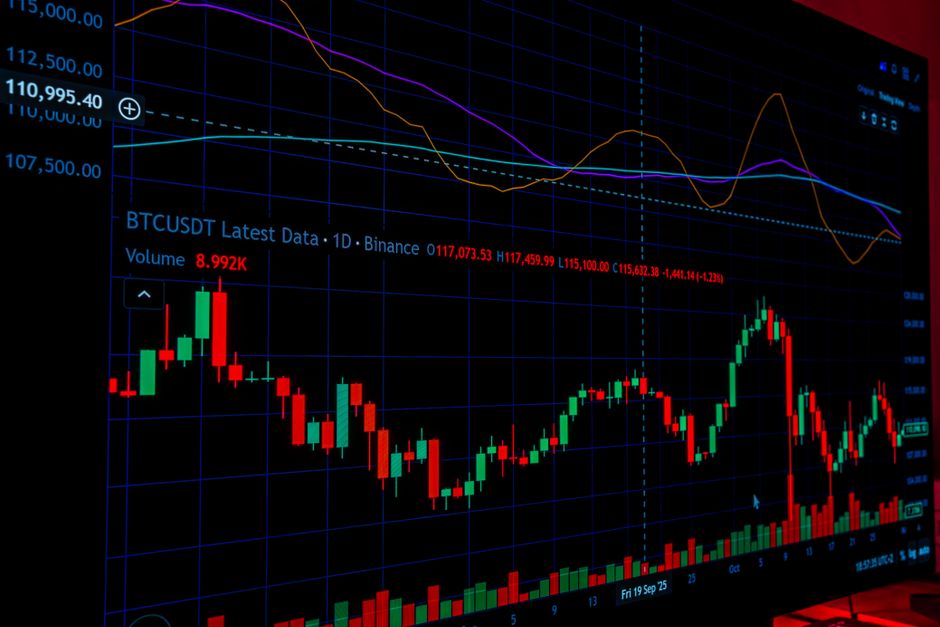
The sequence below reflects how most regulated exchanges operate. Exact screens differ by platform and region.
- Create and verify the account. Expect to provide ID and sometimes proof of address. Do this before funding.
- Choose a funding method and check its cost. Bank transfers usually cost less than debit or credit cards, which can carry card-processing fees and, for credit cards, cash-advance treatment from the card issuer. Confirm before paying.
- Find the trading pair and order minimum. Open the pair (for example BTC/USD) and look for the minimum order size in the order form or fee page.
- Use a limit order if the platform offers one. Limit orders often qualify for a lower maker fee than the taker fee. A market order fills instantly but pays the taker rate.
- Check the fee before you confirm. A good order screen shows the fee and the total in dollars.
- Record the purchase. Save the date, amount, price and fee for tax purposes.
Honest trade-off: a bank transfer may take days to settle, while a card buy is instant but costs more. On a $100 purchase, the difference in cost can be the difference between a 0.6% and a multi-percent fee.
FAQ: minimum amount to start crypto trading
What is the minimum amount to start crypto trading?
It depends on the exchange and the trading pair. Practically, $50-$100 is the level where fees stop being the main story.
How to start crypto trading with $10?
Verify an account on a regulated exchange, fund it by the cheapest method, and place one small limit order on a major asset like BTC or ETH. Use it to learn order types and fees. Do not expect meaningful profit from $10.
Is it safe to start with a small amount?
A small amount limits your maximum loss, but it does not make crypto safe. Prices can fall sharply, as today's 24-hour moves show, and scams target beginners. Use a regulated exchange, enable two-factor authentication, and only invest what you can afford to lose.
Why do fees matter more on small trades?
Fixed fees and minimum spreads are a larger share of a small order. A $1 fee is 10% of $10 but 0.2% of $500. Round trips pay it twice.
Can you get rich starting with $100?
Price gains alone rarely change life circumstances at that scale. A 20% gain on $100 is $20. Wealth from small accounts comes mainly from consistent contributions over years, and there are no guarantees of returns.
Do I owe tax on small crypto trades?
In many jurisdictions, including the US, selling or swapping crypto can be a taxable event regardless of size. Keep records and check your local tax authority.
Related reading: our crypto exchange fees explained guide, the beginner investment budget primer, the complete fintech guide, and more trading articles.
Disclosure: XPERTRAX (xpertrax.com) is an affiliated platform. Links and pop-ups pointing to xpertrax.com promote it. This article is for information only and is not financial advice.