
Crypto Trading Psychology for Beginners: Action Plan
You buy after a green candle, freeze when it reverses, sell at the bottom, then double your next position to "get it back." Nothing in your chart analysis failed. Your behavior did. This guide gives you the fix as procedures: a checklist, a journal, a daily routine and a 30-day plan.
What Crypto Trading Psychology Is

Crypto runs 24/7 with higher volatility, so there is no reason to expect beginners to behave better.
Trading psychology covers three things:
- Emotions: fear, greed, regret, excitement and boredom, which push you to act at the wrong time.
- Cognitive biases: predictable thinking errors such as loss aversion, confirmation bias and overconfidence.
- Process discipline: whether you follow your own written rules when you are under pressure.
Kraken's educational material on trading psychology covers how to remove emotions from crypto trading. Loss aversion, from Kahneman and Tversky's prospect theory, means a loss tends to feel more painful than an equal gain feels good. That asymmetry explains most of what follows.
7 Psychological Traps That Cost Beginners Money
- FOMO (fear of missing out). You buy after a large move because others are posting gains. FOMO often drives poorly timed entries. Fix: no entry without a written trigger and stop level.
- Panic selling. A drawdown hits your pain threshold and you exit at the low. Fix: size positions so a stop-out is survivable, and decide exits before entering.
- Revenge trading. After a loss you take a bigger, less planned trade to recover. Fix: a mandatory cooldown after two consecutive losses.
- Disposition effect. You sell winners early to lock in a gain and hold losers hoping they recover. Fix: define profit targets and stops together.
- Confirmation bias. You read only bullish posts about the coin you already own. Fix: before each trade, write one reason the trade could fail.
- Overconfidence after wins. Three winning trades feel like skill, so you raise size. Fix: fixed percentage risk per trade, never raised by streaks.
- Stop-loss moving. You widen or delete your stop because "it will bounce." Fix: stops can only move in the direction that reduces risk.
What Each Mistake Costs in Dollars
These figures are arithmetic from stated assumptions, not observed trader data. Prices are real-time market data as of November 7, 2026: BTC $75,708, ETH $2,232, SOL $89.58.
| Mistake | Assumption | Dollar impact |
|---|---|---|
| Panic sell | $2,000 in BTC bought at $75,708; sold after a 15% drop to about $64,352 | $300 realized loss |
| Revenge trade | Position doubled to $4,000 after a loss, then a further 10% drop | $400 extra loss, versus $200 at the original size |
| FOMO top entry | $2,000 in SOL bought at $89.58 after a 20% pump (pre-pump about $74.65), then a full retrace | About 16.7% down, or $333 |
| Deleted stop | $2,000 in ETH at $2,232; planned stop 5% lower at $2,120.40; price instead falls 25% | $500 loss versus $100 planned |
| Borrowed-margin overreach | $500 margin at 10x gives $5,000 exposure; price moves 10% against you | $500, the entire margin (exchanges typically liquidate earlier due to maintenance margin) |
The pattern: each behavioral error multiplies a planned loss by 2x to 5x. The planned loss was always small. The unplanned one is the damage.
Before and After: An Illustrative Model
This is a hypothetical composite, not a real trader. Account: $5,000. Planned risk: 1.5% per trade, which is $75. Same 20 trades, same winners, one change: removing the five trades that broke the trader's own rules.
| Metric | Before (emotional) | After (rules enforced) |
|---|---|---|
| Trades taken | 20 | 15 |
| Winners (8 trades) | +$320 | +$320 |
| Planned stop-outs (7 trades at $75) | -$525 | -$525 |
| Rule-breaking losses (5 trades) | -$615 | $0 (trades not taken) |
| Net result | -$820 (-16.4%) | -$205 (-4.1%) |
Discipline cut the loss by $615, or 75%. It did not make the trader profitable, because the underlying strategy still lost money. Psychology removes self-inflicted damage. Whether the strategy has an edge is a separate question you answer with journal data over 50 or more trades.
Daily Habit Stack for Emotional Resilience
| When | Habit | Time | Purpose |
|---|---|---|---|
| Before opening charts | Rate your state (sleep, stress, mood) from 1 to 5. Below 3: no new trades today. | 1 minute | Blocks trading while tired or angry |
| Pre-session | Write today's max loss in dollars and the number of trades allowed | 3 minutes | Sets the loss limit before emotion exists |
| Before each entry | Complete the checklist below | 2 minutes | Forces a written trigger and stop |
| After each loss | Step away from the screen | 10 minutes | Breaks the revenge-trade impulse |
| End of day | Fill in the journal and grade rule adherence | 5 minutes | Creates data on behavior, not just P&L |
| Weekly | Review the journal for your most repeated mistake | 20 minutes | Chooses next week's one focus |
Rule of thumb: attach new habits to something you already do, such as coffee or opening your exchange app. Fewer than five habits are easier to keep than ten.
Pre-Trade Checklist
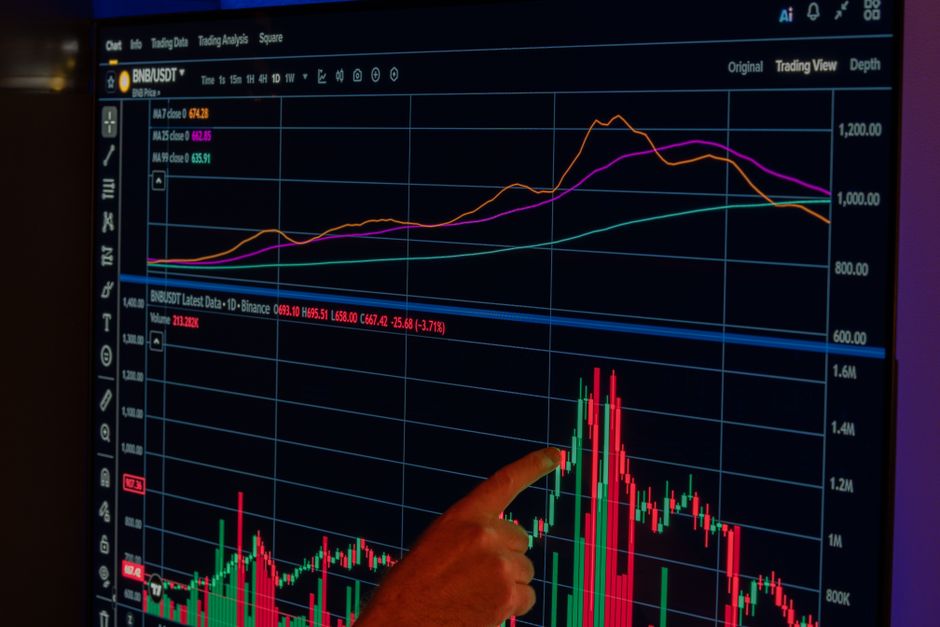
Copy this into any notes app or spreadsheet and answer every line before placing an order. One "no" means no trade.
| # | Question | Yes / No |
|---|---|---|
| 1 | Can I state my entry trigger in one sentence? | — |
| 2 | Is my stop-loss price written down and set on the exchange? | — |
| 3 | Is the dollar loss at that stop 2% of my account or less? | — |
| 4 | Is my profit target at least 1.5x my risk? | — |
| 5 | Have I written one reason this trade could fail? | — |
| 6 | Am I entering because of my plan, not because of a social post or a sudden price spike? | — |
| 7 | Am I within today's trade count and loss limit? | — |
| 8 | Is my state rating 3 or higher? | — |
Trading Journal Template
Track one row per trade. The emotion and rule-break columns are what most beginners skip, and they are the useful ones.
| Column | What to record |
|---|---|
| Date and time | When you entered |
| Asset and size | For example, ETH, $2,000 |
| Entry, stop, target | Three prices written before entry |
| Reason for entry | One sentence |
| Emotion at entry | Calm, excited, anxious, bored, angry |
| Followed plan? | Yes or no |
| Exit price and reason | Target, stop, or discretionary (and why) |
| Result in dollars and R | R is the result divided by the amount risked |
| Lesson | One line |
For more on structuring this record, see our crypto trading journal template guide.
Metrics That Measure Psychological Progress
Profit is a noisy score over a few weeks. Behavior metrics improve first.
| Metric | Formula | Direction to aim for |
|---|---|---|
| Rule adherence rate | Trades following the plan / total trades | Up. Some traders set a high personal target, such as 90%. |
| Revenge trade count | Trades entered within 30 minutes of a loss without a checklist | Down to zero |
| Stop integrity | Trades where the stop was never widened or removed / total | Up to 100% |
| Average loss vs planned loss | Mean actual loss / mean planned loss | Toward 1.0 |
| Max daily loss breaches | Days exceeding your own limit | Down to zero |
| Journal completion | Trades logged / trades taken | 100% |
The most telling number is average loss versus planned loss. If it sits near 2.0, you are doubling your intended risk through behavior.
Psychology vs Technical Analysis
This is not a contest. Technical analysis suggests where to enter and exit. Psychology determines whether you carry out the plan. A mediocre strategy executed consistently gives you clean data to improve. A good strategy executed erratically gives you noise. Beginners should spend roughly equal effort on both. For sentiment tools that quantify crowd emotion, see our crypto market sentiment analysis guide.
Quick self-check: which trap are you most prone to?
| If you often... | Likely trap | First fix |
|---|---|---|
| Buy after big green candles | FOMO | Require a written trigger |
| Sell at the lows, then watch a rebound | Panic selling | Reduce position size |
| Trade more right after losing | Revenge trading | Cooldown rule |
| Take small wins and hold big losers | Disposition effect | Set stop and target together |
| Raise size after a winning streak | Overconfidence | Fixed percentage risk |
30-Day Action Plan
| Days | Focus | Actions |
|---|---|---|
| 1 to 7 | Observe | Log every trade with emotion notes. Change nothing else. Use small size or paper trading. |
| 8 to 14 | Set limits | Adopt a max risk per trade of 1% to 2% and a daily loss limit. Start the pre-trade checklist. |
| 15 to 21 | Add friction | Enforce a 10-minute cooldown after each loss. Stops can only be tightened. |
| 22 to 30 | Review | Calculate the six metrics above. Pick the single worst one and make it next month's focus. |
Pair this with sizing rules from our crypto risk management guide and the position sizing calculator walkthrough. For the wider picture, browse the complete crypto hub, the investment strategy section for longer-horizon approaches, and more trading articles.
Editor Notes: Common Errors and Fixes
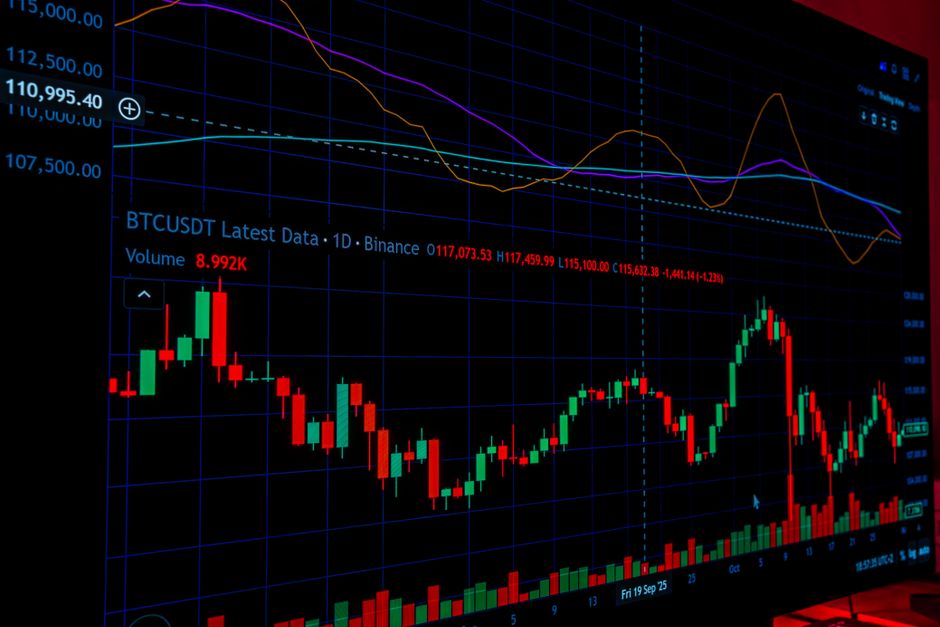
These are patterns that recur in how beginners handle crypto trades, based on documented behavioral finance concepts rather than any personal testing.
- Setting a stop but not placing it. A mental stop is not a stop. Place the order on the exchange so execution does not depend on your mood.
- Checking prices constantly. Crypto trades around the clock, so there is always a candle to react to. Set price alerts at your trigger and stop levels and close the app between them.
- Using borrowed margin too early. Margin shrinks the room for error. A 10% move wipes out 10x margin, as the table above shows. Beginners should learn spot sizing first.
- Judging a strategy on 5 trades. Small samples are dominated by luck. As a rule of thumb, wait for a large sample of logged trades, such as 50 or more, before changing the strategy itself.
- Tracking only P&L. A winning trade that broke your rules still reinforces a bad habit. Grade process and outcome separately.
- Trading to feel something. Boredom is a real trigger. If your journal shows "bored" as the entry emotion, the fix is fewer permitted trades per day, not more analysis.
The honest trade-off: strict rules will make you skip some trades that would have won. That cost is real, and it is the price of avoiding the trades that blow up an account.
FAQ
What is crypto trading psychology for beginners?
It is the study and control of the emotions and biases that affect your trading decisions, such as fear, greed, FOMO and loss aversion. For beginners, it means turning those reactions into written rules before placing any trade.
How do I control emotions when trading crypto?
Use a pre-trade checklist, risk a fixed 1% to 2% of your account per trade, place stop orders on the exchange, take a cooldown after losses, and log your emotions in a journal. Structure works better than willpower.
Is it safe to trade crypto as a beginner?
Crypto trading carries a high risk of loss. Starting small, avoiding borrowed margin, and risking only money you can afford to lose reduces the damage. Nothing removes the risk. This article is educational, not financial advice.
Why do most beginners lose money in crypto?
Common causes are chasing pumps, panic selling, oversized positions, missing stops and trading without a tested plan.
How long does it take to improve trading discipline?
You can track measurable behavior changes, such as rule adherence, within the 30-day plan above. Judging whether your strategy has an edge needs a much larger sample, ideally 50 or more trades.
Get Started
Disclosure: Pro Trader Daily and xpertrax.com are operated by the same owner. Links and pop-ups pointing to xpertrax.com promote our own products. This article is for information only and is not financial advice.