
Best Crypto Exchange for Demo Trading: What the Data Shows
Binance is the clearest starting point: its official blog documents a zero-risk Demo Trading mode. Demo trading means placing simulated orders with virtual funds instead of real money. It is safe because nothing real is at stake, but simulated fills can be kinder than live markets. Treat results as practice, not proof.
Key finding: Of the six exchanges covered here, only Binance has a demo-specific source in the data used for this article. For the other five, the sources document fees and regional limits, not demo balances, expiry or mobile demo access. Cells marked "—" mean the figure was not available, and this article does not guess.
Why Demo Trading Matters Right Now

The best crypto exchange for demo trading is the one whose practice mode matches the market you plan to trade live. On the evidence available, Binance leads because it publishes an official guide to zero-risk practice trading.
Consider what a bad day looks like. According to real-time market data as of November 6, 2026, Bitcoin trades at $76,186, down 5.33% in 24 hours. Ethereum is at $2,241, down 7.34%. A beginner who sizes positions as if the market were calm can lose a meaningful share of an account before lunch. Demo mode lets you learn order types, stop placement and position sizing without that cost.
| Asset | Price | 24h change |
|---|---|---|
| Bitcoin (BTC) | $76,186 | -5.33% |
| Ethereum (ETH) | $2,241 | -7.34% |
| Solana (SOL) | $90.07 | -5.90% |
| XRP | $1.2200 | -6.52% |
You can cross-check live quotes at CoinGecko. For background on simulated trading concepts, Investopedia is a reasonable starting reference.
Comparison Table: What the Evidence Supports
This article lists only the figures its source data contains. The table below only shows what the source data contains. A "—" means the figure was not available.
Before you open any account, confirm the demo balance, reset rules and expiry policy on the exchange's own help center. These details change and no third-party list stays current.
Six Exchanges, Ranked by Evidence
This order reflects how much verifiable demo or cost evidence exists in the source data. It is not a performance rating.
1. Binance
Binance's official blog publishes a guide titled "Learn to Trade Crypto With Zero Risk Using Binance Demo Trading", according to Binance. It is the only demo-specific source in this data set.
- Pros: A documented, official demo trading product aimed at zero-risk practice.
- Cons: No fee schedule is in the source data, so you cannot yet price the live version of your strategy. Check Binance's fee page before moving to real funds.
2. Bybit
Bybit Futures fees start at 0.02% for makers and 0.055% for takers at VIP 0, per Bybit's fee schedule. Its help center also lists 0.0750% taker and 0.0625% maker rates for a standard tier on its trading fee structure page.
- Pros: Low futures maker fee at the entry VIP tier. Higher VIP and Pro tiers get lower rates.
- Cons: Bybit does not serve users in the United States, the Chinese Mainland, Hong Kong and other excluded jurisdictions. Demo details are not in the source data.
3. MEXC
MEXC charges 0% maker and 0.05% taker on spot trades. It also runs a "0 Fee Fest" program with 0% maker and taker fees on Futures trades.
- Pros: The lowest spot taker fee among the figures cited here.
- Cons: The futures zero-fee offer is a named program. Read its terms before building a live cost model around it. Demo details are not in the source data.
4. OKX
OKX's fee page cites a maker fee of 0.08% and a taker fee of 0.1% in its example. Fees depend on your fee tier and whether you have opened a specific order type. Some pairs, such as USDT-TRY, exist only under OKX's Bahamas and Seychelles entities.
- Pros: A published fee-tier framework.
- Cons: Availability depends on which OKX entity serves you, so a practice setup may not match your live pairs. Demo details are not in the source data.
5. Coinbase (Coinbase Advanced)
Coinbase says it is lowering fees for many active traders on Coinbase Advanced. It lists US rates of 0.50% maker and 0.90% taker, and EU and UK rates of 0.25% maker and 0.50% taker.
- Pros: Clear regional fee tables and a maker-taker model.
- Cons: Taker costs are far higher than the other exchanges' cited rates except eToro. Demo details are not in the source data.
6. eToro
eToro charges 1% for buying or selling crypto, per its fee page. Its site advertises no commission on stocks and investing from as low as $10. It serves users in over 75 countries and has announced a new app.
- Pros: Transparent flat fee and a low entry amount.
- Cons: A 1% charge on each side makes short-term strategies expensive. Demo details are not in the source data.
Fee Math That Carries Into Live Trading
A demo account is only useful if your strategy survives live costs. The table multiplies the cited taker fee by two (entry plus exit). It ignores spreads, slippage and funding, so real costs run higher.
| Exchange and product | Cited taker fee | Round trip (x2) |
|---|---|---|
| MEXC spot | 0.05% | 0.10% |
| Bybit Futures, VIP 0 | 0.055% | 0.11% |
| OKX spot (example rate) | 0.1% | 0.20% |
| Coinbase Advanced, EU and UK | 0.50% | 1.00% |
| Coinbase Advanced, US | 0.90% | 1.80% |
| eToro crypto | 1% | 2.00% |
| MEXC Futures under 0 Fee Fest | 0% | 0.00% |
If your demo strategy averages a 0.5% gain per trade, a 2% round trip erases it. At 0.10% it does not. Check whether the demo applies fees at all, because a platform that ignores them will overstate your edge.
Demo Account Limitations
Most ranking pages skip this section. These are the structural limits of any simulated account:
- Fill quality. Simulated orders usually do not move an order book. A large live market order can slip, while a demo order may fill at the quoted price.
- Fees and funding. Check whether trading fees, funding payments and spreads are modeled. If they are not, add them yourself using the table above.
- Product coverage. Demo mode may support fewer pairs or order types than live. Confirm this on the exchange's help center.
- No withdrawals. Virtual funds cannot be withdrawn. Profits are not real.
- Balance and expiry rules. Virtual balances, reset options and expiry policies are not in the source data. Look them up before relying on a long practice run.
- Psychology. Losing a virtual $5,000 does not feel like losing $5,000. Emotional discipline does not transfer automatically.
- Borrowing and margin settings. Demo futures may allow settings you would not use live. Practice at the multiple you actually plan to run.
7-Step Setup Walkthrough
Menu names and layouts change, so this walkthrough is generic. Follow the exchange's own demo guide for exact button labels. For Binance, start with the official blog guide linked above.
- Check eligibility. Confirm the exchange serves your country. Bybit, for example, excludes the United States, the Chinese Mainland and Hong Kong, among other places.
- Register through the official site or app. Type the address yourself rather than following ads or messages.
- Secure the account. Turn on two-factor authentication before doing anything else.
- Find the demo mode. Look in the trading section of the platform or in the official demo guide. Confirm the screen clearly labels itself as demo.
- Read the demo rules. Note the virtual balance, reset option and any expiry or inactivity policy.
- Replicate your live plan. Use the same pairs, order types, risk per trade and margin setting you intend to use with real money.
- Keep a log. Record entry, exit, stop, fees you applied manually and the reason for each trade.
Verification, Virtual Balances and Expiry
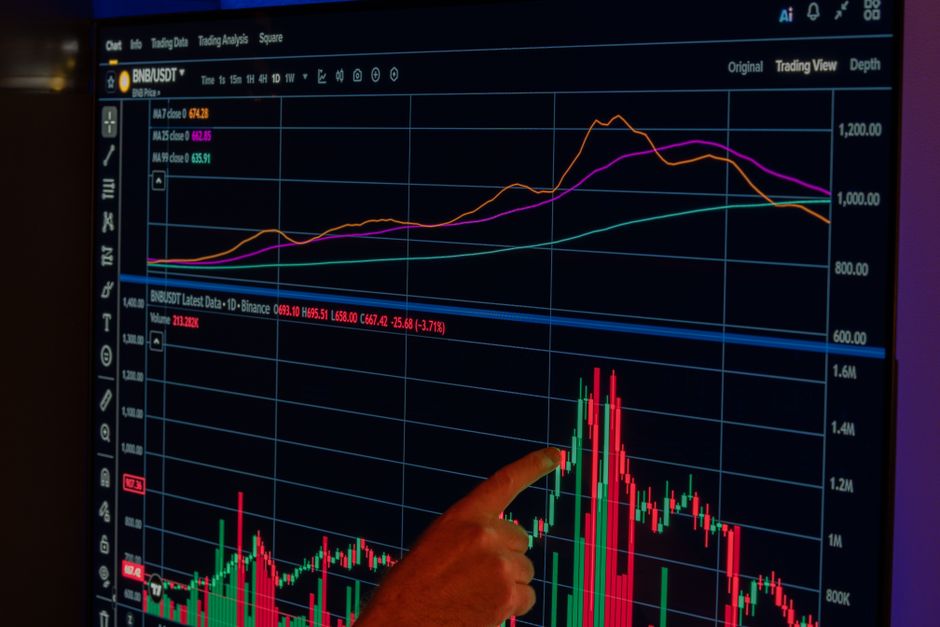
Readers often search for demo trading without verification, or for the highest virtual balance. The source data does not say whether any of these six exchanges require identity checks for demo access, and it does not list virtual balance sizes. Pages that claim exact numbers without linking to an official help article are not worth trusting.
A bigger virtual balance is also not automatically better. A $1,000,000 practice account teaches poor sizing if your real account is $2,000. Reset the balance to your real starting capital when the platform allows it.
Moving From Demo to Live
Use a short, rule-based framework instead of a gut feeling that you are "ready."
- Set a minimum sample. Decide in advance how many logged trades you need before judging results. Twenty trades prove little. Set the number before you start.
- Include costs. Subtract the round-trip fees from the table above from every demo trade.
- Fix risk per trade. A common rule of thumb is to risk 1% of the account per trade. This is an example parameter, not a recommendation for everyone.
- Size from the stop. Position size equals the amount risked divided by the stop distance.
- Start live small. Fund a fraction of your intended capital first and compare live fills to demo fills.
Worked example with today's volatility
Take a $1,000 account and risk 1%, or $10 per trade. Bitcoin at $76,186 has just moved 5.33% in 24 hours, so suppose you place a stop 5% below entry. Position size is $10 divided by 0.05, which is $200. At a 5% stop you would own roughly 0.0026 BTC at that price. A tighter stop would allow a larger position, but would also be hit more often in a market this volatile. Practice finding a stop that suits current volatility before the money is real.
Editor Notes
One mistake to avoid with demo accounts is treating them as a profit simulator rather than a process rehearsal. A demo result is only useful if you apply the same rules live. Fee drag is the second trap. A strategy that looks profitable on a zero-fee practice account can fail once a 1% or 0.90% taker fee is applied each way. The third is regional mismatch. OKX notes that not all pairs exist in all jurisdictions, and Bybit excludes several. Confirm your country is supported before investing practice hours in a platform you cannot use live. If you work across several exchanges, compare the same strategy against each fee schedule. The cheapest venue for a scalper is rarely the cheapest for a monthly rebalancer.
Source Notes
According to Bybit's Help Center, Bybit does not offer services or products to users in a few excluded jurisdictions, including the United States, the Chinese Mainland and Hong Kong.
Sources Checked for Product Details
Prices, fees and features were checked against these pages on November 6, 2026. Providers change terms often; confirm on the official site before you buy or deposit.
- Bybit: Service Restricted Countries - Help Center (bybit.com)
- Bybit: Bybit Trading Fee Structure - Help Center (bybit.com)
- Bybit: Bybit Futures Trading Fees & Fee Schedule (bybit.com)
- MEXC: Discover all MEXC fees and rates in one place (mexc.com)
- MEXC: 0 Fee Fest (mexc.com)
- MEXC: MEXC Spot Trading Fees: Maker & Taker Rates Calculator (mexc.com)
- eToro: etoro. Know better. (etoro.com)
- eToro: eToro Fees: What they are and how they're calculated (etoro.com)
- eToro: etoro launches new app: AI-first, smart, and social (etoro.com)
- OKX: Trading Fee | Fee Rate | Crypto Exchange Fees | Fee Tiers (okx.com)
- OKX: Updates to Global Fee Framework (okx.com)
- OKX: What are the spot trading fees, and how is my fee tier set? (okx.com)
- Coinbase: Exchange fees (help.coinbase.com)
- Coinbase: We're lowering fees for many active traders on ... (coinbase.com)
- Coinbase: What are the fees on Coinbase Pro? (help.coinbase.com)
FAQ
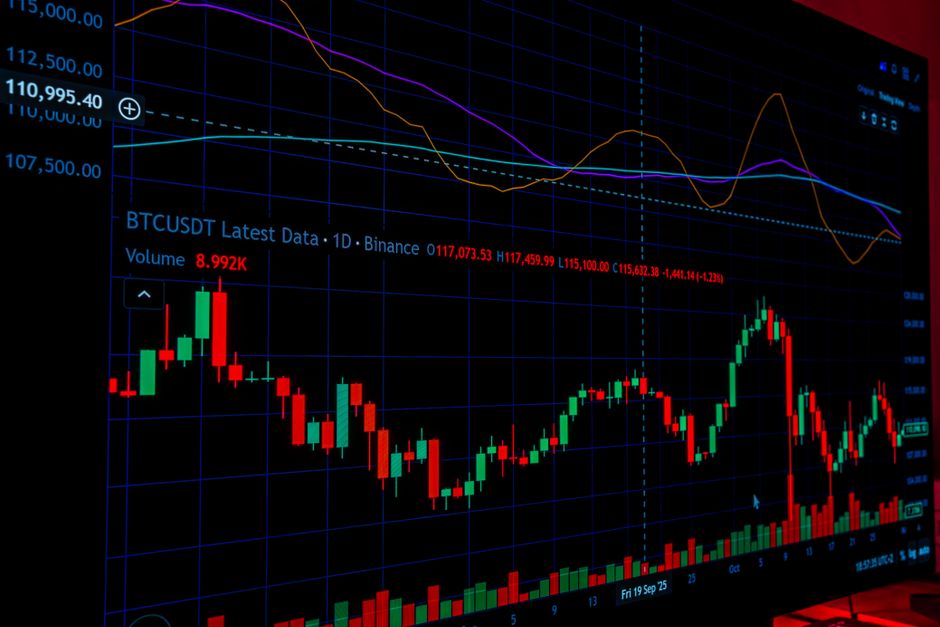
What is demo trading on a crypto exchange?
Demo trading is a simulated mode where you place orders with virtual funds instead of real money. Binance's official blog describes its version as a way to learn crypto trading with zero risk.
How do I start demo trading?
Register on an exchange that serves your country, secure the account, and find the demo mode in the trading section. Confirm balance and expiry rules on the official help center. See the 7-step walkthrough above.
Is demo trading safe?
No real funds are traded in demo mode, so there is no market loss. The remaining risks are security risks such as fake sites and weak passwords, and the false confidence that comes from ignoring fees and slippage.
Why do demo results often differ from live results?
Fees, spreads, slippage and emotions are often missing or muted in simulation. A 1% fee on each side, as eToro lists for crypto, turns a 2% round trip into a significant hurdle that many practice setups never show.
Which exchange has the largest virtual balance?
The source data does not list virtual balances for any of the six exchanges, so this article does not rank them on that point. Check each platform's official demo documentation.
Related Reading
- Complete fintech guide
- More trading articles
- Crypto paper trading strategies
- Crypto position sizing guide
- Best crypto futures exchanges
- How to compare crypto exchange fees
- Best stock paper trading simulators
For a complete overview, see our Best Crypto Exchanges Guide.
Disclosure: Pro Trader Daily and xpertrax.com are operated by the same owner. Links and pop-ups pointing to xpertrax.com promote our own products. This article is for information only and is not financial advice.