
Crypto Trading Fees Comparison: Binance, Bybit, OKX & More
Most traders never see the gap because the fee is deducted from the fill, not billed on a statement.
This guide compares Binance, Bybit, OKX, Kraken and Coinbase on spot maker/taker fees, volume tiers, native token discounts, withdrawals, regional limits and hidden costs. Prices quoted here use real-time market data as of November 28, 2026: Bitcoin at $59,305 and Ethereum at $1,645.
Exchanges commonly use a maker/taker model with fees that fall as 30-day trading volume rises. Exchanges revise these schedules, so treat every percentage below as a base-tier reference and check the official fee page before sizing a strategy.
Exchange Fee Comparison Table
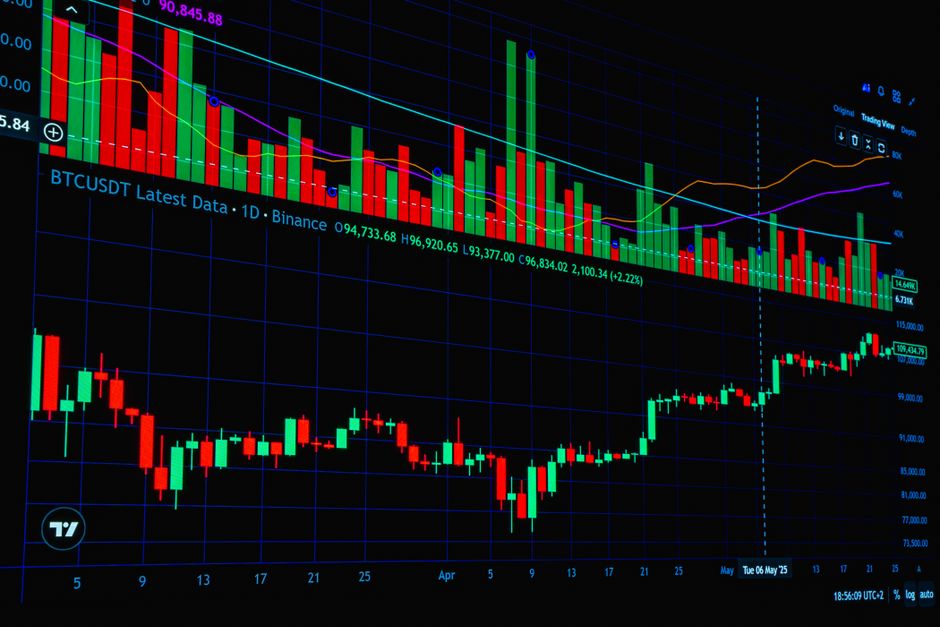
The table shows spot trading at the lowest (entry) tier for standard users.
| Exchange | Maker fee | Taker fee | Native token discount | Fee model note |
|---|---|---|---|---|
| Binance | 0.10% | 0.10% | — | — |
| Bybit | 0.10% | 0.10% | — | — |
| OKX | 0.08% | 0.10% | No major token discount | — |
| Kraken Pro | 0.25% | 0.40% | None | Tiers by 30-day volume |
| Coinbase Advanced | 0.40% | 0.60% | None | — |
5 Exchanges Ranked by Entry-Tier Spot Cost
This ranking uses one criterion only: the blended maker/taker cost at the entry tier. It does not measure liquidity, security or support.
Maker vs Taker Fees Explained
A maker order adds liquidity: a limit order that rests on the order book before it fills. A taker order removes liquidity: a market order, or a limit order that matches immediately. Takers usually pay more than makers, although some tiers use flat rates.
- Limit order priced across the spread: fills immediately as taker.
- Limit order that does not cross the spread: rests on the order book, then fills as maker.
- Post-only orders: cancel instead of filling as taker, which guarantees the maker rate.
For deeper reading, see the maker vs taker fees explained guide.
Volume-Based Tier Breakdowns
| 30-day volume | Kraken Pro maker / taker | Coinbase Advanced maker / taker |
|---|---|---|
| $0 to $10K | 0.25% / 0.40% | 0.40% / 0.60% |
| $10K to $50K | — | 0.25% / 0.40% |
| $50K to $100K | — | 0.15% / 0.25% |
| $100K to $250K | — | 0.10% / 0.20% (up to $1M) |
| $250K to $500K | 0.10% / 0.20% | 0.10% / 0.20% (up to $1M) |
Binance, Bybit and OKX use VIP programs. Exact VIP thresholds change often, so read them from each exchange's fee page rather than from a third-party table.
Monthly and Annual Fee Calculator
The formula is simple: monthly fee = monthly volume x fee rate. The table applies entry-tier taker rates to three trader profiles. This is illustrative arithmetic on the rates above, not a quote.
| Monthly volume | Binance | Binance (BNB) | Bybit | OKX | Kraken Pro | Coinbase Advanced |
|---|---|---|---|---|---|---|
| $500 (casual) | $0.50 | $0.38 | $0.50 | $0.50 | $2.00 | $3.00 |
| $10,000 (active) | $10.00 | $7.50 | $10.00 | $10.00 | $40.00 | $60.00 |
| $300,000 (about $10K per day) | $300.00 | $225.00 | $300.00 | $300.00 | $1,200.00 | $1,800.00 |
The practical lesson: fees compound, and a 0.1 percentage point difference on $3.6 million of annual volume is $3,600.
Position sizing example at the current Bitcoin price of $59,305: a $10,000 buy purchases about 0.1686 BTC before fees.
Native Token Discounts
Binance is the clearest example. Paying spot fees in BNB can reduce the trading fee rate. BNB trades at $551 in real-time market data as of November 28, 2026.
- Holding BNB adds price exposure. A 10% drop in BNB can wipe out months of fee savings on small balances.
Check current promotions and membership plans on their official pages.
Withdrawal and Deposit Fees
Withdrawal costs vary by asset and network, so comparing only the trading fee can mislead. Specific per-coin amounts change often, so the table is qualitative.
| Exchange | Crypto withdrawal fee | Crypto deposit | Fiat deposit |
|---|---|---|---|
| Binance | Per-asset, per-network; listed on withdrawal screen | Generally free | Varies by method and country |
| Bybit | Per-asset, per-network | Generally free | Varies by method and country |
| OKX | Per-asset, per-network | Generally free | Varies by method and country |
| Kraken | — | Generally free | Bank transfer options vary by region; card costs more |
| Coinbase | — | Generally free | — |
As a rule of thumb, card purchases often cost more than bank transfers, and withdrawing to a low-fee network for a given token can reduce costs. For a longer breakdown, see this crypto exchange withdrawal fees comparison.
Hidden Costs: Spread, Slippage, Network Fees
- Spread: the gap between best bid and ask. Advanced shows the order book so you can see the spread directly.
- Slippage: large market orders walk the order book. Thin markets can cost more in slippage than in fees on big orders.
- Conversion fees: "convert" tools on some platforms may embed a markup rather than charging a labeled fee.
- Derivatives: futures use separate maker/taker schedules and funding payments. Do not apply spot rates to perpetuals.
- Stablecoin routing: trading through an intermediate pair doubles your fee events.
DEX vs CEX Fees
Decentralized exchanges charge a protocol fee plus network gas. Uniswap v3 pools offer fee tiers of 0.01%, 0.05%, 0.30% and 1.00%. Uniswap's token (UNI) trades at $4.66 in real-time market data as of November 28, 2026. Gas on Ethereum (ETH at $1,645) is added to every swap on top of the pool fee.
| Cost item | CEX | DEX |
|---|---|---|
| Trading fee | Maker/taker percentage | Pool fee tier, paid to liquidity providers |
| Network cost | Charged on withdrawal only | Gas on every swap |
| Price impact | Order book depth | Pool liquidity and trade size |
| Custody | Exchange holds assets | You hold assets |
For small trades on high-gas networks, a CEX is usually cheaper. For long-tail tokens that have no centralized listing, a DEX is the only route. More in Uniswap fees and gas costs explained.
Regional Fee Variations
Fee schedules, payment methods and even product availability depend on where you live. Fiat rails also differ: ACH, SEPA, Faster Payments and local instant transfers carry different costs and limits.
- Check the exchange's supported-country list before comparing fees.
- Use the fee page for your region, not the global one.
- Local taxes and stamp duties on crypto trades, where they exist, are separate from exchange fees.
- Do not use tools to bypass regional restrictions. Doing so can breach terms of service and risk frozen funds.
Expert Notes: Common Fee Mistakes
Most overpayment comes from order type, not exchange choice. A limit order priced across the spread fills instantly and is charged the taker rate, so many traders pay taker fees while believing they are makers. Enabling the post-only flag prevents this. Before withdrawing, confirm the network selection: sending a token on the wrong network can mean permanent loss, and the cheapest network is not always the one the receiving wallet supports. The trade-off with the lowest-fee venue is liquidity and regional access, not only cost. Pair this guide with the crypto exchange security checklist before moving funds.
Fee Reduction Strategies
- Use limit and post-only orders to qualify for maker rates.
- Consolidate volume on one venue to climb tiers faster.
- Pay fees in the native token only if you would hold it anyway.
- Choose low-cost withdrawal networks for stablecoins.
- Avoid card purchases and instant-convert buttons for larger amounts.
FAQ
What is a crypto trading fees comparison?
It is a side-by-side look at what exchanges charge per trade, including maker and taker rates, volume tiers, discounts, spreads and withdrawal costs, so you can estimate total cost for your trading pattern.
How to find the cheapest exchange for my trading volume?
Estimate your 30-day volume, find the matching tier on each fee page, multiply by the maker or taker rate you will actually pay, then add withdrawal and spread costs. The calculator table above shows the method.
Is it safe to choose an exchange based on low fees alone?
No. Low fees do not reflect custody practices, regulation in your country, liquidity or support quality. Treat fees as one criterion among several.
Why do Coinbase and Kraken cost more than Binance at low volume?
Their entry-tier spot rates are generally higher, and simple trade flows can add a spread. Rates fall as 30-day volume rises.
Why is my effective fee higher than the listed rate?
Common causes are market orders that fill as taker, spread, slippage on thin markets and conversion markups. The listed rate covers only the trading fee.
Related Reading
- Complete crypto trading guide
- best crypto exchanges for beginners
- brokerage commission comparison for stock investors
- More trading articles
Disclosure: XPERTRAX (xpertrax.com) is an affiliated platform. Links and pop-ups pointing to xpertrax.com promote it. This article is for information only and is not financial advice.