
How to Use BTC USDT Trading Signals Free Without Getting Burned
A stranger posts "BTC long, entry 64,500, target 67,000" and the chart seems to agree. You enter. Bitcoin drops 3.9% in a day, as it did in the 24 hours to November 15, 2026, your stop is gone and the channel admin is pitching a paid VIP tier. This guide explains how to use free signals without becoming the exit liquidity for someone else's trade.
Key finding: No free BTC/USDT signal source publishes audited, independent accuracy data that we can cite. Of the 8 user posts with a clear opinion in our discussion sample (from 24 posts), 5 were negative and 3 were positive. The most repeated complaints were poor risk management and pushing a paid upgrade, 2 mentions each. Verify every signal yourself before risking money.
What BTC/USDT signals actually are

A BTC/USDT signal is a trade suggestion on the Bitcoin versus Tether spot or futures pair. A complete signal has five parts:
- Direction: long (buy) or short (sell).
- Entry: a price or zone.
- Stop-loss: the price where the idea is wrong. A stop-loss order is designed to limit a trader's loss on a position.
- Take-profit: one or more exit targets.
- Timeframe: how long the setup is expected to play out.
If a signal lacks a stop-loss, it is a tip, not a signal. Skip it.
Signals come from three places: algorithms (indicator alerts such as RSI or moving-average crosses), human analysts (posted chart ideas) and copy or bot services. Free versions are usually marketing for a paid tier, a referral link or an exchange sign-up.
Market context on November 15, 2026
Volatility decides whether a signal's stop survives. These are real-time market data as of November 15, 2026:
| Asset | Price (USD) | 24h change |
|---|---|---|
| Bitcoin (BTC) | $64,534 | -3.91% |
| Ethereum (ETH) | $1,802 | -5.35% |
| Solana (SOL) | $70.84 | -6.68% |
A 3.91% daily move means a 1% stop sits well inside normal noise. Spot prices also differ slightly between venues, so confirm a signal's entry against your own exchange's BTC/USDT order book rather than the channel's screenshot. For event risk such as macro releases and regulatory headlines, read coverage from CoinDesk before holding any signal overnight.
7 free signal sources, ordered by verifiability
This list is not a performance ranking. No performance data exists to rank on. It orders sources by how much you can check yourself. App names are given without store links; install software only from the publisher's official website or your device's official store.
- Your own indicator alerts on TradingView. TradingView offers a free plan with charting and alerts, and its Strategy Tester lets you backtest rules on historical BTC/USDT data. Most verifiable, because the logic is yours.
- Exchange-native price alerts. Major exchanges such as Binance let you set price alerts on BTC/USDT inside the app. They carry no trade opinion, so they cannot mislead you on direction.
- Price-tracker alerts. Price-tracking apps may offer price alerts. Useful for level-watching, not for entries.
- Public TradingView ideas and open-source scripts. Authors post charts with levels, and script code is often readable. You can inspect the logic and backtest it, but ideas can be edited or deleted after the fact.
- Reddit trading communities. Good for discussion and critique. Treat any single post as a hypothesis. Users report bots and promotional accounts.
- Public Telegram channels. Without a time-stamped, third-party-tracked record, you cannot verify results.
- Discord groups with "free tier" signals. Same risks as Telegram.
Free vs paid: comparison matrix
Descriptions are qualitative on purpose. We will not print accuracy percentages that nobody has audited.
| Factor | Free sources | Paid services |
|---|---|---|
| Cost | No subscription | Recurring fee, varies by provider |
| Published track record | Rare; usually screenshots | Sometimes a dashboard, rarely independently audited |
| Stop-loss included | Inconsistent | Usually, but not guaranteed |
| Upsell pressure | High on Telegram and Discord | Lower, but renewal and upgrade tiers exist |
| Ability to inspect logic | High for your own alerts and open scripts, low for channels | Usually a black box |
| Main risk | Unverifiable calls, survivorship bias | Paying for the same unverifiable calls |
Paying does not fix verification. A paid provider with no independent record is a free provider with an invoice.
What we can and cannot say about accuracy
We found no independent, audited accuracy figure for any popular free BTC/USDT signal source, so none appears here. Claims like "85% win rate" in channel banners cannot be checked, and a win rate alone says little. A provider can win 80% of trades and still lose money if the average loss is much larger than the average win.
The user discussion we analysed (24 public posts, 8 with a clear opinion) is small and not a performance measure. Positive points were "completely free", "accurate entries" and "stable performance", one mention each. Negative points were "poor risk management" and "pushes paid upgrade" (2 each), plus "not legit", "full of bots and scammers", "significant losses" and "unreliable" (1 each). The individual posts are listed in the user reports section on this page.
Why win rate is the wrong first question
Breakeven win rate depends on reward-to-risk. At 2:1, the breakeven is 1 / (1 + 2) = 33.3% before fees. Fees matter at this size: if an exchange charges 0.10% per side, a round trip costs about 0.2% of position value. On a target of only 0.5%, fees consume roughly 40% of the gross win. Scalping signals with tiny targets are the first to break.
Scam red flags
| Red flag | Why it matters |
|---|---|
| Guaranteed returns or "no-loss" claims | No trading method guarantees profit; this is a standard fraud marker |
| Admin asks you to deposit into a specific platform or wallet | Common route for fake-platform schemes; signals should work on any exchange |
| Signals with no stop-loss | Hides losing trades and encourages averaging down |
| Only winning screenshots | Easy to fabricate or cherry-pick; no losses shown |
| Private messages from "VIP managers" | Unsolicited DMs are a typical impersonation tactic |
| Urgency: "last spots", countdown to price rise | Pressure replaces due diligence |
| Requests for API keys with withdrawal permission | Never enable withdrawal rights on any key you share; a trade-only key is the maximum |
For more on spotting fraud, see our guide to spotting crypto scams.
Step-by-step signal execution
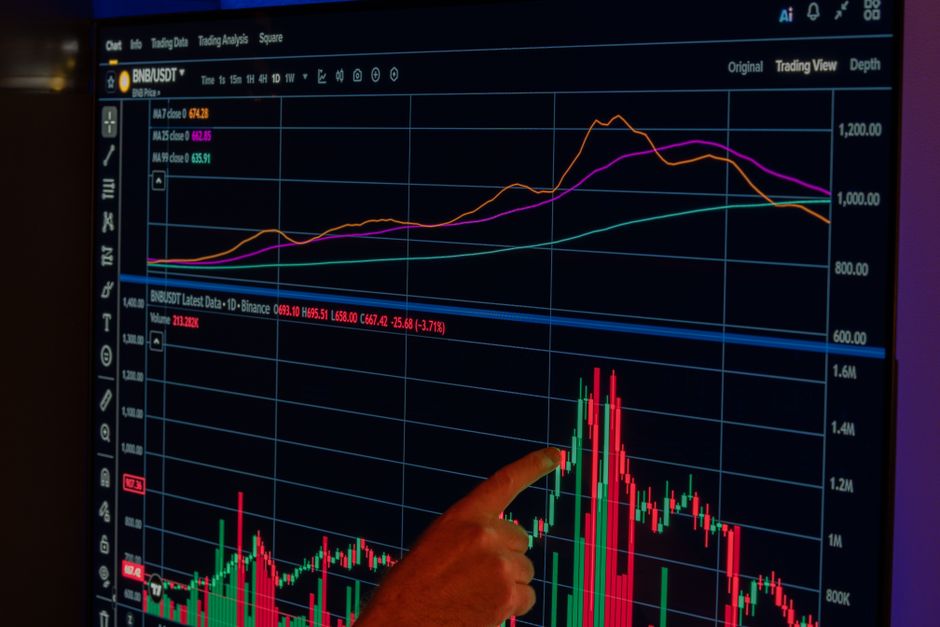
What a usable alert looks like
This is an illustrative format built on the current BTC price, not a recommendation:
| Field | Example | Check |
|---|---|---|
| Pair | BTC/USDT spot | Same pair and venue you trade |
| Direction | Long | Matches the trend on your timeframe? |
| Entry | 64,534 | Is price still near this level? |
| Stop-loss | 63,243 (2% below) | Outside normal noise? |
| Take-profit | 67,115 (4% above) | 2:1 reward-to-risk |
| Timestamp | 2026-11-15, UTC | Is the alert still fresh? |
Seven steps
- Check the timestamp. Convert it from UTC to your timezone. A signal 30 minutes old may already be invalid.
- Compare the entry to live price. If price has moved more than a fraction of the stop distance, skip it. Chasing wrecks the reward-to-risk ratio.
- Confirm a stop exists. If it does not, define your own at a level that invalidates the idea.
- Check the higher timeframe. Open the 4-hour and daily charts. Trading against the larger trend lowers your odds.
- Size the position from the stop, not from conviction (see the next section).
- Place a limit order and a stop order on your exchange at the same time. Stops in your head do not execute.
- Log the trade: source, time, entry, stop, target, result. After 30 or more trades you have your own accuracy record.
Risk management numbers
These are widely used rules of thumb, not guarantees. Adjust them to your own tolerance.
- Risk per trade: about 1% of account equity.
- Daily loss limit: stop trading after losing about 3% in a day.
- Concurrent signals: no more than 2 to 3 open at once, since BTC-based trades are highly correlated.
- Borrowed funds: avoid margin and futures until you have a logged record of results on spot.
Worked position-size example (hypothetical account)
| Input | Value |
|---|---|
| Account equity | $1,000 |
| Risk per trade (1%) | $10 |
| Entry | $64,534 |
| Stop distance | 2% (stop at $63,243) |
| Position size | $10 / 0.02 = $500, about 0.00775 BTC |
| Gross gain at 4% target | $20 |
| Round-trip fees at 0.10% per side | about $1 |
| Net outcome | about +$19 if the target hits, about -$11 if the stop hits |
With fees, breakeven win rate rises from 33.3% to about 36.7% (11 / 30). If a signal's stop is only 1% away, the same $10 risk implies a $1,000 position, your entire account. That is a sign the stop is too tight for this market, not that you should buy more.
How to verify a provider
- Demand a time-stamped history. Every call, wins and losses, with entry and exit. Posted before the move, not after.
- Re-create the results. Paper trade the signals for at least 30 calls before using real money.
- Backtest the stated method. If the provider names an indicator setup, code it in TradingView's Strategy Tester and compare.
- Calculate expectancy, not win rate: (win rate x average win) minus (loss rate x average loss), after fees.
- Check identity. Anonymous admins with no history and recently created channels are higher risk.
- Test the upsell. If the free tier exists only to funnel you to paid, treat the free calls as advertising.
If you want signals you can inspect, build them. Our explainer on RSI and MACD indicators for crypto signals covers the standard building blocks.
Practical notes on setting this up
On TradingView, open the BTCUSDT chart, add an indicator such as RSI (14), click the Alert button, choose the condition (for example, RSI crossing below 30), set the expiry and pick the notification channel. Free plans limit the number of active alerts, so check your plan before building many. Common errors: alerts set on a different exchange's BTCUSDT feed than the one you trade, alerts triggering on an unclosed candle ("once per bar close" avoids false triggers), and forgetting that alerts expire. Entering from your phone during a spike usually means slippage on market orders, so use limit orders. Keep exchange API keys trade-only with withdrawals disabled and IP restrictions on if the exchange offers them.
Related reading
- Complete fintech guide
- Crypto risk management guide
- How to backtest a trading strategy
- RSI and MACD indicators explained
- How to spot crypto scams
- Bitcoin price analysis
- More trading articles
What Real Users Say About Btc Usdt Trading Signals Free
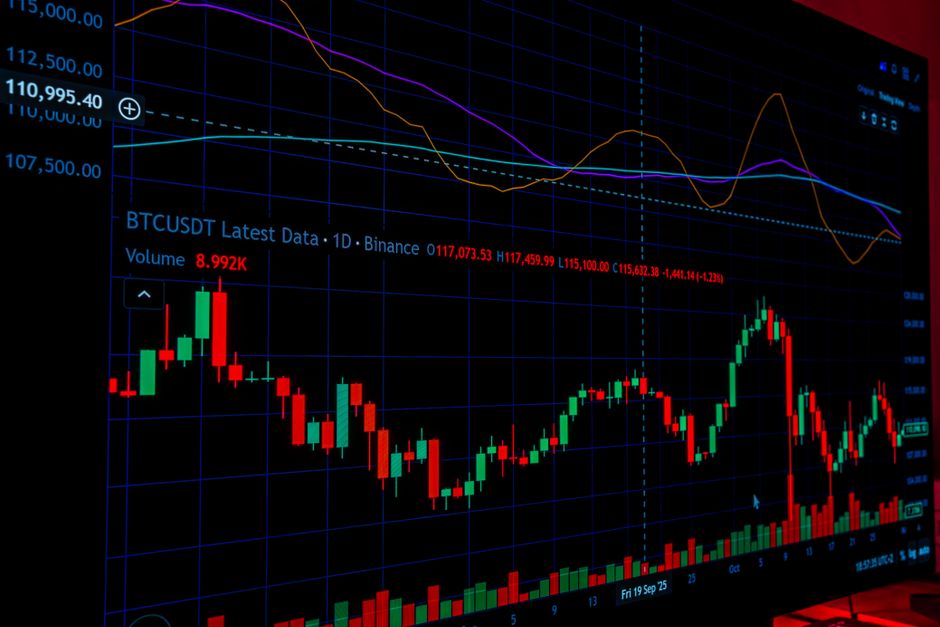
We collected 24 public user discussions about btc usdt trading signals free from Reddit, Trustpilot, Quora, BitcoinTalk (searched November 2026). 8 expressed a clear opinion: 3 positive, 5 negative, 0 mixed.
| What users like | What users complain about |
|---|---|
| completely free (1×) | poor risk management (2×) |
| fully open and free (1×) | pushes paid upgrade (2×) |
| reliable source (1×) | not legit (1×) |
| stable performance (1×) | full of bots and scammers (1×) |
| accurate entries (1×) | significant losses (1×) |
| accurate calls (1×) | unreliable (1×) |
“There are free signal groups, just make sure to always ignore any dms” — Reddit
“So far more than 2 years very stable and only 2 loosing signals” — Reddit
“Nothing free is legit. They are full of bots and scammers” — Reddit
“Most free signal groups are pretty unreliable and even misleading” — Reddit
All 24 sources
- Looking for Reliable Crypto Signal Groups — Reddit · neutral
- Best Trading Signals for Crypto & Forex? Any ... — Reddit · neutral
- What's the best crypto signals group? Any ... — Reddit · neutral
- I joined a crypto signal group so you don't have to — Reddit · neutral
- Platform that tracks and verifies traders crypto signals — Reddit · neutral
- Are free signal groups legit? : r/Trading — Reddit · against
- Does anyone know of a crypto signal group that's not a ... — Reddit · neutral
- “Signals” Groups On Telegram : r/CryptoCurrency — Reddit · for
- Looking for Crypto Trading Signals? Alex Friedman Channel ... — Reddit · neutral
- r/BitcoinMarkets — Reddit · neutral
- TRADING SIGNALS GROUP CHAT - They work or it's a ... — Reddit · against
- Are there any legit FREE trading signals or copy trading from real pros? — Reddit · against
- Search for BTC daily trading signals is coming to an end. Keep going or stop? — Reddit · neutral
- Paid crypto indicators, signals, and influencers-Is it all a scam? — Reddit · against
- If free trading signals are provided, would you be willing to execute them? — Reddit · neutral
- trading signals : r/Trading — Reddit · for
- Read Customer Service Reviews of voxsignals.com — Trustpilot · neutral
- Live Crypto Signals Reviews — Trustpilot · neutral
- Universalcryptosignals Reviews — Trustpilot · against
- AltSignals Trading Group Reviews — Trustpilot · neutral
- The Trading Operating System for Active Crypto Traders — Trustpilot · neutral
- What are the best crypto trading signal providers? — Quora · neutral
- Thread For Btc Daily Traders, get 70/80% accurate calls. Edit — BitcoinTalk · for
- Bitcoin Forum - Index — BitcoinTalk · neutral
Method: public posts found via Google search, limited to user communities. Each positive/negative label is backed by a quote copied from that post; posts without a verifiable quote are not counted. These are anecdotal, unverified user reports, not financial advice.
FAQ
What is a free BTC USDT trading signal?
It is a no-cost trade suggestion for the Bitcoin versus Tether pair, with an entry, stop-loss and take-profit. It may come from an indicator alert, an analyst's chart idea or a Telegram or Discord channel.
How to use BTC USDT trading signals free without losing money?
Check the timestamp, compare entry to live price, confirm a stop-loss, size the trade so a stop costs about 1% of equity, and log every result. Paper trade at least 30 signals before using real funds.
Is it safe to follow free crypto signals?
Not by default. The SEC has warned about crypto fraud promoted over social media and messaging apps, and users in our sample complained about unreliable calls and paid upsells. Never send deposits to a signal provider or share withdrawal-enabled API keys.
Why do free signal channels push paid upgrades?
The free tier is usually marketing. In our discussion sample, pushing a paid upgrade was one of the two most common complaints, with 2 mentions.
Disclaimer: This article is educational and not financial advice. Crypto trading carries a high risk of loss, including loss of your entire capital. Past results, including any shown by signal providers, do not predict future performance. Only trade with money you can afford to lose.
Disclosure: XPERTRAX (xpertrax.com) is an affiliated platform. Links and pop-ups pointing to xpertrax.com promote it. This article is for information only and is not financial advice.