
How a Telegram Crypto Signal Copier Works (and Its Risks)
A channel posts "BTC long, entry 64,592, stop 63,000" and, moments later, the price has already moved. Your phone buzzes after the entry is gone. A signal copier exists to close that gap, and it can also open a new one: the bot can fire a bad call faster than you could ever read it. This guide covers the mechanics, the five main ways to set one up, the risk math, and the failure points that cost traders money.
How a Telegram signal copier works

Every copier runs the same four-step pipeline, whether it is a hosted service or a script you wrote.
- Listen. The tool receives new messages from a channel or group. A bot account can only see chats it has been added to (in channels, as an administrator). A user-account client reads channels you already follow.
- Parse. Text such as "Entry 64,592 / TP1 65,500 / SL 63,000" is converted into structured fields: pair, direction, entry, take-profit levels and stop-loss.
- Size. The tool decides the order quantity from your settings, such as a fixed amount, a percentage of balance, or risk per trade measured against the stop distance.
- Execute. It sends orders to the exchange through API keys, then manages exits: take-profit orders, stop-loss orders, and sometimes trailing stops.
Parsing is where most hobby setups break. Channels rarely keep one format. One admin writes "SL", another writes "Stop", a third posts an image. A copier that skips a message silently is safer than one that guesses a stop-loss wrong.
What the documentation and regulators say
A bot only receives messages from chats where it is a member, and it must be an administrator to read posts in a channel. That is why many hosted copiers ask you to forward signals or add their bot to a channel you control. It also means a copier cannot "see" a private channel you merely follow unless it uses your own user account.
On the risk side, a pump-and-dump scheme inflates an asset's price through hype and then sells into the buying that hype creates. Telegram groups are a common venue for this pattern. A copier that auto-buys every "next big coin" call in such a group can end up as the exit liquidity.
5 ways to run a Telegram crypto signal copier
These are the five practical routes, ordered by how much technical work they require. Named products are examples of an established category, not recommendations, and I list no prices because plans change.
-
Hosted signal-trading platform
Hosted services let you connect an exchange via API and point the platform at Telegram signal sources. The platform handles parsing, order placement and exit management. Trade-off: you depend on its parser and uptime, and you must trust it with trade-enabled keys. Check each provider's current exchange support and plan limits on its official site.
-
Self-hosted script (Telegram client library plus exchange library)
Developers often combine a Telegram client library with an open-source exchange library. You control the parsing rules and keys never leave your server. Trade-off: you own every bug, including reconnects, duplicate messages and exchange API changes.
-
Webhook bridge
Some setups convert a signal into a structured alert and send it to an exchange or bot via webhook. This suits traders who already use charting alerts. Trade-off: one extra hop means one extra failure point, and you must format the payload exactly as the receiver expects.
-
Exchange-native copy trading
This is not a Telegram copier at all. Several major exchanges offer copy-trading features that mirror a lead trader's positions directly. It avoids message parsing, but you follow the exchange's listed traders, not your Telegram channel. Check each exchange's current terms.
-
Semi-automated: alerts with manual confirmation
A bot forwards the parsed signal to you with a pre-filled order size, and you press confirm. You lose some speed but keep a human check on stop placement and obviously broken calls. For unproven channels this is the most sensible starting point.
| Setup | Technical effort | Control over parsing | Key custody | Main risk |
|---|---|---|---|---|
| Hosted platform | Low | Limited | Third party holds API keys | Parser errors, platform outage |
| Self-hosted script | High | Full | You | Bugs, downtime, duplicate orders |
| Webhook bridge | Medium | Medium | Varies | Payload format mismatch |
| Exchange copy trading | Low | Not applicable | Exchange | Lead trader performance |
| Semi-automated | Medium | Medium to full | Varies | Slower fills |
Risk math with a worked example
Prices below come from real-time market data as of November 17, 2026: BTC at $64,592, ETH at $1,814, SOL at $71.46. The account size and signal are hypothetical, used only to show the arithmetic. You can cross-check live prices on any major market data site.
Assume a $10,000 account, 1% risk per trade ($100), and a signal: BTC long, entry $64,592, stop $63,000.
| Step | Calculation | Result |
|---|---|---|
| Risk amount | $10,000 x 1% | $100 |
| Stop distance | $64,592 - $63,000 | $1,592 |
| Position size (BTC) | $100 / $1,592 | about 0.0628 BTC |
| Position value | 0.0628 x $64,592 | about $4,057 |
| Slippage example | Fill at $64,650 instead of $64,592 | $58 worse, about 0.09% |
The point of sizing from the stop is that a wide stop automatically produces a smaller position. A copier set to "fixed $4,000 per signal" ignores this. A signal with a stop 10% away would then risk $400, four times your intended loss. Look for a "risk per trade" or "stop-based sizing" setting, and use it.
For deeper position math, see this crypto position sizing calculator guide and this crypto stop-loss strategy breakdown.
API key safety rules
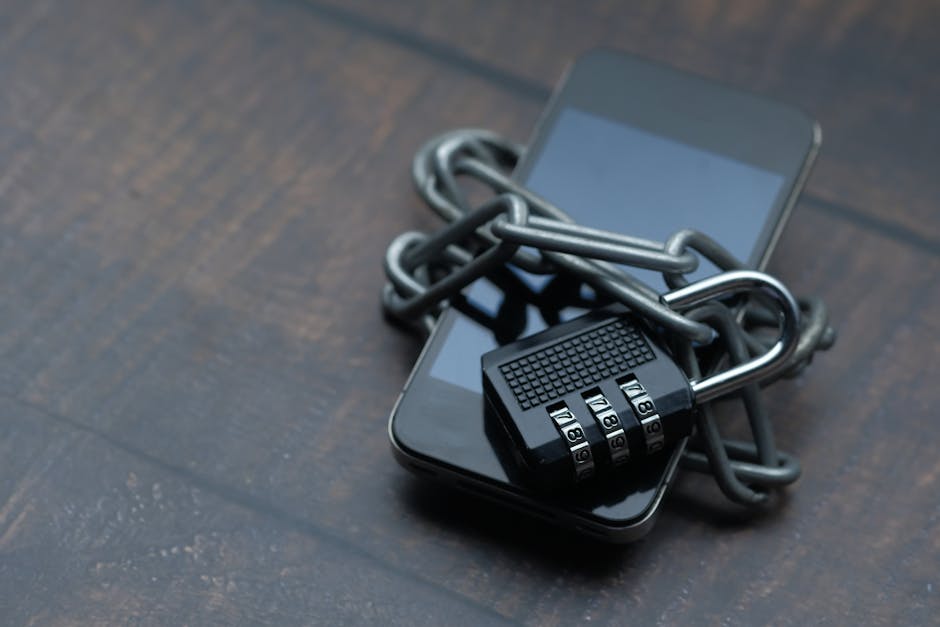
Your exchange API key is the real attack surface. These controls are standard on major exchanges, though menu names differ.
- Enable spot or futures trading only. Never enable withdrawals on a key a third-party tool uses.
- Whitelist IP addresses where the exchange supports it. Hosted platforms usually publish the IPs to whitelist.
- Use a dedicated sub-account funded with only the amount you are willing to lose to a bad signal.
- Create one key per tool so you can revoke one without breaking the rest.
- Never paste keys into a Telegram chat or share them with a channel admin. Anyone offering to "set up the copier for you" and asking for your secret key is a red flag.
- Keep 2FA on for both the exchange and your Telegram account.
More on this in the exchange API key security guide.
Common errors and fixes
| Problem | Typical cause | Fix |
|---|---|---|
| Binance error -2015 (invalid API key, IP, or permissions) | Trading permission off, or the tool's IP is not whitelisted | Enable the correct permission and add the IP to the whitelist |
| Binance error -1013 (filter failure, notional) | Order value below the pair's minimum | Raise the per-trade amount or skip small-balance pairs |
| Binance error -1021 (timestamp outside window) | Server clock drift on a self-hosted machine | Sync the system clock with NTP |
| Signal skipped | Message format not recognized by the parser | Adjust the template or move to semi-automated confirmation |
| Duplicate orders | Channel edits a message and the tool treats it as new | Enable edit-handling or de-duplication by message ID |
| Stop-loss missing after entry | Entry filled, but the exit order failed or was rejected | Use exchanges and settings that attach stop orders at entry; review logs after each trade |
| Fill far from signal price | Market order on a fast move or thin pair | Use limit orders with a maximum slippage tolerance |
How to evaluate a signal channel before connecting a copier
Do this before any money is attached. Telegram view counts and screenshots of winning trades are easy to fake or cherry-pick.
- Demand a full trade log, not a highlight reel. Losses should be visible, with timestamps.
- Check that signals are posted before the move. Compare the message time with exchange candle data for the same pair.
- Reject guaranteed returns. Any promise of fixed daily or weekly profit is a warning sign.
- Paper trade first. Log the signals in a spreadsheet for several weeks, including realistic fills, fees and slippage.
- Watch the business model. Channels paid only when you register on a specific exchange have an incentive to push volume, not to protect your capital.
- Look at the pairs. Repeated calls on illiquid small caps are the classic setup for the pump-and-dump pattern described above.
For wider automation context, read the crypto trading bot guide. If you prefer the exchange-side approach, the DeFi hub and algorithmic trading basics cover related automation ideas outside Telegram.
Editor's notes on real-world use
Traders start with full automation on a channel they have not tracked, then discover their balance is too small for the exchange's minimum order size on half the pairs. Others enable withdrawal permission "just to be safe" and leave it on. A cleaner process: create a sub-account, issue a trade-only key, whitelist the IP, set risk-per-trade sizing at a low percentage, and run semi-automated mode until the logs show the parser handled every message type correctly. Futures signals add another layer, because the leverage setting in the channel's message may differ from the setting on your account, and a mismatch changes your liquidation price. Set margin mode and the multiplier on the exchange yourself instead of letting a bot infer them. Finally, remember that fees are charged on every automated trade, and funding rates apply to perpetual futures positions, so a high-frequency channel can lose money even when its calls are roughly break-even.
This article is educational and is not financial advice. Crypto trading, especially with automation and borrowed position size, can lose your entire deposit.
Related reading

FAQ
What is a Telegram crypto signal copier?
It is software that reads trade calls from Telegram channels, extracts entry, take-profit and stop-loss levels, and places matching orders on your exchange account through API keys.
How to set up a Telegram crypto signal copier safely?
Create a dedicated exchange sub-account, issue an API key with trading permission only, whitelist the tool's IP, use stop-based position sizing, and run in semi-automated mode until the logs prove the parser works on that channel's message formats.
Is it safe to use a Telegram crypto signal copier?
It can be used with controlled risk, but it is not safe by default. The main dangers are leaked or over-permissioned API keys, parsing mistakes, and following channels that profit from your trades. Never enable withdrawals on the key and never share your secret key.
Why do copied trades fill at different prices than the signal?
Crypto prices move between the moment a channel posts and the moment your order reaches the exchange. Market orders, thin order books and fast moves all widen the gap. Limit orders with a slippage cap reduce the problem but can miss the trade entirely.
Do I need to know how to code?
No. Hosted platforms handle the technical work. Coding is only needed for self-hosted scripts, where you also take on maintenance and error handling.
Disclosure: XPERTRAX (xpertrax.com) is an affiliated platform. Links and pop-ups pointing to xpertrax.com promote it. This article is for information only and is not financial advice.