
Who Is the Best Crypto Analysis? What the Evidence Shows
Table of Contents
Bitcoin sits at $59,551 and Ethereum at $1,670, both down in the last 24 hours, according to real-time market data as of November 25, 2026. Every drawdown produces a fresh crop of confident voices who "called it." Many of them never showed you the call before it happened. This article shows how to separate analysts who can be checked from those who can only be believed.
Why No Audited Ranking Exists
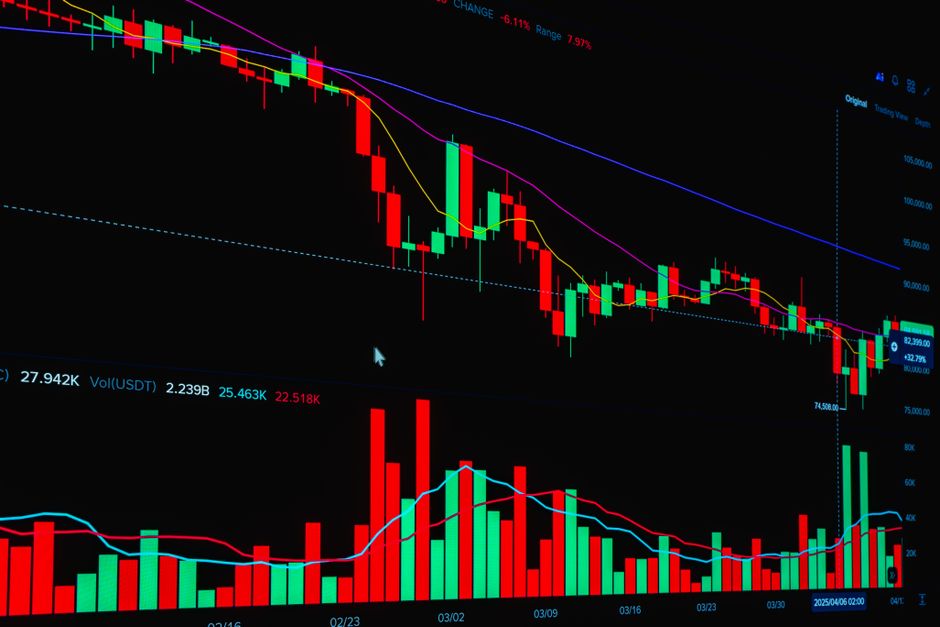
Three structural problems explain why a trustworthy leaderboard is rare:
- Calls are not logged. Posts get edited or deleted, and vague language ("looks bullish") cannot be scored.
- Survivorship bias. Accounts that were wrong lose followers and go quiet, so the visible pool skews toward lucky streaks.
- Conflicts of interest. Analysts may hold the assets they discuss, receive project sponsorships or sell paid groups. Their income depends on attention, not accuracy.
Market conditions make this worse. Today's snapshot shows all 13 major assets in our price feed down between 1.01% and 3.95% in 24 hours. In a market that moves together, a "correct" call on one coin often reflects the market, not skill. Judge calls against a benchmark such as simply holding BTC.
Crypto Analyst Reliability Score Framework
This is a scoring rubric, not measured data. Score any analyst or newsletter 0 (absent), 1 (partial) or 2 (clear) on each criterion. A total of 10 or more out of 12 is a reasonable bar for paying attention. Below 6, treat the source as entertainment.
| Criterion | What to check | Red flag |
|---|---|---|
| Time-stamped calls | Entry, target, stop and timeframe posted before the move | Edited or deleted posts; "I said this earlier" |
| Full record | Losses shown alongside wins | Only winning screenshots |
| Methodology | Named inputs: on-chain metrics, chart levels, funding, flows | "Trust my gut" or secret indicators |
| Conflict disclosure | States holdings, sponsorships, affiliate links | Promotes tokens with no stated position |
| Risk framing | Invalidation level, position-size guidance | Guaranteed returns, "can't lose" language |
| Identity and credentials | Verifiable name, employer or regulated status you can look up | Anonymous account selling paid access |
Verify credentials at the source. A claimed background in banking or research means little until you can confirm it independently.
7 Best Crypto Analysis Sources by Use Case
These are not ranked by performance. No verified performance data exists for them as analysts. They are matched to the job each does well, based on what each platform publicly offers.
- CoinGecko for price and market data. A free aggregator covering prices, market caps and exchange data, with a developer API. Start here to confirm any price claim.
- TradingView for technical analysis. Charting platform with indicators and drawing tools. Useful for checking whether an analyst's levels were drawn on real structure.
- Glassnode for on-chain metrics. Specializes in blockchain-derived indicators such as supply behavior and holder activity.
- Nansen for wallet tracking. Labels wallets and tracks on-chain flows, which helps you see what large addresses are doing.
- Messari for research and fundamentals. Combines asset data with published research. Review the plan options on the official site, since access levels change.
- DefiLlama and Dune for DeFi and custom queries. DefiLlama tracks DeFi protocol metrics such as total value locked. Dune lets users query blockchain data with SQL and share dashboards.
- CoinDesk for news and context. A long-running crypto news outlet. Use it for event context, not trade signals.
Side-by-side comparison by use case
| Platform | Best for | Analysis type | Free access | Skill level |
|---|---|---|---|---|
| CoinGecko | Price and market verification | Market data | Yes | Beginner |
| TradingView | Chart work and level checking | Technical | — | Beginner to advanced |
| Glassnode | Holder behavior, cycle metrics | On-chain | Limited | Intermediate to advanced |
| Nansen | Wallet and flow tracking | On-chain | Mostly paid | Intermediate to advanced |
| Messari | Research and fundamentals | Fundamental | Limited | Intermediate |
| DefiLlama | DeFi protocol metrics | On-chain, DeFi | Yes | Beginner to intermediate |
| Dune | Custom blockchain queries | On-chain | — | Advanced (SQL) |
| CoinDesk | News and event context | News | Yes | Beginner |
Pricing and trial terms change often, and the free-access column is qualitative. Check each provider's pricing page before paying, and avoid annual plans until you have used the monthly tier for a full market cycle phase.
Free vs Paid Analysis
Free tools cover price verification, basic charting and DeFi metrics. Paid tiers mostly add data depth: finer time resolution, more metrics, wallet labels and export or API access. They do not add predictive accuracy. A paid subscription to a data platform is a cost for information. A paid subscription to a signal group is a bet on one person's judgment, and the second deserves much more scrutiny.
| Spend type | What you buy | Main risk |
|---|---|---|
| Data platform | Metrics, history, exports | Paying for data you will not use |
| Research subscription | Written analysis, reports | Author bias, delayed publication |
| Signal or "VIP" group | Trade calls | Unverifiable record, conflicts of interest, front-running by the seller |
Beginner vs Advanced Setup

| Profile | Core stack | Focus |
|---|---|---|
| Beginner | CoinGecko, CoinDesk, free TradingView | Verify prices, learn chart structure, read news with skepticism |
| Intermediate | Add DefiLlama and Messari research | Compare fundamentals and protocol activity across assets |
| Advanced | Add Glassnode, Nansen or Dune | Test on-chain hypotheses against price and flows |
For a structured evaluation checklist covering fundamentals, usage and risks, according to Investopedia, a good starting point is its guide on how to evaluate and analyze cryptocurrency.
AI-Powered Analysis
AI tools are useful for summarizing reports, extracting metrics from long documents and generating hypotheses to test. They are weak as standalone forecasters. A language model can state a price view fluently without any verified basis, and it may cite data that does not exist. The same scorecard applies: demand a stated timeframe, a level that proves the view wrong, and a source you can open yourself. Check every figure against a primary data platform before acting on it.
Build Your Own Accuracy Scorecard
Since no trusted public leaderboard exists, track the analysts you follow. Log each call when it is made, not afterward. Here is a template with an illustrative price anchor from today's real-time market data as of November 25, 2026.
| Field | Example entry |
|---|---|
| Date and source | 2026-11-25, analyst name, link to post |
| Asset and reference price | BTC at $59,551 |
| Direction and timeframe | Long, 30 days |
| Target and invalidation | Analyst's stated levels, copied exactly |
| Benchmark | BTC buy-and-hold over the same period |
| Outcome | Hit target, hit invalidation, or expired |
After 20 or more logged calls, compare outcomes against the benchmark. Calls without a level or timeframe get logged as "unscoreable," and a high share of unscoreable calls is itself a finding.
For context on how far an altcoin call must travel to matter, here are today's reference prices from the same real-time market data.
| Asset | Price | 24h change |
|---|---|---|
| Bitcoin (BTC) | $59,551 | -2.76% |
| Ethereum (ETH) | $1,670 | -2.25% |
| Solana (SOL) | $69.56 | -3.53% |
| XRP | $0.9211 | -2.23% |
| Chainlink (LINK) | $8.79 | -2.69% |
| Avalanche (AVAX) | $6.54 | -3.80% |
Expert Notes: Common Errors and Fixes
The most common error is judging an analyst by a single dramatic hit. A trader who calls a reversal on a coin trading at $0.1437, like Cardano, can look brilliant after one 30% bounce while losing on ten other calls. Fix: score the full set of calls, not the memorable one.
Second, price sources disagree. Exchange-specific charts and aggregated prices can differ, especially on low-liquidity coins. If an analyst's entry "was hit" on one exchange but not on an aggregator, the call is ambiguous. Pick the reference source before the trade, not after.
Third, on-chain metrics get over-read. A single indicator rarely times a move, and most are descriptive rather than predictive. Treat them as context that supports or contradicts a chart-based thesis. Trade-off to accept: more data sources mean more conflicting signals, so cap yourself at three inputs you understand rather than ten you skim.
Fourth, paid groups often show results as a percentage of a single position, ignoring position sizing and fees. Ask what happens to a portfolio if every call is taken at equal size. If the analyst cannot answer, the record is marketing.
FAQ
What is crypto analysis?
Crypto analysis is the study of digital asset markets using fundamentals (project, team, token economics), on-chain data (wallet and network activity) and technical charts (price and volume). Each method answers different questions, and none predicts prices reliably on its own.
How do I find the best crypto analyst to follow?
Score candidates with the reliability framework above. Look for time-stamped calls with levels and timeframes, a visible record of losses, disclosed holdings and a verifiable identity. Track their calls yourself for at least 20 entries before relying on them.
Is it safe to pay for crypto signals?
It carries high risk. Signal groups rarely provide audited records, and sellers may profit from the attention they generate rather than the trades. Start with free data tools, and never trade size you cannot afford to lose on a single source's call.
Why do crypto analysts so often get predictions wrong?
Crypto prices respond to leverage, liquidity, regulation and news that no model captures fully. Assets also move together, so a correct direction can reflect market beta rather than skill. Short-term price targets are the hardest to forecast.
Related Reading
- Pillar: complete crypto research and trading guide
- Sibling: on-chain analysis guide for traders
- Sibling: crypto technical analysis basics
- Sibling: AI crypto trading tools compared
- Adjacent: crypto risk management for active traders
- Adjacent: DeFi analytics dashboards explained
- Hub: More analysis articles
Disclaimer: This article is educational and not financial advice. Crypto assets are volatile and you can lose your entire investment.
Disclosure: XPERTRAX (xpertrax.com) is an affiliated platform. Links and pop-ups pointing to xpertrax.com promote it. This article is for information only and is not financial advice.