
Paper Trading Crypto Practice: 90-Day Plan for Beginners
Bitcoin dropped 3.79% in 24 hours to $71,544, according to real-time market data as of November 12, 2026. Ethereum fell 3.29% to $2,012 and Solana fell 3.89% to $81.53. On a red day like this, a new trader with real money will often panic-sell a good setup or average down on a bad one. A practice account lets you make those mistakes for free. This guide shows how to set one up, what to practice, and the rules for switching to real capital.
What paper trading crypto practice is

Paper trading is simulated trading that lets you buy and sell without risking real money. In crypto, a simulator connects to a live price feed and fills your virtual orders against it. Your balance is fictional. The market data is real.
There are two common formats:
- Chart-based simulators run inside a charting platform. They suit strategy testing and are exchange-agnostic.
- Exchange demo or testnet accounts replicate a specific exchange's interface, order types and contract specs. They suit learning where the buttons are before real funds are involved.
Crypto is a good fit for simulation because it trades 24 hours a day, every day. You can practice at any hour, though that also makes it easy to overtrade.
What a simulator does well
- Teaches order types: market, limit, stop-market, stop-limit, take-profit.
- Lets you test a rule set across many trades quickly.
- Builds the habit of writing down entries, exits and reasons.
What it cannot do
- It cannot reproduce the stress of watching real money fall.
- Fills are often idealized. Slippage and thin order books may be underrepresented, especially on altcoins.
- Funding rates, fees and liquidation mechanics may be simplified or differ from the live exchange.
7 places to practice paper trading crypto
This is an unranked list of well-established options. Features change often, so confirm current availability and limits on each official site before you commit time.
- TradingView Paper Trading. A built-in simulator on a widely used charting platform. Strong for chart analysis and testing setups across crypto pairs.
Platform feature matrix
The table uses qualitative descriptions only. Check each platform's help center for current balances, limits and supported pairs.
| Platform | Format | Best for | Chart tools | Account needed |
|---|---|---|---|---|
| TradingView Paper Trading | Chart-based simulator | Strategy testing, chart practice | Extensive | — |
| Binance demo / testnet | Exchange demo | Learning Binance spot and futures UI | Standard exchange charts | — |
| Bybit demo | Exchange demo | Derivatives interface practice | Standard exchange charts | Registered account |
| OKX demo | Exchange demo | Multi-product practice | Standard exchange charts | Registered account |
| Kraken Futures demo | Sandbox | Futures order flow | — | — |
| BitMEX testnet | Testnet | Perpetual contracts, margin mechanics | Standard | — |
| Deribit test | Testnet | Options and futures | Standard | — |
How to choose: Use a chart-based simulator for strategy development in the first 30 days. Add the demo account of the exchange you intend to trade on in the second month, so the real interface is familiar by the time you fund it.
Step-by-step setup walkthrough
Menus move around, so this walkthrough describes the logic rather than exact button positions. Follow the same sequence on any platform.
Part A: Chart-based simulator (TradingView example)
- Open a chart for a liquid pair such as BTC/USDT or ETH/USDT.
- Open the trading panel at the bottom of the chart.
- Select the Paper Trading option from the broker list and connect it.
- Check the starting virtual balance and set it to a realistic figure. Use an amount close to what you would actually fund, not a fantasy million.
- Place a limit order, then a stop-loss, then a take-profit. Confirm each shows on the chart.
- Open the order history and positions tabs so you know where fills and closed trades are recorded.
Part B: Exchange demo or testnet
- Find the demo or testnet entry point in the exchange's account menu or help center. Some exchanges use a toggle inside the main app. Others use a separate website with separate credentials.
- Confirm you are in demo mode before trading. The interface usually shows a banner or a different color scheme.
- Claim or reset virtual funds using the platform's own method.
- Place the same three orders: limit entry, stop-loss, take-profit.
- Read the contract specifications for any derivative you plan to trade: tick size, margin mode, funding interval and liquidation rules.
Common errors and fixes:
- Testnet login fails with your main credentials. Separate testnets typically need their own registration.
- Orders do not fill. The testnet order book may be thin. Use market orders, or place limits closer to the last price.
- Virtual balance runs out. That is a data point. Review your sizing rather than just resetting.
- Prices look different from the live exchange. Testnets can have their own order books. Chart-based simulators using live feeds are better for price-accuracy checks.
Practice exercise: position sizing on live prices
This is the single most useful drill. The numbers below are illustrative, using the BTC price from real-time market data as of November 12, 2026 (data from CoinGecko is a good place to cross-check live quotes).
| Input | Value |
|---|---|
| Virtual account size | $10,000 |
| Risk per trade (1%) | $100 |
| BTC entry | $71,544 |
| Stop-loss | $70,100 |
| Stop distance | $1,444 (about 2.0%) |
| Position size ($100 / $1,444) | About 0.069 BTC |
| Notional value | About $4,954 |
Run this calculation before every paper trade. If the stop moves further away, the position shrinks. If you cannot state your invalidation level before entering, skip the trade. Do the same on ETH ($2,012) and SOL ($81.53), where larger percentage swings mean smaller position sizes for the same dollar risk.
For deeper treatment, see this crypto risk management and position sizing guide.
30-60-90 day roadmap
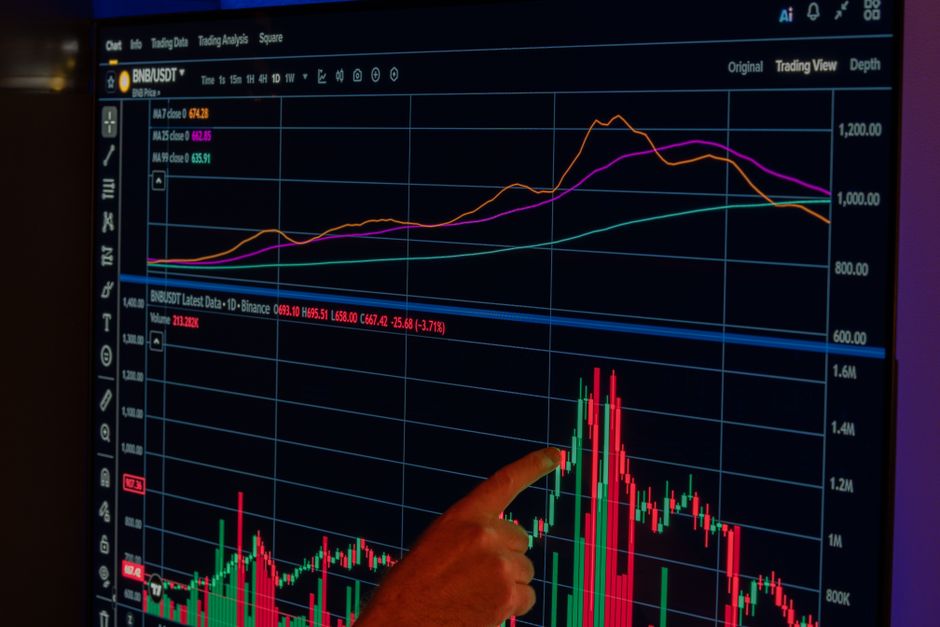
The time frames below are planning guidance, not a published benchmark. Some people need longer. What matters is that each phase has an exit test.
| Phase | Focus | Tasks | Exit test |
|---|---|---|---|
| Days 1-30 | Mechanics | Learn order types, fees, charts. Trade one or two pairs only. Start a journal. | You place every order type correctly without looking anything up. |
| Days 31-60 | One written strategy | Write entry, exit and sizing rules. Take only setups that match. Log screenshots and reasons. | At least 50 trades logged, with a rule-compliance rate you can calculate. |
| Days 61-90 | Stress and review | Practice through volatile sessions. Review the journal weekly. Add exchange demo of your chosen venue. | Results hold across both calm and volatile weeks, with losses inside your risk limit. |
A crypto trading journal template keeps the review step honest. Record the setup, planned risk, actual exit, and whether you followed your rules. Judge yourself on rule compliance first and profit second.
Common mistakes in paper trading
- Using an unrealistic balance. A $1,000,000 virtual account teaches habits that do not transfer to a $2,000 real account.
- Ignoring fees. Spot and derivatives fees compound. Include them in your tracking even if the simulator does not.
- Resetting after a loss. A blown account is useful feedback. Resetting hides it.
- Using extreme borrowed exposure because it is free. Behavior you would never risk with real money builds the wrong reflexes.
- Trading every hour. Crypto never closes, so overtrading is easy. Set session windows.
- Skipping the journal. Without records, 100 trades are just 100 forgettable clicks.
- Trusting idealized fills. Thin altcoin books will not fill at your price in real life. Practice on large pairs, and assume worse fills when judging results.
- Changing the strategy after every loss. You need a sample of trades under fixed rules before any conclusion.
Psychology: paper money versus real money
This is where most beginners get surprised. No public dataset I can verify measures how many paper traders go on to profit with real funds, so any success-rate figure you see quoted for that transition should be treated with suspicion.
| Behavior | On paper | With real money |
|---|---|---|
| Holding a loser | Easy to follow the stop | Strong urge to move or remove the stop |
| Position size | Often oversized | Fear can cause undersizing or early exits |
| Missed trades | Little regret | Fear of missing out drives chasing |
| Drawdowns | Shrugged off | Can trigger revenge trading |
| Review discipline | Optional | Essential to stay objective |
You cannot remove this gap, but you can shrink it:
- Set a paper account size equal to the real amount you plan to fund.
- Write a daily loss limit and stop trading when it is hit, even in simulation.
- Pre-commit to the exact conditions for going live, in writing, before you see any results.
- Start live trading at a size small enough that a full loss would not change your week.
Experience notes from the order ticket
Most practice failures come from a few predictable places. First, stop-orders: a stop-market fills at the next available price, which in a fast move can be well beyond your trigger, while a stop-limit may not fill at all. Learn both on the demo and note which behavior each platform shows. Second, margin modes: cross margin shares collateral across positions, while isolated margin caps loss to the allocated amount. Confirm the mode before every derivatives order. Third, fees and funding: perpetual contracts charge or pay funding at set intervals, so a position that looks flat can still bleed. Fourth, a clean workflow beats a clever strategy. Use one pair, one timeframe, one setup, one risk rule, and log everything. If you add an exchange demo later, check whether your chosen venue's crypto exchanges for beginners options match the product you intend to trade.
Transition checklist: when to go live
Move to real money only when every item below is true.
- You have a written strategy with defined entry, exit, stop and size rules.
- Your journal shows a meaningful sample of trades following those rules; as a rule of thumb, aim for at least several dozen.
- Your largest paper loss stayed within the per-trade limit you set.
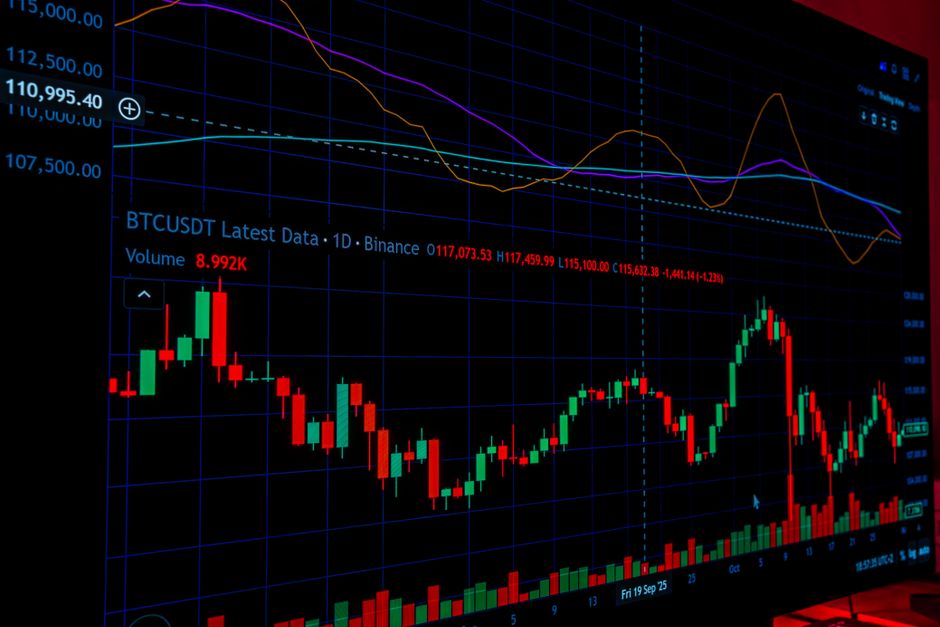
- You have traded through at least one sharp, high-volatility move, such as the 3% to 4% daily drops seen across the major coins today.
- You know the live exchange's fees, order types and withdrawal process.
- The amount you fund is capital you can afford to lose.
Go-live protocol:
- Fund a small amount, a fraction of your paper account size.
- Keep the same strategy and same position-sizing formula.
- Run the paper account in parallel for a few weeks and compare fills against the live account.
- Scale up only after you see that live behavior matches your rules.
If you also trade equities, the same process applies; see this paper trading stocks simulator guide. For wider context on tools and platforms, browse the complete fintech guide and more trading articles. Reading how to read crypto candlestick charts will help in the first 30 days.
FAQ
What is paper trading crypto practice?
It is simulated crypto trading with virtual funds at live or near-live prices. You place orders, manage risk and review results without risking real capital.
How to start paper trading crypto?
Open a chart-based simulator or an exchange demo account, set a realistic balance, trade one liquid pair, and log every trade in a journal. Follow the 30-60-90 day roadmap above.
Is paper trading crypto safe?
Yes. No real funds are at risk. The main danger is false confidence: simulated fills are usually cleaner than real ones, and the emotional pressure is missing.
Why do many people lose money after switching to real trading?
Real losses trigger fear and impulsive decisions that a simulator cannot reproduce. Fees, slippage and funding costs also reduce returns compared with idealized practice results. Start small and keep the same rules.
How long should I paper trade before using real money?
There is no official number. As a rule of thumb, aim for a couple of months of logged, rule-following trades, but the quality of the record matters more than the calendar.
Which platform is best for paper trading crypto?
It depends on your goal. Chart-based simulators suit strategy testing. Exchange demos or testnets suit learning a specific venue's interface and contract rules.
Disclosure: XPERTRAX (xpertrax.com) is an affiliated platform. Links and pop-ups pointing to xpertrax.com promote it. This article is for information only and is not financial advice.