
Can AI Give Crypto Signals? What Works and What Fails
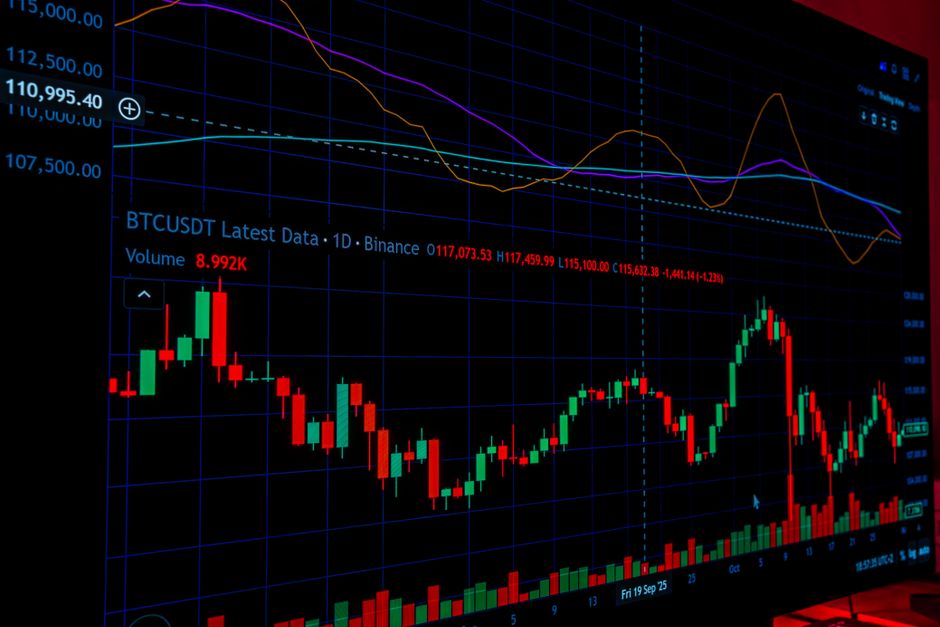
Yes, AI can give crypto signals, and plenty of services sell them. The harder question is whether those signals make money after fees, slippage and a market that rewrites its own rules every few months. Bitcoin sits at $74,019 and Uniswap fell 6.98% in a single day, according to real-time market data as of November 12, 2026. A signal that looks brilliant on a chart can be wiped out by one bad session. This guide separates what AI does well from what marketing pages claim.
What Regulators Say About AI Trading Claims
The takeaway is simple. A tool can legitimately use machine learning and still be unable to promise profit. Any service that guarantees returns should be treated as a red flag.
How AI Crypto Signals Work
An AI crypto signal is an alert, such as "long BTC above a level" or "momentum weakening on SOL". A model generates it from data inputs. The pipeline usually has four steps:
- Data intake. Candle data, volume, funding rates, open interest, on-chain flows, news and social text.
- Feature building. Raw data becomes indicators, ratios and sentiment scores.
- Model output. A classifier or regression model returns a probability or score, for example "62% chance of higher close in 24 hours".
- Rule layer. A threshold turns the score into a buy, sell or hold alert, often with a suggested stop.
The model sees only patterns in past data. It has no insight into a surprise exchange failure, a court ruling or a macro shock, and it often lags the moment those events hit the price.
6 Types of AI Crypto Signal Sources
- Technical-pattern machine learning. Trained on price and volume history to flag breakouts, trend shifts and mean-reversion setups. Common, easy to backtest and easy to overfit.
- Sentiment and language models. Read headlines, posts and announcements to score market mood. Fast, but easy to manipulate with coordinated posting.
- On-chain analytics models. Track wallet flows, exchange inflows and stablecoin movement. Useful context for larger coins, thin for small tokens.
- Derivatives and order-flow models. Use funding rates, open interest and liquidation data to spot crowded positioning. Strong for short-term risk, weak for long-term direction.
- General chatbots such as ChatGPT. Can summarize news, explain an indicator or draft a checklist. They have no built-in live market feed unless connected to one, and they are not trained to be trading models.
- Reinforcement-learning bots. Learn trading policies by simulation. Impressive in backtests, fragile when market conditions change.
| Signal source | Main input | Typical strength | Typical weakness |
|---|---|---|---|
| Technical-pattern ML | Price, volume | Systematic and testable | Overfitting to past regimes |
| Sentiment and NLP | News, social text | Fast reaction to headlines | Noise and manipulation |
| On-chain models | Wallet and exchange flows | Context for large assets | Weak on small tokens |
| Derivatives and order flow | Funding, open interest | Spots crowded trades | Short horizon only |
| General chatbots | Text prompts | Explanation and summaries | Not a trading model |
| Reinforcement learning | Simulated trading | Adaptive rules in theory | Breaks when conditions shift |
Why Volatility Limits Every Signal

Crypto moves fast enough that a small stop can be hit by ordinary noise. Real-time market data as of November 12, 2026, according to CoinGecko-style tracking, shows the spread of 24-hour moves:
| Asset | Price | 24h change |
|---|---|---|
| Bitcoin (BTC) | $74,019 | 0.76% |
| Ethereum (ETH) | $2,060 | 0.61% |
| Solana (SOL) | $83.52 | 0.55% |
| XRP | $1.0580 | 0.64% |
| Chainlink (LINK) | $10.20 | -1.18% |
| Avalanche (AVAX) | $8.56 | 1.75% |
| Uniswap (UNI) | $6.22 | -6.98% |
Most majors moved under 2% on this day, while UNI dropped nearly 7%. A model trained on calm periods can misjudge a day like that. Signals on smaller assets carry more risk of this kind than signals on Bitcoin or Ethereum.
Where AI Signals Fail
- Overfitting. The model memorizes history. Backtests look excellent, live results do not.
- Look-ahead bias. The test accidentally uses data that was not available at decision time, which inflates results.
- Regime change. A model built in a bull trend can fail in a range or a crash.
- Costs ignored. Exchange fees, spreads and slippage can turn a small edge into a loss, especially for high-frequency alerts.
- Delay. A signal sent to thousands of subscribers gets acted on at the same moment, so the price you receive differs from the price in the alert.
- Fake AI. Some channels use the label with no model behind it.
How to Vet an AI Signal Provider
| Check | Good sign | Red flag |
|---|---|---|
| Performance claims | Live, time-stamped record including losing trades | Only screenshots of winners |
| Methodology | Explains inputs, timeframe and risk rules | "Secret algorithm" with no detail |
| Return promises | States that losses are possible | Guaranteed or "risk-free" profit |
| Costs | Clear subscription price, no pressure to deposit | Pushes you to a specific exchange or private wallet |
| Custody | Never asks for withdrawal-enabled API keys or your funds | Asks you to send crypto to manage it |
| Backtest quality | Out-of-sample results with fees included | In-sample curve only |
For exchange API keys, enable trading permissions only and keep withdrawals disabled. That one setting limits damage if a third-party service is compromised.
Practical Workflow and Position Sizing

Treat the signal as a hypothesis, then test it the same way a systematic trader would. The sequence below reflects standard practice in quantitative trading.
- Write the rule down. Asset, timeframe, entry trigger, stop and exit. If the provider cannot state these, you cannot test them.
- Test out of sample. Split data into a training period and a later period the model never saw. Walk-forward testing repeats this across time windows.
- Include costs. Add exchange fees and an estimate for slippage from your own exchange's fee schedule.
- Paper trade first. Run it live with no money for several weeks across different market conditions.
- Size by risk, not conviction. A common rule of thumb is to risk a small fixed share of the account per trade, often around 1%.
Illustrative math, not a recommendation. Assume a hypothetical $10,000 account risking 1% ($100) on a BTC long at $74,019 with a stop 3% lower at $71,798.43. Position size is $100 divided by 3%, or about $3,333, which equals roughly 0.045 BTC. If the signal is wrong and the stop is hit, the loss is about $100 regardless of how confident the model sounded. Gaps and slippage can make the real loss larger.
Common errors and fixes: traders often widen the stop after entry (fix: set it before entering and do not move it away from price), chase an alert minutes after it fires (fix: skip it if price has moved past your planned entry), and stack several signals that all use the same indicator (fix: count them as one view). Honest trade-off: stricter filters mean fewer trades and less excitement, but they reduce the number of low-quality entries.
If a plan fails, the crypto risk management guide covers stops and sizing in more detail. Broader background sits in the complete fintech guide and the crypto market hub. Readers comparing asset classes can also see AI stock picking tools, and more trading articles are collected on the category page.
FAQ
What is an AI crypto signal?
It is an alert generated by a model from price, volume, derivatives, on-chain or sentiment data. It suggests a possible entry, exit or risk change. It is a probability-based suggestion, not a forecast of what will happen.
How to use AI crypto signals without overpaying for hype?
Write down the rule behind each signal, check for a live time-stamped record, test it on paper first and include fees in the results. Risk a small fixed share of your account per trade and set the stop before you enter.
Is it safe to follow AI crypto signals?
It can be safe only if you control your own funds and limit risk per trade. Never send crypto to a signal provider, never enable withdrawals on API keys and avoid anyone guaranteeing profit. Even honest models lose trades.
Why do AI crypto signals often fail in live trading?
The most common causes are overfitting to past data, look-ahead bias in backtests, market regime changes, ignored trading costs and delays between the alert and your order.
Can ChatGPT give crypto signals?
A general chatbot can summarize news and explain indicators, but it is not a trading model and has no guaranteed live market data. Use it for research support and verify prices on a data source such as CoinGecko or CoinDesk.
This article is educational and is not financial advice. Crypto trading carries a high risk of loss. Price figures are from real-time market data as of November 12, 2026.
Disclosure: XPERTRAX (xpertrax.com) is an affiliated platform. Links and pop-ups pointing to xpertrax.com promote it. This article is for information only and is not financial advice.