
How to Choose a Crypto Trading India Platform: Fees & Tax
A common mistake is to pick an exchange based on the sign-up bonus. That is the wrong filter. The costs that actually hurt are the 30% flat tax, the 1% TDS on every sale above the threshold, and the occasional exchange that freezes withdrawals after a breach. The platform you choose decides how much of this you can see coming.
This guide gives you a decision framework, a comparison of platforms Indian traders commonly evaluate, the tax mechanics with worked arithmetic, and a KYC and withdrawal checklist. Prices below come from real-time market data as of November 25, 2026: Bitcoin trades at $60,025 and Ethereum at $1,688.
Regulatory Status in India

Cryptocurrencies are classed as virtual digital assets (VDAs) and taxed under dedicated provisions. They are neither banned nor recognised as legal tender. In short, you can trade them, you must pay tax on them, and the state does not guarantee them.
| Item | Status |
|---|---|
| Legality of trading | Not prohibited. No dedicated crypto law has been enacted, as far as publicly reported. |
| Legal tender | No. Crypto is not currency in India. |
| Banking access | The Supreme Court set aside the RBI's 2018 banking restriction in March 2020. Individual banks still apply their own risk policies. |
| AML rules | VDA service providers are expected to follow India's anti-money-laundering rules and run KYC. |
| Tax | 30% on gains (Section 115BBH) and 1% TDS (Section 194S). |
Policy can shift. Before you deposit, check the latest position with the Income Tax Department and FIU-IND rather than relying on any article, including this one, as a legal opinion. For a deeper breakdown, see our crypto taxes India guide.
7 Platforms Indian Traders Commonly Evaluate
This is not a ranking. We cannot verify live fee schedules or app ratings, so we list well-known options with qualitative notes and tell you what to verify. For a trust-score view, data from CoinGecko's India exchange listing is a useful cross-check. For app-focused comparisons, read the overview according to CoinMarketCap Academy.
- CoinDCX. An Indian exchange offering spot trading in rupees.
- WazirX. A well-known Indian exchange with a security incident in its history. Check its current operating status and withdrawal terms.
- Mudrex. Known for automated, recurring-style investing and baskets. Useful if you want rule-based buying instead of manual timing. Review the fee schedule for automated plans.
- ZebPay. An older Indian exchange. A track record is not a guarantee, but longevity gives you more history to research.
- Giottus. An Indian exchange with a spot-focused rupee offering. Check its current coin list and INR deposit methods.
- Bitbns. An Indian exchange that offers spot trading and other products. Confirm which products are currently available to Indian residents.
| Platform | Best suited for | What to verify before depositing |
|---|---|---|
| CoinDCX | Active spot traders wanting depth | — |
| WazirX | Existing users and researchers | Current operating status, withdrawal terms |
| Mudrex | Automated recurring buying | Fees on automated plans |
| ZebPay | Users who value operating history | Current INR deposit and withdrawal methods |
| Giottus | Spot traders on a simple interface | Coin list, support responsiveness |
| Bitbns | Traders comparing product range | Which products are open to Indian residents |
Fee Structures: What to Compare
We do not quote exact percentages here because exchanges change schedules often and tier by volume. Compare these components on each platform's official fee page instead.
| Fee component | How it is charged | What to check |
|---|---|---|
| Trading fee | Percentage of each order, often maker/taker split | Is the number on the fee page the same as what the order screen shows? |
| Spread (simple buy/sell apps) | Built into the quoted price | Compare quote against the exchange order book |
| GST | — | Whether fees are shown with or without GST |
| TDS | 1% on sale value above thresholds | Whether TDS is deducted at sale and reported in your statements |
| INR deposit | Often free for UPI/IMPS/NEFT, varies | Per-transaction limits |
| INR withdrawal | Flat or percentage fee, varies | Minimum amount, processing window |
| Crypto withdrawal | Network fee passed through, sometimes plus a margin | Compare against the actual on-chain cost |
Tax Implications With Worked Examples
Gain example. You buy crypto for ₹1,00,000 and sell it for ₹1,20,000. The gain is ₹20,000. Tax at 30% is ₹6,000, plus 4% health and education cess, so ₹6,240. Surcharge may apply at higher incomes.
Loss example. You buy for ₹1,00,000 and sell for ₹80,000. You cannot offset the ₹20,000 loss against salary, stock gains or other crypto gains, and you cannot carry it forward. That asymmetry is the main reason frequent short-term trading is expensive in India.
TDS example. TDS is 1% of the sale value, not of the profit. Selling ₹1,00,000 worth deducts ₹1,000 at source. TDS is an advance credit against your tax, not an extra tax, but it locks up cash if you trade often.
Also record transfers between wallets and exchanges. Gifts of crypto can be taxable in the recipient's hands. Keep trade statements from every platform for your tax records. Our crypto tax reporting walkthrough covers the filing schedule.
KYC, Minimum Investment and Fiat Withdrawals
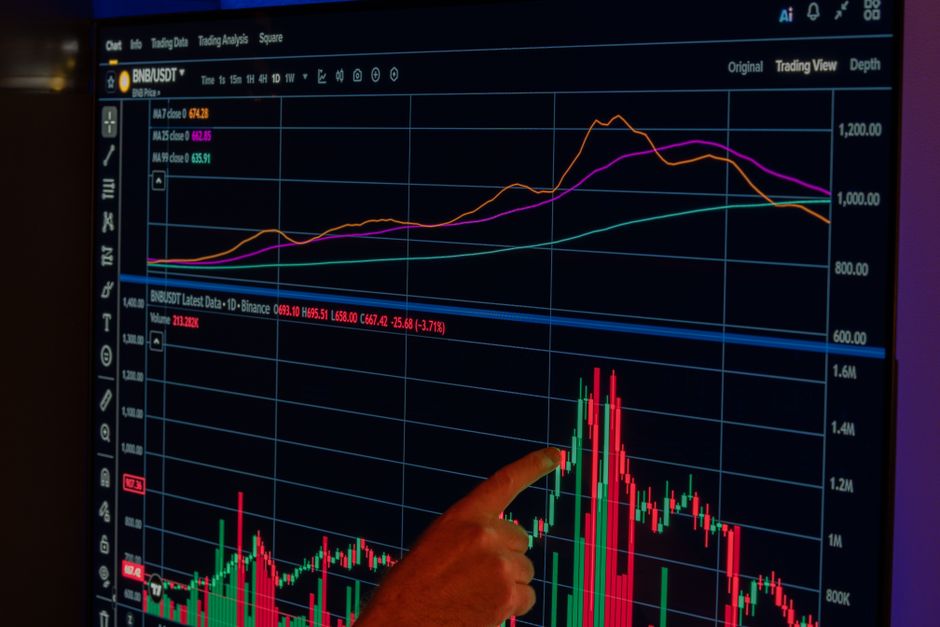
KYC and AML requirements
- Documents: PAN is mandatory. Aadhaar-based verification is common. Expect a selfie or liveness check.
- Bank account: Must be in your own name. Third-party accounts are rejected.
- Common failure: Name mismatch between PAN and bank account, such as initials versus full name. Fix it with your bank before applying.
- Other: Platforms may ask for source-of-funds details on larger deposits under AML rules.
Minimum investment: the ₹100 reference
Crypto is divisible, so a small rupee amount buys a fraction of a coin. With Bitcoin at $60,025 (real-time market data as of November 25, 2026), you would hold a tiny fraction of one coin per ₹100. Minimum order sizes are set per platform and per trading pair, so confirm the figure in the app. A ₹100 test order is a sensible way to check the full deposit-trade-withdraw cycle before committing more. Remember that the fee, GST and any spread consume a larger share of a tiny order.
Fiat withdrawal methods
| Method | Typical role | Check |
|---|---|---|
| IMPS | Fast bank payout where offered | Per-transaction cap, any fee |
| NEFT/RTGS | Larger transfers, bank-hours dependent | Minimum amount for RTGS |
| UPI | Deposits on many platforms; availability for crypto has varied over time | Confirm in the app before relying on it |
We do not publish withdrawal times because none are guaranteed. The best test is the one you run yourself with a small sum.
Security and Hack History
Indian exchanges are not exempt from breaches. Some Indian exchanges have reported security incidents in the past. Both are a reason to read incident reports, not a reason to assume any rival is safe. Use this checklist:
- Is the entity registered with FIU-IND? Confirm on the regulator's records, not on the exchange's homepage badge.
- Does the platform support app-based two-factor authentication, not just SMS?
- Does it offer withdrawal address whitelisting?
- Has it published an incident report and a reserves statement after any breach?
- Does the company separate customer assets from its own funds?
The simplest defence is structural: keep only trading capital on the exchange and move long-term holdings to a wallet you control. Our best crypto wallet guide explains the options. If you are new to buying, read how to buy Bitcoin safely first.
Mobile Apps and Customer Support
App store ratings shift weekly and are skewed by review campaigns, so any number printed here would be stale quickly. Check the current rating, the date of the latest update and the pattern in the most recent one-star reviews. Look for repeated complaints about frozen withdrawals, KYC loops or unresolved tickets.
| Support signal | Good sign | Warning sign |
|---|---|---|
| Channels | In-app ticketing plus email, with ticket numbers | Only social media replies |
| Grievance process | Named grievance officer and published escalation path | No contact details beyond a chat bot |
| Incident communication | Status page and dated notices | Silence during outages |
Step-by-Step Onboarding
- Shortlist two platforms from the table above and read each fee page and security page.
- Prepare documents: PAN, Aadhaar-linked mobile number, and a bank account whose name matches your PAN.
- Complete KYC and turn on app-based two-factor authentication immediately.
- Deposit a small amount, such as ₹100 to ₹500, by the cheapest INR method offered.
- Place a small market or limit order. Prefer limit orders on thin pairs to control the price.
- Test a withdrawal of the rupee balance back to your bank and note the time taken and any fee.
- Export statements monthly for tax records.
Risk Management for Indian Traders
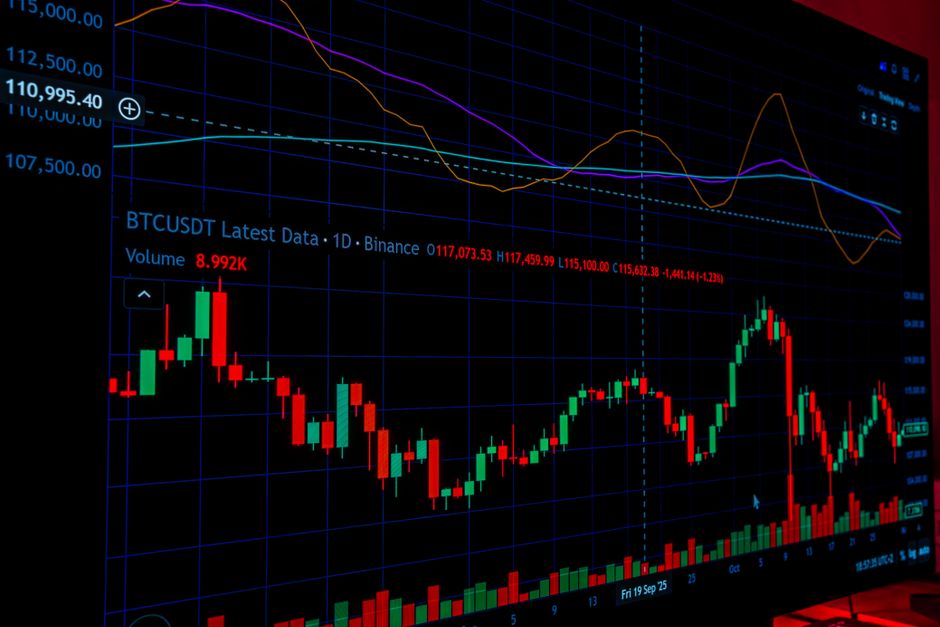
- Size positions for the tax asymmetry. Losses are not deductible, so a losing trade costs its full amount while a winning one is taxed at 30%.
- Cut trade frequency. Every sale above the threshold triggers 1% TDS, which ties up capital.
- Split custody. Hold long-term coins in a personal wallet and keep only active capital on the exchange.
- Know the volatility. Large coins can move several percent in a day. Smaller tokens move more. Ethereum is at $1,688 and Solana at $70.44 (real-time market data as of November 25, 2026), and either can swing sharply.
- Use only money you can lose.
For frameworks on position sizing, see crypto risk management strategies. If you also trade equities, compare the tax treatment in our stock capital gains tax India explainer, and see how rupee payment rails work in UPI payments explained.
FAQ
What is a crypto trading India platform?
It is an exchange or app that lets Indian residents buy and sell cryptocurrency with rupees, typically through UPI, IMPS or bank transfer, after completing KYC with PAN and Aadhaar.
How to start crypto trading in India?
Choose a platform registered with FIU-IND, finish KYC, link a bank account in your own name, deposit a small amount, place a small first order, and keep records of every trade for tax filing.
Is it safe to trade crypto on Indian platforms?
Safety varies by platform. Check registration, incident history, two-factor options and withdrawal reliability. Exchanges can be breached, so avoid keeping long-term holdings on any exchange.
Why is crypto tax so high in India?
Gains are taxed at a flat 30% under Section 115BBH, with only the cost of acquisition deductible and no loss set-off. A separate 1% TDS under Section 194S applies above the thresholds.
Ready to compare exchanges on live data? Check Latest Price
More reading: complete fintech guide and more trading articles.