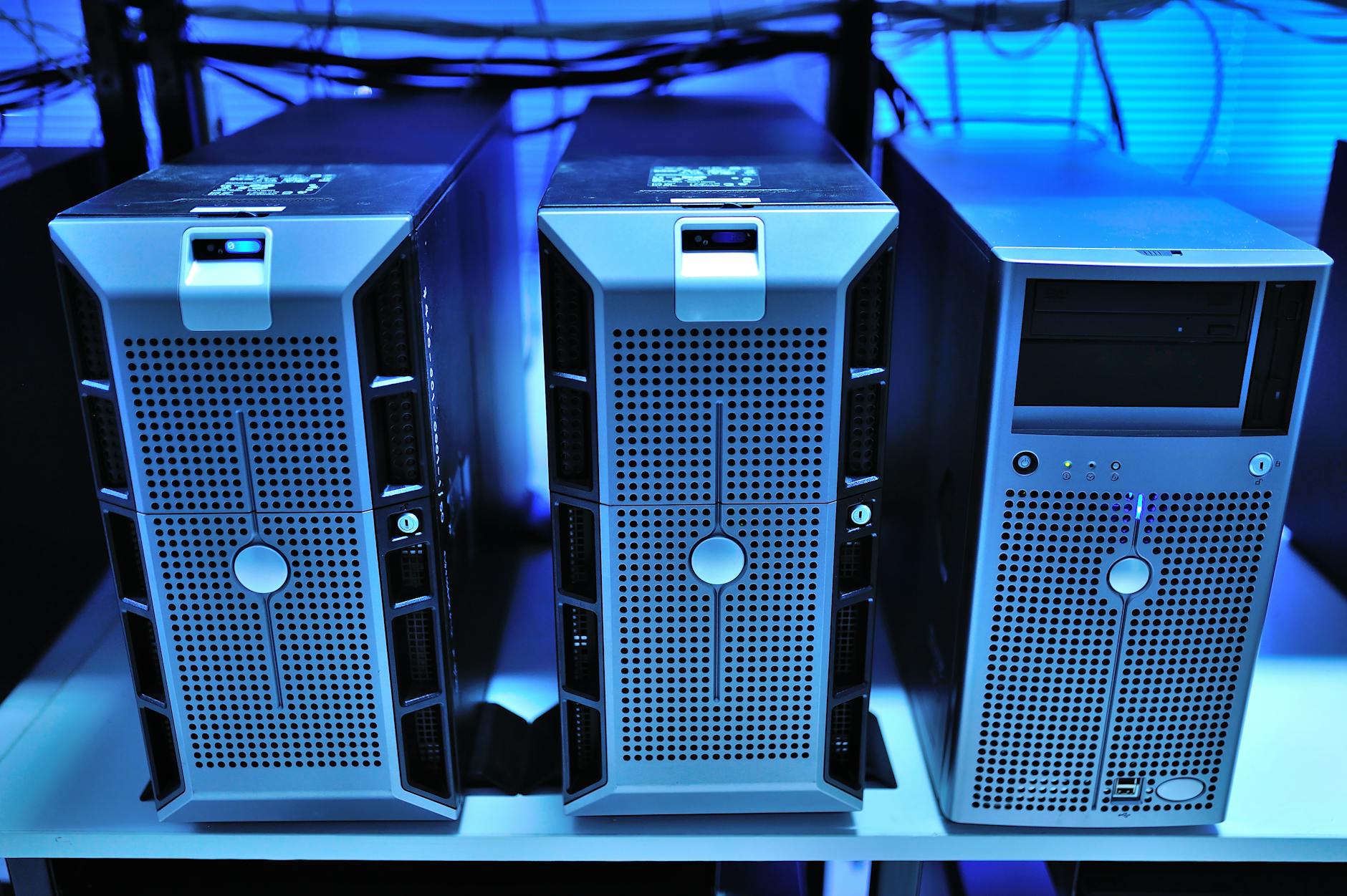
Why XAI Data Center Infrastructure Investment Matters: The $20 Billion AI Hardware Revolution
What Is xAI Data Center Infrastructure Investment?
xAI, founded by Elon Musk in 2023, announced a transformational infrastructure buildout aimed at creating world-class data center capacity for training large language models and other frontier artificial intelligence systems. The project centers on the construction of advanced facilities capable of housing tens of thousands of AI accelerators—primarily Nvidia GPUs—with the electrical and cooling infrastructure necessary to sustain continuous training operations.
The infrastructure initiative is fundamentally about scale. Modern frontier AI models require unprecedented compute resources. A single training run for a next-generation language model can consume gigawatt-hours of electricity and take weeks or months. xAI's data center strategy directly enables the company to:
- Train proprietary language models without relying on external cloud providers
- Maintain control over hardware allocation and inference capacity
- Achieve cost efficiency at scale unavailable to smaller competitors
- Execute rapid iteration cycles on model architectures
- Support commercial inference services at competitive pricing
This represents a vertical integration strategy familiar from the hyperscaler playbook but novel for a relatively new AI research company. Unlike OpenAI (which leases Azure capacity) or Anthropic (which uses various cloud providers), xAI is building owned infrastructure to eliminate dependency on third-party compute providers and capture full economics of AI model deployment.
Colossus Architecture and Technical Specifications
The flagship facility referenced publicly as "Colossus" represents the physical and architectural centerpiece of xAI's infrastructure plan. While comprehensive technical documentation remains proprietary, available information suggests Colossus incorporates several architectural innovations:
Compute Density and Scale:- Approximately 2 gigawatts of peak electrical capacity allocation
- Hyperscale data center design optimized for GPU-dense workloads
- Multi-cabinet design prioritizing electrical efficiency and thermal management
- Advanced interconnect topology enabling rapid data transfer between GPU clusters
- Nvidia H100 and H200 tensor processing units as primary compute accelerators
- Custom networking hardware for cluster communication
- Redundant power supply and UPS systems for 99.99%+ availability targets
- Distributed storage systems supporting petabyte-scale training datasets
- Advanced cooling infrastructure managing heat output from dense GPU arrays
- Real-time monitoring and orchestration software for workload distribution
- Fault tolerance and disaster recovery capabilities across geographic sites
- Direct fiber connectivity to internet backbone for model serving
The 2GW capacity figure serves as a useful performance metric. By comparison, a single Nvidia H100 GPU consumes roughly 700 watts during peak utilization. This means the infrastructure theoretically accommodates approximately 2,800 H100 GPUs at sustained peak load—though actual deployment likely distributes across multiple facility expansions rather than a single monolithic installation.
The $20 Billion Investment Breakdown
The $20 billion total capital commitment represents multiple funding components and deployment phases:
Capital Sources Identified:- xAI equity funding from previous rounds (Series B and C investments)
- Debt financing and infrastructure bonds (estimated 40-50% of total)
- HUMAIN consortium minority equity stake ($3 billion allocated)
- Potential operational revenue reinvestment from existing inference services
- Hardware acquisition (Nvidia GPUs, networking, storage): $8-10 billion
- Real estate, construction, and facility buildout: $6-8 billion
- Electrical infrastructure and power contracts: $2-3 billion
- Software engineering and operations: $1-2 billion
- Contingency and ecosystem integration: $1 billion
This capital intensity reflects the reality of AI infrastructure. Nvidia H100 GPUs cost $40,000-$50,000 per unit, and a single large facility might house thousands. Real estate, power infrastructure, and construction represent massive fixed costs that create significant barriers to entry for competitors.
HUMAIN Partnership and Minority Stake
The HUMAIN consortium—a strategic partnership vehicle—holds a documented $3 billion minority stake in the infrastructure project. HUMAIN represents a collaboration between international technology partners seeking to develop AI capabilities independent of US-only infrastructure.
HUMAIN Structure and Participants:- Designed as a multi-stakeholder partnership for AI infrastructure investment
- Includes technology companies, sovereign wealth funds, and institutional investors
- Focuses on ensuring diversified, resilient compute capacity for frontier AI development
- Maintains geopolitical balance in AI hardware concentration
Geographic Expansion: Mississippi, Memphis, Southaven
The primary facility location in Southaven, Mississippi (a suburb of Memphis) represents a deliberate strategic choice combining multiple advantages:
Electrical Infrastructure:- Direct proximity to Mississippi River and regional hydroelectric capacity
- Access to lower-cost power from TVA (Tennessee Valley Authority) grid
- Existing industrial power infrastructure supporting heavy manufacturing
- Negotiated power contracts estimated at $0.03-0.05 per kilowatt-hour (below national average)
- Lower land costs compared to West Coast technology hubs
- Existing industrial real estate availability for conversion
- Regional workforce access from Memphis metropolitan area
- State and local economic development incentives and tax benefits
- Proximity to Memphis International Airport (major logistics hub)
- Mississippi River barge transport for hardware components
- Regional highway infrastructure connecting to nationwide networks
- Fiber optic connectivity options through regional carriers
This geographic strategy mirrors successful hyperscaler models: identify regions with abundant power, lower costs, and acceptable connectivity, then negotiate tax incentives with state and local authorities eager to attract high-wage industrial investment. The Memphis-Southaven corridor checks all boxes while remaining politically palatable and logistically efficient.
Nvidia GPU Allocation and Supply Chain
The xAI infrastructure project represents one of the largest dedicated GPU procurement programs globally, creating significant supply chain implications.
Hardware Procurement Challenges:- Nvidia H100/H200 GPUs remain supply-constrained with long lead times
- Estimated 6-12 month production delays for large volume orders
- Competing demand from OpenAI, Google, Meta, Microsoft, and others
- Potential $50B+ annual global GPU spending across AI infrastructure projects
- Multi-source strategies exploring AMD, Cerebras, and other alternative accelerators
- Custom silicon development for specific inference workloads
- Networking hardware from Broadcom, Intel, and custom providers
- Storage systems from NetApp, Pure Storage, and others
Competitive Infrastructure Comparison
To contextualize xAI's buildout, comparison with competitors reveals infrastructure investment intensity across the AI industry.
| Company | Estimated Infrastructure Spend | Primary Model | Geographic Focus |
|---|---|---|---|
| OpenAI | $10-15 billion (via Microsoft Azure) | Leased cloud capacity | US-based Azure regions |
| Google DeepMind | $8-12 billion annually | Owned Google data centers | Globally distributed |
| Meta AI | $15-20 billion annually | Owned data centers | US-based facilities |
| xAI | $20 billion (capital buildout) | Owned infrastructure | Mississippi/regional expansion |
| Anthropic | $1-3 billion (mixed model) | Cloud + owned capacity | Cloud-dependent initially |
Competitive Positioning: xAI's $20 billion commitment places it among the largest AI infrastructure investors. The key distinction: xAI is a dedicated AI research company building own infrastructure, whereas Google and Meta deploy infrastructure across broader operations. OpenAI's reliance on Azure leasing creates operational dependency on Microsoft—a strategic vulnerability xAI aims to eliminate.
The competitive implication is clear: frontier AI model development increasingly requires vertically integrated infrastructure ownership. Companies unable to control their compute destiny face allocation constraints and cost pressures that constrain research velocity and model capability advancement.
Power Consumption and Cooling Requirements
The 2GW capacity figure represents peak electrical demand, but sustained operations require sophisticated power and thermal management systems.
Power Profile Analysis: A 2GW facility running at 70% average utilization (realistic for training and inference mixed workloads) draws approximately 1,400 MW continuous power consumption. This translates to roughly:- 12.3 terawatt-hours annually at continuous operation
- Daily consumption equivalent to 150,000-200,000 homes
- Peak demand events requiring 2,000+ MW grid capacity
- Estimated power costs $300-500 million annually at negotiated regional rates
- Air cooling inadequate; liquid cooling required for efficiency
- Custom cooling loops circulating dielectric fluid or water through GPU packages
- Heat rejection to atmosphere or local water sources (Mississippi River proximity aids this)
- Redundant cooling systems preventing cascading failures during maintenance
- Real-time temperature monitoring with automated load balancing
- Closed-loop cooling minimizing water consumption
- Heat recovery for regional industrial or agricultural applications
- Compliance with EPA and state water quality standards
- Carbon offset strategies or renewable energy procurement agreements
Economic Impact and Job Creation
xAI's $20 billion infrastructure investment generates substantial regional economic impacts across multiple dimensions.
Direct Employment:- Construction phase: 2,000-4,000 temporary construction jobs over 2-3 years
- Operations phase: 500-1,000 permanent facility operations jobs
- Average facility operations wage: $65,000-100,000 annually (engineers, technicians)
- Management and administration: 100-200 additional roles
- Regional supplier contracts (power, cooling, materials) worth $500 million+
- Construction material procurement generating local supplier opportunities
- Hotel, food service, and transportation demand during construction phase
- Real estate value appreciation in surrounding Southaven area
- Annual payroll taxes and property taxes estimated $50-100 million
- Sales tax on operations and supply procurement
- Potential revenue sharing arrangements with state development authorities
For Mississippi and Shelby County (Memphis area), the infrastructure investment represents transformational economic impact—a $20 billion capital infusion creating permanent high-wage jobs in a region historically challenged by industrial job losses. This economic narrative explains strong political support from state officials and local development organizations.
Environmental and Regulatory Considerations
Large-scale data center development faces increasingly rigorous environmental and regulatory scrutiny.
Permitting Requirements:- EPA air quality permits for cooling tower emissions
- Water quality permits under Clean Water Act for discharge
- Local zoning variances and conditional use permits
- Environmental impact assessments for wetlands and endangered species
- Electrical interconnection agreements with regional transmission operators
- Power purchase agreements (PPAs) for renewable energy—wind farms, solar projects
- Potential on-site solar or wind generation
- Carbon offset programs if grid electricity contains fossil fuel components
- Water consumption reduction targets and recycling programs
- Transparency reporting on environmental metrics
- Transparent communication with local residents and municipalities
- Community advisory boards providing input on environmental safeguards
- Commitment to local hiring and supplier diversity
- Educational partnerships with regional universities
Implementation Timeline and Rollout Plan
The $20 billion infrastructure investment extends across multiple fiscal years, with phased rollout optimizing for power availability, hardware procurement, and market demand evolution.
Likely Implementation Phases: Phase 1 (2024-2025): Land acquisition, permitting, site preparation, and initial construction. Early GPU procurement begins. Estimated $3-5 billion capital deployment. Initial 200-300 MW facility capacity operational. Phase 2 (2025-2026): Primary facility construction completion, full Colossus system deployment, hardware installation, and software integration. Estimated $7-10 billion deployment. Facility reaches 1.2-1.5 GW operational capacity supporting frontier model training. Phase 3 (2026-2027): Secondary facilities in Memphis or expanded Southavan capacity, additional GPU procurement, inference infrastructure scaling. Estimated $5-7 billion deployment. Full 2GW capacity reached with redundancy across multiple sites. Phase 4 (2027+): Ongoing optimization, next-generation hardware adoption, capacity expansion based on demand, potential additional geographic sites.This timeline aligns with typical hyperscale data center development cycles while accounting for the specialized requirements of AI training infrastructure. Hardware procurement timelines represent the critical path—securing 2,000-3,000 GPUs over 2-3 years requires early commitment and relationship management with Nvidia.
Frequently Asked Questions
What exactly is xAI's data center investment about?
xAI is building massive owned infrastructure (data centers) containing roughly 2 gigawatts of electrical capacity and thousands of Nvidia GPUs to train frontier AI models and provide inference services. The $20 billion investment represents capital deployment over multiple years to create compute capacity competitive with OpenAI, Google, and Meta.
How does this compare to OpenAI's infrastructure approach?
OpenAI relies primarily on leased Azure cloud capacity from Microsoft—external infrastructure dependency. xAI is building owned facilities, similar to Google and Meta's strategy. Ownership eliminates vendor lock-in, reduces per-compute costs at scale, and maintains control over availability and hardware configuration.
Why is the HUMAIN partnership significant?
The $3 billion HUMAIN stake provides additional capital, strategic partnership validation, and international engagement. It signals that frontier AI infrastructure development extends beyond US-only players and addresses geopolitical concerns about AI concentration. HUMAIN partners likely gain preferential access to compute capacity and AI research outcomes.
What makes the Mississippi/Southaven location strategic?
Lower power costs (critical for profitability), abundant electrical capacity (hydroelectric and TVA grid), strong water resources for cooling, lower real estate costs, regional workforce, and state/local economic development incentives. Hyperscalers locate data centers where power is cheap and abundant.
How many GPUs does xAI need for 2GW capacity?
A single Nvidia H100 consumes roughly 700 watts. At 2,000 MW capacity running sustained loads, this implies approximately 2,800+ H100-class GPUs deployed across the facility. Actual count may vary depending on GPU model mix, cooling efficiency, and power provisioning architecture.
Is this a good investment opportunity for traders?
xAI remains a private company without public equity markets. The infrastructure buildout benefits shareholders and debt holders, but retail investors cannot directly own xAI equity. Investors can gain indirect exposure through:
- Nvidia stock (primary GPU supplier)
- Power generation and utility companies serving the region
- Construction and engineering firms supporting buildout
- Potential future xAI IPO if the company chooses public markets
What are the environmental concerns?
Primary concerns: power consumption (environmental footprint if grid uses fossil fuels), water consumption for cooling, thermal discharge, and land use. Modern data centers address these through renewable energy procurement, closed-loop cooling systems, water recycling, and environmental compliance. xAI's facility likely incorporates best practices, though full details remain proprietary.
How does xAI's investment compare to OpenAI and Google spending?
xAI's $20 billion is a capital buildout over multiple years. OpenAI's actual infrastructure spend flows through Microsoft Azure (estimated $10-15 billion over similar timeline). Google's infrastructure spend exceeds $15 billion annually but supports all operations (search, maps, YouTube, etc.). xAI's $20 billion dedicated commitment demonstrates serious intent to compete at frontier scale.
Investor Considerations for xAI Infrastructure
For traders and investors evaluating xAI's infrastructure strategy, several critical factors warrant consideration:
Upside Scenarios: If xAI successfully deploys the infrastructure and trains competitive frontier models, the company gains substantial economic value. Inference services (selling API access to xAI models) become highly profitable at scale. The infrastructure serves as a moat—competitors cannot match xAI's model capability without comparable compute. Potential acquisition by larger tech company or IPO returns capital to stakeholders at significant premium. Downside Risks: Technology risk: GPU performance improvements may obsolete hardware faster than expected. Financing risk: $20 billion deployment may encounter funding constraints or debt refinancing challenges if capital markets tighten. Competitive risk: OpenAI, Google, Meta, and others may achieve better model performance with more efficient training, making xAI's compute less valuable. Regulatory risk: AI safety concerns or government restrictions on compute concentration could constrain xAI's ability to deploy infrastructure. Geopolitical Considerations: According to reporting from TechCrunch, xAI's infrastructure strategy positions the company as a major AI player with implications for US technology leadership and international competition. The HUMAIN partnership adds geopolitical complexity—how the infrastructure serves international partners affects US government enthusiasm and potential regulatory treatment.The $20 billion xAI infrastructure commitment reflects the scale and capital intensity of frontier AI development. It signals that serious AI companies are transitioning from cloud-dependent models to vertically integrated infrastructure ownership. This shift has implications for Nvidia's GPU market, regional power markets, technology finance, and the competitive dynamics shaping the AI industry for the next decade.
Infrastructure is strategy. The company that controls its own compute destiny controls its technical roadmap, product roadmap, and ultimately its competitive position in frontier AI. xAI's infrastructure buildout represents a bet that vertically integrated ownership beats outsourced dependency.
Related Resources:
Explore our complete fintech investment guide for broader infrastructure trends. Learn more about AI infrastructure investment strategies and Nvidia GPU supply chain dynamics. See our cryptocurrency investment hub for blockchain infrastructure comparisons, and check our technical analysis section for computational infrastructure benchmarking.