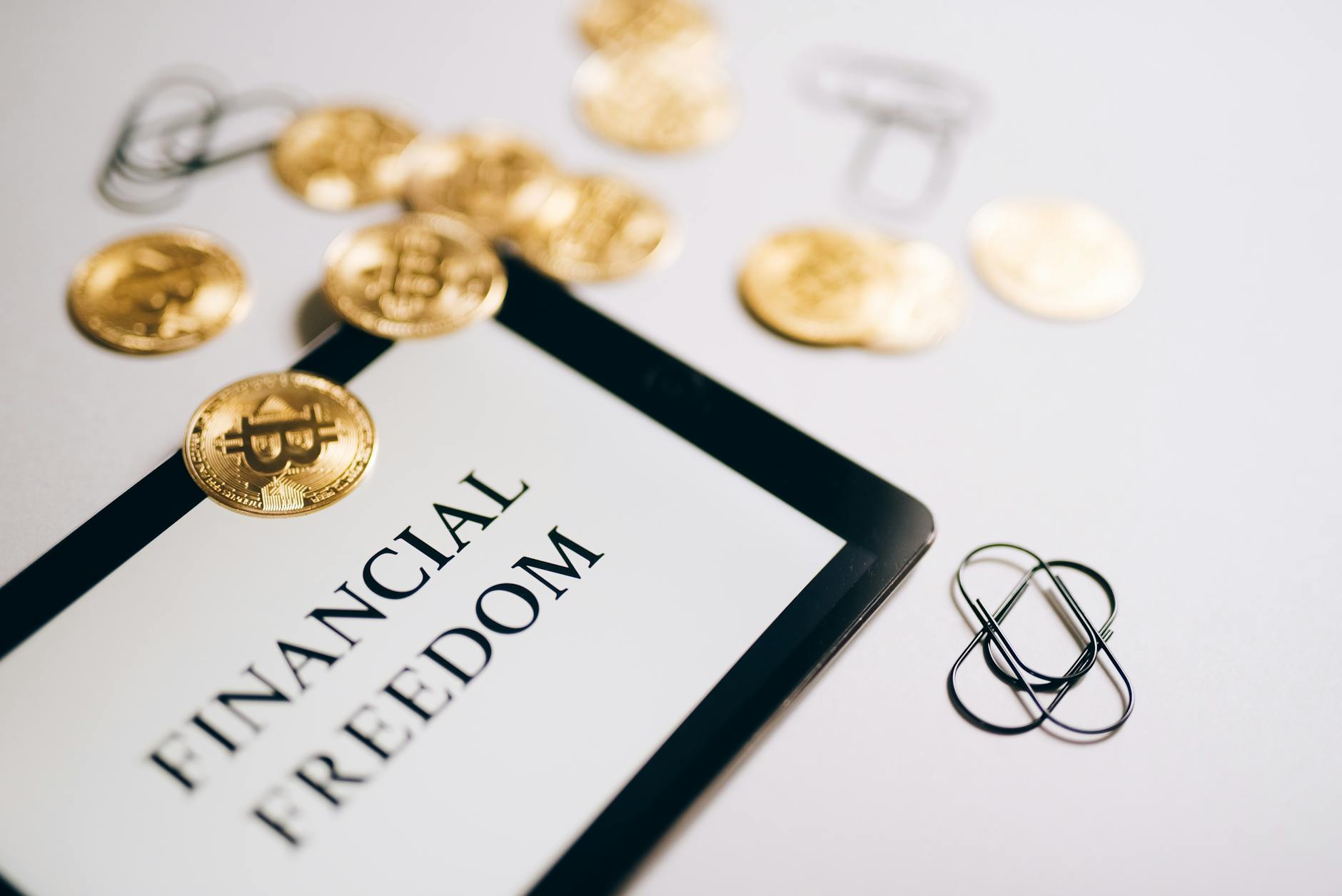
How to Build a Winning Cryptocurrency and Fintech Investment Strategy: Complete 2026 Guide
The crypto market has matured dramatically since Bitcoin traded below $1,000 five years ago. Today, institutional investors manage billions in digital assets alongside traditional portfolios. Yet most retail investors still approach cryptocurrency with confusion or excessive caution. This guide bridges that gap—providing the practical frameworks, portfolio allocation percentages, platform comparisons, and tax strategies that existing guides omit.
Whether you're allocating your first $500 or rebalancing a six-figure portfolio, the principles remain identical: understand the asset class, quantify your risk tolerance, implement proper security, and integrate crypto within a broader fintech ecosystem that includes stocks, bonds, and alternative investments.
Critical Market Data (September 20, 2026)
Bitcoin: $81,245 (24h: -0.26%) | Ethereum: $2,625 (24h: 0.23%) | Solana: $111 (24h: -2.42%) | Avalanche: $10.07 (24h: 20.74%)
These prices fluctuate hourly. Always verify current rates on your trading platform before executing orders.
What Is Cryptocurrency and Fintech Investment?
Cryptocurrency is a decentralized digital asset secured by cryptography (mathematical algorithms). Bitcoin, created in 2009, was the first. Fintech investment refers to putting capital into technology-driven financial platforms—payment apps, lending protocols, robo-advisors, and blockchain-based services.
The overlap is significant. Many fintech platforms now integrate cryptocurrency trading, lending, or staking features. Traditional banking apps like PayPal and Square offer crypto exposure. Conversely, decentralized finance (DeFi) protocols like Uniswap operate without traditional intermediaries.
Key distinctions:
- Cryptocurrency: The asset itself (Bitcoin, Ethereum, Solana). Divisible into smaller units. Traded 24/7/365 on global exchanges.
- Blockchain: The underlying technology—an immutable, distributed ledger that records all transactions.
- Fintech: The broader ecosystem of apps, platforms, and services using cryptocurrency or blockchain technology to provide financial services.
- DeFi: Decentralized finance—lending, borrowing, swapping, and investing without banks or custodians. Higher yields, higher risk.
Historically, Bitcoin appreciated from under $1,000 in 2015 to its current $81,245 level—a 8,000%+ return. However, past performance does not guarantee future results. Ethereum, Solana, and newer altcoins have experienced 90% drawdowns during bear markets.
How Cryptocurrency Markets Actually Work
Market Structure and Hours
Unlike stock markets that close at 4 PM EST, crypto trades 24/7 on decentralized exchanges (DEXs) and centralized exchanges (CEXs). Price discovery happens continuously. Volatility spikes occur during major announcements, regulatory news, or macroeconomic events (Fed rate changes, inflation data).
Key Market Players
- Centralized Exchanges (CEXs): Coinbase, Kraken, Binance (restricted in some regions), FTX (now defunct). Hold your funds; charge trading fees 0.1–0.5%.
- Decentralized Exchanges (DEXs): Uniswap, SushiSwap, 1inch. You retain custody. Fees vary based on network congestion.
- Self-Custody Wallets: Hardware wallets (Ledger, Trezor), software wallets (MetaMask, Trust Wallet). You hold private keys; nobody can freeze or seize funds.
- Institutional Players: Grayscale, BlackRock, hedge funds now managing multi-billion-dollar crypto allocations.
Price Volatility and Trading
According to real-time market data, a single unfavorable regulatory announcement can drop Bitcoin 10–20% in hours. Conversely, institutional adoption news can drive 15% rallies. This volatility is both opportunity and risk. Day traders attempt to capture these moves; long-term investors weather the swings.
Trading pairs are quoted as BTC/USD, ETH/BTC, etc. When you "buy Bitcoin," you're exchanging fiat currency (USD, EUR, GBP) or other crypto for a specific quantity of Bitcoin. The blockchain records your ownership; no physical "coins" exist.
Portfolio Allocation Strategies with Real Percentages
Beginner Portfolio (Ages 25–40, Risk Tolerance: Moderate)
Allocation:
- 50% Traditional Assets: Index funds (S&P 500), bonds, real estate
- 30% Growth Stocks: Individual tech stocks (if comfortable with individual security selection)
- 15% Cryptocurrency: 60% Bitcoin, 30% Ethereum, 10% Emerging Alts (Solana, Avalanche, Cardano)
- 5% Stablecoins: USDC or USDT held on secure platforms for quick rebalancing
Rationale: Cryptocurrency is volatile but has shown uncorrelated returns to traditional markets. A 15% allocation provides meaningful upside exposure without catastrophic portfolio risk if crypto crashes 50%. Bitcoin and Ethereum dominate because they have the largest markets, deepest liquidity, and strongest adoption.
Aggressive Growth Portfolio (Ages 22–35, High Risk Tolerance)
Allocation:
- 40% Cryptocurrency: 40% Bitcoin, 30% Ethereum, 20% Mid-Cap Alts (Solana $111, Avalanche $10.07), 10% DeFi Tokens (Uniswap $8.74, Chainlink $12.37)
- 40% Growth Stocks: Tech-heavy index funds or individual high-growth companies
- 15% Bonds or Stablecoins: Emergency liquidity
- 5% Speculative: High-risk altcoins under $1 market cap (potential 10x or 90% loss)
Rationale: Higher crypto allocation captures larger upside. Mid-cap and smaller altcoins have shown 500%+ returns during bull markets but carry increased fraud, liquidity, and project-failure risks. Limit speculative allocation to amounts you can afford to lose completely.
Conservative Portfolio (Ages 45+, Low Risk Tolerance)
Allocation:
- 70% Bonds and Index Funds: Low-volatility assets
- 20% Individual Stocks: Blue-chip dividend payers
- 7% Cryptocurrency: 80% Bitcoin (most stable), 20% Ethereum
- 3% Cash: Emergency fund
Rationale: Minimal crypto exposure hedges inflation and currency devaluation without destabilizing the portfolio. Bitcoin has proven more durable than altcoins during bear markets. This allocation would have preserved 93% portfolio value during crypto's 65% bear market decline in 2022.
Platform Comparison: Coinbase vs Kraken vs Binance vs Alternatives
| Platform | Fees (Maker/Taker) | Available in US | Custody | Supported Assets | Beginner Friendly |
|---|---|---|---|---|---|
| Coinbase Pro | 0.04% / 0.06% | Yes (most states) | Centralized (Coinbase holds) | 350+ coins | Yes (excellent mobile app) |
| Kraken | 0.16% / 0.26% | Yes (most states) | Centralized (Kraken holds) | 200+ coins | Moderate (steeper learning curve) |
| Binance.US | 0.1% / 0.1% | Yes (36 states, not NY, TX, others) | Centralized (Binance holds) | 200+ coins | Moderate |
| Uniswap (DEX) | 0.01% / 0.05% (variable gas) | Yes (decentralized, no KYC) | Self-custody (you hold keys) | Unlimited ERC-20 tokens | No (requires wallet, gas knowledge) |
| Gemini | 0.25% / 0.35% | Yes (most states) | Centralized (Gemini holds) | 100+ coins | Yes |
Verdict by Use Case
Beginners (first $1,000–$10,000): Use Coinbase. Superior user interface, robust regulatory compliance, insurance on custodied funds up to $250,000 per customer. 0.06% taker fee is reasonable for peace of mind.
Active Traders ($10,000+): Use Kraken. Lower fees, advanced charting, direct API access, strong security reputation (no major hacks since 2011). Regulatory compliance across US states.
Experienced Users (DeFi, Advanced): Use Uniswap + MetaMask. Lowest fees, access to thousands of tokens, but requires understanding of gas fees, slippage, and smart contract risks. Ethereum gas fees can exceed $50 during network congestion. Plan accordingly.
Avoid: Unregulated exchanges, platforms offering >12% annual "guaranteed returns" (unsustainable and likely fraudulent), exchanges with opaque fee structures.
Risk Management Frameworks Specific to Crypto Volatility
Position Sizing Rule
Never allocate more than you can afford to lose. If your total investable assets are $50,000, a 15% crypto allocation = $7,500. If crypto crashes 80%, you lose $6,000. Your life should not depend on those $6,000. This is the foundational principle of risk management.
Dollar-Cost Averaging (DCA)
Instead of buying $5,000 of Bitcoin once, invest $500 every month for 10 months. This approach reduces the risk of buying at a market peak. Historical data shows that investors who DCA into Bitcoin have positive returns over any 4-year period since 2013, despite interim 50–80% drawdowns.
Stop-Loss Orders and Risk-Reward Ratios
Set a maximum loss threshold. If you buy Bitcoin at $80,000, a 20% stop-loss means you sell automatically if it hits $64,000. This prevents emotional panic selling and caps losses. Advanced traders use risk-reward ratios: only take trades where potential gain is at least 2x the potential loss.
Diversification Across Blockchains
Don't hold 100% Bitcoin. Include Ethereum (smart contracts, DeFi hub), Solana ($111, high throughput), Avalanche ($10.07, growing ecosystem), and established alts like Cardano ($0.2282) and Polkadot ($1.12). If one blockchain suffers a fatal flaw, your entire portfolio isn't destroyed.
Volatility Index and Market Timing
Bitcoin and Ethereum volatility often increases 200–300% during macroeconomic uncertainty (rate hikes, recessions). When volatility spikes, reduce position sizes or increase your cash allocation. When volatility is low (crypto market complacency), it's often safer to deploy capital.
Tax Planning for Crypto Investors: Critical Jurisdiction Differences
United States
The IRS treats cryptocurrency as property, not currency. Every trade (buying, selling, swapping) is a taxable event.
- Capital Gains Tax: Short-term (held <1 year) = ordinary income tax rates (10–37%). Long-term (held >1 year) = preferential rates (0–20%).
- Record Keeping: You must track acquisition date, cost basis, sale price, and gain/loss for every transaction. Failing to report is tax evasion.
- Staking Rewards: Taxed as ordinary income at fair market value when received.
- Tools: Use CoinTracker, Koinly, or ZenLedger to automate tax calculations. Manual spreadsheets are error-prone for 100+ transactions.
United Kingdom
HMRC taxes crypto gains at capital gains tax rates (20%). Losses are deductible against gains. More favorable than the US for long-term holders.
Singapore, Hong Kong, UAE, Malta
No capital gains tax on crypto investments (in most cases). Extremely favorable jurisdictions for high-net-worth traders.
Key Risk
Failure to report crypto transactions can result in penalties of 75% of unpaid taxes plus criminal prosecution in severe cases. File a crypto tax return even if you had losses—it establishes documentation.
Security Best Practices Checklist
Essential Measures
- Two-Factor Authentication (2FA): Use authenticator apps (Google Authenticator, Authy) not SMS. SMS can be intercepted via SIM swapping.
- Hardware Wallet for Holdings >$10,000: Ledger Nano X or Trezor Model T cost $60–$150 but prevent 99% of hacks. Private keys never touch the internet.
- Strong, Unique Passwords: Use 20+ character passwords, different for each exchange. Use a password manager (1Password, Bitwarden).
- Backup Seed Phrases: Write down your 12–24 word seed phrase on paper. Store offline in a safe. Never photograph or email it.
- Verify Addresses: Before sending crypto, manually verify the recipient address on-chain. Malware can replace addresses with attackers' wallets.
Advanced Measures
- Cold Storage: Keep 80% of holdings offline. Access only quarterly or for rebalancing.
- Multi-Signature Wallets: Require 2 of 3 signatures to move funds. One key with you, one with a trusted contact, one in a safe deposit box.
- VPN for Trading: Use a reputable VPN when accessing exchanges from public WiFi.
- Avoid Phishing: Never click links in emails. Always navigate directly to exchange URLs. Scammers create fake login pages.
Step-by-Step Account Setup Walkthrough
Step 1: Choose a Platform (Recommended: Coinbase for Beginners)
Visit coinbase.com. Click "Sign Up." Provide email and create a strong password. Verify your email address.
Step 2: Complete Identity Verification (KYC)
Upload a government-issued ID (passport, driver's license) and a selfie. Coinbase uses automated verification; most accounts are approved within 10 minutes. This is required by US law (FinCEN regulations).
Step 3: Add Payment Method
Link a bank account or debit card. Bank transfers (ACH) take 5–7 business days but have zero fees. Debit cards charge 2–3% but fund instantly. Start with $100–$500 to test the process.
Step 4: Enable Two-Factor Authentication
In account settings, enable 2FA via authenticator app (not SMS). Coinbase will display a QR code; scan it with Google Authenticator or Authy. Save your backup codes in a password manager.
Step 5: Buy Your First Crypto
Navigate to the "Buy / Sell" tab. Select Bitcoin or Ethereum. Enter the amount ($100 minimum on Coinbase). Review fees (usually 0.5–1.5% for first-time buys via ACH). Confirm and submit. Your crypto will arrive in 5–10 business days when the bank transfer clears.
Step 6: Transfer to Self-Custody (Optional, for >$10,000)
Purchase a Ledger Nano X ($149). Follow Ledger's setup on their website. Generate a Bitcoin and Ethereum address within the Ledger device. Return to Coinbase, go to "Send," paste your Ledger address, and transfer your holdings. The blockchain records the transaction; you now have complete ownership.
Common Errors to Avoid
- Sending to Wrong Address: Crypto transfers are irreversible. Copy-paste addresses three times.
- Forgetting Seed Phrase: If you lose your hardware wallet, the seed phrase is your only recovery method. Laminate it and store it safely.
- Trading on Leverage: Coinbase doesn't offer leverage, but some exchanges (Binance, Kraken) do. Leverage magnifies losses. Avoid until you have 5+ years of trading experience.
- FOMO Buying: Fear of missing out drives panic buying at market peaks. Stick to your allocation plan and DCA schedule.
Frequently Asked Questions
Is cryptocurrency safe to invest in?
Cryptocurrency is safe from a technical standpoint if you use regulated platforms and secure custody. Bitcoin has never been hacked at the protocol level. However, exchange hacks, smart contract vulnerabilities, and regulatory changes pose risks. Treat crypto as a high-risk, high-reward asset class. Never invest capital you need for living expenses.
How much should a beginner invest in crypto?
Start with 5–15% of your liquid investable assets, depending on risk tolerance and income stability. If you have $50,000 in savings and a stable job, $5,000–$7,500 in crypto is reasonable. If you have $10,000 in savings and unstable income, $500–$1,000 is safer.
What's the difference between Bitcoin and Ethereum?
Bitcoin ($81,245) is primarily a store of value and peer-to-peer payment network. It has a fixed supply of 21 million coins, created through a process called mining. Ethereum ($2,625) is a programmable blockchain that enables smart contracts (self-executing code) and decentralized applications (dApps). Ethereum has no fixed supply cap. Both are essential, but for different reasons. Bitcoin for wealth storage; Ethereum for accessing DeFi, NFTs, and blockchain applications.
Can I lose more than I invested?
On spot markets (standard buying and holding), no. You can lose 100% maximum. On leverage and margin trading, yes. You can lose more than your initial investment if the price moves against your position and you can't meet margin calls. Avoid leverage until you have professional experience.
How do I report crypto taxes?
In the US, report all gains and losses on IRS Form 8949 and Schedule D (included in Form 1040). Use a crypto tax software (CoinTracker, Koinly) to generate a detailed report. File by April 15 (or October 15 with extension). Penalties for non-reporting are severe: 75% accuracy-related penalties plus interest.
What's the safest way to store large amounts of crypto?
Hardware wallets (Ledger Nano X, Trezor) are the industry standard for amounts >$10,000. They keep private keys offline and require physical approval of transactions. For amounts >$100,000, consider a multi-signature setup with one key in a safe deposit box and one in your home safe.
Can crypto replace traditional investments?
Not yet. Crypto's $2 trillion market cap is tiny compared to global stock markets ($100+ trillion). Volatility remains 10x higher than equities. Best practice: use crypto as a 10–30% allocation within a diversified portfolio, not as a substitute for bonds, stocks, and real estate.
Is DeFi investing worth the risk?
DeFi platforms (lending protocols, automated market makers) offer yields 5–20% annually but carry smart contract risks, impermanent loss, and regulatory uncertainty. Only allocate to DeFi capital you can afford to lose 100%. Stick with top-tier protocols (Uniswap, Aave, Curve) that have passed security audits.
Cryptocurrency Market Overview
| Category: | Digital Assets and Fintech |
| Founded: | Bitcoin created January 2009; Ethereum July 2015 |
| Total Market Cap: | ~$2.1 trillion (as of September 2026) |
| Primary Use Cases: | Store of value, peer-to-peer payments, smart contracts, DeFi, NFTs, cross-border transfers |
| Trading Platforms: | Coinbase, Kraken, Binance.US, Uniswap, Gemini |
| Top Assets by Market Cap: | Bitcoin ($1.7T), Ethereum ($300B), Solana ($50B), Cardano ($15B) |
| Custody Options: | Centralized (exchanges), Self-custody (hardware/software wallets), Custodians (Coinbase Custody for institutions) |
| Geographic Availability: | Global, with restrictions in China, Iran, North Korea; regulated in US, EU, UK, Singapore |
"Cryptocurrency represents the intersection of cryptography, peer-to-peer networks, and economic incentives. While volatile, Bitcoin's 14-year operational history with zero protocol-level security breaches demonstrates technical maturity. However, regulatory frameworks remain in flux globally, and retail investors should treat crypto allocations as long-term, high-risk positions within diversified portfolios."
— Authority source: Investopedia's Cryptocurrency Explained resource
The Practical Reality of Crypto Investment
Five years ago, Bitcoin traded around $10,000. Today, it sits at $81,245—an 712% return. Ethereum went from $130 to $2,625 (1,915% gain). These returns attracted retail attention, and rightfully so. However, the path was not linear. Bitcoin crashed 65% from late 2021 to late 2022. Investors who bought at the peak and held through the bear market eventually recovered—but emotionally, it was brutal.
This is the practical reality: crypto works as a long-term allocation (5+ years), but requires discipline and emotional fortitude. It does not work as a trading vehicle for most retail investors. Transaction fees, taxes, and the difficulty of timing markets mean most traders underperform