
How to Tax Crypto Canada: CRA Rules, Forms, Examples
A $100,000 crypto gain does not mean a $100,000 tax bill. It also does not mean the CRA will overlook it. Every sale, swap and purchase made with crypto is a taxable event. Tracking cost base across wallets and exchanges is a common place for filers to go wrong.
Bitcoin trades at $75,704 and Ethereum at $2,234, per real-time market data as of November 8, 2026. Prices move daily, so your tax bill depends on the CAD value on the day of each transaction, not on today's quote.
How Crypto Is Taxed in Canada

According to the Canada Revenue Agency (CRA), cryptocurrency is treated as a commodity, not as currency. Any transaction that uses crypto is treated like a barter transaction. You must report the fair market value in Canadian dollars at the moment of the transaction.
Taxable events:
- Selling crypto for CAD or any other fiat currency
- Trading one crypto for another (BTC to ETH is a disposition of BTC)
- Spending crypto on goods or services
- Gifting crypto to someone other than your spouse in some cases, since a gift is generally a disposition at fair market value
- Receiving crypto as payment, mining rewards or staking rewards
Not taxable by themselves:
A gain is generally realized only when the asset is sold or otherwise disposed of. That principle is the same in Canada.
Capital Gains vs Business Income
This is the biggest decision point. The CRA looks at the facts of your activity, not what you call it.
| Factor | Points to capital gain (investor) | Points to business income (trader) |
|---|---|---|
| Frequency | Occasional trades | Frequent, systematic trades |
| Holding period | Months to years | Hours to days |
| Intent | Long-term appreciation | Short-term profit from price swings |
| Time and knowledge | Passive, part-time | Full-time effort, market expertise |
| Financing | Own savings | Borrowed funds or leverage |
| Inclusion rate | 50% of the gain | 100% of net profit |
| Losses | Only against capital gains | Fully deductible against other income |
| Expenses | Limited (outlays, fees on disposition) | Business expenses deductible |
| Form | Schedule 3 | Form T2125 |
There is no single bright-line test. Day trading and heavy use of leverage push toward business income. A buy-and-hold approach pushes toward capital treatment.
8 Crypto Activities and Their Tax Treatment
- Selling crypto for CAD: Capital gain or loss. Proceeds minus adjusted cost base (ACB) minus selling costs. 50% taxable.
- Swapping crypto for crypto: Disposition of the coin you give up, valued in CAD at the time of the swap. The coin you receive gets that CAD value as its cost base.
- Spending crypto on purchases: Disposition at fair market value. A coffee paid in BTC can create a small gain or loss.
- Mining: Income at fair market value when received, 100% included. Business expenses (electricity, equipment) may apply if it is a business. When you later sell, the received value is your cost base.
- Staking rewards: Generally treated as income at fair market value when received, 100% included. Later sales trigger a separate capital gain or loss.
- Airdrops: Report airdrops tied to services or business activity as income. Treat the received value as your cost base, and get advice for large or unusual airdrops.
- Getting paid in crypto (salary, freelance): Employment or business income in CAD at the time received, 100% included.
- Buying and holding: No tax until you dispose of it. Record the purchase for ACB.
Capital Gains Formula and the $100K Example
Formula: (Proceeds of disposition − Adjusted cost base − Outlays and expenses) × 50% = Taxable capital gain.
The inclusion rate used in this guide is 50%. Check the CRA site before filing in case rules change.
ACB averaging example
- Buy 1 BTC at CAD $60,000. Buy another 1 BTC at CAD $90,000.
- Total cost: CAD $150,000 for 2 BTC. Average ACB: CAD $75,000 per BTC.
- Sell 1 BTC at CAD $105,000, with a CAD $200 fee.
- Gain: $105,000 − $75,000 − $200 = $29,800. Taxable portion: $14,900.
Canada uses average cost for identical property. You do not pick which coins you "sold" the way US users can with specific identification.
$100,000 gain example
- Proceeds: CAD $150,000
- ACB: CAD $50,000
- Capital gain: $100,000
- Taxable capital gain (50%): $50,000, added to your other income
The tax owed depends on your other income and your province. The table below uses assumed combined federal and provincial marginal rates for illustration. It is not a calculation of actual brackets.
| Assumed marginal rate | Tax if $100K capital gain | Tax if $100K business income |
|---|---|---|
| 30% | $15,000 | $30,000 |
| 40% | $20,000 | $40,000 |
| 50% | $25,000 | $50,000 |
Large gains also push part of your income into higher brackets, so the actual tax can differ from a flat-rate estimate. Use the CRA's current federal and provincial brackets, or tax software, for your final number.
Capital losses
Capital losses offset capital gains only. Unused net losses can generally be carried to other years against taxable capital gains.
Superficial Loss Rule (the Canadian Wash Sale)
"Wash sale" is a US term. Canada's equivalent is the superficial loss rule. A loss is denied when both conditions hold:
- You (or an affiliated person, such as your spouse or a corporation you control) buy the same or identical property in the 30 days before or after the sale at a loss, and
- You or the affiliated person still own it at the end of that 30-day period after the sale.
Crypto of the same type is generally viewed as identical property, so selling ETH at a loss and rebuying ETH within the window can deny the loss. The denied loss is added to the ACB of the repurchased coins, so it is deferred rather than lost forever. Swapping into a different coin and waiting beyond the window avoids the issue.
Example: you sell 10 ETH at a $5,000 loss (10 ETH is worth $22,340 at $2,234 in USD terms) and buy 10 ETH back 12 days later. The $5,000 loss is denied for now and added to the cost base of the new ETH.
Step-by-Step: Reporting to the CRA
- Export all transaction histories from every exchange, wallet and DeFi platform for January 1 to December 31.
- Convert each transaction to CAD at the rate on the day it occurred.
- Calculate ACB per coin using average cost across all holdings of that coin.
- Classify each activity: capital (Schedule 3), business (T2125), or other income (staking, mining, airdrops, payments).
- Complete Schedule 3 for capital gains and losses. The taxable amount flows to your T1 General.
- Complete Form T2125 if trading or mining as a business. Net business income goes on the T1.
- File the T1 General by April 30 of the following year.
Form note: Some guides cite T776 for crypto. T776 is the Statement of Real Estate Rentals and does not apply to crypto. Use Schedule 3 for capital gains and T2125 for business income.
Timing: Tax is based on the calendar year in which the transaction occurs, not when you withdraw to your bank. Selling in December 2026 means the gain goes on your 2026 return, even if the cash lands in January. Selling in early January moves the gain to the next tax year, which can defer tax by a year. Realizing losses before December 31 can offset gains from the same year.
Exchange Rates and Record-Keeping
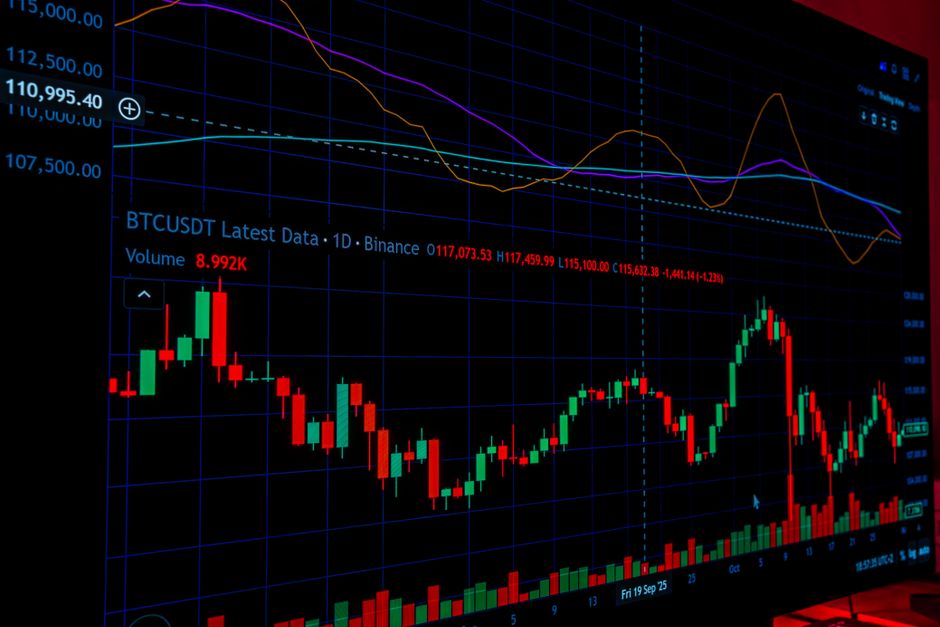
Convert to CAD using a consistent, documented source, such as the Bank of Canada daily rate or the exchange's own CAD price at the time of the transaction. Use the same method every year.
Record retention: keep records for a minimum of six years from the end of the tax year to which they relate.
| Record | Why it matters |
|---|---|
| Date and time of each transaction | Sets the tax year and exchange rate |
| Type of crypto and amount | Needed for ACB per coin |
| CAD value at the time | Proceeds or cost base |
| Fees paid | Reduce gain as outlays |
| Wallet addresses and exchange account IDs | Proves transfers between your own accounts |
| Counterparty details (if known) | Supports payments and business income |
| Mining and staking receipts | Income at the time received |
Exchanges can shut down or delete data. Download your CSV files annually and store them offline.
RRSP and TFSA Treatment
- You cannot hold coins directly in an RRSP or TFSA. Only qualified investments are allowed. Crypto ETFs listed on Canadian exchanges may qualify, depending on the product.
- Gains inside a TFSA are tax-free and RRSP gains are tax-deferred, but the CRA can tax TFSA activity as business income if it looks like a trading business. Penalties for non-compliant holdings and over-contributions apply.
- Inside an RRSP or TFSA, ETF trades create no Schedule 3 entry. Selling a crypto ETF in a non-registered account does.
For account basics, see our TFSA vs RRSP investing guide.
Cross-Border and Foreign Exchange Issues
- Canadian tax residents are taxed on worldwide income, so gains made on a foreign exchange are reportable in Canada.
- Foreign property reporting (Form T1135) may apply if you hold specified foreign property above a certain cost threshold. Whether crypto on a foreign platform counts is debated, so confirm with a tax professional if you are near that threshold.
- If you move to or from Canada, you are generally deemed to dispose of most property at fair market value on departure. Get advice before you move.
Penalties and Audit Red Flags
| Issue | Consequence |
|---|---|
| Late filing with a balance owing | — |
| Repeated late filing | — |
| Repeated failure to report income | — |
| Gross negligence | — |
| Unpaid tax | Interest |
| Tax evasion | Fines and possible prosecution |
Rates and rules can change, so verify current figures on the CRA site.
Audit red flags:
- Large deposits to a bank account from an exchange with no matching return entry
- Reporting no crypto activity despite exchange-reported activity
- Huge swings in reported income or lifestyle that does not match income
- Unexplained transfers to or from foreign platforms
- Frequent trading reported as capital gains
Assume the CRA could eventually see your exchange data.
Common Mistakes
- Treating crypto-to-crypto swaps as non-taxable
- Using USD values instead of converting to CAD at the transaction date
- Tracking ACB per exchange instead of per coin across all wallets
- Ignoring staking and mining income
- Missing the superficial loss rule when rebuying after a loss
- Reporting frequent day trading as capital gains without considering business classification
- Not keeping records for six years
- Counting transfers between your own wallets as sales, which inflates gains
Experience Notes: Where Filers Get Stuck
The hardest part is rarely the tax rate. It is rebuilding cost base. Exchange CSV files often omit transfers, show fees in a different coin, or use USD pricing. A common fix is to reconcile each wallet's closing balance against the calculated holdings before computing gains. If the numbers do not match, a transfer or swap is missing. Another common error is double counting: a withdrawal from an exchange and a deposit to a wallet appear as two entries and can be mistaken for a sale and a purchase. Tag these as transfers.
The trade-off between capital and business treatment is real. Business treatment allows full loss deductions and expense claims, but 100% of the profit is taxable and the CRA can challenge the classification. Pick the treatment that matches your facts and apply it consistently. Crypto tax software saves time, but you remain responsible for the numbers on your return.
Related Reading

- Complete fintech guide
- best crypto exchanges in Canada
- how crypto staking rewards work
- crypto tax software comparison
- capital gains tax strategies for investors
- More crypto articles
Price data in this article is real-time market data as of November 8, 2026. Use CAD values from your own records for tax purposes.
FAQ
What is how to tax crypto Canada about?
It covers how Canadians calculate and report tax on crypto. Most trades and sales are capital gains with 50% taxable. Mining, staking and business trading are fully taxable income.
How to report crypto on taxes in Canada?
Calculate gains in CAD, complete Schedule 3 for capital gains or Form T2125 for business income, and file your T1 General by April 30.
Is it safe to not report small crypto gains?
No. There is no minimum threshold for reporting. Unreported gains can lead to interest, penalties and reassessment.
Why do crypto-to-crypto swaps trigger tax?
The CRA treats a swap as a disposition of the coin you give up at its CAD fair market value, so you realize a gain or loss on it.
How much tax do I pay on $100,000 of crypto gains?
If it is a capital gain, $50,000 is added to your income and taxed at your marginal rate. At an assumed 40% rate, that is about $20,000. If it is business income, all $100,000 is taxable.
Do I need to keep crypto records?
Yes. Keep records for at least six years from the end of the relevant tax year.
Disclosure: Pro Trader Daily and xpertrax.com are operated by the same owner. Links and pop-ups pointing to xpertrax.com promote our own products. This article is for information only and is not financial advice.