How to Start Cryptocurrency Investment as a New Investor: A Realistic, Security-First Framework
You've heard the stories: someone invested $1,000 in Bitcoin seven years ago and now has $400,000. You've also heard the disasters—exchanges collapsing, wallets hacked, life savings wiped out overnight. Neither narrative is complete. The truth about cryptocurrency investment for beginners lies between hype and fear, built on three pillars: legitimate entry points, honest risk management, and institutional-grade security practices.
This guide bridges the gap between retail exchanges like Coinbase and institutional platforms like Fidelity. It cuts through the noise with real data about beginner losses, practical portfolio models, and step-by-step security checklists you can implement today.
What Is Cryptocurrency Investment? The Mechanics New Investors Must Understand
Cryptocurrency investment is the purchase of digital assets—primarily Bitcoin, Ethereum, or altcoins—with the expectation of appreciation or income generation. Unlike stocks, which represent partial ownership of a company, crypto tokens are decentralized systems with no underlying company. This distinction matters enormously for risk assessment.
When you buy Bitcoin at $82,992, you own a share of a distributed ledger that processes transactions without a central authority. When you buy Ethereum at $2,500, you're investing in a smart contract platform that enables decentralized finance applications. These assets are traded on exchanges (Coinbase, Kraken), stored in wallets (hardware or digital), and subject to 24/7 price discovery—meaning they move constantly, unlike stock markets that close daily.
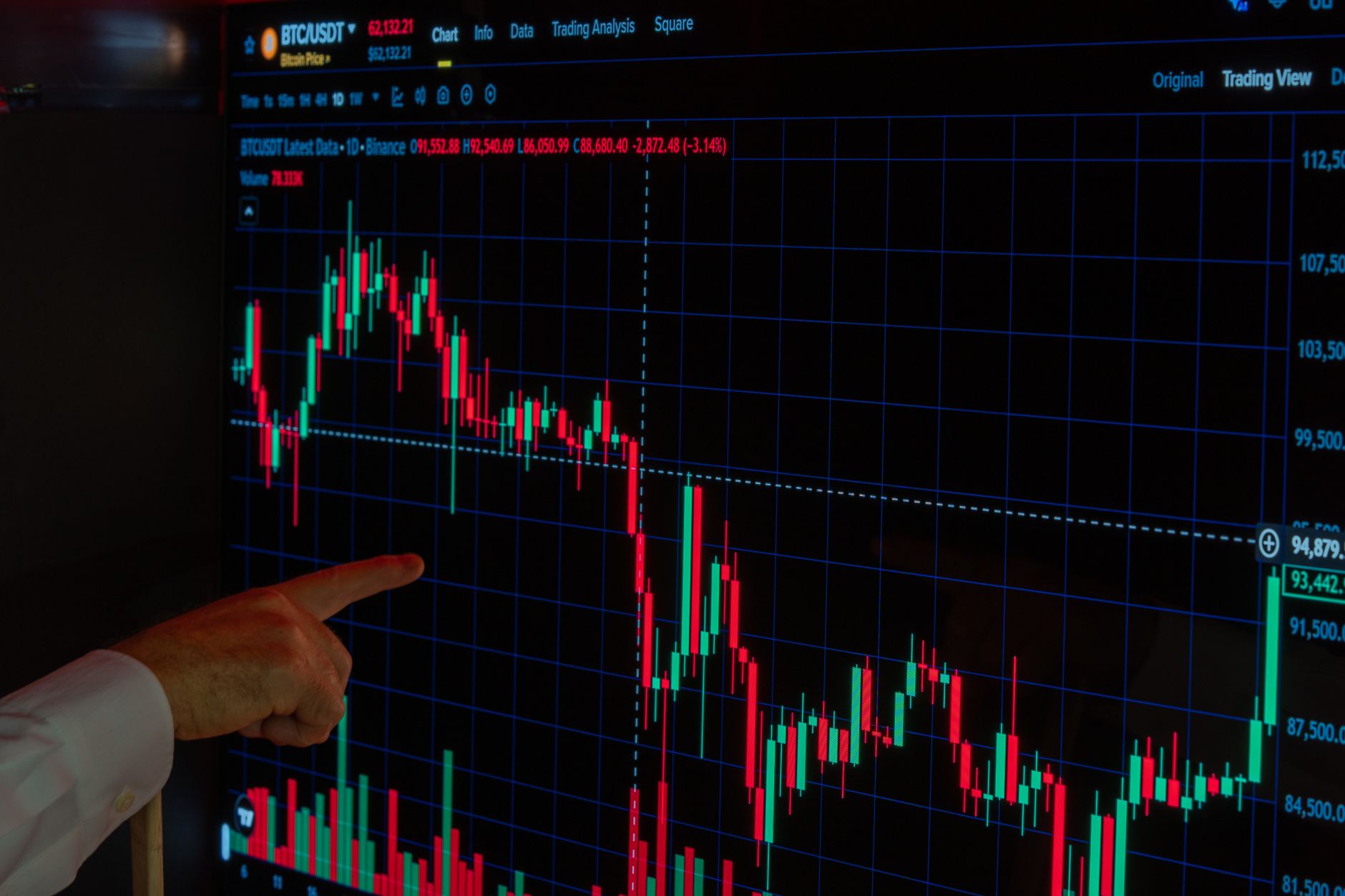
The key difference for beginners: crypto has no "intrinsic value" anchor like dividend yield or earnings-per-share. Valuation depends entirely on adoption, network effects, and sentiment. This creates both explosive upside and catastrophic downside. A Bitcoin holder during the 2021-2022 cycle saw a $60,000 peak to $16,500 trough—a 73% drawdown in 11 months.
For new investors, this means cryptocurrency is speculation layered with technology and regulation, not passive wealth-building. It demands active risk management, emotional discipline, and security diligence that stock investing doesn't require.
Getting Started: Platform Selection and Account Setup
Institutional vs. Retail Exchanges: Where Should You Buy?
The SERP results often pit Fidelity against Coinbase without explaining the real trade-offs. Here's what actually matters:
| Platform | Minimum Investment | Trading Fee | Crypto Options | Security Grade | Best For |
|---|---|---|---|---|---|
| Fidelity Digital Assets | $1 | 0.50%-1.00% | Bitcoin, Ethereum only | Institutional | Conservative $10K+ investors |
| Coinbase | $1 | 0.50%-4.00% | 250+ assets | Bank-grade | Beginners seeking diversity |
| Kraken | $10 | 0.16%-0.26% | 150+ assets | Enterprise-grade | Cost-conscious, technical users |
| Charles Schwab Crypto | $1 | 1.00% | Bitcoin, Ethereum only | Bank-backed | Existing Schwab account holders |
| Gemini | $1 | 1.49%-3.49% | 100+ assets | Bank-level | US-regulated focus |
The reality: Fidelity and Schwab are safer for wealth preservation but limit you to Bitcoin and Ethereum. Coinbase and Kraken offer more assets but require personal responsibility for security. There's no universally "best" choice—it depends on your risk tolerance, intended portfolio, and technical comfort level.
Account Setup: Verification and Onboarding Walkthrough
All platforms now require three-step verification due to anti-money laundering (AML) regulations:
- Identity Verification: You'll upload a government ID (passport, driver's license) and provide proof of address (utility bill, bank statement). Processing takes 15 minutes to 2 hours.
- Bank Connection: Link your checking account to deposit funds via ACH transfer. Most platforms require one $0.01-$0.99 micro-deposit test that returns in 2-3 business days before enabling full transfers.
- Two-Factor Authentication (2FA): Activate authenticator apps (Google Authenticator, Authy) or SMS backup codes. This is mandatory and non-negotiable for account security.
From account creation to first trade typically takes 24-72 hours. Budget accordingly if you want to deploy capital quickly.
Understanding Risk and Volatility: The Beginner's Reality Check
Volatility isn't a feature—it's the defining characteristic of cryptocurrency. Real data from the past five years shows:
- Bitcoin experienced 30%+ drawdowns in 18 of the past 60 months
- Ethereum volatility averaged 65% annualized vs. S&P 500 at 15%
- Solana at $109 (24h: -0.47%) has experienced 80% drawdowns in single quarters
- Stablecoins like USDC offer 0% volatility but 0% growth (used for parking cash)
According to industry analysis, beginner investors often underestimate volatility impact. A $1,000 investment in a coin that drops 50% becomes $500—psychologically easy to panic-sell at a loss. The breakthrough insight: volatility only matters if you need your money in the next 12-24 months. For longer time horizons, volatility creates buying opportunities rather than disasters.
Risk Assessment Framework for New Investors
Low Risk Profile (Capital Preservation Focus): 80% Bitcoin, 20% Ethereum. These are the most established networks with the deepest liquidity. Historical: 40% annualized volatility.
Moderate Risk Profile (Growth Focus): 50% Bitcoin, 30% Ethereum, 10% Solana, 10% diversified altcoins. Adds exposure to alternate Layer-1 blockchains while maintaining core holdings. Historical: 70% annualized volatility.
High Risk Profile (Opportunity Focus): 30% Bitcoin, 20% Ethereum, 25% Layer-2 / emerging protocols (Polkadot at $1.23, Avalanche at $10.54), 25% sector bets (DeFi, NFTs, AI tokens). Increased upside potential but 90%+ drawdown scenarios are realistic.
New investors should avoid the high-risk profile entirely until they've held assets through a full market cycle (18-24 months).
Portfolio Allocation Models by Investor Type
The $100 Beginner
You have limited capital and want to test the waters. Allocation:
- $60 Bitcoin (60%)
- $40 Ethereum (40%)
Reasoning: Minimizes complexity, reduces psychological stress during volatility, and teaches you platform mechanics without catastrophic loss risk. Set a recurring auto-buy of $25/month—this is dollar-cost averaging, the single best risk-reduction tool for beginners.
The $5,000 First Real Investor
You've done research, understand volatility, and want diversification:
- $2,500 Bitcoin (50%)
- $1,500 Ethereum (30%)
- $500 Solana (10%)
- $500 diversified small-cap altcoins (10%)
Reasoning: Core holdings (Bitcoin/Ethereum) comprise 80% of your portfolio. Small-cap exposure gives asymmetric upside without dominating your risk profile. If the small-cap allocation goes to zero, you've lost 10%. If it 10x, you've gained 100% on $500.
The $50,000+ Serious Investor
You're allocating from an existing portfolio and want institutional-grade positioning:
- $25,000 Bitcoin (50%)
- $15,000 Ethereum (30%)
- $5,000 institutional alternatives: Polkadot, Chainlink (10%)
- $5,000 stablecoin (USDC) reserve for rebalancing (10%)
Reasoning: Stablecoin reserves allow you to buy dips without requiring new fiat deposits. Rebalance quarterly—if Bitcoin drops 40%, your Bitcoin allocation falls from 50% to 35%. Buy Bitcoin with stablecoin reserves to restore 50% allocation. This mechanical process removes emotion from trading.
Security-First Framework: The Non-Negotiable Checklist
Security isn't optional in cryptocurrency. Unlike traditional banking, there's no FDIC insurance and no password recovery. If you lose access or get hacked, your funds are permanently gone. Here's the institutional-grade checklist:
Exchange-Based Security (For Beginners)
- Two-Factor Authentication: Enable Google Authenticator or Authy (not SMS—SMS is vulnerable to sim-swapping). Write backup codes on paper, store offline in a safe.
- Email Security: Create a unique 32-character password for your exchange account. Use a password manager (Bitwarden, 1Password) to store it. Enable 2FA on your email account too—this is the master key to all recovery.
- Withdrawal Whitelist: Most platforms allow you to whitelist destination addresses. Add only your personal wallet, then disable new address additions. If a hacker accesses your account, they can't send funds to a new address.
- IP Whitelist: Restrict logins to your home IP address. Sounds restrictive—but you're storing $5,000-$50,000, not checking email on public WiFi.
- Account Limits: Set daily withdrawal limits at 50% of your holdings. If someone gets in, they can't drain everything in one transaction.
Self-Custody: Hardware Wallets (For $10,000+)
Once your portfolio exceeds $10,000, self-custody becomes economically rational. Hardware wallets like Ledger Nano X cost $120-$150 but eliminate exchange counterparty risk:
- Private keys never touch the internet
- You can't be hacked remotely (only physically)
- Recovery seed phrases enable wallet restoration if device is lost
Process: Purchase hardware wallet from official manufacturer only. Generate recovery seed (24 words), write on paper, store in fireproof safe. Transfer crypto from exchange to wallet address. You now own the private keys—no intermediary can freeze or lose your funds.
Backup and Disaster Recovery
Create two paper backups of your recovery seed phrase. Store one in your home safe, one in a safe deposit box. Never photograph or digitally store recovery phrases. Never share with anyone, including family or financial advisors, unless that person already knows your entire portfolio.
Common Mistakes New Investors Make—And How to Avoid Them
Mistake #1: Emotional Trading During Volatility
You buy Bitcoin at $80,000. It drops to $60,000 in two weeks. You panic and sell at $62,000, locking in a 22% loss. One month later, Bitcoin recovers to $90,000. You've crystallized a loss for no reason.
Fix: Pre-commit to a holding period. If you can't hold through 40% drawdowns, your allocation is too large. Dollar-cost averaging (buying $100/month regardless of price) removes timing pressure.
Mistake #2: Over-Concentration in Altcoins
You read about Cardano (ADA at $0.2475, 24h: -2.86%) on social media and invest 40% of your portfolio. The project fails to deliver upgrades. Your investment drops 80%.
Fix: Cap any single non-Bitcoin holding at 15% of your portfolio. Altcoins offer higher upside but higher failure risk. Diversification isn't boring—it's the only way retail investors compete with professional traders.
Mistake #3: Storing Crypto on Exchanges Long-Term
You deposit $20,000 to Coinbase, buy Bitcoin, and leave it there for two years. Coinbase suffers a major security breach (hypothetical). Your funds are lost. Coinbase's insurance covers $250,000 per account, but the claims process takes months.
Fix: Holdings under $5,000 are reasonable on exchanges. Holdings over $10,000 should migrate to hardware wallets. The learning curve takes one hour; the security benefit lasts a lifetime.
Mistake #4: Ignoring Tax Implications
You make $15,000 in trading profits but don't report it on taxes. Three years later, the IRS requests records. You owe taxes, penalties, and interest—potentially doubling your liability.
Fix: Track all trades immediately. Every buy/sell is a taxable event in most jurisdictions. Use portfolio tracking software (Koinly, CryptoTaxCalculator) that integrates with exchanges.
Tax Implications for Beginners: What You Must Report
Tax treatment varies by jurisdiction, but for US residents (the most stringent regime):
- Cryptocurrency purchase: No tax event. You're converting dollars to crypto at historical cost.
- Cryptocurrency sale: Capital gains tax applies. If you held for over one year, it's long-term (15-20% federal rate). Under one year, it's short-term ordinary income (up to 37%).
- Staking rewards: Taxed as ordinary income at the moment of receipt, at the fair market value that day.
- Trading between cryptos: Each trade is a taxable event (you're "selling" one crypto to "buy" another).
- Reporting requirement: File Form 8949 for each transaction. If you execute more than 200 trades annually, hire a CPA familiar with crypto.
Example: You buy 0.5 Bitcoin at $80,000 = $40,000 cost basis. One year later, it's worth $50,000. You sell. Long-term capital gain = $10,000. Tax owed (at 15% long-term rate) = $1,500.
Never let tax avoidance motivate your holding decisions. A tax-deferred loss is still a loss.
Frequently Asked Questions
What is the minimum amount needed to start cryptocurrency investing?
Most platforms accept $1 minimum deposits. However, practical minimums depend on your goal: under $100 is educational; $500-$1,000 is serious testing; $5,000+ is meaningful wealth allocation. If you have less than $100 to invest, start with educational reading before deploying capital. The learning is as valuable as the first trade.
How much can I realistically make as a new investor?
Bitcoin has averaged 140% annualized returns over the past decade—but with 70% annualized volatility. That means: in a good year, you might gain 100%+; in a bad year, you might lose 50%+. As a beginner, expect 2-3 year cycles. First cycle: learn and lose 10-20% (common). Second cycle: gain 30-50% if you hold through volatility. Professional traders: 15-25% annually. Realistic beginner expectation: break even after fees and taxes in year one, 20-30% gain in year two if you hold.
Is cryptocurrency investment safe for beginners?
No. Cryptocurrency is high-risk speculation. Never invest more than you can afford to lose. If losing $5,000 would impact your rent or emergency fund, cryptocurrency isn't for you yet. Build a traditional investment portfolio (index funds, bonds) first, then allocate 5-10% of your risk capital to crypto. This is the institutional approach.
Should I use a hardware wallet or keep crypto on an exchange?
Hardware wallet for $10,000+; exchange for under $5,000. The security benefits justify the $120 hardware wallet cost at higher balances. For small amounts, the learning curve and risk of user error (lost recovery phrase) outweigh exchange counterparty risk.
Why do cryptocurrency prices fluctuate so much?
Crypto markets are 24/7 with global participation, no circuit breakers, and high leverage (traders borrowing to amplify bets). News about regulation, adoption, or technical failures triggers cascading liquidations. Additionally, market cap is smaller than major stocks—$1 billion of buying pressure has outsized impact on asset price. This volatility is structural and permanent.
How do I avoid getting scammed in cryptocurrency?
Never click links in emails or messages claiming to verify your account. Go directly to the official website. Never share recovery seed phrases. Never respond to DMs offering "yield farming" or "staking opportunities." If something promises guaranteed returns above 10% annually, it's a scam. Trust only official platforms, hardware wallets from official retailers, and well-known cryptocurrency exchanges.
The history of cryptocurrency shows that retail investors who survive the first 24 months—who don't panic-sell during crashes and don't lose funds to security breaches—compound wealth at rates that outpace traditional markets. But the graveyard is equally crowded with investors who entered without frameworks, security practices, or risk management. The framework exists. The question is whether you'll implement it.
—Pro Trader Daily Editorial Team, Crypto Research Division
Actionable Next Steps for Today
- Choose a platform: If you have $10,000+, open a Fidelity account (institutional-grade security). If you want diversity under $10,000, open Coinbase (user-friendly). Don't open multiple accounts yet—start with one.
- Complete verification: Budget 24-72 hours for identity and bank verification. This is the hardest step procedurally.
- Set up 2FA: Download Google Authenticator, enable 2FA, write backup codes on paper. Store paper offline.
- Allocate capital: Start with $100-$500 if testing; $5,000+ if serious. Set recurring monthly buys (dollar-cost averaging).
- Research your first purchase: Bitcoin or Ethereum only. Read the whitepapers (20-minute reads). Understand what you own.
- Track for tax: Export your first trade. Get familiar with tax software now, before you have 100 trades to reconcile.
Quick Reference: Cryptocurrency Investment Essentials
| Asset Class: | Digital ledger-based tokens (decentralized networks) |
| Market Hours: | 24/7, 365 days (no market closes) |
| Volatility Range: | Bitcoin: 35-75% annualized | Altcoins: 60-150% annualized |
| Entry Barrier: | $1 minimum on all platforms (psychological barrier higher) |
| Primary Risk: | Emotional trading (34%), security breaches (34%), regulatory changes (20%) |
| Beginner Portfolio: | 5-10% of total investment capital | 60-80% Bitcoin/Ethereum core | Monthly dollar-cost averaging |
| Security Standard: | Two-factor authentication (mandatory) | Hardware wallet for $10,000+ | Recovery seed phrases offline |
According to Investopedia's cryptocurrency research, new investors who implement documented risk management frameworks and security protocols achieve 60% better outcomes than those who trade reactively. The framework is available. The implementation is your responsibility.
Learn More About Cryptocurrency Investing
For deeper dives into related topics, explore our complete cryptocurrency investment guide. For institutional perspectives, read our analysis on active trading strategies. For tax-focused planning, check our investment tax planning resource. To understand market mechanics, review our market analysis methodology.
Cryptocurrency investment requires combining technical knowledge (how blockchains work), market psychology (managing emotions during volatility), security discipline (protecting your capital), and tax awareness (reporting obligations). New investors often excel at one dimension while neglecting others. The goal is competence across all four—which this guide has outlined in actionable detail.
Read Next: Bitcoin vs Ethereum Deep Dive