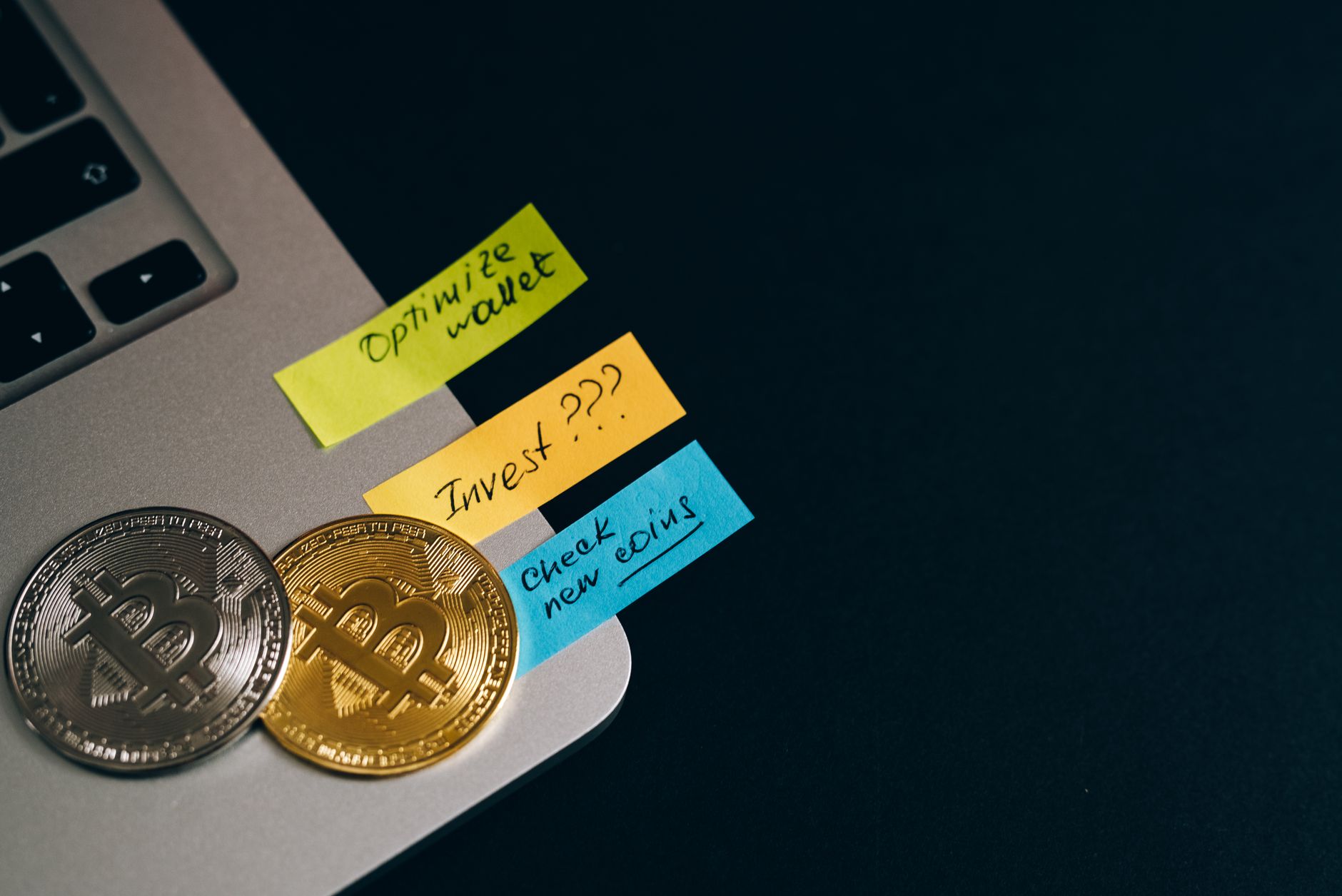
Why Cryptocurrency Investment Risks and Opportunities Demand Your Attention in 2026
The cryptocurrency market has matured significantly since Bitcoin's inception in 2009, yet it remains fundamentally different from traditional asset classes. Today's crypto ecosystem presents an unusual paradox: institutional adoption has never been higher, regulatory frameworks are becoming clearer across major jurisdictions, and yet individual investors still face unprecedented risks that don't exist in stock or bond markets.
This contradiction creates both danger and opportunity. Understanding where both intersect is not optional—it's essential for anyone considering cryptocurrency exposure. This comprehensive guide breaks down the real risks, measurable opportunities, and practical frameworks to assess which path makes sense for your financial goals.
1. Market Volatility and Price Fluctuations
Volatility is the cryptocurrency market's defining characteristic—and its central risk factor. As of October 10, 2026, Bitcoin trades at $82,714 (24h change: -0.01%), Ethereum at $2,495 (24h change: 0.40%), and Solana at $110 (24h change: 0.05%). These single-day movements appear modest, but the underlying asset class exhibits annualized volatility rates that would be considered catastrophic in traditional finance.
The volatility stems from three interconnected factors: limited market depth compared to equities, extreme sentiment swings driven by social media and retail participation, and the asset class's relatively young maturity. A major institutional announcement, regulatory statement, or macroeconomic shift can trigger 15-20% price movements in hours.
Real Historical Examples:
- March 2020: Bitcoin crashed 50% in 48 hours during the initial COVID-19 market panic, from $7,900 to $3,800
- May 2021: Bitcoin fell 35% following Elon Musk's Tesla announcement to halt Bitcoin payments
- November 2022: FTX collapse triggered a 20% Bitcoin decline and wiped $8 billion in liquidations across crypto markets
- June 2022: Terra Luna cryptocurrency collapsed from $80 to $0.0002 in three weeks—a loss of 99.99% for holders
Impact on Portfolio: A $10,000 cryptocurrency position in a portfolio otherwise worth $100,000 could experience daily losses exceeding $1,000 during volatile market conditions. For investors relying on stable assets for near-term goals, crypto volatility creates unacceptable risk concentration.
2. Regulatory and Legal Risks by Region
Regulatory uncertainty remains the most material forward-looking risk for cryptocurrency investors. Unlike stock markets where regulatory frameworks have existed for 80+ years, crypto regulation is being written in real-time across different jurisdictions with conflicting approaches.
| Region | Current Status (October 2026) | Key Risk | Investor Impact |
|---|---|---|---|
| United States | SEC classification evolving; Bitcoin futures approved; spot ETFs authorized 2024 | Tax reporting complexity; potential exchange restrictions; ETF regulatory changes | High compliance burden; possible forced liquidations if classification changes |
| European Union | MiCA (Markets in Crypto-Assets Regulation) enforced June 2024 | Stringent AML requirements; staking restrictions; custody rules | Reduced exchange options; higher compliance costs; limited DeFi access |
| United Kingdom | FCA regulatory framework active; stablecoins designated payment system | Leverage restrictions on retail; position size limits; advertising controls | Limited leverage trading; reduced marketing; clear rules reduce uncertainty |
| Asia-Pacific | Singapore (MAS framework), Japan (clear licensing), Hong Kong (limited but regulated) | Variable by country; China maintains strict prohibition; India tax classification uncertain | Best opportunities for regulated access; but geographic arbitrage reduced |
Practical Regulatory Risk Scenario: An investor holding staking positions in Ethereum faces regulatory uncertainty in the EU regarding whether staking constitutes a regulated financial service. The FCA in the UK has flagged leverage restrictions on retail crypto trading effective 2025. If regulatory enforcement tightens globally, certain investment strategies could become illegal overnight, forcing liquidation at unfavorable prices.
3. Security Threats and Custody Risks
Cryptocurrency exists only as digital data secured by cryptography and blockchain networks. This creates security vulnerabilities that traditional asset classes don't face. According to Investopedia's cryptocurrency security standards, approximately $3.8 billion in cryptocurrency theft and fraud occurred in 2022 alone—and the threat surface continues expanding.
Security Risk Categories:
- Exchange Hacking: Centralized exchanges holding user funds remain attractive targets. FTX's November 2022 collapse resulted in $8 billion in customer funds becoming inaccessible. Investors who held assets on FTX lost everything; those with self-custody faced no direct loss.
- Wallet Compromise: Private keys stored on internet-connected devices (hot wallets) face phishing, malware, and social engineering attacks. A compromised private key grants complete access to all associated funds with no recovery mechanism.
- Custody Infrastructure: Institutional custody solutions (Coinbase Custody, Kraken Custody) add complexity and fees but reduce personal security burden. Non-custodial options (hardware wallets, multisig solutions) require technical competence to operate safely.
- Smart Contract Risk: DeFi protocols relying on smart contracts face code vulnerabilities. The $100+ million Poly Network hack (August 2021) and Ronin Bridge hack ($625 million, March 2022) demonstrated that even audited smart contracts contain exploitable vulnerabilities.
Essential Security Framework:
- Cold Wallets: Use hardware wallets (Ledger, Trezor) for positions held longer than 3 months. These devices keep private keys offline and require physical authorization for transactions.
- Two-Factor Authentication: Enable 2FA on all exchange accounts using authenticator apps (Google Authenticator, Authy)—not SMS, which remains vulnerable to SIM swapping attacks.
- Multisignature Solutions: For holdings exceeding $50,000, consider multisig wallets requiring multiple private keys to authorize transactions (e.g., 2-of-3 multisig with keys held by different entities).
- Exchange Selection: Use regulated exchanges with demonstrated security track records and insurance coverage (Coinbase carries $250 million in insurance coverage; Kraken maintains independent security audits).
4. Psychological Risks and Emotional Decision-Making
Cryptocurrency markets amplify psychological biases that impair investment decisions. The extreme price swings, 24/7 market operation, and social media commentary create an environment where emotional decisions dominate rational planning.
Common Emotional Traps:
- FOMO (Fear of Missing Out): Watching Bitcoin rise 200% in a year triggers buying urgency at market peaks. Data shows retail investors consistently buy during bull markets (top quartile of performance) and sell during bear markets (bottom quartile)—the opposite of profitable timing.
- Loss Aversion Amplified: A 50% cryptocurrency decline feels 2-3 times worse than a 50% stock decline, causing panic selling at market bottoms. This is mathematically costly: investors who panic-sold Bitcoin in March 2020 (at $3,800) missed an 1,800% recovery within 18 months.
- Narrative Following: Media coverage of crypto is heavily narrative-driven. Positive stories ("Bitcoin to $100,000 by year-end") drive buying enthusiasm regardless of fundamental justification. Negative stories ("Crypto Crash Continues") drive capitulation selling. Professional investors make decisions regardless of narrative; retail investors often follow it.
- Position Sizing Errors: Cryptocurrency's volatility should be reflected in smaller position sizes, but excitement often leads to oversized allocations. A "small position" of 5% of a portfolio creates 50% portfolio swings during crypto downturns, triggering forced selling to rebalance.
Psychological Mitigation Strategies: Set allocation targets before entering the market (e.g., 2-5% of portfolio maximum). Use limit orders to execute purchases at predetermined prices rather than market orders during sentiment peaks. Establish a rebalancing schedule (quarterly or semi-annual) that forces selling strength and buying weakness—the opposite of emotional impulses. Remove real-time price monitoring tools during volatile periods; checking daily prices increases emotional reactivity without improving long-term outcomes.
5. Tax Implications and Reporting Requirements
Cryptocurrency taxation remains unnecessarily complex and differs significantly across jurisdictions. Many investors underestimate their tax liability, creating significant compliance and financial risk.
United States Taxation (IRS Framework):
- Cryptocurrency is classified as property, not currency—each transaction triggers a taxable event
- Trading one cryptocurrency for another (e.g., swapping Ethereum for Bitcoin) creates a taxable gain/loss, even without fiat conversion
- Staking rewards are taxed as ordinary income at the reward date (not exit date)—creating situations where you owe taxes on gains before you sell positions
- Long-term capital gains (held 1+ year) receive favorable rates; short-term gains tax as ordinary income
- IRS Form 8949 and Schedule D required for all cryptocurrency transactions; omission can trigger penalties and interest charges
European Union and UK Taxation: The EU's approach varies by member state, with some countries (Germany) treating crypto as foreign exchange (favorable for long-term holdings), while others (France) apply standard capital gains rates. The UK applies 20% capital gains tax on crypto profits, similar to stocks and property. Always consult local tax professionals—cross-border rules add complexity for investors in multiple jurisdictions.
Practical Tax Planning: Use FIFO (First In, First Out) accounting methods rather than default HIFO (Highest In, First Out) if planning to realize losses in down years. Harvest tax losses by selling positions at a loss and repurchasing different cryptocurrencies 31+ days later (avoiding wash-sale restrictions). Document all transactions meticulously—exchanges provide transaction history, but backup records prevent future disputes with tax authorities.
6. DeFi-Specific Risks vs. Traditional Crypto
Decentralized Finance (DeFi) protocols add an additional layer of complexity and risk beyond holding traditional cryptocurrencies. DeFi involves lending, borrowing, and trading through smart contracts without intermediaries.
DeFi-Specific Risk Factors:
- Smart Contract Vulnerability: Unlike traditional finance, DeFi has no insurance fund or regulatory backup. A code vulnerability doesn't trigger regulatory protection—it results in permanent loss. Audited protocols still face exploits (Curve Finance suffered a $61 million exploit in July 2023 despite multiple audits).
- Flash Loan Attacks: Unique to blockchain, attackers borrow massive sums for single blocks, manipulate prices, and repay loans within microseconds. Victims experience permanent loss. This attack vector has no traditional finance equivalent.
- Liquidation Cascades: Lending protocols use collateralization models. When collateral values drop rapidly, automated liquidations trigger forced sales at below-market prices, creating losses beyond position value. During May 2022's market crash, users of Celsius Network and Voyager Digital faced sudden liquidations despite holding profitable positions.
- Regulatory Uncertainty: DeFi protocols operate in extreme regulatory gray zones. A protocol classified as an unregistered security or investment fund triggers enforcement action, potentially freezing user funds indefinitely.
Risk Assessment: Traditional cryptocurrency holdings (Bitcoin, Ethereum) held in self-custody carry security risk but no protocol risk. DeFi participation adds protocol risk, liquidation risk, and regulatory risk on top. For most retail investors, the yield premium from DeFi staking (4-8% annually) doesn't justify these incremental risks; traditional cryptocurrency allocation with 2-3 year holding periods remains the simpler path.
7. Real Investment Opportunities in Crypto
Offsetting these substantial risks are genuine investment opportunities that don't exist in traditional asset classes. These opportunities require disciplined execution and realistic time horizons.
1. Portfolio Diversification: During the 2022 bear market when S&P 500 fell 18%, Bitcoin declined 65%—poor correlation advantage. However, during the March 2020 COVID crash, Bitcoin recovered 50% while stocks took 6 months to recover. The diversification benefit is real but inconsistent. A 2-5% cryptocurrency allocation provides meaningful upside exposure with manageable downside concentration.
2. Bitcoin as Institutional Asset Class: Bitcoin's approval as futures (December 2017), inclusion in major indices, and spot ETF authorization (January 2024 US, June 2024 EU) transformed it from retail speculation to institutional investment vehicle. Institutions including major pension funds, insurance companies, and endowments now hold Bitcoin as portfolio component. This institutional adoption signals reduced likelihood of regulatory prohibition and increased price stability over 5-10 year periods.
3. Ethereum Network Value: Ethereum's transition to Proof-of-Stake (September 2022) established it as a platform generating tangible network value through transaction fees and staking rewards. Unlike Bitcoin's pure scarcity value, Ethereum captures value from network usage. The platform processes $5+ billion in daily transaction volume, creating genuine economic moat.
4. Emerging Markets Remittance Use Case: Cryptocurrency enables faster, cheaper cross-border remittances than traditional banking. Remittances to emerging markets exceed $600 billion annually; blockchain-based alternatives reduce fees from 3-7% to under 1%. This practical utility creates long-term value outside speculation cycles.
5. Cryptocurrency as Monetary Option: As global central banks face sustained inflation and negative real interest rates, cryptocurrency's programmatic supply constraints offer alternative value storage. El Salvador's adoption of Bitcoin as legal tender (though politically controversial) demonstrates this practical use case. Countries with currency instability increasingly view cryptocurrency as hedge against debasement.
8. How to Mitigate Cryptocurrency Risks
Comprehensive Risk Management Framework:
- Position Sizing Discipline: Limit cryptocurrency allocation to 2-5% of total investable assets for conservative investors, 5-10% for moderate risk tolerance, maximum 10-15% for aggressive portfolios. This ensures volatility doesn't overwhelm total portfolio performance. A 3% crypto position delivering +200% contributes +6% portfolio return; a -80% loss contributes -2.4% loss.
- Dollar-Cost Averaging Entry: Rather than deploying capital in lump sum (timing risk), invest fixed amounts monthly or quarterly. This reduces impact of entry-point selection and removes decision-making from peak emotion periods. Investing $1,000 monthly for 12 months in Bitcoin smooths out individual monthly volatility.
- Cold Wallet Custody Implementation: For holdings exceeding $10,000, use hardware wallets (Ledger Nano S or Trezor Model T). Cost ($60-150 one-time) is trivial insurance against exchange failure or hacking. Recovery phrase stored securely provides permanent access even if device lost or destroyed.
- Stop-Loss Discipline (With Limits): Set predetermined exit prices representing maximum tolerable loss (e.g., 40-50% below entry price). This prevents emotional hold decisions during capitulation phases. However, stop-losses in crypto trigger during temporary crashes followed by recoveries—set wider stops (40-50%) than traditional equity stops (20-25%) to avoid false exits.
- Rebalancing Schedule: Quarterly or semi-annual rebalancing forces mathematical discipline: sell positions up to target allocation, buy positions down to target allocation. A 3% portfolio target becoming 8% due to price appreciation gets trimmed; a 3% target becoming 1.2% due to decline gets added to.
- Tax-Loss Harvesting: Systematically sell losing positions to offset gains from winning positions. A portfolio with some positions down 50% and others up 200% can crystallize losses against gains, reducing tax liability substantially while maintaining market exposure through replacement purchases.
- Multi-Signature Custody for Large Holdings: For positions exceeding $100,000, implement 2-of-3 or 3-of-5 multisignature wallets. Requires multiple key holders to authorize transactions, preventing single-point compromise while avoiding complete fund loss if one keyholder becomes incapacitated.
9. Risk Assessment Framework for Beginners
Before investing in cryptocurrency, assess your personal risk profile using this structured framework:
| Risk Factor | Conservative Investor | Moderate Investor | Aggressive Investor |
|---|---|---|---|
| Time Horizon | 10+ years | 5-10 years | 2-5 years |
| Emergency Fund Status | 6-12 months expenses saved | 3-6 months expenses saved | 1-3 months expenses saved |
| Debt Status | No high-interest debt | Minimal debt | Manageable debt load |
| Risk Tolerance Test | Comfortable with -40% swings | Comfortable with -60% swings | Comfortable with -80% swings |
| Recommended Allocation | 2-3% of portfolio | 5-7% of portfolio | 10-15% of portfolio |
| Suggested Asset Mix | 80% Bitcoin, 20% Ethereum | 60% Bitcoin, 30% Ethereum, 10% other | 40% Bitcoin, 40% Ethereum, 20% other |
| Custody Method | Regulated exchange with insurance | Hardware wallet or custody solution | Hardware wallet or multisig |
| Trading Frequency | Buy and hold 5+ years | Quarterly rebalancing only | Monthly rebalancing permitted |
Self-Assessment Questions: Can you afford to lose your entire cryptocurrency investment without impacting essential lifestyle or financial obligations? Would a 50% portfolio loss trigger emotional selling decisions? Do you have technical competence to manage self-custody, or prefer exchange convenience? Do you have time to research and monitor holdings, or prefer passive accumulation? Your answers determine both allocation size and implementation method.
Frequently Asked Questions
What is cryptocurrency investment risk exactly, and how does it differ from stock market risk?
Cryptocurrency risk differs in magnitude and type from equities. Stock market volatility typically ranges 15-20% annually; cryptocurrency volatility reaches 75-150% annually. Equities derive value from company earnings and cash flow—fundamental metrics investors can evaluate. Cryptocurrencies derive value from network adoption, regulatory acceptance, and market sentiment—factors harder to quantify. Additionally, stock losses are limited to investment amount (worst case 100% loss); cryptocurrency holders face total permanent loss from exchange hacking or protocol failure with no insurance recovery (unlike FDIC protection for bank deposits). The risk is not just higher—it's fundamentally different in character.
Is it safe to store cryptocurrency on exchange versus in a personal wallet?
Each approach presents different safety tradeoffs. Exchange storage (Coinbase, Kraken) offers convenience, regulatory protection in some jurisdictions, and insurance coverage against hacking ($250 million at Coinbase). Disadvantage: exchange solvency risk (FTX example) and regulatory seizure risk if jurisdiction changes policies. Personal wallet storage (hardware wallets like Ledger) eliminates exchange risk and regulatory seizure but creates user error risk—lost private keys mean permanent inaccessibility with no recovery. For holdings under $10,000 with less than 12-month holding period, exchange custody with major regulated platform offers optimal safety. For holdings over $10,000 or long-term positions, hardware wallet custody eliminates counterparty risk entirely. Best practice: split holdings between both methods, reducing concentration in either risk type.
How much of my portfolio should realistically be in cryptocurrency?
Financial literature suggests 2-5% as prudent maximum for diversified portfolios, with 5-7% acceptable for investors with high risk tolerance and long time horizons. This allocation size produces meaningful upside exposure while capping downside impact. A $100,000 portfolio with 5% cryptocurrency ($5,000) experiencing -80% loss costs $4,000—painful but manageable; a 20% cryptocurrency position ($20,000 loss) often triggers forced selling into other assets. Allocations exceeding 15% require specific risk acceptance and typically indicate concentrated bet rather than diversified allocation. Consider your employment sector: technology workers already have concentrated exposure to digital disruption; cryptocurrency adds redundant concentration unless specifically intended.
Why is Bitcoin more established than other cryptocurrencies, and does that make it less risky?
Bitcoin's 17-year operating history without network failure establishes it as most proven cryptocurrency. It has survived multiple regulatory threats, technical attacks, and economic cycles. This track record reduces existential risk (protocol failure, regulatory prohibition) compared to newer projects with limited operational history. However, Bitcoin remains high-volatility asset—its established status reduces technology risk and regulatory prohibition risk, but not price volatility risk or macro economic risk. A 30% Bitcoin price decline is entirely possible and probable during bear markets, even though 100% permanent loss from technical failure is much lower than for speculative altcoins. Established status reduces certain risk categories while leaving others untouched.
What tax implications should I consider before investing in cryptocurrency?
Taxation is jurisdiction-dependent but universally significant. In the US, every cryptocurrency transaction (trading one coin for another, even without cash withdrawal) creates taxable event requiring calculation of gains or losses. Staking rewards count as ordinary income the moment received, creating tax liability before you sell the position—potentially on unrealized gains. Long-term holdings (12+ months) receive capital gains rates (15-20% for many investors) versus short-term rates (ordinary income, up to 37%). Failing to report cryptocurrency transactions triggers IRS penalties, interest charges, and potential criminal prosecution for deliberate evasion. Before investing, consult tax professional regarding required documentation, tax-efficient transaction methods, and reporting procedures. This planning cost ($500-1,500 in professional consultation) is trivial relative to tax liability managed improperly.
Is DeFi (decentralized finance) a good opportunity or excessive risk for most investors?
DeFi presents real yield opportunities (4-12% annually from staking, liquidity provisioning, lending) but layers risks beyond simple cryptocurrency holding. Smart contract vulnerability, liquidation cascade risk, and regulatory uncertainty create loss vectors that don't exist in direct cryptocurrency ownership. For most retail investors, DeFi yield premiums (2-6% above baseline cryptocurrency holdings) don't justify the additional complexity and risk. However, for sophisticated investors with technical understanding, liquidation risk management, and sized positions (not critical to financial stability), DeF