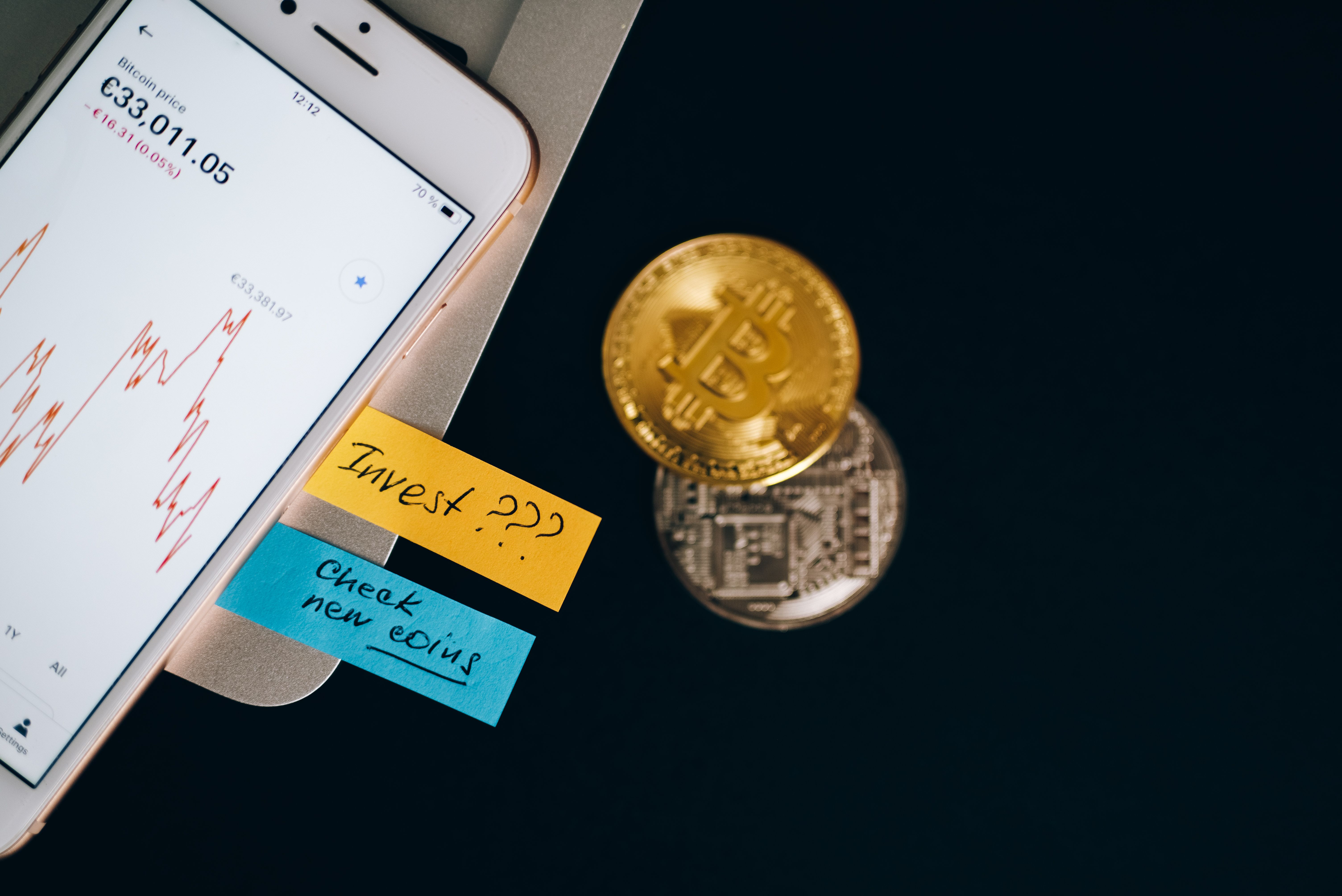
What Are the Best Crypto Trading Signals Available? Guide
Most people searching for the best crypto trading signals have already seen the promise: copy a Telegram call, catch the pump, quit your job. Then the entry price is gone, the stop is missing, and the "VIP room" costs more than the trade made.
That outcome is common enough that, in the discussion data we reviewed, none of the five posts with a clear opinion were positive. This guide ranks what can be backed with facts, shows how to judge any signal source, and says plainly where the evidence runs out.
What crypto trading signals are and how they work

A trading signal is a trigger to buy or sell an asset, generated by analysis. In crypto, signals come in three forms:
- Manual calls: a person posts an entry, targets and a stop-loss in a chat group or channel.
- Indicator alerts: your own chart conditions (a moving-average cross, an RSI level) fire a notification.
- Automated signals: a bot or a webhook message triggers an order on your exchange account.
A usable signal contains six fields: asset and pair, direction, entry zone, stop-loss, take-profit targets, and a validity window. If any of these is missing, the signal cannot be evaluated or sized properly.
What the evidence says
The discussion data comes from 27 public posts on Reddit, Trustpilot and BitcoinTalk. Only 5 carried a clear opinion, and the split was 0 positive, 5 negative, 0 mixed. Top complaints, each mentioned once:
| Complaint theme | Mentions |
|---|---|
| Magic indicators | 1 |
| Exclusive VIP groups | 1 |
| Total scam | 1 |
| Affiliate commission scheme | 1 |
| Unprofitable model | 1 |
| Not worth the time | 1 |
The most-mentioned provider name was AltSignals, with 2 mentions. That is a count of discussion, not an endorsement or a verdict on performance. The sample is small, so treat it as a warning signal and not a measurement of the whole market. It is also all we have, and it points the same way as the missing performance data described below.
Top signal and automation tools, ranked by verifiable features
The provider data available covers charting and automation platforms, not paid signal channels. That is useful: these tools let you generate or execute signals yourself. The ranking below reflects documented features only. It is not a performance ranking, because no verified returns exist for any of them.
1. TradingView: best for building your own alerts
Per the official site, TradingView offers smart alerts, screeners, calendars and a range of chart types. The pricing page lists 8 charts per tab and 50 parallel chart connections. A demo account uses virtual funds, and Bar Replay simulates past price movement, which makes it a practical way to test a signal idea against history before risking money.
2. 3Commas: best for executing signals through webhooks
3Commas lists Free, Pro and Expert plans plus a custom option. Its pricing page cites a demo account, webhook execution and support for 9 exchanges. Webhook execution matters because it lets an alert from a charting tool trigger an order without manual copying.
3. Cryptohopper: best-documented entry pricing
Cryptohopper lists the Explorer plan at $29.00 per month, or $24.16 per month billed annually (a 17% discount). Explorer covers up to 15 coins, runs 24/7 and allows 80 open positions. A 3-day free trial is offered. The site also mentions DCA, trailing features, AI and copy trading, and says a unified-account demo trading mode is live.
4. Pionex: best for a built-in demo before you commit
Pionex runs trading bots in the cloud around the clock. It offers Demo Trading with virtual funds and says new users can claim free trial funds. The "best bot available" line on its site is the platform's own claim, so treat it as marketing and not evidence.
Where Binance fits
Binance appears in this guide only as an exchange where signals are commonly executed. The source data contains no signal-specific features, so we make no claims about it. Check any platform's own documentation for supported order types before you automate.
Pricing and feature comparison
Cells show "—" where the source data gives no figure. Check each official pricing page before paying.
| Platform | Type | Entry price | Demo or trial | Documented features |
|---|---|---|---|---|
| TradingView | Charting and alerts | — | Demo account with virtual funds; Bar Replay | Smart alerts, screeners, 8 charts per tab, 50 parallel chart connections |
| 3Commas | Bots and automation | Free plan exists; paid prices — | Demo account | Webhook execution, 9 exchanges, DCA bot, Free/Pro/Expert/Custom plans |
| Cryptohopper | Bots and copy trading | Explorer: $29.00/mo, or $24.16/mo billed annually | 3-day free trial; demo trading | 15 coins, 24/7, 80 open positions, DCA, trailing, AI, copy trading |
| Pionex | — | — | Demo Trading; free trial funds | Cloud-run bots, 24/7 automated trading |
| Binance | Exchange | — | — | — |
Free vs paid signals
No dataset in our sources compares the accuracy of free and paid signals, so any claim that paid is "more accurate" is unsupported. What can be compared is structure:
| Factor | Free sources | Paid sources |
|---|---|---|
| Cost | None, or a free plan tier | Subscription, often recurring |
| Incentive | Audience growth, referral links | Retention of subscribers |
| Transparency | Varies widely | Varies widely; "exclusive VIP" framing was a named complaint |
| Verification | Usually possible on your own charts | Rarely verifiable without a long, timestamped record |
Payment does not remove the conflict of interest. Both models can earn money from your trading activity through referral links, which is why the "affiliate commission scheme" complaint matters.
Accuracy, backtesting and expectancy
None of the sources provided here publish audited success rates or backtests for any signal service. So this guide gives no win-rate figures. If a provider quotes one, ask for a timestamped record of every signal, including losers, with entries, exits and fees.
Win rate alone says little. Use expectancy: (win rate x average win) minus (loss rate x average loss), measured in units of risk (R).
Illustrative arithmetic only, not real performance: a hypothetical service wins 40% of trades with an average win of 2R and an average loss of 1R. Expectancy is (0.40 x 2) minus (0.60 x 1) = +0.2R per trade. If the average win is 1.2R, expectancy falls to (0.40 x 1.2) minus (0.60 x 1) = minus 0.12R, so the same win rate loses money. Fees and slippage push results lower still.
For your own testing, TradingView's Bar Replay and demo accounts let you replay a signal rule across past price action. Backtests flatter results because they ignore delays and emotional errors, so use them to reject bad ideas, not to prove good ones.
Signal lag, execution timing and conflicting providers
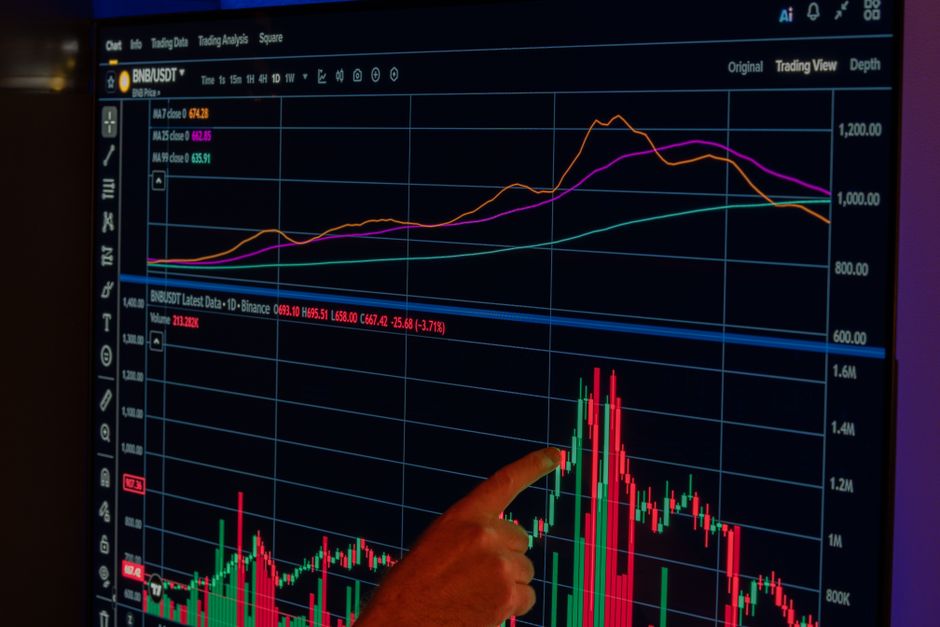
A signal is only as good as the price you actually get. Using real-time market data as of November 16, 2026, Bitcoin trades at $64,816. Take a hypothetical signal with entry at $64,816 and a stop at $63,520, which is $1,296 of risk per coin. If you fill at $65,100 after a delay, with the stop unchanged, your risk grows to $1,580, about 22% more. The target distance shrinks at the same time. This is arithmetic, not a market forecast, but it shows why late entries destroy the expected payoff.
- Use validity windows: skip any signal when price has moved beyond the stated entry zone.
- Prefer limit orders: they cap the price you pay, at the cost of sometimes missing the trade.
- Automate carefully: webhook execution through a platform like 3Commas removes copy-paste delay but also removes your chance to veto a bad alert.
When two providers disagree: one says long Ethereum, another says short. Ethereum currently trades at $1,811, up 4.58% over 24 hours per the same market data. Do not average the two views into a half-sized trade. Pick the source with the better documented record, or skip the trade. Conflicts often mean the market is unclear, and sitting out costs nothing.
Scam red flags and creator verification
Watch for these patterns:
- Guaranteed or fixed returns. No legitimate analyst can guarantee profit.
- "Magic" indicators with no disclosed logic, a theme in the negative user posts.
- Pressure to join an exclusive VIP group or deposit through a specific exchange link.
- Calls pushed on low-liquidity tokens where early insiders can sell into your buying. This is the typical pump-and-dump or rug-pull setup.
- Deleted history. Winners get pinned, losers vanish.
- Requests for API keys with withdrawal permission, or for your seed phrase. Never grant withdrawal rights to any bot or signal service.
Verifying a creator: look for a named person or registered company, a multi-month public record that can be checked against price history, and independent mentions outside their own channels. Check for fee disclosure and referral disclosure. If you cannot confirm who is behind the service, assume you cannot recover money from them.
Signal evaluation checklist
Copy this list into your notes and score any provider before paying.
- Does every signal include entry, stop-loss, targets and a validity window?
- Is there a full, timestamped record including losing trades?
- Can you compute expectancy in R from that record, after fees?
- Is the creator or company identifiable and checkable?
- Are referral links and paid promotions disclosed?
- Does the service avoid guaranteed-return language?
- Is there a trial or demo period, and can you cancel without friction?
- Did you paper-trade the signals first, via a demo account or Bar Replay?
- Does the trade size keep your loss per signal to a small fixed share of your account?
- Do API keys have trading rights only, with withdrawals disabled?
A practical workflow: build, test, then automate
Here is how a careful trader can use the documented tools. Each step relies only on features described in the sources above.
- Define the rule. Write the entry, stop and exit conditions before touching a chart.
- Replay it. Use TradingView's Bar Replay or demo account to apply the rule to past price action and count the results in R.
- Set alerts. Use TradingView alerts to notify you when conditions appear, and decide manually at first.
- Paper trade the execution. Use the demo account on 3Commas, the demo trading on Cryptohopper or Pionex, or the Cryptohopper 3-day trial.
- Go live small. Risk a fixed, small portion of the account per trade, and review fills against intended entries.
Common errors: acting on an alert whose entry zone has expired, forgetting that fees alter expectancy, enabling withdrawal rights on API keys, and running a bot on thin altcoin pairs where slippage exceeds the expected edge. The fix for each is the same: shrink size, define the stop first, and keep a trade log.
Risk disclaimer: This article is educational and is not financial advice. Crypto trading carries a high risk of loss, and you can lose your entire stake. Past results, including backtests, do not predict future results. Never trade money you cannot afford to lose.
Sources Checked for Product Details
Prices, fees and features were checked against these pages on November 16, 2026. Providers change terms often; confirm on the official site before you buy or deposit.
- TradingView: TradingView Subscriptions: Pricing and Features (tradingview.com)
- TradingView: Demo features on TradingView (tradingview.com)
- TradingView: TradingView Features — Power Up Your Analysis & Trading (tradingview.com)
- 3Commas: Crypto Trading Bot Pricing Plans (3commas.io)
- 3Commas: 3Commas: Crypto Trading Bots & Automation Platform (3commas.io)
- 3Commas: DCA Bot: Automate Your DCA Trading Strategy (3commas.io)
- Pionex: Demo Trading (pionex.com)
- Pionex: Get structured trial fund for free (pionex.com)
- Cryptohopper: Cryptohopper Pricing | Compare Crypto Trading Bot Plans (cryptohopper.com)
- Cryptohopper: Cryptohopper | The Best Crypto Trading Bot for Automated Trading (cryptohopper.com)
- Cryptohopper: Cryptohopper News: Latest Crypto Developments (cryptohopper.com)
What Real Users Say About What Are Crypto Trading Signals Available
We collected 27 public user discussions about what are crypto trading signals available from Reddit, Trustpilot, BitcoinTalk (searched November 2026). 5 expressed a clear opinion: 0 positive, 5 negative, 0 mixed.
| What users like | What users complain about |
|---|---|
| No clear positive experiences in this sample | magic indicators (1×) |
| — | exclusive vip groups (1×) |
| — | total scam (1×) |
| — | affiliate commission scheme (1×) |
| — | unprofitable model (1×) |
| — | not worth time (1×) |
Most-mentioned names: altsignals (2)
“it feels like a total scam” — Reddit
“pays them a small commission each time you make a trade” — Reddit
All 27 sources
- What's the best crypto signals group? Any ... — Reddit · neutral
- Looking for Reliable Crypto Signal Groups — Reddit · neutral
- Best Trading Signals for Crypto & Forex? Any ... — Reddit · neutral
- I joined a crypto signal group so you don't have to — Reddit · neutral
- Paid crypto indicators, signals, and influencers-Is it all a ... — Reddit · against
- Does anyone know of a crypto signal group that's not a ... — Reddit · neutral
- Platform that tracks and verifies traders crypto signals — Reddit · neutral
- “Signals” Groups On Telegram : r/CryptoCurrency — Reddit · against
- Looking for Crypto Trading Signals? Alex Friedman Channel ... — Reddit · neutral
- where can you get legitimate trade signals? (paid) — Reddit · neutral
- Trade Signal Review : r/RealDayTrading — Reddit · unverified
- Crypto “signal” groups turning into Ponzi farms? Anyone else noticed? — Reddit · unverified
- TRADING SIGNALS GROUP CHAT - They work or it's a scam? : r/Forex — Reddit · against
- Do you guys believe in "signals" if yes what are the best sources?? : r/Bitcoin — Reddit · neutral
- Have you ever traded using signals? : r/CryptoMarkets — Reddit · neutral
- trading signals : r/Trading — Reddit · against
- Buy/Sell Signals, are they any good ? : r/CryptoMarkets — Reddit · against
- Live Crypto Signals Reviews — Trustpilot · neutral
- Best in Cryptocurrency Service United States — Trustpilot · neutral
- Flicker: Crypto Stock Signals Reviews — Trustpilot · neutral
- Raven Signals Pro Reviews — Trustpilot · neutral
- WolfxSignals - Crypto & Forex Trading Group Reviews — Trustpilot · neutral
- Crypto Signals One Reviews — Trustpilot · neutral
- Best Crypto & Forex Signals (JFX) Reviews — Trustpilot · neutral
- Binance Killers® Crypto Trading Reviews — Trustpilot · neutral
- AltSignals Trading Group Reviews — Trustpilot · neutral
- Best Crypto Signals trading — BitcoinTalk · unverified
Method: public posts found via Google search, limited to user communities. Each positive/negative label is backed by a quote copied from that post; posts without a verifiable quote are not counted. These are anecdotal, unverified user reports, not financial advice.
FAQ
What is a crypto trading signal?
A crypto trading signal is an alert to buy or sell a coin, generated by a person, an indicator or an algorithm. A complete one includes entry, stop-loss, targets and a time limit.
How to choose a reliable signal provider?
Demand a full timestamped record with losing trades, confirm who runs the service, check fee and referral disclosure, and compute expectancy yourself. Then paper-trade first. If any step fails, skip the provider.
Is it safe to follow paid crypto signals?
Not by default. In the discussion data we reviewed, all 5 posts with a clear opinion were negative, citing scams, affiliate schemes and unprofitable models. Safety depends on small position sizes, no withdrawal-enabled API keys and independent verification.
Why do many signals lose money?
Common reasons include late execution, missing stop-losses, fees and slippage, and results that look good only because losing trades were hidden. Even a decent win rate can produce negative expectancy if average losses exceed average wins.
How to test signals before using real money?
Use TradingView's demo account and Bar Replay for historical testing, then use the demo features on 3Commas, Cryptohopper or Pionex to check execution with virtual funds.
Related reading
- Pillar: Complete fintech guide
- crypto risk management guide for active traders
- how to backtest a crypto trading strategy
- best crypto trading bots compared
- how to spot crypto scams and rug pulls
- how to read crypto price charts
- More trading articles
Disclosure: XPERTRAX (xpertrax.com) is an affiliated platform. Links and pop-ups pointing to xpertrax.com promote it. This article is for information only and is not financial advice.