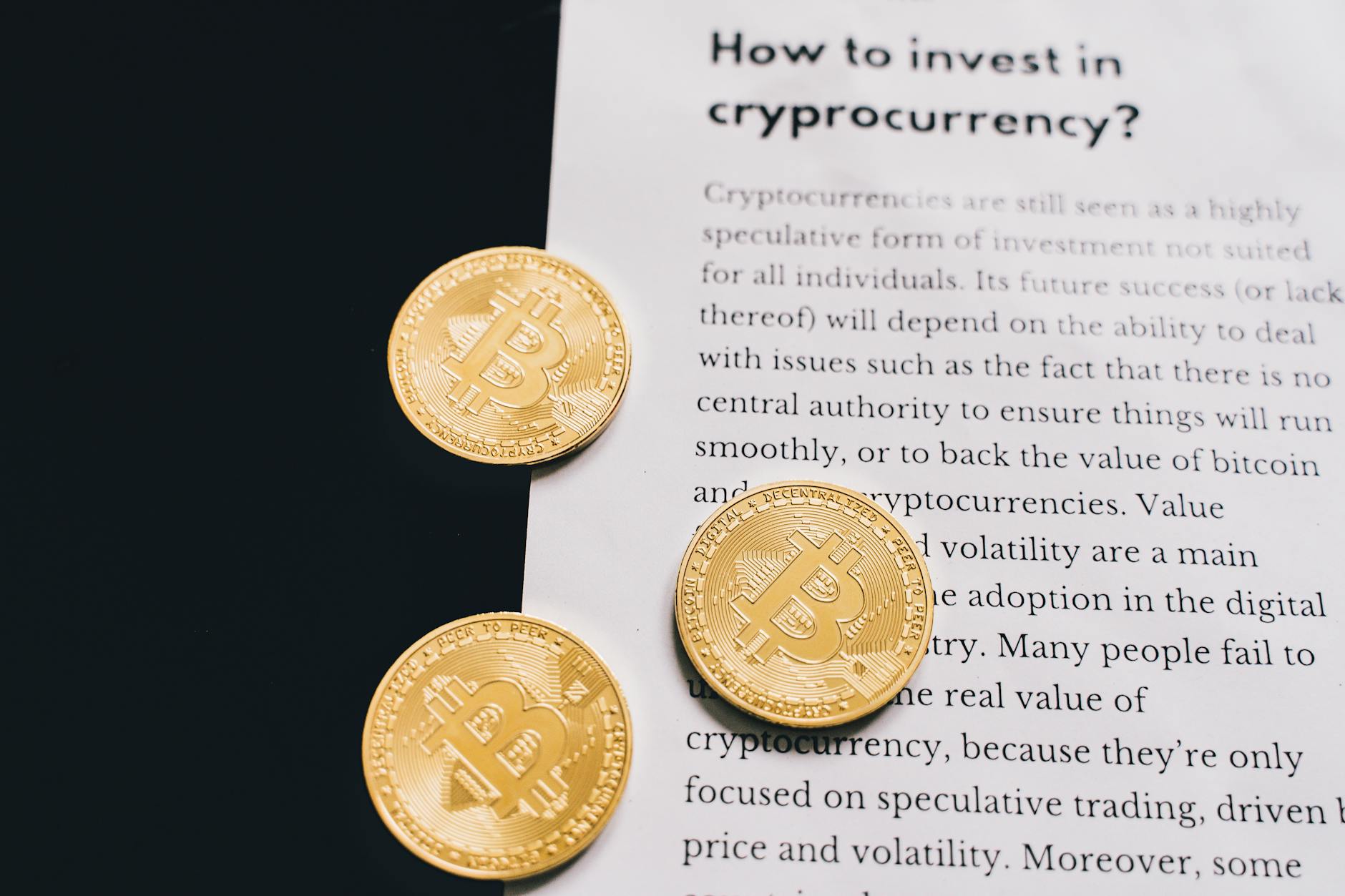
How to Start Investing With Confidence: Actionable Strategies for First-Time Investors
You have $500 in savings. You've heard people talk about "getting into the market," but the terminology feels like a foreign language. Stock splits? Expense ratios? Tax-deferred accounts? The barrier to entry isn't capital—it's clarity. Most beginners don't fail because they lack money; they fail because they don't know where to start or what to expect.
This guide removes the guesswork. We've mapped out seven investment vehicles available to you right now, with exact minimum deposits, realistic return ranges, tax implications, and time commitments. Whether you have $100 or $10,000 to invest, you'll find an option that matches your risk appetite and life situation.
7 Best Investment Vehicles for Beginners
Each of these options has been selected based on three criteria: accessibility (low minimum investment), simplicity (minimal active management required), and transparency (clear fee structures). All figures reflect current market standards as of August 2026.
1. Exchange-Traded Funds (ETFs)
Minimum Investment: $1 (most brokers offer fractional shares)
Typical Annual Fees: 0.03%–0.50% (expense ratio)
Expected Annual Return: 7–10% (broad market index ETFs)
Risk Level: Low to moderate
Time Commitment: 15 minutes per quarter for rebalancing
An ETF is a basket of stocks or bonds that trades like a single stock. The VOO (Vanguard S&P 500 ETF) holds 500 large-cap U.S. companies. The VTI (Vanguard Total Stock Market ETF) holds the entire U.S. stock market in one fund. You buy one share and instantly own diversification that would cost thousands to replicate manually.
Why beginners love this: You pick the fund once, it rebalances automatically, and you're done. Expense ratios below 0.10% mean you keep 99.9% of your gains. According to Investopedia, broad-market ETFs are the foundation of most professional portfolios.
Platform options: Fidelity, Charles Schwab, Vanguard all offer commission-free trading. Fidelity allows account opening with $1.
2. Index Mutual Funds
Minimum Investment: $500–$3,000 (varies by fund family)
Typical Annual Fees: 0.05%–0.20%
Expected Annual Return: 7–10%
Risk Level: Low to moderate
Time Commitment: 10 minutes per year
Mutual funds operate similarly to ETFs but trade once per day after market close instead of continuously. The Vanguard Total Stock Market Index Fund (VTSAX) requires a $3,500 minimum but charges only 0.04% annually. The Fidelity ZERO Large Cap Index (FNILX) has zero expense ratio and no minimum.
The trade-off: mutual funds lack the intraday trading flexibility of ETFs, but they're ideal for "buy and forget" investors who won't touch the account for decades.
3. Robo-Advisors
Minimum Investment: $1–$500
Management Fees: 0.25%–0.50% annually
Expected Annual Return: 6–9% (after fees)
Risk Level: Customizable (low, moderate, aggressive)
Time Commitment: 20 minutes setup, then automatic rebalancing
Robo-advisors are algorithm-driven portfolio managers. You answer a 10-question quiz about your age, income, and risk tolerance. The algorithm allocates your money across ETFs (typically 80% stocks / 20% bonds for moderate investors), then rebalances quarterly.
Popular platforms:
- Betterment: $0 minimum, 0.25% advisory fee, tax-loss harvesting included
- Wealthfront: $500 minimum, 0.25% advisory fee, financial planning tools
- M1 Finance: $1 minimum, 0% fees, pie-based portfolio builder
Robo-advisors eliminate stock-picking anxiety. You're paying 0.25% for the peace of mind, but you're giving up control—which, statistically, is a good trade for beginners.
4. Individual Stocks (Dividend-Focused)
Minimum Investment: $1 (fractional shares)
Brokerage Fees: $0 (commission-free at most brokers)
Expected Annual Return: 8–12% (dividend yield + growth; highly variable)
Risk Level: Moderate to high
Time Commitment: 5–10 hours per month (research, monitoring)
For beginners ready to research, dividend stocks from established companies offer steady income. Johnson & Johnson, Coca-Cola, and Procter & Gamble have paid dividends uninterrupted for 60+ years. A $1,000 position in a 3% dividend-yielding stock generates $30 annually in passive income—compounded over decades, this builds wealth.
Reality check: Stock picking requires research. Most beginners underperform index funds by 2–3% annually. Pick only if you enjoy reading 10-K filings; otherwise, use ETFs.
5. Bonds and Bond ETFs
Minimum Investment: $1 (bond ETFs) or $1,000 (individual bonds)
Typical Annual Yield: 4.5%–5.5% (August 2026 environment)
Expected Return: 4–6% annually
Risk Level: Very low (government bonds) to low (corporate bonds)
Time Commitment: 5 minutes (if using ETFs)
Bonds are loans you give to governments or corporations. In return, they pay you interest. BND (Vanguard Total Bond Market ETF) gives you diversified access to thousands of bonds for 0.03% annually. Yields on the 10-year U.S. Treasury currently sit around 5%, making bonds competitive with stock dividends—but with far lower volatility.
Why beginners should consider bonds: They provide stability in a downturn. During the 2020 market crash, bonds gained while stocks fell 30%. A 60/40 stock-bond portfolio declined only 18%.
6. High-Yield Savings Accounts and Money Market Funds
Minimum Investment: $1–$25,000 (varies by institution)
Current Annual Yield: 4.5%–5.25% (August 2026)
Expected Return: 4.5%–5.25% guaranteed
Risk Level: Zero (FDIC insured up to $250,000)
Time Commitment: 5 minutes to open
Not technically an investment, but competitive with bonds. Online banks like Marcus, Ally, and American Express Personal Savings offer 5%+ on savings with zero risk. Perfect for your emergency fund or money you need within 12 months.
7. Target-Date Funds
Minimum Investment: $1,000–$3,000
Annual Fees: 0.10%–0.15%
Expected Annual Return: 6–9% (depends on target date)
Risk Level: Automatically adjusts based on retirement date
Time Commitment: 0 (fully automated)
A target-date fund does the work for you. Vanguard Target Retirement 2060 Fund (VFORX) is designed for someone retiring around 2060. It starts aggressive (90% stocks) and gradually becomes conservative as retirement nears (30% stocks at age 65). This is the ultimate "set it and forget it" vehicle.
Risk Tolerance Assessment Framework
Your risk tolerance is how much portfolio volatility you can stomach without panic-selling. The 2020 pandemic crashed the market 34% in five weeks. Did you think "great buying opportunity" or "I need to pull everything out"? Your honest answer determines your allocation.
| Risk Profile | Age / Years to Retirement | Stock/Bond Split | Expected Annual Return | Worst-Case Annual Loss | Best Investment Vehicles |
|---|---|---|---|---|---|
| Conservative | Within 10 years of retirement | 40/60 | 4–6% | −8% to −12% | Bond ETFs, Target-Date Funds, High-Yield Savings |
| Moderate | 10–30 years | 60/40 | 6–8% | −15% to −20% | Index ETFs, Robo-Advisors, Dividend Stocks |
| Aggressive | 30+ years | 90/10 | 8–10% | −30% to −40% | Individual Stocks, Growth ETFs, Sector Funds |
Action step: If a 30% decline would make you sell (triggering losses), you're not aggressive. If you'd buy more, you are. Choose your profile honestly—it's more important than return chasing.
Real Budget Allocation Strategies
Starting With $100
Option A: Robo-Advisor
- Open Betterment or M1 Finance
- Invest $100 into a moderate portfolio (60/40 stocks/bonds)
- Set up $25/month automatic deposit
- Expected wealth after 10 years: $4,200 (assuming 7% annual returns)
Option B: Single ETF
- Open a brokerage at Fidelity, Schwab, or Vanguard
- Buy $100 of VTI (total stock market ETF)
- Set up $25/month auto-invest
- Expected wealth after 10 years: $4,500 (slightly higher due to lower fees)
Starting With $1,000
Three-Fund Beginner Portfolio
- $600 into VTI (U.S. stocks)
- $300 into VXUS (International stocks)
- $100 into BND (Bonds)
- Rebalance annually
- Expected wealth after 10 years: $44,000
This 60/30/10 allocation gives you U.S. exposure, international diversification, and bond stability. Annual rebalancing takes 15 minutes.
Starting With $5,000
Comprehensive Portfolio
- $2,400 into VTI (U.S. large-cap stocks)
- $800 into VB (U.S. small-cap stocks)
- $1,200 into VXUS (International stocks)
- $600 into BND (Bonds)
- Set up $500/month auto-invest
- Expected wealth after 10 years: $174,000
This 48/16/24/12 split is diversified across size, geography, and asset class. Even $200/month contributions compound significantly.
Tax Efficiency Comparison
Where you invest matters as much as what you invest in. A 1% fee difference seems small until you realize that over 30 years, it's 33% less wealth.
| Account Type | Annual Contribution Limit | Tax Treatment | When to Use | Best For |
|---|---|---|---|---|
| 401(k) | $23,500 (2024) | Contributions reduce taxable income; withdrawals in retirement taxed as income | If employer offers match (free money!) | Long-term wealth building |
| Traditional IRA | $7,000 (2024) | Contributions tax-deductible; withdrawals in retirement taxed | Self-employed or no employer plan | Tax-deferred growth |
| Roth IRA | $7,000 (2024) | Contributions not deductible; withdrawals in retirement tax-free | If you expect higher tax bracket in retirement | Tax-free withdrawals for life |
| Taxable Brokerage | Unlimited | Dividends and capital gains taxed annually | After maxing retirement accounts | Flexibility; access before 59.5 |
Beginner tax strategy: If your employer offers a 401(k) match, contribute enough to get it. If not, max out a Roth IRA ($7,000/year), then use a taxable brokerage. The Roth IRA compounds tax-free for 40+ years—that's worth the contribution limit.
Passive Income Potential by Vehicle
True passive income doesn't require active work. Here's what each vehicle realistically generates:
Dividend Stocks
A $10,000 portfolio of 3.5% dividend-yielding stocks generates $350/year ($29/month). Over 20 years with 7% capital appreciation, you earn $46,000 total—$28,000 from dividends, $18,000 from growth.
Bond ETFs
A $10,000 position in BND (current 5% yield) generates $500/year. No capital appreciation expected, but you're getting reliable income with minimal volatility.
Dividend ETFs
A $10,000 position in DGRO (dividend growth ETF, 2.5% yield) generates $250/year. The fund buys dividend-growing stocks that increase payouts 7–10% annually, so your income compounds without reinvestment.
Robo-Advisor Dividend Portfolios
Betterment's "dividend focus" setting prioritizes dividend-paying stocks and REITs. A $10,000 allocation generates roughly $350–400/year while still appreciating.
Timeline to first $100/month passive income: You need approximately $34,000 invested at 3.5% yield, or $24,000 at 5% (bond ETFs). At $500/month contributions, this takes 48–68 months. Patience compounds.
7 Common Beginner Mistakes and How to Avoid Them
1. Waiting for the Perfect Entry Point
The mistake: You keep $2,000 in cash waiting for a market "crash," which never comes as dramatically as you expect.
The fix: Dollar-cost averaging. Invest $200/month regardless of market conditions. Over time, you buy at highs and lows, averaging out volatility. Historically, starting immediately beats timing perfectly 95% of the time.
2. Overcomplicating the Portfolio
The mistake: You buy 15 different ETFs, individual stocks, REITs, and commodities, then can't remember what you own.
The fix: Start with three funds max (U.S. stocks, international stocks, bonds). Add complexity only after you understand the basics.
3. Panic-Selling in Downturns
The mistake: The market drops 20%. You sell everything and lock in a loss. The market recovers 6 months later, and you miss the gain.
The fix: Set your allocation based on risk tolerance. If a 30% loss would make you sell, reduce your stock percentage to 50%. Your behavior matters more than market timing.
4. Ignoring Fees
The mistake: You invest through a broker charging 1% fees instead of 0.1%. Over 30 years, this costs you $150,000+ on a $500,000 portfolio.
The fix: Use commission-free brokers and index funds under 0.20% expense ratio. Vanguard, Fidelity, and Schwab all offer this.
5. Chasing Performance
The mistake: You see a sector fund returned 35% last year, so you invest heavily. The next year it drops 25%. You bought the top.
The fix: Ignore the past year's performance. Look at 10-year averages and stick to your allocation. Rebalance once yearly.
6. Not Taking Advantage of Tax-Advantaged Accounts
The mistake: You invest $10,000 in a taxable brokerage account without maxing your IRA. You pay capital gains tax annually.
The fix: Max out your Roth IRA ($7,000/year) first. The tax-free compounding for 30+ years is worth more than any brokerage flexibility.
7. Investing Money You'll Need Soon
The mistake: You need a down payment in 3 years but invest in growth stocks. The market drops, and you're forced to sell at a loss.
The fix: Match the time horizon to the investment. Money needed in <3 years: high-yield savings or short-term bonds. 3–10 years: bond-heavy ETFs. 10+ years: stocks.
Frequently Asked Questions
What is the best investment for someone with $500?
A low-cost, broad-market ETF like VTI or a robo-advisor like Betterment. Both require minimal investment and have expense ratios under 0.50%. Robo-advisors (0.25% fee) are better if you want automated rebalancing; ETFs (0.03% fee) are better if you're comfortable managing the allocation yourself.
How long does it take to see returns?
Market returns compound exponentially after 10+ years. In year one, a $10,000 investment at 8% returns $800. In year 10, the cumulative portfolio is worth $21,589. In year 20, it's worth $46,610. Short-term (under 3 years), stock returns are unpredictable; long-term (10+ years), historical returns average 8–10% annually.
Is investing safe for beginners?
Index fund investing is safe for long-term horizons (10+ years). The risk is real (you can lose 30% in a bad year) but historically recovers within 3–4 years. Individual stock picking is riskier; robo-advisors and ETFs are safer because they diversify across hundreds of holdings. Never invest money you'll need in the next 3 years.
Should I invest during a market downturn?
Yes. Downturns are opportunities. When stocks drop 20%, you're buying at a discount. Every major market crash in history has been followed by a recovery and new highs within 3–5 years. Continuing to invest (dollar-cost averaging) during downturns historically produces the best long-term returns.
What's the difference between ETFs and mutual funds?
ETFs trade throughout the day like stocks; mutual funds settle once per day. ETFs have lower expense ratios (0.03% vs. 0.10%+). Mutual funds have higher minimum investments. For beginners, ETFs are easier and cheaper.
Do I need to pay taxes on ETF gains?
In a taxable brokerage account, yes. You owe capital gains tax when you sell (short-term if held <1 year, long-term if held 1+ year). Long-term capital gains are taxed at 0%, 15%, or 20% depending on income. In a Roth IRA, gains are tax-free. In a 401(k), gains are tax-deferred. Use tax-advantaged accounts to minimize this.
Can I start investing with less than $100?
Yes. Most brokers now offer fractional shares, so you can buy $1 worth of an ETF. Robo-advisors like M1 Finance have zero minimums. The barrier is psychological, not financial—starting with any amount is better than waiting.
"The best time to plant a tree was 20 years ago. The second-best time is now." Every month you delay investing costs thousands in compound growth. A 25-year-old investing $200/month at 8% returns reaches $1 million by age 65. Starting at 35 takes $800/month. The cost of delay is exponential.
Your Next Steps
Investment doesn't require perfection—it requires consistency. Pick one vehicle from the list above based on your budget and risk tolerance. Open an account (takes 15 minutes online). Set up automatic monthly contributions. Forget about it for 5 years. Return to check your balance and marvel at compound growth.
The hardest part isn't choosing the right investment; it's starting despite the uncertainty. Now you have a framework. Use it.
Additional Resources: Explore more on fintech strategies, investment fundamentals, and stock market basics for deeper dives. Compare with our trading guides to understand active vs. passive approaches. Check out banking and savings options for capital safety. Review market analysis for economic context on current interest rates and valuations.
Get Started With Investopedia's Investment Guide