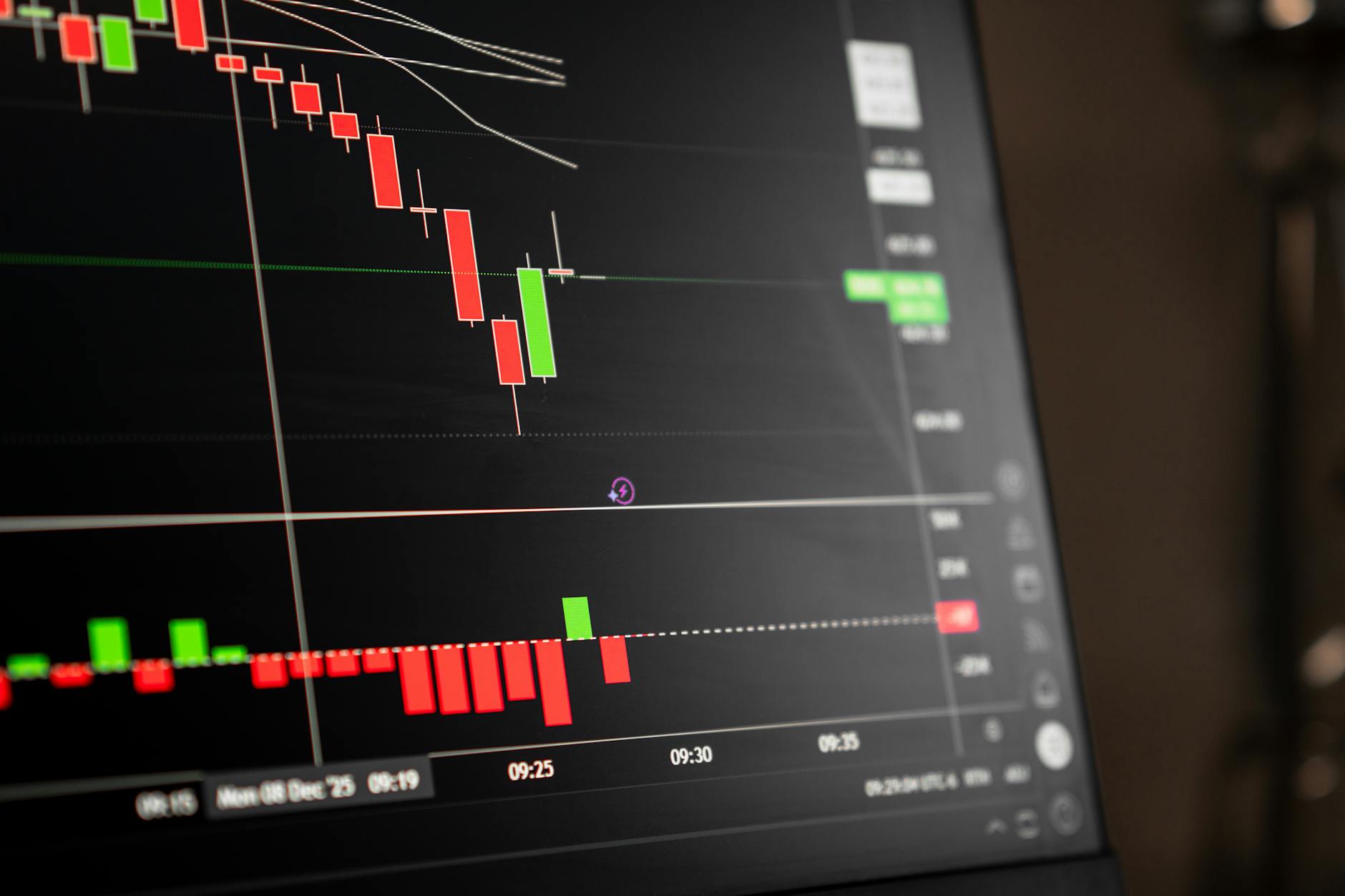
Why Choosing the Right Investment Platform Determines Your 20-Year Wealth Outcome
Top 5 Platforms Ranked by Long-Term Value
-
Fidelity – Best Overall for Comprehensive Investing
Fidelity eliminates account minimums and offers commission-free trading on stocks, ETFs, and mutual funds. The platform provides access to 4,000+ no-load, no-transaction-fee mutual funds and over 350 ETFs. Account types include individual taxable accounts, IRAs (traditional, Roth, SEP), and 401(k) rollovers. Monthly account fees are zero. Fractional shares start at $1 minimum investment. Customer service operates 24/5 (Monday–Friday 8 a.m.–8 p.m. ET, Saturday 9 a.m.–5 p.m. ET). According to Forbes Advisor, Fidelity leads for beginner and intermediate investors seeking a single unified platform.
-
Charles Schwab – Best for All-in-One Banking and Investing
Charles Schwab combines brokerage with checking, savings accounts, and credit cards. Zero account minimums, zero commission on stock and ETF trades, and zero margin loan interest on balances under $25,000. The StreetSmart Edge platform provides institutional-quality research tools. Schwab offers IRA rollovers, 401(k) rollovers, and HSA investing. Stocks begin at fractional share trading with no minimum. Account types span taxable, IRA, joint, and trust accounts. Customer service: 24/7 via phone and chat. The brokerage is SIPC-insured up to $500,000 per account category.
-
Vanguard – Best for Index Investing and Low Fees
Vanguard is a client-owned mutual company (not publicly traded), meaning it prioritizes investor returns over shareholder profits. Admiral Shares mutual funds require $3,000 minimums but offer expense ratios as low as 0.03% annually—among the lowest available. Vanguard ETFs start at fractional shares with $1 minimums. Commission-free trading on stocks, ETFs, and mutual funds. Vanguard's Target-Date retirement funds automatically rebalance, ideal for passive long-term investors. Account types include IRAs, Roth conversions, and taxable accounts. Phone support: Monday–Friday 8 a.m.–10 p.m. ET, Saturday 9 a.m.–5 p.m. ET.
-
Robinhood – Best for Mobile-First and Crypto-Integrated Investing
Robinhood popularized commission-free trading and fractional shares at $1 minimums. The app emphasizes simplicity for younger investors. Zero account minimums. Robinhood offers stocks, ETFs, options, and crypto (Bitcoin, Ethereum) on a single platform. No monthly account fees. However, Robinhood generates revenue via payment for order flow (PFOF), meaning your trades are sold to market makers—transparent but worth noting. Limited to taxable accounts and IRAs; no rollover IRAs or custodial accounts. Customer service: email and in-app chat only (no phone support). SIPC-insured up to $500,000.
-
Webull – Best for Hands-On Traders with Advanced Tools
Webull offers zero-commission stock and ETF trading, fractional shares from $1, and paper trading (simulated investing for practice). The platform includes options trading, crypto, and extended hours (4 a.m.–8 p.m. ET). Advanced charting tools are integrated free. No account minimums or monthly fees. Webull is suitable for active traders building discipline before risking real capital. Limited tax-loss harvesting integration. Customer service: email and in-app support (weekday 9 a.m.–5 p.m. ET). SIPC coverage: $500,000 per account.
Hidden Fees That Erode 20-Year Returns
| Platform | Stock Trade Commission | ETF Commission | Mutual Fund Expense Ratio (Avg) | Monthly Account Fee | Margin Interest Rate |
|---|---|---|---|---|---|
| Fidelity | $0 | $0 | 0.12% | $0 | 7.55% (prime brokers) |
| Charles Schwab | $0 | $0 | 0.09% | $0 | Prime rate + 1.5% |
| Vanguard | $0 | $0 | 0.04% | $0 | Prime rate + 1.0% |
| Robinhood | $0 (PFOF) | $0 (PFOF) | Varies | $0 | N/A (no margin loans) |
| Webull | $0 (PFOF) | $0 (PFOF) | Varies | $0 | Prime rate + 2.5% |
What This Means: A $50,000 portfolio in Vanguard index funds (0.04% expense ratio) costs $20 annually in fees. The same portfolio at 0.50% costs $250 yearly. Over 20 years at 7% annual returns, the fee difference compounds to approximately $8,000–$12,000 in foregone gains.
Platforms using payment for order flow (Robinhood, Webull) earn money by routing your trades to market makers, potentially resulting in slightly worse execution prices. Research shows PFOF-driven execution disadvantages average 0.5–2 basis points per trade—negligible for buy-and-hold investors but material for active traders executing 100+ trades annually.
Real Dollar Growth: $10K to $100K Scenarios
Using historical S&P 500 returns (average 10.0% annually over the last decade, adjusted to 8.5% conservative long-term assumption):
| Starting Amount | Annual Contribution | Years | Vanguard (0.04% fee) | Fidelity (0.12% fee) | Robinhood (0.40% fee) | Fee Difference Impact |
|---|---|---|---|---|---|---|
| $10,000 | $0 | 20 | $58,200 | $58,050 | $56,800 | $1,400 lost |
| $50,000 | $200/month | 20 | $285,600 | $284,100 | $278,900 | $6,700 lost |
| $100,000 | $500/month | 20 | $680,400 | $677,800 | $663,200 | $17,200 lost |
Key Insight: On a $100,000 initial investment with $500 monthly contributions, fee differences alone cost $17,200 over 20 years—equivalent to 5 extra years of contributions. This is why Vanguard and Fidelity (with sub-0.15% average expense ratios) outpace higher-fee competitors.
Tax-Loss Harvesting and Account Strategy
Tax-loss harvesting automatically sells losing positions to offset capital gains, reducing taxable income. Among platforms reviewed, Fidelity and Schwab offer integrated tax-loss harvesting; Vanguard requires manual execution; Robinhood and Webull do not support it systematically.
A $50,000 portfolio with average gains of $8,000 annually can defer $2,000–$3,000 in taxes annually through harvesting, saving $600–$1,200 per year (at 30% marginal tax rate). Over 20 years, this compounds to $15,000–$30,000 in tax savings—often exceeding the platform fee benefit.
Account Strategy for Maximum Tax Efficiency:
- Roth IRA: Contribute up to $7,000 annually (2026 limit for under-50). Growth is tax-free forever. Ideal for index funds and long-term holdings.
- 401(k) Rollover: Roll old employer 401(k)s into an IRA at Fidelity or Schwab (not Robinhood). Access to lower-cost institutional fund shares. No annual contribution limit on rollovers.
- Taxable Account: Hold for 1+ year to qualify for long-term capital gains rates (15%–20% federal vs. 37% ordinary income). Use tax-loss harvesting annually.
- HSA Investing: Charles Schwab and Fidelity allow investing HSA funds; growth is triple-tax-free if used for qualified medical expenses.
Asset Classes and Diversification Capabilities
| Asset Class | Fidelity | Schwab | Vanguard | Robinhood | Webull |
|---|---|---|---|---|---|
| US Stocks | ✓ | ✓ | ✓ | ✓ | ✓ |
| US ETFs | ✓ (4,000+) | ✓ (3,500+) | ✓ (All Vanguard) | ✓ (1,200+) | ✓ (2,000+) |
| Mutual Funds | ✓ (4,000+) | ✓ (3,200+) | ✓ (400+ Vanguard) | ✗ | ✗ |
| Bonds/Fixed Income | ✓ | ✓ | ✓ | ✗ | ✗ |
| Crypto (Bitcoin, Ethereum) | ✗ | ✓ (limited) | ✗ | ✓ | ✓ |
| Options Trading | ✓ (Level 2+) | ✓ (Level 2+) | ✓ (Level 2+) | ✓ | ✓ |
| International Stocks | ✓ | ✓ | ✓ | Limited | Limited |
For long-term growth, a core diversified portfolio typically allocates 70% US stocks/ETFs, 20% international ETFs, and 10% bonds. Fidelity, Schwab, and Vanguard support this fully. Robinhood and Webull lack bond trading, limiting traditional asset allocation. If you plan to integrate crypto (5–10% allocation), Robinhood or Webull become viable secondary accounts.
Research Tools and Education Comparison
Fidelity Research Lab: Includes earnings call transcripts, equity research reports from 20+ institutional firms, and AI-powered stock screeners. Learning Center contains 500+ articles and videos. No paywall.
Charles Schwab Research: StreetSmart Edge platform features proprietary research, options analysis, and news feeds. Schwab U learning portal covers investing fundamentals. Interactive courses are free for account holders.
Vanguard Investor Center: Focus on long-term, low-cost index investing. Educational resources emphasize behavioral finance and staying disciplined during volatility. Limited to Vanguard products but high-quality.
Robinhood Learning: Basic articles covering stocks, crypto, and options. Minimal depth; best for absolute beginners. No advanced research tools.
Webull Paper Trading: Simulated trading with real-time data allows backtesting strategies without capital risk. Unique educational advantage for learning options and technical analysis without real losses.
For long-term buy-and-hold investors, Fidelity and Schwab offer depth that prevents emotional over-trading. Educational tools teach why staying invested beats market timing—critical for 20-year success.
Security, SIPC Coverage, and Peace of Mind
All five platforms hold customer assets in separate accounts from operational funds. SIPC (Securities Investor Protection Corporation) coverage applies to all except cryptocurrency holdings.
| Platform | SIPC Coverage | Cash Coverage | Encryption | 2FA Available |
|---|---|---|---|---|
| Fidelity | $500,000 per category | FDIC via sweep account | 256-bit SSL | ✓ (App/SMS/email) |
| Charles Schwab | $500,000 per category | FDIC via SPAXX money market | 256-bit SSL | ✓ (App/SMS) |
| Vanguard | $500,000 per category | FDIC via sweep account | 256-bit SSL | ✓ (App/SMS) |
| Robinhood | $500,000 (no category split) | FDIC for cash | 256-bit SSL | ✓ (App/SMS) |
| Webull | $500,000 per account type | FDIC via sweep | 256-bit SSL | ✓ (App/SMS) |
Why This Matters: SIPC protects against broker failure, not market losses. If Fidelity fails, your $500,000 in stocks is protected. If your Tesla stock drops 50%, SIPC does not apply. Enable two-factor authentication on all accounts—most breaches occur through weak passwords, not platform vulnerabilities.
Robinhood's single SIPC limit (not split by account type) is less favorable if you hold IRAs and taxable accounts; a $600,000 portfolio gets only $500,000 coverage. Fidelity, Schwab, and Vanguard split coverage by account type, so $300,000 IRA + $300,000 taxable = full $600,000 protection.
Frequently Asked Questions
What is the minimum investment to start building long-term wealth?
All five platforms accept $1 or less via fractional shares. You can open an account with any amount, from $10 to $10,000. Fidelity and Schwab recommend starting with $100–$500 and adding monthly. Dollar-cost averaging (investing fixed amounts monthly) removes the pressure of timing the market perfectly.
How to avoid emotional trading that derails 20-year plans?
Set up automatic investments. Fidelity, Schwab, and Vanguard allow recurring deposits (e.g., every payday). Automate purchases of your chosen ETF (e.g., VTSAX or VOO) and delete the trading app from your phone after setup. Behavioral research shows investors who trade actively underperform buy-and-hold by 1.5–3% annually due to poor timing and fees.
Is it safe to use Robinhood for a 20-year investment plan?
Yes, Robinhood is SIPC-insured and user funds are held separately. The concern is not safety but capability—Robinhood lacks bond trading, tax-loss harvesting, and advanced research tools. It suits crypto-integrated accounts but not comprehensive long-term wealth building. Consider it a secondary platform, not your primary long-term account.
Why does Vanguard's 0.04% fee beat Fidelity's 0.12%?
Vanguard is client-owned (a mutual company); profits return to investors as lower fees. Fidelity is employee-owned and funds technology investments. Both are excellent; the fee difference compounds to $8,000 over $50,000+ portfolios over 20 years.
Should I open an IRA or taxable account first?
Prioritize Roth IRA if eligible (income limits apply; 2026 phase-out starts at $150,000 single). Contribute the annual maximum ($7,000 in 2026), then fund a taxable account. Roth growth is tax-free forever—the long-term advantage is enormous. If self-employed, a SEP-IRA allows up to $69,000 contributions (2026).
How often should I rebalance a long-term portfolio?
Once annually. Vanguard's Target-Date funds do this automatically. For DIY portfolios, rebalance when equity allocation drifts more than 5% from your target (e.g., 70/30 stock/bond becomes 75/25). Avoid rebalancing quarterly or monthly—trading costs and taxes outweigh benefits for long-term investors.
What happens to my account if the platform shuts down?
SIPC ensures your positions transfer to another broker. In 2008, Lehman Brothers collapsed; SIPC moved all customer accounts to other firms within weeks. Your stocks remain yours. Never store large sums in uninsured cash with platforms lacking FDIC sweep. All five reviewed here have sweep protections.
Can I integrate crypto into a long-term portfolio?
Bitcoin and Ethereum are volatile (30–50% swings annually). Some advisors allocate 2–5% to crypto as speculative kickers, with 95%+ in stocks and bonds. Robinhood and Webull allow on-platform crypto; others require a separate crypto exchange (Kraken, Coinbase). Keep crypto to a small percentage unless you understand volatility.
The Pro Trader Daily Take: Platform Selection Is a 20-Year Decision
Choosing a long-term investment platform is not about daily excitement—it is about mathematical compounding. A $50,000 initial investment in Vanguard index funds (0.04% fees) with $250 monthly additions grows to $285,600 over 20 years. The same portfolio at 0.40% fees grows to $278,900. The difference: $6,700, equivalent to 10 years of monthly contributions vanishing to unnecessary fees.
Fidelity emerges as the all-around winner: zero minimums, zero commissions, comprehensive research, and sub-0.15% average expense ratios. Charles Schwab is ideal if you want integrated banking. Vanguard leads for pure low-cost index investing. Robinhood and Webull suit younger investors or those planning crypto integration, but lack the research depth and tax tools necessary for passive wealth building.
Begin with $100–$1,000, set up automatic monthly investments, choose a simple portfolio (70% US stock index / 20% international index / 10% bonds), and resist the urge to check balances more than quarterly. The investor who contributes consistently and avoids trading outperforms the trader who chases returns every quarter. Your platform choice removes friction from this process—pick wisely.
"The stock market is a device for transferring money from the impatient to the patient." – Warren Buffett
Long-term wealth is built through consistency, low fees, and time in the market—not timing the market. Your platform choice either enables or obstructs this path.
Related Reading
Explore deeper into investment strategy and platform specifics:
- Complete investment guides and analysis
- Fintech platforms and digital banking
- Stock market fundamentals and analysis
- Cryptocurrency investing and blockchain
- Decentralized finance strategies
- Active trading tools and techniques
- Market analysis and research tools