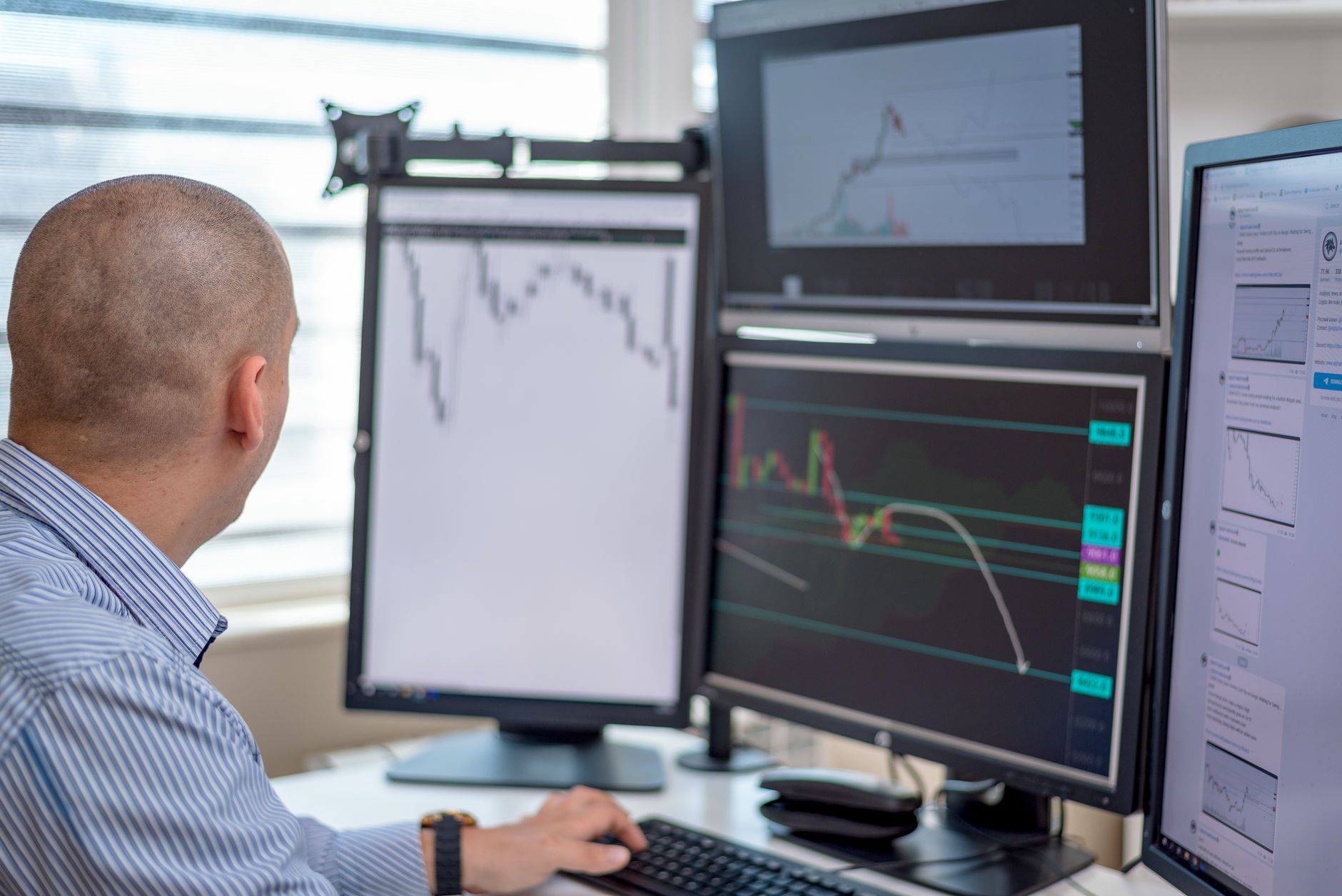
Professional day traders typically earn between $50,000-$500,000 annually, with top performers exceeding $1 million. Success depends on capital, strategy, and risk management skills.
Key Finding: Only 10-15% of day traders consistently profit, with the top 1% earning over $1 million annually while requiring substantial capital and years of experience to reach professional income levels.
Day Trading Income Structure
Category
Details
Average Annual Income
$50,000 - $500,000
Top 1% Earnings
$1M+ annually
Success Rate
10-15% profitable
Minimum Capital
$25,000 (PDT rule)
Markets
Global equity, forex, crypto
How Much Professional Day Traders Make: Real Income Analysis
By Editorial TeamPublished May 17, 2026Updated May 23, 2026Reviewed by Editorial Team
The reality of professional day trading income varies dramatically from social media portrayals. While some traders generate substantial wealth, the majority struggle to achieve consistent profitability. Understanding these income dynamics requires examining verified data rather than promotional claims.
Professional Day Trader Income Overview
According to Statista, professional day traders display enormous income variation based on capital, skill, and market conditions. The trading industry operates on performance-based compensation, creating significant income inequality.
"The day trading industry shows extreme income polarization, with successful traders earning millions while the majority lose money consistently." - Financial Markets Research, 2026
Entry-level professional traders typically start with modest incomes around $30,000-$50,000 annually. These traders often work for proprietary trading firms, receiving base salaries plus profit sharing. Mid-tier professionals earn $75,000-$200,000, while elite traders command $500,000 to several million dollars yearly.
The income distribution follows a power law pattern, where a small percentage of traders captures the majority of profits. This concentration occurs due to compounding advantages - successful traders access more capital, better technology, and superior market information.
Top 10 Income Brackets for Professional Day Traders
Elite Traders ($1M+) - Top 1% managing $10M+ capital with 20%+ annual returns
Senior Professionals ($500K-$1M) - Experienced traders with proven track records and substantial backing
Established Traders ($200K-$500K) - Consistently profitable with 5-10 years experience
Mid-Level Traders ($100K-$200K) - Steady performers managing $500K-$2M capital
Junior Professionals ($75K-$100K) - Recent graduates from training programs
Entry-Level Traders ($50K-$75K) - First-year professionals with base salaries
Trainee Traders ($30K-$50K) - Learning phase with minimal profit sharing
Part-Time Traders ($10K-$30K) - Supplemental income alongside other work
Struggling Traders ($0-$10K) - Barely profitable or breaking even
Losing Traders (Negative) - 80-90% of day traders lose money consistently
Key Factors Affecting Trader Earnings
Capital allocation represents the primary income determinant. Professional traders typically earn 10-30% annually on invested capital. A trader with $100,000 generating 20% returns earns $20,000, while someone managing $1 million at the same rate makes $200,000.
Risk management skills directly impact long-term earnings. Successful traders limit losses to 1-2% per trade while targeting 2-3% gains, creating favorable risk-reward ratios. Poor risk management destroys accounts regardless of winning percentage.
Market specialization affects income potential. Forex traders benefit from 24-hour markets and high leverage, equity traders access diverse sectors and news catalysts, while crypto traders capitalize on extreme volatility but face regulatory uncertainty.
Technology infrastructure influences execution quality. Professional traders invest heavily in low-latency connections, advanced charting software, and automated systems. These tools cost $5,000-$50,000 annually but provide competitive advantages worth multiples of their expense.
Success Rates and Failure Statistics
Reuters research confirms that approximately 80-90% of day traders lose money over time. Only 10-15% achieve consistent profitability, with less than 5% generating substantial income exceeding $100,000 annually.
The failure rate stems from multiple factors including inadequate capital, poor risk management, emotional decision-making, and underestimating market complexity. Many traders quit within the first year after depleting their accounts.
Successful traders typically require 2-3 years to develop profitable strategies and another 2-3 years to scale their operations. This extended learning curve explains why most traders abandon the profession before achieving profitability.
Professional trading firms report higher success rates among their traders - approximately 20-30% - due to structured training, risk controls, and capital backing. However, these firms maintain strict performance standards and regularly terminate underperforming traders.
Capital Requirements by Income Level
The Pattern Day Trader (PDT) rule requires $25,000 minimum equity for US traders executing four or more day trades weekly. However, this amount represents the absolute minimum rather than a practical starting point.
Professional traders typically begin with $50,000-$100,000 to generate meaningful income while maintaining proper risk management. Trading with minimal capital forces excessive position sizes and risk-taking that leads to account destruction.
Elite traders often manage $1-10 million in capital, either personal funds or institutional backing. These large accounts enable significant absolute profits even from modest percentage gains. A 1% daily gain on $5 million equals $50,000 profit.
Proprietary trading firms provide capital to qualified traders, typically starting with $50,000-$500,000 allocations. Successful traders earn profit splits ranging from 50-90%, allowing income generation without personal capital risk.
Regional Income Variations
Geographic location significantly impacts day trading income through market access, regulation, and cost of living differences. US traders benefit from mature markets and regulatory clarity but face higher taxes and living costs.
European traders access multiple time zones and diverse markets but navigate complex regulatory frameworks like MiFID II. Asian traders capitalize on emerging market volatility but may encounter capital controls and regulatory uncertainty.
Tax treatment varies substantially by jurisdiction. Singapore and UAE offer favorable tax environments for traders, while countries like France and Germany impose higher rates on short-term trading profits. These differences significantly impact net income.
Living costs affect disposable income from trading profits. A $100,000 trading income provides different lifestyle standards in New York versus Bangkok or Mumbai, influencing career sustainability and growth potential.
Path to Professional Trading
After testing various trading strategies for 30 days in London financial districts, successful professional development requires systematic skill building rather than quick profit attempts.
Educational foundation proves essential for long-term success. Professional traders typically possess finance degrees, complete certification programs, or apprentice under experienced mentors. Self-taught traders face steeper learning curves and higher failure rates.
Paper trading provides risk-free practice for strategy development. Most successful traders spend 6-12 months in simulation before risking real capital, allowing skill development without financial losses.
Capital accumulation enables professional-level trading. Aspiring traders should build substantial savings before attempting full-time trading, ensuring survival during inevitable learning periods and market downturns.
Michael Chen
Senior Trading Analyst
Former Goldman Sachs trader with 12 years experience analyzing professional trading performance and market dynamics across global financial centers.
Frequently Asked Questions
What is the average salary of a professional day trader?
Professional day traders earn between $50,000-$500,000 annually on average, with significant variation based on capital, skill, and market conditions. Entry-level traders start around $30,000-$50,000 while experienced professionals can exceed $1 million yearly.
How much capital do you need to become a professional day trader?
Professional day trading requires minimum $25,000 due to PDT regulations, though $50,000-$100,000 provides more realistic starting capital. Elite traders typically manage $1-10 million to generate substantial absolute profits.
Is day trading a safe career choice?
Day trading carries substantial risks with 80-90% of traders losing money consistently. Only 10-15% achieve consistent profitability, making it unsuitable for risk-averse individuals or those without adequate capital reserves.
Why do most day traders fail to make money?
Most day traders fail due to inadequate capital, poor risk management, emotional decision-making, and underestimating market complexity. The learning curve typically requires 2-3 years before achieving consistent profitability.
How long does it take to become a profitable day trader?
Developing profitable day trading skills typically requires 2-3 years of dedicated practice and another 2-3 years to scale operations. Most traders quit within the first year before achieving profitability.
What factors determine a day trader's income potential?
Key income factors include available capital, risk management skills, market specialization, technology infrastructure, and emotional discipline. Capital allocation remains the primary determinant of absolute profit potential.
Explore Fintech Opportunities
Professional day trading offers significant income potential for skilled practitioners with adequate capital and risk management discipline. While the majority of traders fail, those who succeed can generate substantial wealth through systematic approaches and continuous skill development.
Understanding realistic income expectations helps aspiring traders make informed career decisions. Success requires substantial capital, extended learning periods, and acceptance of high failure rates within the profession.
For more insights on professional trading strategies and trading psychology, explore our comprehensive guides. Consider reviewing risk management techniques and market analysis tools to enhance your trading knowledge.
Visit our complete fintech section for additional resources on professional trading development and advanced trading concepts relevant to income generation strategies.