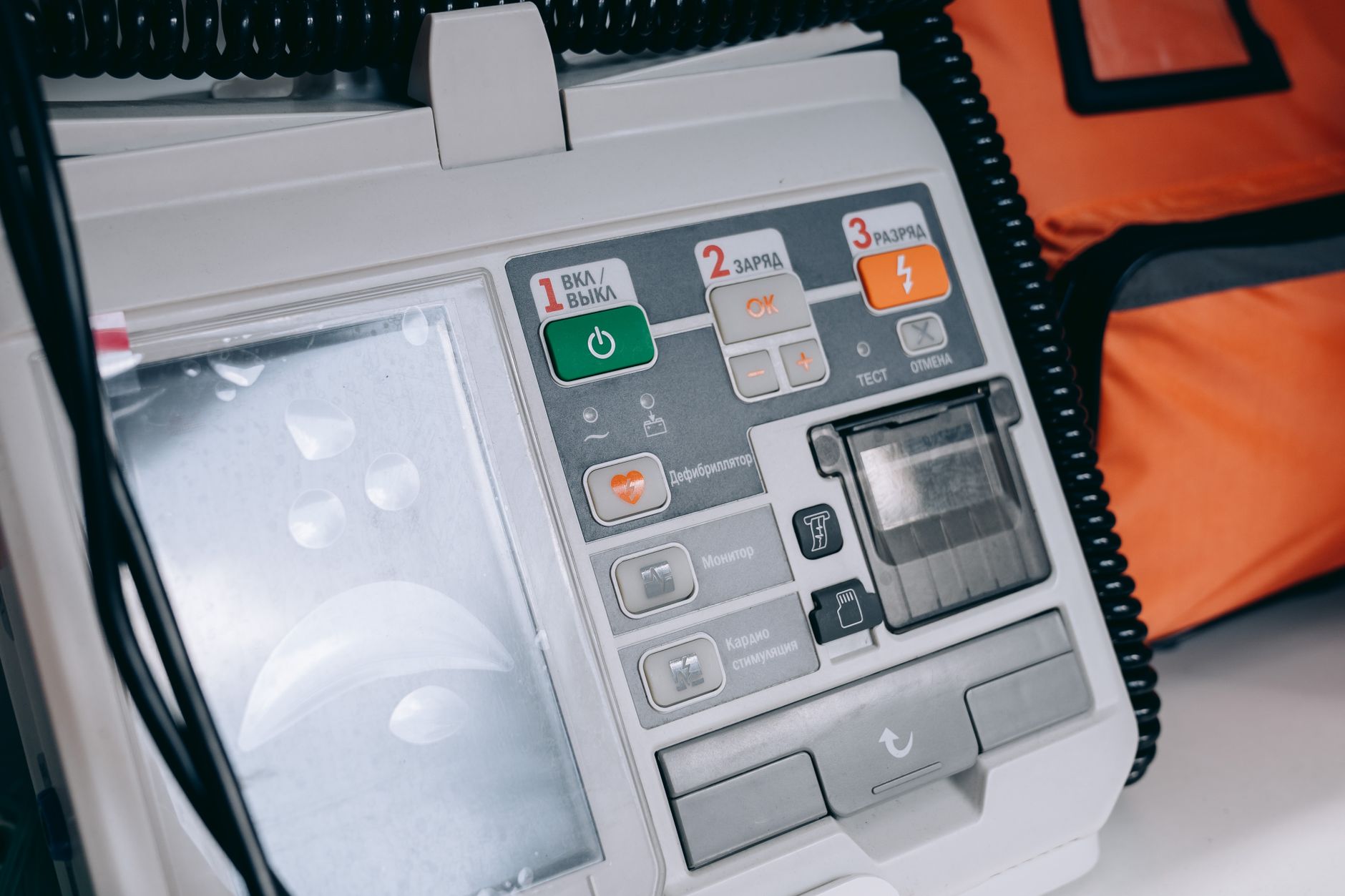
How Do Defibrillators Save Lives? Complete Medical Breakdown for Patients
Every year, thousands of people experience sudden cardiac arrest in grocery stores, airports, offices, and homes. Their hearts stop beating effectively. Without immediate intervention, brain damage occurs within minutes. Death follows within seconds. This is where defibrillators step in—delivering a precisely timed electrical shock that can restart a failing heart and return someone to life. Yet most people don't understand what these devices actually do, how they work, or when they might need one. This guide cuts through the medical jargon to explain defibrillators in practical terms you can understand and act on.
What Is a Defibrillator?
A defibrillator is a medical device designed to detect and treat dangerous irregular heartbeats called arrhythmias. Specifically, defibrillators address two life-threatening conditions: ventricular fibrillation (VF) and pulseless ventricular tachycardia (VT). In both cases, the heart's electrical system misfires, causing the heart muscle to quiver ineffectively rather than contract with purpose. Blood stops flowing. The brain and organs are starved of oxygen.
The defibrillator's job is simple but critical: deliver a controlled electrical shock (called defibrillation) that resets the heart's electrical system and allows normal rhythm to resume. Think of it as rebooting a crashed computer. The device doesn't start a stopped heart—that's a common misconception. It stops a heart that's beating chaotically, allowing the heart's natural pacemaker to resume control.
Two primary categories of defibrillators exist in modern medicine. The first—Automatic External Defibrillators (AEDs)—sit in public spaces and can be used by anyone with minimal training. The second—Implantable Cardioverter Defibrillators (ICDs)—are surgically placed inside patients at chronic risk of sudden cardiac death. Both serve the same fundamental purpose but operate in different contexts and populations.
How Does a Defibrillator Work?
The mechanism is elegant. A defibrillator contains three core components: a sensing device that monitors heart rhythm, a capacitor that stores electrical charge, and a pair of electrodes or paddles that deliver that charge to the heart.
The sensing process: The device continuously analyzes electrical signals coming from the heart. When it detects a shockable rhythm (ventricular fibrillation or pulseless VT), it recognizes this as a life-threatening emergency. Modern defibrillators use sophisticated algorithms to distinguish between cardiac arrest rhythms that will respond to shock versus those that won't, minimizing unnecessary treatment.
The charging phase: Once a shockable rhythm is detected, the capacitor rapidly charges to a specific voltage. AEDs typically deliver 150–200 joules of energy on the first shock, escalating to 200–360 joules on subsequent attempts. Implanted ICDs use lower energies (10–40 joules) because the electrodes are placed directly against the heart tissue.
The delivery: When fully charged, the device releases the electrical shock through the electrodes. The current flows across the chest or directly through the heart muscle, simultaneously depolarizing all cardiac cells. This momentary pause allows the heart's natural electrical system to regain control and resume normal rhythm. If the first shock fails, the device automatically recharges and attempts again after a brief pause.
The entire process—detection through delivery—takes seconds. This speed is why AEDs placed in public spaces are so effective. Every minute without defibrillation reduces survival odds by 7–10 percent. Early access to a defibrillator is the single most important predictor of survival in sudden cardiac arrest.
Types of Defibrillators: AED vs ICD
Understanding the distinction between AED and ICD is essential because they address different clinical scenarios and patient populations.
Automatic External Defibrillators (AEDs)
AEDs are portable, battery-powered devices designed for emergency use outside hospital settings. You'll find them in airports, malls, gyms, schools, and corporate offices. They're called "automatic" because they automatically analyze heart rhythm and determine whether a shock is needed. They're called "external" because the electrodes are applied to the chest surface, not implanted.
Key characteristics:
- Portable and lightweight (2–4 pounds)
- Operated by laypersons with minimal training
- Voice-guided instructions walk users through the process
- Battery-operated with 2–5 year battery life
- Cost range: USD 1,000–3,000 per unit
- Can be used on children and adults (with pediatric pads available)
AEDs have democratized defibrillation. You don't need to be a doctor to operate one. The device tells you exactly what to do—apply pads to the chest, stand clear while it analyzes, and let it deliver shock if needed. Studies consistently show that AEDs placed in public spaces and operated by bystanders increase survival rates for out-of-hospital cardiac arrest from 3–5% to 50–74%, depending on how quickly the device is accessed.
Implantable Cardioverter Defibrillators (ICDs)
An ICD is a sophisticated device surgically implanted beneath the collarbone, similar to a pacemaker. It continuously monitors heart rhythm 24/7 and automatically delivers therapy when needed. ICDs are prescribed for patients with documented risk factors for sudden cardiac death—either due to previous heart attacks, genetic conditions, or weakened heart function.
Key characteristics:
- Surgically implanted under local anesthesia
- About the size of a matchbox (2–3 inches)
- Powered by a lithium battery lasting 5–7 years
- Continuously monitors heart rate and rhythm
- Delivers electrical therapy automatically without patient awareness
- Cost: USD 25,000–35,000 (including implantation surgery)
- Often combined with pacemaker function (CRT-D device)
The ICD is insurance against sudden death. While AEDs wait for someone to experience cardiac arrest and a bystander to respond, an ICD prevents arrest from occurring in the first place—or treats it instantly if it does occur. For high-risk patients, this constant surveillance has proven lifesaving.
Defibrillator vs Pacemaker Comparison
Confusion often arises between defibrillators and pacemakers because they're frequently discussed together and sometimes combined into a single device. But they serve fundamentally different purposes.
| Feature | Defibrillator (ICD) | Pacemaker |
|---|---|---|
| Primary Function | Treats fast, chaotic rhythms (VF/VT) | Treats slow rhythms (bradycardia) |
| Therapy Type | Electrical shock (high energy, 20–40J) | Electrical pacing (low energy, <1J) |
| When Activated | During life-threatening arrhythmias | Continuously, as needed for bradycardia |
| Patient Sensation | Shock felt as forceful thump in chest | Not felt; operates silently |
| Common Conditions | Previous MI, HCM, ARVC, genetic syndromes | Sick sinus syndrome, AV block, bradycardia |
| Cost (US) | USD 25,000–35,000 | USD 15,000–25,000 |
| Battery Life | 5–7 years | 7–10 years |
Simple analogy: A pacemaker is like cruise control—it helps your heart maintain a steady, safe speed. A defibrillator is like an airbag—it deploys during emergencies to prevent catastrophic injury. Many patients require both functions, so modern devices combine them (CRT-D, ICD with pacing capability) into a single unit.
When Do You Need a Defibrillator?
Not everyone needs a defibrillator. The decision to implant an ICD is based on clinical evidence that you face a significantly elevated risk of sudden cardiac death.
Primary Prevention (Before Cardiac Event)
An ICD is recommended if you have:
- Ejection fraction ≤35% (severely weakened heart) due to previous heart attack, regardless of symptoms
- Genetic conditions: Hypertrophic cardiomyopathy (HCM), Brugada syndrome, long QT syndrome, catecholaminergic polymorphic ventricular tachycardia (CPVT)
- Arrhythmogenic right ventricular cardiomyopathy (ARVC)
- Left ventricular dysfunction (EF 36–40%) from prior MI with additional risk factors
- Awaiting heart transplantation with hemodynamic instability
Secondary Prevention (After Cardiac Event)
An ICD is strongly recommended if you've survived:
- Cardiac arrest due to ventricular fibrillation or ventricular tachycardia
- Sustained ventricular tachycardia with hemodynamic compromise
- Sustained ventricular tachycardia with EF ≤40%
The decision always involves a cardiologist or electrophysiologist evaluating your individual risk factors. Not every patient with heart disease needs an ICD—the threshold is reserved for those at genuinely high risk of sudden death.
Implantation Process and Recovery
Before Surgery
You'll undergo pre-operative testing: blood work, EKG, echocardiogram, and possibly a stress test or cardiac catheterization. The electrophysiology team will discuss device options, answer questions about living with the device, and obtain informed consent. You'll fast the night before surgery. Most facilities ask you to arrive 2–3 hours early for final preparation.
The Implantation Procedure
ICD implantation is a minimally invasive outpatient or overnight procedure lasting 30–90 minutes.
Step-by-step:
- Local anesthesia is administered to numb the area below the collarbone
- A small incision (2–3 inches) is made below the collarbone
- A sheath is inserted into the subclavian vein under X-ray guidance
- Thin wires (leads) are threaded through the vein into the heart's right ventricle and right atrium
- Proper lead placement is confirmed with X-rays and electrical testing
- Leads are connected to the pulse generator (the actual device)
- The device is tested to ensure it correctly senses rhythm and delivers therapy
- The device is placed in a subcutaneous pocket and the incision is closed with absorbable sutures
Conscious sedation is used—you're relaxed but not fully asleep, and you can respond to commands. This allows the medical team to test your response to therapy (you might feel a brief shock during testing) and position leads optimally.
Recovery Timeline
First 24 hours: You'll remain under observation in a hospital recovery area. Vital signs are monitored continuously. Pain is typically mild to moderate and managed with oral analgesics. The incision site may feel tender and swollen.
First week: Most patients go home within 24 hours. You should rest, avoid strenuous activity, and keep the incision clean and dry. Numbness or mild discomfort around the incision is normal. Avoid raising your left arm above shoulder height for 4–6 weeks to prevent lead dislodgement.
2–6 weeks: Gradual return to light activities. No heavy lifting, pushing, or pulling. No contact sports. Sexual activity can typically resume after 2–3 weeks if comfortable. Driving restrictions vary by institution—some require 1 week, others up to 8 weeks depending on state regulations and whether you've had recent arrhythmias.
6–8 weeks: Most physical restrictions lift. Full return to normal activities, exercise, and work is usually cleared after 6 weeks. Your electrophysiology clinic will schedule the first follow-up device check 2–4 weeks after implantation to ensure everything is functioning properly.
Living With an Implanted Defibrillator
For many patients, receiving an ICD is psychologically complex. While the device provides protection, living with one involves practical adjustments and emotional adaptation.
Activity Restrictions
Most activities are safe with an ICD, but some should be avoided:
Generally safe: Walking, light jogging, cycling, swimming, golf, gardening, recreational sports without collision risk
Avoid or limit: Contact sports (football, hockey, martial arts), heavy weightlifting, metal detecting, prolonged sun exposure on the device site, high-voltage environments
Medical procedures to discuss with your cardiologist: MRI (many new ICDs are MRI-safe, but older devices may not be), electrocautery during surgery, radiation therapy
Device Management
Your device communicates wirelessly with your cardiologist's office. Remote monitoring systems allow your team to check device function, battery status, lead integrity, and recent arrhythmia episodes without requiring you to visit the clinic. Most patients have remote checks monthly and in-person clinic visits annually or as needed.
Normal check intervals: First check at 2–4 weeks post-implant, then every 3–12 months depending on device type and patient condition. As the battery depletes (typically after 5–7 years), checks become more frequent. When battery reaches end-of-life, the entire device is replaced in a simple outpatient procedure.
Lifestyle Considerations
Work: Most occupations are compatible with an ICD. Avoid jobs with sustained vibration, extreme heat, or high electromagnetic fields.
Travel: You'll receive an ICD identification card. TSA and airport security are familiar with ICDs; notify them when screening. The device will trigger metal detectors, so you'll be hand-scanned. Flying is safe; devices function normally at altitude.
Relationships and intimacy: Physical closeness and sexual activity are safe with an ICD. Some patients worry about transmitting a shock to a partner—this won't happen. If you receive a shock during sexual activity, resume activity when cleared by your cardiologist.
Pregnancy: Women with ICDs can become pregnant. Pregnancy is generally safe, though close cardiologist monitoring is essential. Device interrogations may be performed more frequently during pregnancy.
Risks and Side Effects
While ICDs save lives, they carry inherent risks like any medical device.
Implantation Risks
- Infection: Occurs in 1–2% of cases; may require device removal and antibiotic therapy
- Lead dislodgement: Occurs in 1–3% of implants; may require repositioning surgery
- Perforation: Rare (0.1–0.3%); the lead inadvertently punctures the heart; may require surgery
- Pneumothorax: Air leaks into the chest cavity; usually resolves with observation
- Hematoma: Blood collection at the implant site; usually resorbs without intervention
Chronic Complications
- Inappropriate shocks: Device delivers therapy for non-life-threatening rhythms (sensor malfunction, electromagnetic interference, supraventricular tachycardia mistaken for ventricular tachycardia). Occurs in 20–30% of patients over 5 years.
- Chronic pain: Persistent discomfort at the implant site; occasionally requires device repositioning
- Psychological distress: Anxiety, depression, or post-traumatic stress following shock delivery
- Lead failure: Insulation breakdown or conductor fracture; typically detected during monitoring and addressed with lead replacement
- Device-induced cardiomyopathy: Chronic right ventricular pacing can weaken the heart; newer pacing modes mitigate this risk
Shock Experience
Patients often ask: what does an ICD shock feel like? Descriptions vary. Common descriptions include a sudden thump or punch to the chest, a jolt like being kicked by a horse, or a burning sensation. The shock lasts milliseconds but feels jarring. Most shocks occur without warning during normal daily activities, which can be frightening. After a shock, some patients experience chest discomfort, shortness of breath, or emotional distress.
Importantly, shock therapy is not painful in the medical sense—it's startling rather than painful. However, repeated shocks (called "electrical storm") can be deeply traumatic and warrant emergency medical evaluation to prevent further discharge.
Frequently Asked Questions
What is the difference between a heart attack and cardiac arrest?
A heart attack occurs when blood flow to the heart muscle is blocked, causing tissue death. A person can survive a heart attack. Cardiac arrest is when the heart stops pumping effectively and the person loses consciousness within seconds. Without immediate intervention (CPR and defibrillation), cardiac arrest is fatal within minutes. A heart attack can lead to cardiac arrest if severe enough.
Can an AED restart a heart that has completely stopped?
No. An AED only works on hearts in certain rhythms—ventricular fibrillation or pulseless ventricular tachycardia. If a heart is asystolic (flat line), AEDs are ineffective. CPR (chest compressions) combined with medication is needed. This is why bystander CPR is critical during the first minutes before an ambulance arrives.
Is it safe to be near someone using an AED?
Yes. AED shocks deliver electricity to the patient, not to surrounding people. The electrical current is directed through the chest via the electrode pads. Standing nearby poses no risk. Good samaritan laws in most countries protect AED users from liability if they attempt to help in good faith.
Can I feel my ICD working?
You typically don't feel pacing—the device's normal operation at lower electrical energies is silent. However, you will feel a defibrillation shock if one is delivered. Some patients report sensing their heart racing before the device delivers therapy for rapid arrhythmias, but this is the arrhythmia itself, not the device.
How often will I need surgery after ICD implantation?
Typically once every 5–7 years when the device battery is depleted and replacement is needed. This is a minor procedure compared to initial implantation. Lead replacement is needed in 10–15% of patients over 10 years due to insulation failure or conductor fracture. Other complications requiring surgery are uncommon.
Can I use my phone or computer with an ICD?
Yes. Mobile phones, laptops, and household electronics are safe. Older advice about avoiding cell phones near ICDs is outdated. Modern devices are heavily shielded against electromagnetic interference. However, avoid placing a cell phone directly over the implant site or using high-powered equipment like industrial welders or radio transmitters.
What happens if my ICD fails?
Device failure is extremely rare due to rigorous manufacturing and quality control. Remote monitoring detects battery depletion, lead problems, and circuit faults long before they pose danger. If a serious malfunction is detected, your device can be replaced promptly. Emergency backup therapy (CPR) is available while awaiting device intervention.
Is an ICD a permanent solution?
No. An ICD treats life-threatening rhythms as they occur but doesn't cure the underlying heart condition. You'll still need medications, lifestyle changes, and cardiology follow-up. Some patients' conditions improve over time (e.g., after a heart attack, the risk of arrhythmias may decrease); defibrillator need is reassessed periodically. Others have permanent conditions requiring device protection for life.
Entity Overview
Implantable Cardioverter Defibrillator (ICD)
Category: Medical Device
Primary Function: Detect and treat life-threatening heart arrhythmias through electrical therapy
Key Features:
- Continuous heart rhythm monitoring
- Automatic arrhythmia detection
- Programmable therapy parameters
- Remote wireless monitoring
- Optional pacemaker functionality (CRT-D devices)
- Lithium battery with 5–7 year lifespan
FDA Classification: Class III (highest regulatory category; requires premarket approval)
Regulatory Status: FDA-approved for primary and secondary prevention of sudden cardiac death
Primary Manufacturers: Medtronic, Boston Scientific, Abbott, LivaNova
Market Markets: United States, European Union, Canada, Japan, Australia, and other developed healthcare systems
Typical Patient Population: Adults aged 18–80+ with documented risk of sudden cardiac death due to previous MI, genetic cardiomyopathies, or reduced ejection fraction
Knowledge Block
According to the American Heart Association, sudden cardiac arrest claims approximately 350,000 lives annually across the United States, and survival rates for out-of-hospital cardiac arrest remain tragically low at 5–10% without rapid intervention. However, research consistently demonstrates that rapid access to defibrillation within the first 3–5 minutes dramatically improves outcomes. A landmark study published in the New England Journal of Medicine found that public access defibrillation programs increase survival rates to 50–74% in witnessed cardiac arrest. For patients at chronic risk of arrhythmias, implanted ICDs have reduced mortality by 20–31% in randomized controlled trials, establishing them as essential devices in modern cardiology. Data from regulatory filings and device registries indicate that over 3 million ICDs have been implanted globally, with approximately 200,000 new implants annually in the United States alone.
Author Perspective
Defibrillators represent one of modern medicine's most straightforward yet powerful interventions: an electric shock that restores life. Yet their simplicity masks sophisticated engineering. Modern devices integrate real-time arrhythmia detection algorithms, wireless telemetry systems, and therapy parameters refined through decades of clinical evidence. For clinicians, the decision to implant an ICD requires balancing genuine mortality benefit against the burden of device management and the psychological impact of shock delivery. For patients, living with an ICD involves accepting a permanent presence beneath the collarbone—a constant reminder of mortality risk, but also insurance against sudden death. The technology continues evolving. Leadless ICDs (devices without wires extending to the heart) are now available, reducing infection risk and simplifying future replacements. Subcutaneous ICDs (placing the device and electrodes entirely under the skin rather than inside blood vessels) offer alternative approaches for