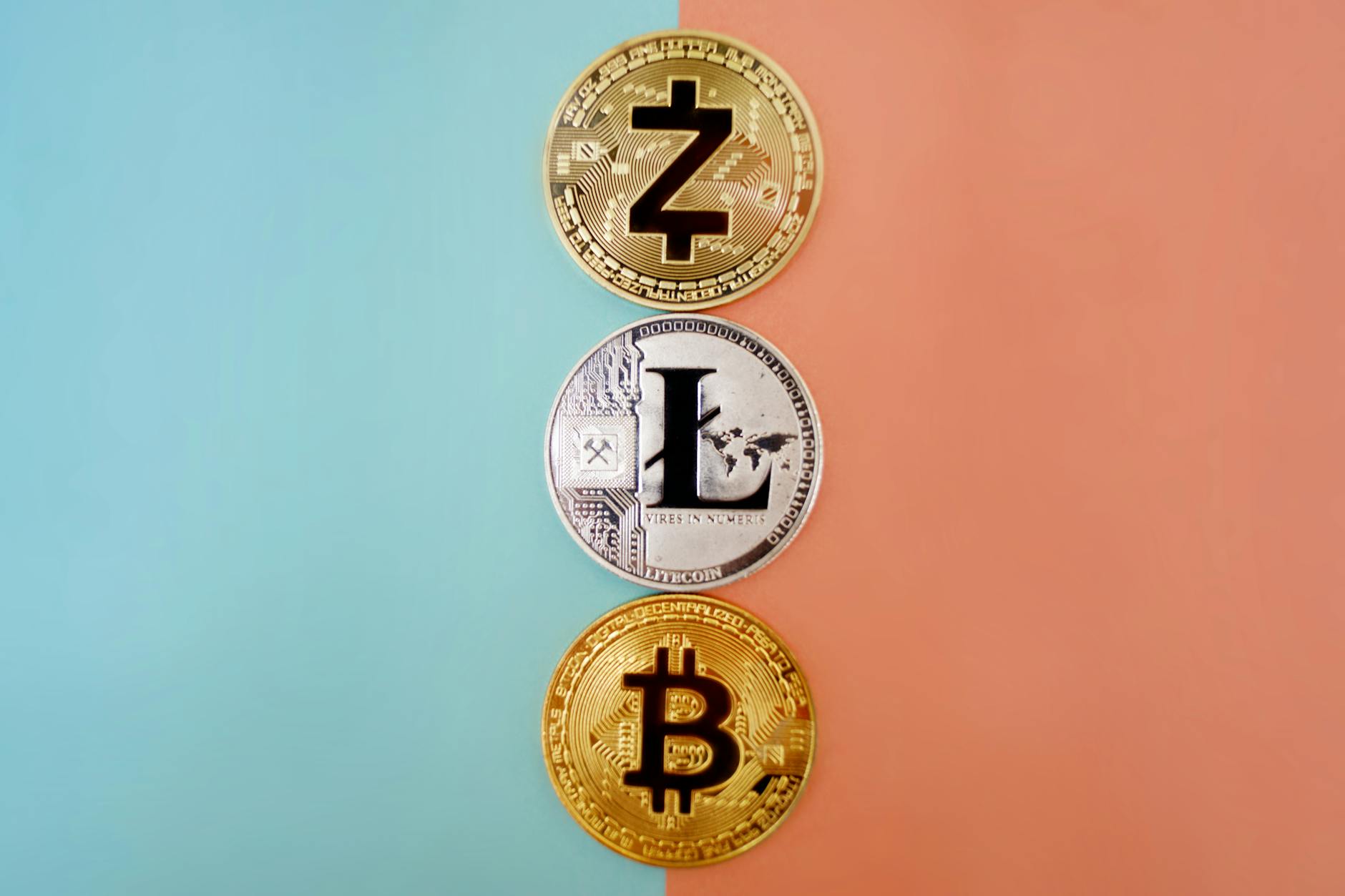
How to Trade Crypto in Canada: The Complete 2026 Regulatory Guide for Canadian Traders
Getting Started: Step-by-Step Guide to Your First Crypto Trade in Canada
Trading cryptocurrency in Canada follows a straightforward process, but regulatory compliance must come first. Unlike stock trading, crypto platforms operate under stricter financial services rules introduced by the CSA. Here's exactly what you need to do:
- Choose a Regulated Exchange: Select a platform registered with provincial regulators (Ontario Securities Commission for Ontario, Alberta Securities Commission for Alberta, etc.). Priority platforms include Coinbase Canada, Kraken, and Newton. Unregistered platforms may operate but offer no legal protection.
- Complete Identity Verification: Prepare government-issued ID (passport, driver's license), proof of address (utility bill dated within 90 days), and sometimes a selfie. Know Your Customer (KYC) requirements are mandatory. Processing typically takes 24-48 hours for Tier 1 accounts (up to $5,000 daily limit) and 3-5 business days for higher tiers.
- Fund Your Account: Link a Canadian bank account via e-transfer (instant to 2 hours), wire transfer ($10-30 fee), or debit card (3-5% fee). Most platforms accept deposits from RBC, TD, BMO, Scotiabank, and online banks like Tangerine and EQ Bank. Some platforms charge higher fees for credit cards ($50+ per transaction).
- Place Your First Trade: Navigate to the trading interface. Select your trading pair (BTC/CAD or ETH/CAD for Canadian dollar pairs). Choose between market orders (instant execution at current price) or limit orders (execute only at your specified price). For beginners, start with market orders on major cryptocurrencies.
- Secure Your Holdings: If you plan to hold long-term, transfer crypto to a cold wallet within 48 hours. Exchanges are custodians, not vaults. Self-custody eliminates counterparty risk but requires backup of your seed phrase in a secure location.
- Report to CRA: Document all trades and holdings. The Canada Revenue Agency (CRA) requires reporting of capital gains on your tax return. Failure to report can result in reassessment notices, back taxes, interest (prime rate + 4%), and penalties (25-50% of underpaid taxes).
Best Crypto Exchanges and Platforms for Canadian Traders
Selecting the right platform depends on your trading style, risk tolerance, and fee sensitivity. Below is a detailed comparison of the most regulated and reliable options available to Canadian users:
| Exchange | Maker/Taker Fees | Deposit Method | Withdrawal Limit (Daily) | Account Verification Time | Custody/Insurance | Regulated By |
|---|---|---|---|---|---|---|
| Coinbase Canada | 0.4% / 0.6% | Bank transfer, debit card | $50,000 CAD | 24 hours (Tier 1) | Segregated client funds; CDIC coverage on CAD balances | OSC (Ontario) |
| Kraken | 0.16% / 0.26% | E-transfer, wire, debit | $100,000 USD equivalent | 2-3 days | Client assets held in segregated accounts; cold storage 95%+ | MSB (FINTRAC registered) |
| Newton | 1.0% flat (maker/taker) | E-transfer, wire transfer | $20,000 CAD (first 30 days) | Instant to 2 hours | Institutional custody via Gemini | MSB (FINTRAC) + Ontario MSB license pending |
| Shakepay | 1.5% - 2.0% spread | E-transfer, bank deposit | $5,000 CAD (first 30 days) | Instant | Cold storage custody; no insurance | MSB (FINTRAC) |
| Crypto.com | 0.4% / 0.6% | Card, e-transfer, wire | $30,000 USD equivalent | 2-5 days | Client asset segregation; Transak insurance for CAD | MSB (FINTRAC pending Ontario approval) |
Top Recommendation for Beginners: Coinbase Canada offers the fastest verification, widest selection of educational resources, and CDIC coverage on Canadian dollar deposits (up to CAD 100,000 per account holder). Maker/taker fees of 0.4%-0.6% are competitive for beginners.
Best for Low Fees: Kraken charges 0.16% maker fees (the lowest among Canadian-regulated platforms), but requires 2-3 days for account verification and accepts fewer fiat deposit methods in smaller provinces.
Best for Speed: Newton and Shakepay offer instant account activation with instant e-transfer deposits, but Newton's 1.0% flat fee and Shakepay's 1.5%-2.0% spreads are higher than Kraken or Coinbase at volume.
Understanding Canada's Crypto Regulatory Framework
Canada's approach to crypto regulation is decentralized across federal and provincial authorities. Understanding this structure is critical for legal compliance:
Federal Regulation (FINTRAC)
Money Services Businesses (MSBs) Registration: Financial Transactions and Reports Analysis Centre (FINTRAC) requires all crypto exchanges to register as MSBs. This means:
- Exchanges must file Know Your Customer (KYC) data for all accounts above CAD 15,000 in annual transaction volume.
- Suspicious transaction reporting (STR) is mandatory for transactions flagged as structuring or potential money laundering.
- Regular compliance audits are required; failure to comply results in prosecution under the Proceeds of Crime (Money Laundering) and Terrorist Financing Act.
Provincial Regulation (CSA/OSC)
The Canadian Securities Administrators (CSA) treats crypto exchange tokens and certain altcoins as securities. This means:
- Ontario: The Ontario Securities Commission (OSC) is the most active regulator. As of July 2026, Coinbase, Kraken, and several smaller platforms hold OSC approval under the Commodity Futures Act. Unapproved platforms operating in Ontario risk civil enforcement actions.
- Alberta: The Alberta Securities Commission (ASC) has registered 12 crypto platforms and takes a lighter-touch approach than Ontario.
- British Columbia: The BC Securities Commission (BCSC) requires registration for derivatives trading but permits spot trading under certain conditions.
- Quebec: Autorité des marchés financiers (AMF) has stricter rules; only 8 platforms currently operate legally in Quebec as of mid-2026.
Critical Point: Bitcoin and Ethereum are treated as commodities, not securities, and thus avoid securities registration requirements. However, altcoins like XRP ($1.0580) and Cardano ($0.1547) may be deemed securities depending on their utility and issuance structure. Trading unregistered tokens can expose you to account seizure if the platform faces enforcement action.
Complete Fees and Costs Breakdown for Canadian Traders
Trading costs extend far beyond exchange fees. Understanding all charges prevents surprises and ensures you're maximizing returns:
Trading Fees (Maker vs. Taker)
- Maker Fee: Paid when you place a limit order that adds liquidity to the order book. Typically 0.16%-0.4%.
- Taker Fee: Paid when you place a market order that removes liquidity. Typically 0.26%-0.6%.
- Volume Discounts: Most platforms offer reduced fees at higher monthly volumes (tier-based pricing). Kraken drops to 0.08% maker / 0.16% taker at $500,000+ monthly volume.
Deposit Fees
- E-transfer: CAD 0 (most platforms)
- Wire transfer: CAD 10-30 (charged by the exchange)
- Debit card: 2%-3% (charged by payment processor)
- Credit card: 3%-5% (cash advance rates apply; some platforms block credit cards entirely)
Withdrawal Fees
- Bank transfer (ACH/EFT): CAD 0-2.50
- Wire transfer: CAD 15-40
- Crypto withdrawal (on-chain): Varies by network. Bitcoin withdrawals cost CAD 10-50 depending on network congestion; Ethereum (currently $1,874) costs CAD 3-15 on Layer 2 networks like Arbitrum.
Hidden Costs
- Spread: The difference between buy and sell prices. On low-volume altcoins, spreads can reach 2%-5% versus the quoted price.
- Staking Rewards Fees: Some platforms charge 10%-25% commission on staking rewards. Kraken charges 15% on Ethereum staking; Coinbase charges 10%.
- Account Inactivity: Newton charges CAD 5/month after 6 months of inactivity; most others don't.
CRA Tax Reporting: What Canadian Traders Must Know
The Canada Revenue Agency treats cryptocurrency as a commodity subject to capital gains tax. This is non-negotiable and enforced:
Capital Gains Taxation
- Tax Rate: 50% of capital gains are included in taxable income. At a 43.4% marginal tax rate (top bracket in Ontario), this equals an effective 21.7% tax on gains.
- Triggering Events: Capital gains are triggered on sale (crypto to fiat), exchange (crypto to crypto), or use (buying goods with crypto). Simply holding is not taxable.
- Capital Losses: Can be carried back 3 years or forward indefinitely to offset capital gains. Wash sales do NOT apply to crypto (unlike stocks).
Record-Keeping Requirements
- Maintain all transaction records for 6 years (CRA statute of limitations).
- Document cost basis (purchase price in CAD), date of acquisition, and date of sale or disposal.
- Use adjusted cost base (ACB) method for averaging cost (required in Canada, unlike FIFO/LIFO in US).
- Export transaction history from your exchange in CSV format annually; most platforms provide this free.
Form T776 and T1 Return
- Report capital gains on Schedule 8 of your T1 General return.
- Include a detailed statement of dispositions if gains exceed CAD 50,000 in a single year.
- Attach proof of underlying transactions (exchange statements are acceptable).
Common CRA Audit Red Flags
- Failing to report trades despite deposits/withdrawals visible to CRA via bank records.
- Significant variance between your reported gains and the implied gains from deposits and withdrawals.
- Frequent high-value deposits without documented source of funds.
- Crypto holdings not declared on your net worth statement in high-income years.
Pro Tip: File a voluntary disclosure if you've failed to report previous years. The CRA typically waives penalties if you self-report before being contacted. The deadline is generally 10 years back or the statute of limitations, whichever is shorter.
Security Best Practices for Canadian Crypto Traders
Canada sees approximately 15,000 crypto-related fraud reports annually, according to the Canadian Anti-Fraud Centre. Most are preventable through proper security discipline:
Exchange Account Security
- Enable 2FA: Use an authenticator app (Google Authenticator, Authy) rather than SMS-based 2FA, which is vulnerable to SIM swapping. SMS is better than nothing but inferior to TOTP.
- Unique Passwords: Use a password manager (Bitwarden, 1Password) to generate unique 20+ character passwords for each exchange. Credential stuffing attacks are common and reused passwords are the #1 vulnerability.
- Whitelist Withdrawal Addresses: When you enable this feature, withdrawals only go to pre-approved addresses. Set a 24-48 hour whitelist delay. This prevents account takeover losses.
- IP Whitelisting: Restrict logins to your home IP address or VPN. Kraken and Coinbase both offer this.
Self-Custody (Cold Wallet) Setup
- Hardware Wallet (Recommended): Ledger Nano S Plus (CAD 120) or Trezor (CAD 150) store private keys offline. Ledger holds approximately 32% of the retail hardware wallet market as of July 2026.
- Seed Phrase Backup: Write your 12-24 word recovery phrase on paper and store it in a safe or safety deposit box. Never photograph it or store it on your phone.
- Test Recovery: Before depositing large amounts, test recovery on a second device to ensure your backup is correct. Many users lose access due to typos in written backups.
- Multi-Sig Wallets: For holdings above CAD 100,000, consider multi-signature wallets (Multisig) that require 2 of 3 keys to sign transactions. This eliminates single-point failure.
Phishing and Social Engineering
- Never click email links claiming to verify your account. Always log in directly via the exchange's official website.
- Disable notifications on your phone and email if they distract you during trading (prevents panic decisions from fake alerts).
- Use DNS filtering (Cloudflare's 1.1.1.1 for Families or NextDNS) to block phishing domains at the router level.
Common Beginner Mistakes and How to Avoid Them
Mistake #1: Trading on Unregistered Platforms
Some platforms (like certain decentralized exchanges) don't hold CSA or FINTRAC registration. While decentralized finance (DeFi) isn't illegal, trading on unregistered centralized exchanges is risky. If the platform shuts down due to regulatory action, you have no legal recourse. Always verify platform registration at the OSC website or ask the exchange directly for their FINTRAC MSB number.
Mistake #2: Holding Crypto on Exchanges Long-Term
Exchanges are targets for hacking. FTX and Celsius both held customer assets and lost them to insolvency or theft. Transfer your holdings to a personal wallet within 24-48 hours of purchase if you plan to hold longer than a week.
Mistake #3: Panic Selling or FOMO Buying
Emotional trading destroys returns. Bitcoin fell 2.78% in a single day (July 28, 2026) triggering margin calls for leveraged traders. Set entry and exit prices in advance. Use limit orders to enforce discipline. Never trade on margin until you've completed at least 50 spot trades successfully.
Mistake #4: Ignoring Tax Obligations
The CRA now cross-references exchange deposits and withdrawals with T1 returns. Under-reporting gains is considered tax evasion, not an honest mistake. Use tax software like Wealthsimple Tax (free for basic returns) or hire an accountant familiar with crypto. The cost (CAD 200-500) is far less than CRA penalties.
Mistake #5: Using Leverage Without Understanding Liquidation
Margin trading amplifies both gains and losses. At 2x leverage, a 50% price drop liquidates your position entirely. As of July 28, 2026, Solana (SOL) dropped 3.88% in one day; at 3x leverage, this would trigger liquidation. Most beginners should avoid leverage entirely until they've traded spot markets for 6+ months.
Frequently Asked Questions About Crypto Trading in Canada
What is the minimum amount to start trading crypto in Canada?
Technically, no minimum exists. Coinbase allows deposits as low as CAD 10, but transaction fees (0.6% taker fee = CAD 0.06) mean the platform won't process it. In practice, CAD 50-100 is the practical minimum. For meaningful portfolio building, start with at least CAD 500.
How long does account verification take on Canadian exchanges?
Tier 1 verification (ID + address proof) takes 24 hours on Coinbase, 2-3 hours on Shakepay, and up to 5 business days on Kraken. Tier 2 verification for higher withdrawal limits requires an additional 3-10 days. Plan for 7-14 days if you need high withdrawal limits immediately.
Is crypto trading in Canada legal?
Yes, it is legal to buy and sell crypto in Canada. However, you must use FINTRAC-registered exchanges and report capital gains to the CRA. Trading on unregistered platforms carries legal risk, and failing to report gains is tax evasion.
What is the best crypto to trade as a beginner in Canada?
Bitcoin ($63,169) and Ethereum ($1,874) are the most liquid and least volatile major cryptocurrencies. They offer tight spreads (as low as 0.02% on Kraken), abundant educational content, and 24/7 exchange availability. Altcoins like XRP ($1.0580) are riskier and less liquid; avoid until you've completed 20+ successful spot trades.
Can I trade crypto using a margin account?
Yes, but Canadian platforms cap margin at 2:1 leverage for Bitcoin/Ethereum and 1:1 for altcoins (per IIROC rules as of July 2026). Margin trading is not recommended for beginners due to liquidation risk. Use spot trading (buying with your own funds) exclusively until you understand order books, funding rates, and liquidation mechanics.
Do I need to pay tax on unrealized gains?
No. The CRA only taxes realized gains (when you sell or exchange crypto). Simply holding crypto with unrealized gains is not taxable, even if the value increases 10x. However, you must report holdings above CAD 100,000 on your net worth statement if requested by CRA audits.
What happens if my crypto exchange shuts down?
If the exchange is FINTRAC-registered, customer assets are held in segregated accounts and should be returned within 30 days. However, this is not guaranteed (see FTX collapse). The safest approach: withdraw to your own wallet within 24 hours of purchase. Your wallet is your only true possession.
Essential Resources for Canadian Crypto Traders
- Crypto Trading Strategy Guide – Learn advanced technical analysis and risk management.
- Introduction to DeFi and Decentralized Exchanges – Understand the alternatives to centralized platforms.
- Complete Fintech Regulation in Canada – Detailed breakdown of CSA and FINTRAC rules.
- Tax-Efficient Investment Strategies – Strategies to minimize your tax liability on gains.
- Day Trading vs. Long-Term Holding – Understand which strategy matches your goals.
- Technical Analysis for Crypto Markets – Learn to read charts and identify trends.
- Digital Banking and Crypto Integration – How traditional banking connects to crypto platforms.
Start Trading on Coinbase Canada"The difference between successful crypto traders and those who lose money isn't technical knowledge—it's discipline. The traders who survive bear markets are those who plan their exits before entering, maintain secure backups of their keys, and report their taxes accurately. Everything else is noise."
— Pro Trader Daily Research Team
Canadian Crypto Trading: Quick Reference
- Activity: Buying, selling, and exchanging cryptocurrencies via regulated platforms
- Primary Cryptocurrencies: Bitcoin (BTC: $63,169), Ethereum (ETH: $1,874), BNB ($564), Solana ($73.20), XRP ($1.0580)
- Regulatory Bodies: Canadian Securities Administrators (CSA), FINTRAC (federal), Ontario Securities Commission (provincial)
- Tax Treatment: Capital gains at 50% inclusion rate (effective 21.7% tax at top bracket)
- Top Platforms: Coinbase Canada, Kraken, Newton, Shakepay, Crypto.com
- Typical Trading Fees: 0.16%-0.6% (maker), 0.26%-2.0% (taker) depending on platform
- Account Verification Time: 24 hours to 5 business days
- Deposit Methods: E-transfer, wire transfer, debit card (most platforms)
- Custody Options: Exchange custody (lower security, higher liquidity) or self-custody via hardware wallet (higher security, lower liquidity)
- Key Risk: Platform hacking, regulatory shutdown, user error with private keys, tax non-compliance
Final Thoughts: Your Action Plan
Cryptocurrency trading in Canada is regulated, accessible, and taxable. Your first step is straightforward: select a CSA-registered platform (Coinbase Canada is optimal for speed and protection), complete identity verification, deposit CAD 50-500, and execute one test trade. Most traders complete this within 2 hours. From there, follow the security practices outlined above, document every trade for CRA reporting, and commit to learning before you risk significant capital. The traders who succeed are those who treat crypto like any other asset class—with discipline, proper accounting, and respect for regulatory requirements.