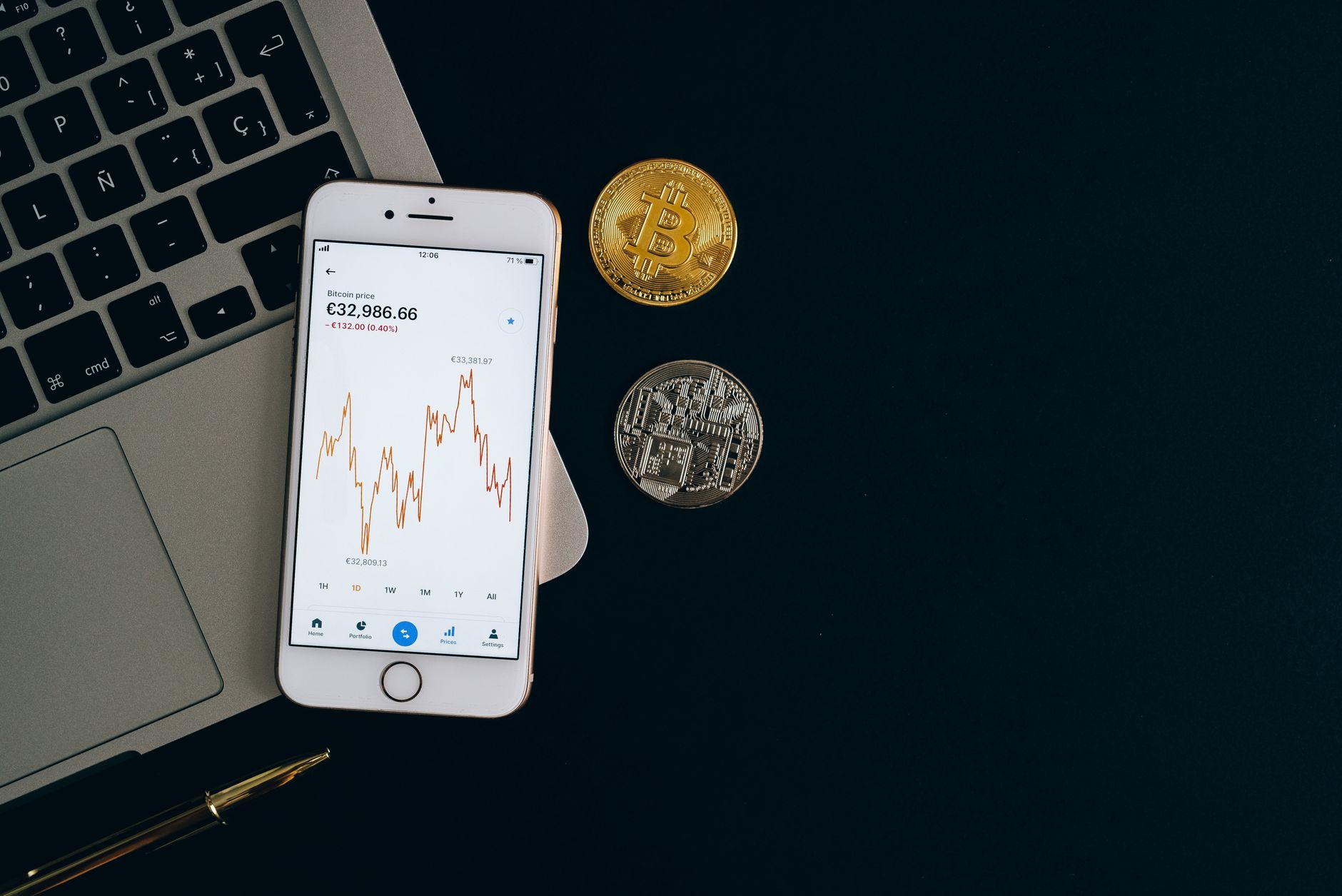
How to Create a Crypto Wallet in India: Step-by-Step Guide for 2026
Creating a cryptocurrency wallet in India has become significantly more accessible, yet it remains a process wrapped in regulatory complexity and security considerations that differ markedly from global peers. Whether you're a first-time buyer holding Bitcoin at $64,824 or an experienced trader managing a diversified portfolio, understanding India's specific requirements—from KYC mandates to tax implications to local payment integration—is critical before you make your first deposit.
This guide walks you through every step, addresses the regulatory landscape head-on, and equips you with the security practices that actually matter for Indian users operating in this evolving market.
What Is a Crypto Wallet and How Does It Work?
A crypto wallet is a software application that stores your private and public keys. Your public key is your wallet address—shareable, used to receive funds. Your private key is your password and ultimate proof of ownership—never share it with anyone, ever.
When you initiate a transaction, the blockchain network verifies your private key, confirms you own the funds, and executes the transfer. Without your private key, no one can access or move your cryptocurrencies, which is why wallet security is non-negotiable.
Think of it like this: your public key is your bank account number (safe to share). Your private key is your account password and PIN combined (never reveal). Your wallet provider (if using a custodial service) holds both securely on your behalf.
Types of Crypto Wallets Available in India
1. Custodial Wallets (Exchange-Based)
You create an account on an exchange like WazirX, CoinDCX, or Kraken, and they hold your private keys. Faster for beginners, supports UPI deposits, but introduces counterparty risk. If the exchange faces regulatory action or hacking, your funds are at risk.
2. Non-Custodial Wallets (Self-Hosted)
You control the private keys entirely. Software wallets (MetaMask, Trust Wallet) run on your phone or desktop. Hardware wallets (Ledger, Trezor) are physical devices. Full control, zero counterparty risk, but user error = permanent loss.
3. Mobile Wallets
Optimized for Android (critical for India's mobile-first market). Popular choices: Trust Wallet (supports 70+ blockchains), Coinbase Wallet (beginner-friendly), Uniswap Wallet (DeFi-native). Most allow both custodial and non-custodial modes.
4. Web3 Wallets
Browser extensions (MetaMask) that connect to decentralized applications. Indian developers increasingly use MetaMask for interacting with DeFi protocols and NFT marketplaces.
India's Regulatory Status on Cryptocurrency
The regulatory environment remains fluid. Here's what applies as of July 2026:
- Ownership is legal: The Supreme Court struck down the RBI's 2018 banking ban on crypto services in March 2020, affirming that individuals can own cryptocurrencies.
- Exchanges must comply with FEMA and KYC: Any platform accepting Indian rupees must follow Foreign Exchange Management Act (FEMA) rules and conduct Know Your Customer (KYC) verification identical to banks.
- No dedicated crypto regulation: India lacks a comprehensive digital asset law. Tax treatment is defined under income tax rules, but classification as "asset," "currency," or "commodity" remains contested.
- Banking restrictions: Many Indian banks still refuse to service crypto exchanges due to internal policy or RBI guidance. This drives reliance on payment processors and peer-to-peer methods.
- Tax obligation exists: Cryptocurrency income is taxable. Gains from trading, mining, or staking are treated as income (taxed at slab rates) or capital gains (20% with indexation if held over 2 years).
Bottom line: Create a wallet freely. Buy and sell on a KYC-compliant exchange. Pay your taxes. Stay informed on regulatory updates, as a comprehensive digital asset bill has been promised for years and may materialize.
Top 5 Wallets for Indian Users
-
WazirX (Exchange Wallet)
- Best for: First-time Indian buyers
- Pros: UPI/INR deposit, Indian customer support, regulatory focus, low fees
- Cons: KYC required, custodial risk, limited non-crypto assets
- Fee: Maker 0.1%, Taker 0.2%
- Regulation status: Fully KYC/AML compliant, banking partnerships fluctuate
-
CoinDCX (Exchange Wallet)
- Best for: Mid-tier Indian traders
- Pros: Multiple payment options, broad coin selection, referral rewards, mobile app (Android-optimized)
- Cons: Custodial, KYC required, occasional bank partner delays
- Fee: 0.5% on most pairs
- Regulation status: FEMA compliant, holds no license but follows compliance framework
-
Trust Wallet (Non-Custodial Mobile)
- Best for: Users wanting full control
- Pros: Supports 70+ blockchains, buy crypto via credit/debit card, no KYC if peer-to-peer, Android app is excellent
- Cons: Self-custody = user responsibility, no INR direct deposit
- Fee: 2-3% on card purchases (third-party processor), blockchain network fees vary
- Security: Private keys stored locally on device
-
MetaMask (Web3 Browser Wallet)
- Best for: DeFi users and developers
- Pros: Industry standard, connects to 1000+ DeFi apps, supports Ethereum, Polygon, BSC, open-source
- Cons: No built-in fiat on-ramp in India (use exchanges first), requires self-custody discipline
- Fee: Network gas fees only (blockchain, not MetaMask)
- Security: Private keys controlled locally, but browser security is critical
-
Ledger Nano X (Hardware Wallet)
- Best for: Long-term holders and high-value portfolios
- Pros: Maximum security (private keys never touch internet), supports 5,500+ assets, backup recovery phrase
- Cons: Upfront cost (approx. INR 7,500-12,000 in India), learning curve for non-technical users, not ideal for frequent trading
- Fee: One-time hardware cost, then only blockchain network fees
- Security: Gold standard for non-custodial crypto storage
Step-by-Step Wallet Creation Process: WazirX Example
WazirX is India's largest crypto exchange by trading volume. Here's how to create your first wallet:
Step 1: Visit WazirX and Register
Go to wazirx.com. Click "Sign Up." Enter your email address and create a strong password (minimum 8 characters, mix of uppercase, lowercase, numbers, and symbols). Confirm your email via the link sent to your inbox.
Step 2: KYC Verification – Stage 1 (Basic)
Provide your full name, date of birth, and nationality. This takes 2 minutes and activates basic trading limits (usually INR 50,000 per day withdrawal).
Step 3: KYC Verification – Stage 2 (Advanced)
Upload a government-issued ID (Aadhaar, PAN, or passport) and a recent address proof (electricity bill, rent agreement, or Aadhaar). Take a clear selfie holding your ID. Processing typically takes 24-48 hours. Once approved, withdrawal limits increase to INR 10,00,000+ per day.
Step 4: Bank Account Linking
Add your bank account or UPI ID. WazirX integrates with multiple banks. If your bank refuses to process crypto transfers, WazirX may offer partner banks or NEFT/RTGS routes. This step is critical for depositing INR.
Step 5: Deposit Funds
Transfer INR via UPI, bank transfer, or debit card (2-3% fee). Minimum deposit: typically INR 100. Funds appear in your wallet within minutes (UPI) to 24 hours (bank transfer).
Step 6: Place Your First Buy Order
In the trading interface, select a cryptocurrency (Bitcoin at $64,824, Ethereum at $1,879, or any altcoin). Choose "Buy" and set the amount in INR or quantity in crypto. Review the fee (0.2% taker fee for buy orders on WazirX) and confirm. The crypto appears in your wallet instantly.
Step 7: Secure Your Account
Enable two-factor authentication (2FA) via an authenticator app (Google Authenticator or Authy). This prevents unauthorized access even if someone gains your password. Screenshot or write down your 16-character backup codes in a secure location.
Step 8: Optional – Transfer to Self-Custody
To move your crypto off the exchange and into a non-custodial wallet, go to "Withdraw," paste your Trust Wallet address (or hardware wallet address), and initiate the transfer. You'll pay a blockchain network fee (varies by asset, typically INR 50-500). After 1-2 confirmations, your crypto is in full your control.
KYC Verification Requirements for India
Every exchange operating legally in India must follow RBI and SEBI guidelines for KYC. Here's what you need:
Documents Required
- Proof of Identity: PAN card (preferred), Aadhaar, passport, or voter ID. Aadhaar is instant if you have it.
- Proof of Address: Electricity bill (issued within last 6 months), water bill, telephone bill, rent agreement with government stamp, or passport. Digital copies accepted.
- Proof of Income (Optional): Income tax return or salary slip (some exchanges for higher limits, most don't require)
Typical Timeline
- Basic KYC: Instant or within minutes (name + DOB + nationality)
- Intermediate KYC: 1-48 hours (document upload, manual review)
- Advanced KYC: 48 hours to 5 business days (video call or additional verification)
Limits and Restrictions
- Basic: INR 10,000-50,000 daily withdrawal
- Intermediate: INR 1,00,000-5,00,000 daily withdrawal
- Advanced: INR 10,00,000+ daily withdrawal (or unlimited for some exchanges)
Important: KYC details are encrypted and stored per FEMA/RBI rules. Never share your KYC documents via email, WhatsApp, or unofficial channels. Legitimate exchanges never ask for passwords or 2FA codes.
Local Payment Integration: UPI and Bank Transfer Methods
India's crypto adoption is partly driven by seamless payment integration. Here are the primary methods:
UPI (Unified Payments Interface)
How it works: Link your UPI ID (e.g., yourname@okhdfcbank) to the exchange. Click "Deposit," select UPI, and send INR directly from your bank app. Funds arrive within minutes.
Advantages: Instant, zero fees from the exchange, no bank transfer delays.
Disadvantages: Daily UPI limit (typically INR 1,00,000-2,00,000 per transaction, varies by bank and RBI limits), not all banks support UPI-to-crypto transfers (some have blocked them).
Supported exchanges: WazirX, CoinDCX, Zebpay (most Indian platforms support UPI)
Bank Transfer (NEFT/RTGS)
How it works: Exchange provides its partner bank account details. You initiate a bank transfer from your account using NEFT (National Electronic Funds Transfer) or RTGS (Real-Time Gross Settlement). Transfer usually clears within 24 hours.
Advantages: Larger amounts possible, more stable than UPI
Disadvantages: Takes 24 hours, bank may flag as suspicious if regular (some banks automatically reject crypto-related transfers)
Debit/Credit Card
Cost: 2-5% fee charged by the exchange (third-party processor handles compliance)
Supported exchanges: WazirX, CoinDCX, Kraken (for international cards)
P2P (Peer-to-Peer)
How it works: Trade crypto directly with other users via escrow on platforms like Binance P2P, LocalBitcoins, or WazirX P2P. No KYC required if amounts are small, though Indian law suggests KYC is technically mandatory.
Risk: Counterparty risk, potential scams, slower than exchange deposits
Security Best Practices for Indian Crypto Users
1. Never Share Your Private Key or Seed Phrase
Your 12 or 24-word seed phrase (recovery phrase) is the master key to your wallet. If someone obtains it, they own your crypto. Scammers impersonating exchange support will ask for this. Legitimate services never do. Write it on paper, store in a safe, never photograph it or email it.
2. Use a Dedicated Device or Hardware Wallet for Large Holdings
If holding more than INR 5,00,000, a hardware wallet (Ledger Nano X, Trezor) is strongly recommended. For smaller amounts, a dedicated mobile device or hardware wallet still reduces risk compared to keeping large balances on an exchange or unprotected phone.
3. Enable 2FA on All Accounts
Use an authenticator app (Google Authenticator, Authy, Microsoft Authenticator), not SMS 2FA (vulnerable to SIM swaps). Save backup codes offline. Many Indian users have fallen victim to SIM swap attacks where attackers gain phone access and reset 2FA.
4. Use Strong, Unique Passwords
Minimum 16 characters, random mix of uppercase, lowercase, numbers, symbols. Use a password manager (Bitwarden, 1Password). Never reuse passwords across exchanges. If one exchange is breached, attackers will try that password on others.
5. Beware of Phishing in India's Crypto Community
Scammers target Indian WhatsApp groups and Telegram communities offering "guaranteed returns" or impersonating exchange support. Common tactics: links to fake login pages, requests for 2FA codes, or fake "customer service" numbers. Verify links directly on the official website, never click links from messages.
6. Keep Exchange Balances Low
Only keep the crypto you intend to trade on an exchange. Move the rest to a self-custody wallet. Exchanges are hot wallets (internet-connected), therefore higher-risk targets for hackers.
7. Verify Wallet Addresses Carefully
Before sending crypto, double-check the address. A single character error sends your funds to an unrecoverable address. Many Indian users have lost funds due to typos. Copy-paste from a trusted source, never retype.
8. Update Software Regularly
Keep your phone, wallet app, and browser updated. Outdated apps have known security vulnerabilities. Android users especially should enable automatic updates and use the Google Play Store (not third-party APK downloads).
Tax Reporting and Compliance for Indian Crypto Users
According to India's income tax framework (Finance Act 2022 amendment), cryptocurrency is treated as an asset. Here's how it's taxed:
Income Tax on Crypto Gains
- Short-term Capital Gains (STCG): If you sell within 24 months of purchase, gains are taxed at your slab rate (12%, 20%, or 30% depending on income). No indexation benefit.
- Long-term Capital Gains (LTCG): If you hold for more than 24 months, gains are taxed at 20% with indexation benefit (reduces tax on inflation). This is more favorable than STCG.
- Trading Income: Frequent traders (50+ transactions per year or obvious intent to trade) may face "business income" classification, taxed at slab rates. This is case-by-case.
Reporting Requirements
- All trades must be reported in Schedule 112A (capital gains) of your ITR (Income Tax Return).
- Specify: transaction date, cost basis, selling price, capital gain/loss.
- Many exchanges provide downloadable transaction history (CSV format) to facilitate reporting.
- Failure to report can trigger notices and penalties.
Cryptocurrency as an Asset – 30% TDS Rule
Effective July 1, 2023, a 30% Tax Deducted at Source (TDS) applies to cryptocurrency transactions if the transfer value exceeds INR 50,000 in a financial year. This is controversial and affects Indians using P2P or unregistered exchanges. Most major exchanges have voluntarily complied, deducting TDS at the time of withdrawal.
Mining and Staking Income
Income from crypto mining or staking (earning new coins as reward) is treated as "other income" and taxed at your slab rate in the year earned. Report the value in INR on the date received.
Practical Compliance Steps
- Download transaction history from your exchange(s) at the end of the financial year (April 1 – March 31).
- Calculate cost basis (in INR at purchase date) and selling price (in INR at sale date).
- Compute STCG/LTCG and determine holding period.
- Report in ITR Schedule 112A with detail.
- Keep records for 6 years (statute of limitations).
- Consult a CA (Chartered Accountant) familiar with crypto if gains are substantial.
"Cryptocurrency ownership is legal in India, but tax evasion is not. The Income Tax Department has been actively identifying unreported crypto income through exchange audits and international data sharing agreements. Reporting ensures you avoid penalties and interest."
— Based on Income Tax Framework and FY 2022-23 compliance guidance
Common Mistakes Indian Crypto Users Make
1. Storing Everything on an Exchange
WazirX, CoinDCX, and other exchanges are custodial. If they face regulatory action, hacking, or insolvency, your funds are at risk. Move crypto you don't intend to trade to a self-custody wallet.
2. Using the Same Password Across Multiple Exchanges
If one exchange is breached, attackers will try that password on others. Use a unique, strong password for every platform.
3. Falling for "Guaranteed Returns" Schemes
WhatsApp groups offering 5-10% monthly returns are pyramid schemes. Crypto doesn't guarantee returns. If it sounds too good, it's a scam.
4. Neglecting Tax Reporting
The Income Tax Department is increasingly scrutinizing crypto transactions. Non-reporting or underreporting can trigger notices, penalties up to 200%, and legal action. Report all gains, even if small.
5. Sending Crypto Without Verifying the Address
A single typo and your funds are gone forever. Always verify addresses via copy-paste and double-check the first and last few characters.
6. Using Unregulated Exchanges Without KYC
Unregulated exchanges or P2P methods avoid KYC to attract users, but offer zero recourse if your account is hacked or funds are stolen. Use KYC-compliant exchanges for safety and legal protection.
7. Ignoring Bank Transfer Rejections
Some Indian banks have blanket policies against crypto. If your bank consistently rejects transfers to exchanges, don't fight it—switch to a crypto-friendly bank or use multiple payment methods (UPI, debit card).
8. Not Backing Up Recovery Phrases
If your phone dies and you don't have your seed phrase written down, you lose access to your crypto permanently. Back up immediately when creating a non-custodial wallet.
Frequently Asked Questions
Is it legal to own cryptocurrency in India?
Yes. The Supreme Court's 2020 judgment struck down the RBI's banking ban, affirming that individuals can own cryptocurrencies. However, using unregulated exchanges or avoiding KYC may attract scrutiny. Always use KYC-compliant platforms to stay on the right side of the law.
Can I create a crypto wallet without KYC?
You can create a non-custodial wallet (MetaMask, Trust Wallet) without KYC since you're the only one accessing it. However, any exchange where you buy or sell via INR requires KYC under FEMA and RBI regulations. KYC-free exchanges are unregulated and risky.
What's the safest way to store crypto as an Indian user?
For long-term holdings (6+ months), a hardware wallet (Ledger Nano X, approx. INR 7,500-12,000) is safest. For frequent traders, a custodial exchange is practical. For medium-term, a mobile non-custodial wallet (Trust Wallet, MetaMask) balances security and usability.
How much tax do I pay on crypto gains in India?
Short-term gains (sold within 24 months) are taxed at your income slab rate (12%, 20%, or 30%). Long-term gains (held over 24 months) are taxed at 20% with indexation benefit. Additionally, a 30% TDS applies to transfers above INR 50,000 per year (as of July 2023).
Which Indian banks support crypto deposits?
Most mainstream banks (HDFC, ICICI, Axis) have stopped direct support due to internal policy. However, many still allow transfers to exchanges via NEFT/RTGS if classified correctly. UPI deposits work better. Some regional banks and
For a complete overview, see our Best Crypto Wallets Guide.