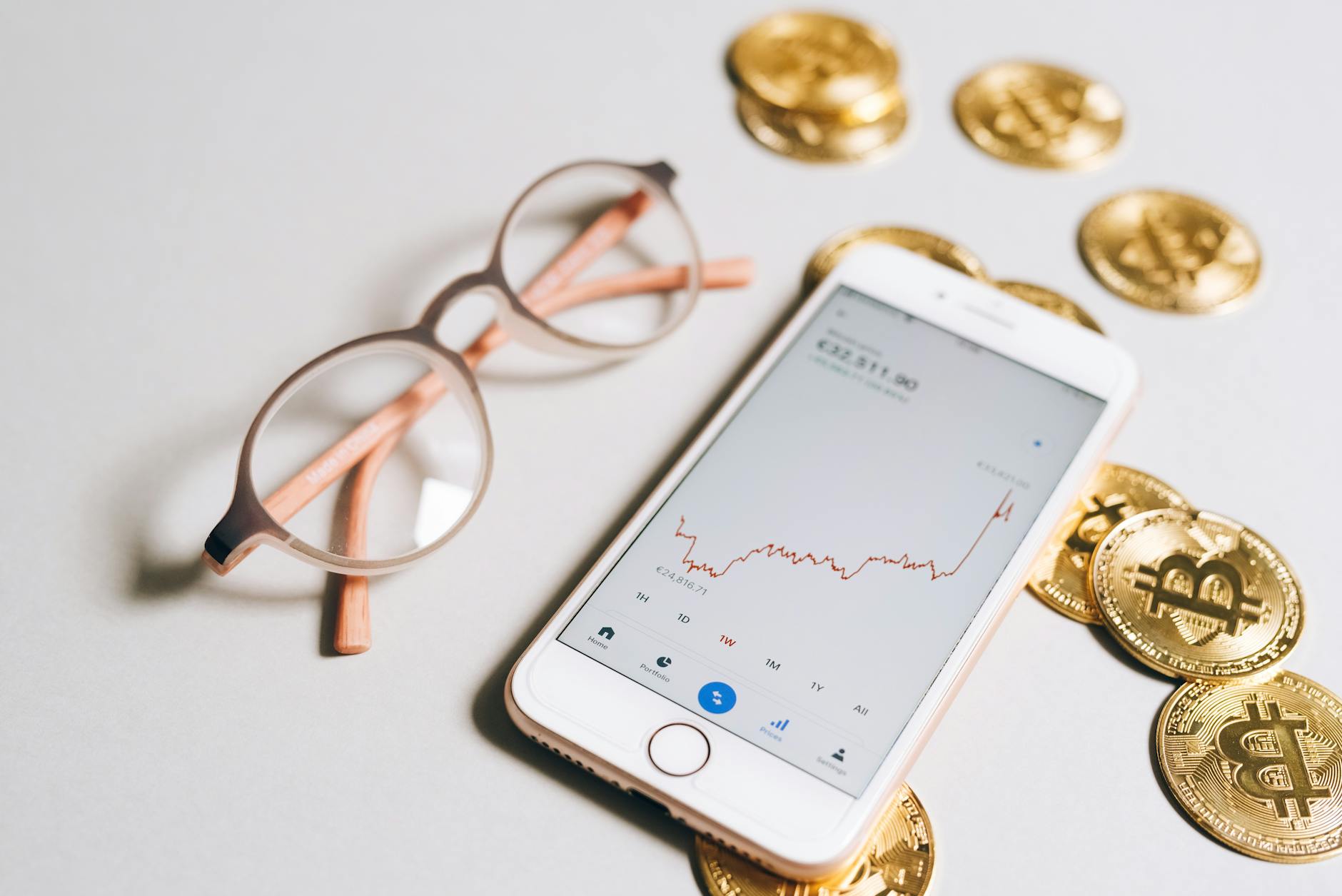
Why Cryptocurrency Investment Risks Often Catch Beginners Off Guard
You've seen the headlines: Bitcoin soared to $77,330 in recent weeks, then dropped 2.31% in a single day. A friend made 300% returns on Solana. Another lost their entire investment to a fake exchange link. Cryptocurrency is seductive—the promise of decentralized finance, generational wealth, financial freedom. But beneath the opportunity lies a minefield of risks that separate informed investors from devastated ones.
The truth most crypto marketing won't tell you: cryptocurrency is fundamentally different from stocks, bonds, or real estate. There's no Federal Deposit Insurance Corporation (FDIC) protection if your exchange collapses. No automatic reversal if you send funds to the wrong wallet address. No regulatory safety net for most tokens. The potential for 10x returns comes packaged with the equal potential for permanent loss.
This guide exposes the eight concrete risks every crypto investor must understand—and more importantly, provides a practical framework to assess your personal risk tolerance and determine exactly how much of your portfolio should actually be in cryptocurrency.
1. Volatility and Market Risk: The Certainty of Uncertainty
Cryptocurrency prices don't decline gradually. They crater.
Bitcoin's historical volatility averages 70-80% annualized, compared to the S&P 500's typical 15-20%. In plain terms: if you invested $1,000 in Bitcoin in November 2021 ($68,000 per coin), you'd have seen it plummet to $16,500 by November 2022—a 75% loss. That's not a "dip." That's generational devastation for unprepared investors.
Current cryptocurrency prices as of September 12, 2026:
- Bitcoin (BTC): $77,330 (down 2.31% in 24 hours)
- Ethereum (ETH): $2,542 (down 3.19% in 24 hours)
- Solana (SOL): $102 (down 2.61% in 24 hours)
- Polkadot (DOT): $1.04 (down 6.07% in 24 hours)
The volatility stems from three factors: limited real-world adoption, high retail speculation, and complete absence of the stabilizing mechanisms that anchor traditional markets (like dividend yields or underlying business cash flows). A single Elon Musk tweet can move Bitcoin 10% overnight. A regulatory announcement triggers panic selling. A minor security exploit in a DeFi protocol erases $100 million in locked value within hours.
Real case study: Investors in Luna (now defunct) lost $40 billion in three days in May 2022 when its algorithmic stablecoin mechanism failed catastrophically. The token collapsed from $80 to $0.0001 in a matter of weeks. Those who bought at the peak lost 99.99% of their investment.
2. Regulatory and Legal Risk: The Invisible Sword
Cryptocurrency exists in a regulatory gray zone that's rapidly shifting. The U.S. Securities and Exchange Commission (SEC) has declared certain tokens are securities and thus fall under stringent registration requirements. Other regulators classify crypto differently: the Commodity Futures Trading Commission treats Bitcoin as a commodity, while the Financial Crimes Enforcement Network treats it as currency for anti-money-laundering purposes.
For your investment, this creates three concrete dangers:
- Retroactive enforcement: Tokens purchased legally today might be deemed unregistered securities tomorrow. Your investment could become unmarketable overnight as exchanges delist them to comply with new rules.
- Geographic arbitrage collapse: Many profitable crypto strategies exploit differences between regulatory regimes. When a major market (like the EU or UK) tightens regulation, the price gap disappears, trapping late investors.
- Tax ambiguity: Most countries haven't finalized crypto taxation rules. "Staking" rewards might be taxed as income, as capital gains, or differently depending on your jurisdiction and how long you hold. Some investors face surprise tax bills years after transactions.
Real impact: When the SEC declared XRP an unregistered security in late 2020, the token dropped 66% in days. Investors holding XRP through regulated U.S. exchanges couldn't trade for months. Those who bought at $3.84 watched it fall to $0.20 while regulatory uncertainty paralyzed the market.
According to the SEC's enforcement actions, regulatory ambiguity remains the primary catalyst for crypto market disruptions in 2026.
3. Security and Hacking Risk: The Irreplaceable Target
Cryptocurrency is uniquely attractive to criminals: it's digital (can be stolen from anywhere), irreversible (once sent, it's gone), and often held by individuals rather than institutions with security teams.
The risks manifest across multiple attack vectors:
- Exchange hacks: FTX imploded in November 2022, with founder Sam Bankman-Fried misappropriating $8 billion in customer funds. Hundreds of thousands of investors lost access to their holdings entirely. Even "regulated" platforms proved to be Ponzi schemes with no actual assets backing customer balances.
- Wallet compromise: Hardware wallets (like Ledger Nano X at $139) reduce risk but aren't foolproof. Users who lose their seed phrase have permanently lost access to their funds—no bank can recover them.
- Phishing and social engineering: Hackers posing as Coinbase support steal credentials. Users click malicious links and approve wallet drains. In 2024, phishing attacks accounted for $14.7 million in crypto losses according to FBI reports.
- Smart contract vulnerabilities: The code powering DeFi platforms is often written by small teams without formal security audits. The Ronin bridge hack (2022) cost $625 million when hackers exploited a validation vulnerability that could have been caught by basic testing.
Your insurance options are minimal. If you hold cryptocurrency through a major exchange, you may have some protection only if that exchange has voluntarily adopted insurance. Self-custody (holding your own private keys) offers no recovery option if compromised.
4. Fraud and Scam Risk: Designed to Exploit FOMO
Cryptocurrency's anonymity, global reach, and lack of intermediaries make it a fraud magnet. According to Federal Trade Commission data, cryptocurrency scams cost Americans $14.4 billion in 2024 alone—up 400% from 2019.
The most dangerous fraud vectors targeting beginners:
| Scam Type | How It Works | Red Flags | Typical Loss |
|---|---|---|---|
| Pump and Dump | Promoters buy cheap tokens, hype them on social media, then sell when price rises, leaving buyers holding worthless tokens | Guaranteed returns; influencer endorsements; urgency to "get in before it moons"; token launched weeks ago with massive price gains | $500–$50,000+ |
| Fake Exchange | Scammers create cloned versions of legitimate exchanges (Coinbase, Kraken), users deposit funds that disappear | Slightly misspelled domain (e.g., coinbse.com); promises lower fees; site design matches legitimate exchange too perfectly | $1,000–$100,000+ |
| Romance Scam | Fake profiles build relationships with victims, then convince them to "invest" in guaranteed crypto gains | Extremely attractive photos; quick relationship escalation; reluctance to video call; pushing toward private payment channels | $10,000–$500,000 |
| Rug Pull | Developers create token with website/roadmap, gain users/investors, then abandon project and steal funds in liquidity pool | Anonymous team; no working product; promises unrealistic returns; new token with sudden trading volume spike | $100,000–$millions (collective losses) |
Real case study: The Squid Game token (2021) launched with hype tied to the Netflix series. Investors bought in, price soared to $2,861, then developers rug-pulled, stealing $3.38 million. The token became worthless. Victims couldn't recover a penny.
Warning signs universally present across scams: promises of guaranteed returns, pressure to act quickly ("limited time offer"), celebrity endorsements, requests to use untraceable payment methods (gift cards, wire transfers), and refusal to provide legitimate business licensing or registration information.
5. Platform and Exchange Risk: When the House Burns Down
Cryptocurrency exchanges have failed at unprecedented scales:
- FTX (2022): $8 billion in customer funds misappropriated; exchange declared bankruptcy; thousands of users lost 100% of holdings with no recovery timeline.
- Mt. Gox (2014): $450 million in Bitcoin stolen; recovery process took 12 years, with creditors receiving ~30% of their losses in 2024.
- QuadrigaCX (2019): Canadian exchange collapsed; $190 million in customer funds disappeared; founder allegedly fled with private keys.
Even "regulated" platforms proved inadequate: FTX was headquartered in the Bahamas, had political connections, and was treated as a responsible actor by mainstream media—until it wasn't.
Your protection depends entirely on your custody model:
- Exchange custody: You trust the exchange's security and solvency. If it fails or gets hacked, you have no guarantee of recovery. Very few exchanges carry insurance that covers 100% of user balances.
- Self-custody (hardware wallet or cold storage): You control the private key, so the exchange's failure doesn't affect you. But if you lose the key or get hacked, there's zero recovery option.
- Hybrid approach: Most experienced investors keep long-term holdings in self-custody and only maintain trading amounts on regulated exchanges.
As of 2026, major U.S. exchanges (Coinbase, Kraken) maintain some insurance for custodial accounts, but the limits are typically $250,000 per account—far below holdings of serious investors.
6. Liquidity Risk: The Invisible Exit Door
Liquidity risk is the danger that you can't sell your cryptocurrency at the price you expect when you need to.
This manifests in several ways:
- Bid-ask spreads: For major coins like Bitcoin and Ethereum, trading spreads are tight (0.1-0.5%). For smaller altcoins, spreads can reach 5-20%, meaning you lose money instantly upon purchase simply from the price difference between what buyers pay and sellers ask.
- Market depth collapse: During panic selling, there aren't enough buyers at any reasonable price. If you need to exit 1,000 Bitcoin worth $77 million at market price, you might move the price down 30% simply by flooding the market with supply.
- Exchange restrictions: During extreme volatility, exchanges temporarily disable withdrawals or place limits on outgoing transfers. Users trying to sell during crashes found they couldn't access their funds for hours or days.
- Staking lock-ups: Some coins offer higher returns if you "stake" them (lock them up as collateral). During the Ethereum 2.0 transition, staked ETH was illiquid for years, leaving investors unable to exit even when prices crashed 80%.
Illiquid altcoins (coins outside the top 20 by market cap) are particularly dangerous. Coins with $10 million market cap might show $1 million daily trading volume in normal conditions, but during market stress, volume evaporates entirely.
7. User Error and Irreversibility: The Mistake You Can't Undo
Traditional financial systems include safety mechanisms: you can call your bank if you wired funds to the wrong account; they can (sometimes) reverse the transaction. Credit card companies have dispute resolution.
Cryptocurrency has none of this. Transactions are immutable by design.
Common user errors:
- Wrong wallet address: Accidentally paste an address from your clipboard (modified by malware) and send $50,000 to a scammer's wallet. It's gone forever. Not even the blockchain can reverse it.
- Lost seed phrase: Forget or misplace the 12-24 word recovery phrase for your hardware wallet. Your funds are locked away permanently, unrecoverable even by the manufacturer.
- Sending to wrong chain: Send Ethereum to a Bitcoin address (or send Bitcoin Cash to a Bitcoin address). The transaction doesn't fail—it succeeds, and your funds vanish into an address controlled by nobody on that network.
- Typo in private key import: One character wrong when copying your private key, and you've imported the wrong wallet or corrupted it entirely.
- Keeping seed phrase digitally: Store your recovery phrase in a text file, email, or cloud drive. A hacker gains access and drains your wallet.
Real impact: A single user error—writing down a seed phrase incorrectly or trusting a fake website—costs crypto investors an estimated $13 million annually in unrecoverable funds, according to Chainalysis data.
Unlike stock trading, where regulatory requirements include "know your customer" verification and transaction reversibility windows, crypto transactions execute with no intermediary confirmation and cannot be undone.
8. Psychological and Behavioral Risk: How Your Brain Sabotages You
Cryptocurrency's extreme volatility creates a psychological minefield that's distinct from traditional investing:
- FOMO (Fear of Missing Out): Watching Bitcoin rally 20% in a week triggers panic buying. You buy at the peak right before a correction, locking in losses.
- Panic selling: Your $10,000 investment drops to $4,000 in a day. The psychological pain triggers irrational selling, locking in losses at the worst possible moment rather than waiting for recovery.
- Leverage spiral: Cryptocurrency exchanges offer 10x, 20x, even 100x leverage on certain pairs. A beginner deposits $1,000, borrows $99,000, and controls $100,000 in Bitcoin. A 5% price drop liquidates their entire position. Leverage accounts for most catastrophic personal losses in crypto.
- Conspiracy thinking: Crypto communities are prone to conspiracy narratives ("governments are suppressing crypto," "this is all rigged"). Confirmation bias keeps you holding losing positions with irrational conviction.
- Sunk cost fallacy: You've lost $20,000 on Dogecoin but keep adding "just in case" it recovers, effectively throwing good money after bad.
Research from behavioral finance shows that cryptocurrency traders exhibit loss aversion 2-3x stronger than stock traders, meaning the emotional pain of a loss hits harder than the joy of equal gains. This imbalance drives poor decision-making.
Personal Risk Assessment Framework: How Much Crypto Should You Own?
Financial advisors at major institutions offer this general guidance, though you should consult a qualified advisor for personal circumstances:
| Risk Profile | Annual Income | Crypto Allocation | Dollar Example ($50K Annual Income) | Investment Type |
|---|---|---|---|---|
| Conservative | Any | 0-2% | $0–$1,000 | Bitcoin, Ethereum only; long-term hold |
| Moderate | $50K–$150K | 2-5% | $1,000–$2,500 | Bitcoin (60%), Ethereum (30%), established altcoins (10%) |
| Moderate-Aggressive | $150K+ | 5-10% | $2,500–$5,000 on $50K income | Diversified portfolio; some leverage acceptable; consider staking |
| Aggressive | $200K+ with emergency fund | 10-20% | $5,000–$10,000 on $50K income | Early-stage projects; leverage; options trading; active management |
Critical guardrails:
- Never allocate more than you can afford to lose completely. If losing it would materially harm your lifestyle, you've allocated too much.
- Maintain 6-12 months of emergency expenses in cash or bonds before investing any crypto.
- Don't use leverage until you have a minimum 2 years of active trading experience and have profitably traded through at least one complete market cycle (bull and bear).
- Rebalance quarterly. If Bitcoin appreciates from 5% to 15% of your portfolio due to price growth, sell some to bring it back to your target allocation.
- Don't allocate retirement funds (401k, IRA, etc.) to crypto without explicit documentation that you understand the risks. Many plans explicitly prohibit it.
Risk Mitigation Strategies: Practical Defense
Understanding risks is step one. Mitigating them is step two.
Practical mitigation actions ranked by impact:
- Use a hardware wallet for holdings over $1,000: Ledger Nano X ($139), Trezor Model T ($180), or Coldcard ($249). This removes exchange risk entirely. Your coins are secured by your private key, which never leaves the device even when you send transactions.
- Enable two-factor authentication on all accounts: Use an authenticator app (Google Authenticator, Authy), not SMS (which can be intercepted). SMS 2FA is better than nothing, but authenticator apps are substantially more secure.
- Diversify across multiple exchanges: If one exchange is hacked or collapses, you don't lose everything. Split holdings: 50% self-custody (hardware wallet), 25% on Coinbase (FDIC-insured cash reserves), 25% on Kraken (maintains insurance). Avoid concentrating on any single platform.
- Research before buying any token: Check founder/team credentials on LinkedIn. Read GitHub code repositories (even basic inspection shows activity and legitimacy). Review regulatory filings. Avoid anything less than 2 years old unless you're explicitly speculatively investing with capital you can afford to lose.
- Use dollar-cost averaging for entries: Rather than lump-sum investing $5,000, invest $500 monthly over 10 months. This smooths out volatility and removes the pressure to time the market perfectly.
- Set strict stop-loss levels before buying: Decide in advance: if Bitcoin drops 30% from entry, I sell. If Ethereum drops 50%, I sell. Remove emotion by automating these decisions beforehand (some exchanges allow stop-loss orders).
- Never use leverage as a beginner: The risk-reward calculation that looks attractive in theory (10x returns!) becomes catastrophic in practice (liquidation in hours). Skip margin trading and futures until you've successfully held crypto through a 40%+ decline without panic-selling.
- Insure significant holdings: Companies like Coincover and Nexus Mutual offer insurance for self-custodied crypto. Premiums are 1-3% annually but protect against theft, exchange failure, and other losses.
If You've Already Lost Funds: Recovery Resources
If you've fallen victim to cryptocurrency fraud, theft, or are locked out of exchange funds:
- Report to the FBI: IC3.gov (Internet Crime Complaint Center) is the official reporting portal. The FBI tracks patterns and can aid criminal investigations, though recovery is rare.
- Contact the FTC: ReportFraud.ftc.gov collects scam data. While they rarely recover individual funds, they use the data to target large fraud rings.
- Engage a crypto forensics firm: Companies like Chainalysis and Elliptic can trace stolen funds on the blockchain. Hiring them costs $5,000-$50,000 but can be worthwhile for large losses and may assist law enforcement recovery efforts.
- Consult a lawyer if exchange funds are frozen: If your funds are locked by an exchange claiming regulatory compliance, a financial attorney experienced in crypto can navigate recovery processes. Some exchanges have established claims procedures.
- Tax deduction for losses: In the U.S., crypto losses are deductible as capital losses (up to $3,000 against ordinary income annually, with carryover of excess losses). Consult a tax professional to ensure proper documentation.
The harsh reality: recovery probability is low. Most stolen crypto is gone permanently. This underscores why prevention (security discipline, due diligence, position sizing) is infinitely more effective than recovery.
The Regulatory Landscape in 2026: What's Changed
Regulatory clarity has improved modestly since 2024, but uncertainty remains substantial:
- U.S. SEC clarity: The SEC now explicitly classifies most altcoins as unregistered securities, creating ongoing delisting risk. Bitcoin and Ethereum are exempted as non-securities, but coins launched after 2017 remain in legal limbo.
- EU MiCA regulation (effective 2024): The European Union's Markets in Crypto-Assets Regulation now requires crypto service providers to maintain reserves equal to customer holdings, reducing exchange failure risk. However, it restricts algorithmic stablecoin projects and high-risk leverage products.
- U.K. FCA approach: The Financial Conduct Authority requires crypto exchanges to report on anti-money-laundering and customer protection measures. This increases operational costs and reduces the number of available platforms in UK jurisdictions.
- Emerging market divergence: Singapore, Switzerland, and El Salvador offer crypto-friendly regulation to attract investment and talent. Conversely, China banned all cryptocurrency activity. Your risk profile changes dramatically based on your physical location and the exchanges available to you.
According to regulatory tracking organizations, a major catalyst for 2027 will be the SEC's final clarity on whether specific altcoins (Ripple's XRP, Cardano's ADA, Polkadot's DOT) are securities or commodities. Adverse rulings could devalue these holdings by 40-60%.
Frequently Asked Questions
Is it safe to invest in cryptocurrency?
Cryptocurrency is not unsafe inherently—it's misuse and poor risk management that creates losses. Bitcoin and Ethereum, held in self-custody and comprising no more than 5-10% of a diversified portfolio, carry manageable risk roughly equivalent to small-cap stocks. Leverage, exchange custody without insurance, and allocation to unvetted altcoins dramatically increase risk. Most losses stem from one of four causes: using leverage, holding through exchange collapses, falling for scams, or panic-selling during corrections. Avoid those four, and your risk profile becomes significantly lower.
How much of my portfolio should be cryptocurrency?
General guidance: Conservative investors 0-2%, moderate investors 2-5%, aggressive investors with emergency funds 5-10%, and only sophisticated traders with 2+ years experience 10-20%.
Disclosure: Pro Trader Daily and xpertrax.com are operated by the same owner. Links and pop-ups pointing to xpertrax.com promote our own products. This article is for information only and is not financial advice.