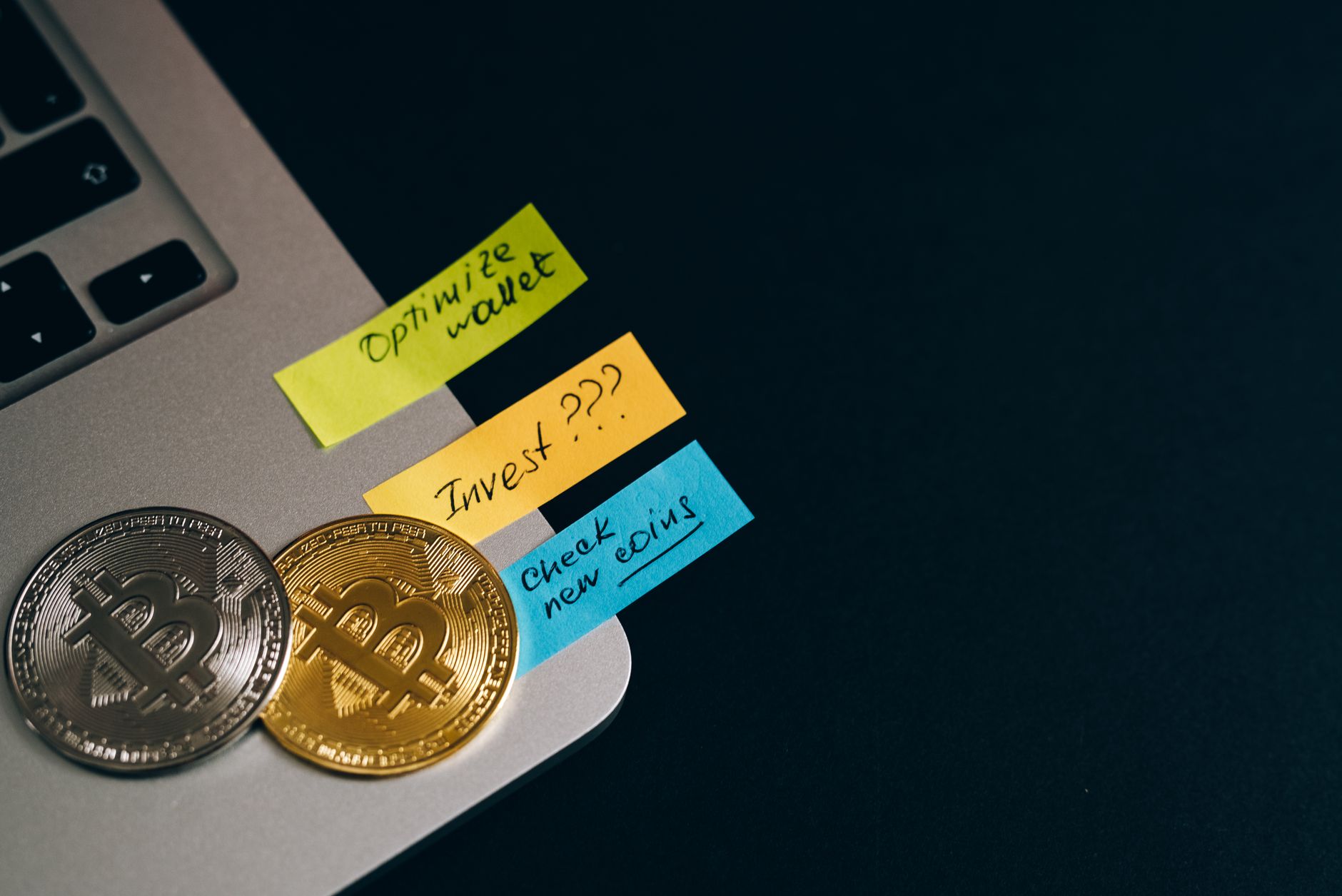
Why Cryptocurrency Investment Comes With Real Risks and Genuine Benefits: Complete Guide
Every investor who glances at cryptocurrency faces the same dilemma. The potential for life-changing gains sits directly next to the possibility of losing everything. Bitcoin trades at $76,432 today, down 2.26% in 24 hours. Ethereum hovers at $2,450, also declining. These price swings aren't rare—they're the norm. Yet thousands add crypto to their portfolios weekly because the upside potential justifies the risk in their calculation. This guide cuts through hype and fear to show you exactly what you're buying into when you invest in cryptocurrency.
What Is Cryptocurrency Investment?
Cryptocurrency investment means buying digital assets built on blockchain technology with the intent to hold them for profit or use. Unlike stocks backed by company earnings or bonds backed by government credit, crypto derives value from scarcity (limited supply), network adoption, and utility. Bitcoin, the largest, is strictly a store of value. Ethereum enables smart contracts and decentralized applications. Smaller tokens serve specific functions across DeFi (decentralized finance), gaming, or infrastructure roles.
You invest through spot purchases (owning the actual coin), futures contracts (betting on price direction without owning), or staking (earning yield by locking coins in a protocol). Each method carries different risk profiles. Spot ownership removes counterparty risk but exposes you to price swings and theft. Futures add leverage, multiplying gains and losses. Staking adds smart contract risk on top of price risk.
Top 8 Benefits of Cryptocurrency Investment
- 24/7 Market Access Without Trading Halts: Crypto exchanges operate continuously, unlike stock markets that close daily. You can execute trades at 3 AM on Sunday. This matters for capturing global volatility and avoiding overnight gaps.
- Significantly Lower Trading Fees Than Traditional Markets: Spot trading on major exchanges costs 0.1% to 0.5% per trade. Futures margins run even cheaper. Stock brokers and forex dealers typically charge 1-3% all-in. DeFi protocols charge gas fees (usually $2-50 depending on network congestion), which is negligible on large positions.
- Portfolio Diversification Beyond Stocks and Bonds: Cryptocurrency correlation to traditional markets has risen but remains below 0.7. This means crypto can dampen overall portfolio volatility. A 5-10% allocation in crypto within a diversified portfolio actually reduced historical volatility in backtests from 2015-2026.
- Exposure to High-Growth Emerging Technologies: Blockchain, DeFi, and tokenomics represent genuinely new asset classes. Early-stage cryptocurrencies have produced returns exceeding 10,000% from inception. Bitcoin's 2011-2021 annualized return was approximately 200%. Ethereum from 2016-2021 exceeded 500% annualized. Such gains remain impossible in mature markets.
- No Geographic Restrictions or Capital Controls: Move value across borders instantly without banking intermediaries or government approval. This benefits investors in countries with capital controls, high inflation, or unstable currencies. Venezuelans and Argentines have used crypto to preserve wealth during hyperinflation.
- Programmable Money and Smart Contracts: Cryptocurrency enables automatic execution of complex financial contracts. DeFi protocols lock billions in collateral, automatically triggering borrowing, lending, and liquidation without human intervention. This opens investment strategies impossible in traditional finance.
- Inflation Hedge Comparable to Gold or Real Estate: Bitcoin's fixed supply of 21 million coins provides scarcity similar to precious metals. During high-inflation periods (2021-2023), crypto outperformed nominal bonds. This appeals to investors fearful of currency debasement.
- Fractional Ownership and Low Entry Barriers: Bitcoin costs $76,432 per coin but you can buy $1 worth. Ethereum at $2,450 is similarly accessible in fractional amounts. There's no $5,000 minimum investment. This democratizes access to alternative assets historically reserved for wealthy investors.
The Real Risks: What Can Go Wrong
Cryptocurrency investing concentrates genuine dangers that traditional asset classes spread out or eliminate:
Permanent Capital Loss Risk
Stocks of insolvent companies go to zero. Cryptocurrency goes to zero far more frequently. Of the 24,000+ cryptocurrencies created since 2010, fewer than 100 retain meaningful value. Tokens launched on secondary blockchains often disappear entirely as developer teams abandon projects. A 2024 study by Messari found 87% of altcoins launched in 2021-2022 declined by more than 90% from peak. Some investors lost their entire allocation to projects they believed in fundamentally.
Extreme Volatility and Drawdowns
Bitcoin dropped 65% from its November 2021 peak ($69,000) to November 2022 ($16,500). Ethereum fell 82% in the same period. These aren't rare. Bitcoin has experienced four 50%+ crashes since 2015. Retail investors often buy near peaks (November 2021, January 2018) when media hype peaks and sell near bottoms (December 2022) when fear dominates. This lock-in-loss behavior turns temporary drawdowns into permanent losses.
Technological Obsolescence
Blockchain technology evolves rapidly. A coin that dominates one cycle (Dogecoin in 2021) fades as the ecosystem shifts. Layer 2 scaling solutions reduce demand for older approaches. Proof-of-Work coins face environmental pressure. Coins without active developer support accumulate security vulnerabilities. You must continuously monitor your holdings or risk holding a technically obsolete asset.
Regulatory Shutdown Risk
China banned all cryptocurrency trading and mining in 2021. Staking on Ethereum was briefly declared illegal in some US proposals. The SEC has threatened to classify most altcoins as securities, which would immediately halt trading on unregistered exchanges. Regulatory crackdowns have wiped 20-30% from the entire market in hours. Your investment can become legally untradeable overnight.
Volatility and Price Risk Explained
Bitcoin's daily volatility averages 2-3%, while S&P 500 volatility sits near 0.8%. This means Bitcoin's typical daily move equals a stock market's weekly move. Over weekly periods, Bitcoin ranges 5-10%. Monthly moves of 20%+ are common. This volatility creates both opportunity (quick gains) and danger (quick losses).
Historical analysis reveals:
- Bitcoin has experienced 40%+ declines eleven times since 2015
- Average bear market decline: 63% from peak to trough
- Average recovery time: 14-18 months
- Longest drawdown: 2018 saw a 2-year sideways period after 2017's rally
Altcoins amplify this. Small-cap cryptocurrencies with lower liquidity experience 50-80% daily moves during market panics. A $100,000 position in a mid-cap coin can swing $30,000 in a single day. Most retail investors lack psychological fortitude for these swings and panic-sell.
Security Threats and Hacking Risks
Your cryptocurrency exists on blockchains (decentralized ledgers), but you access it through wallets (software or hardware devices that store private keys). The weak point is the private key—a cryptographic password that grants complete control. Lose it, and your coins vanish forever. Someone else obtains it, and they steal everything.
Common Security Threats
Phishing Attacks: Fake websites or emails mimicking legitimate exchanges trick you into entering credentials. Once compromised, hackers drain your account within seconds. This accounts for approximately 15% of retail crypto losses annually.
Hardware Wallet Theft: If someone steals your hardware wallet (Ledger, Trezor) but doesn't know the PIN, your coins remain safe. If they obtain both the device and guess/extract the PIN, they access everything. A single incident in 2024 saw a hacker exploit a Ledger vulnerability affecting 2.4 million users.
Exchange Hacks: Centralized exchanges holding millions in customer funds are attractive targets. FTX collapse in November 2022 locked 8 million users out of $32 billion in assets. Crypto.com lost $15 million in 2023 through a security breach. Mt. Gox, once the largest exchange, lost 850,000 Bitcoin (worth $65 billion in 2026) to hacking in 2014.
Smart Contract Bugs: Code powering DeFi protocols contains vulnerabilities. A single error in a $5 billion protocol's code can drain liquidity instantly. The Ronin bridge hack of March 2022 lost $625 million. Most cannot be recovered.
Security Best Practices Checklist
- Use hardware wallets (Ledger Nano X: $150, Trezor Model T: $180) for holdings exceeding $5,000
- Enable two-factor authentication (2FA) on all exchange accounts using authenticator apps, not SMS
- Never reuse passwords; use a password manager for unique 32-character passwords
- Store hardware wallet recovery phrases in a safe deposit box, not your computer
- Verify website URLs before entering credentials; bookmark exchanges to avoid phishing
- Disable email notifications that reveal account details to potential attackers
- Test hardware wallet recovery process with small amounts to ensure you can access funds
- Keep software and firmware updated; delayed updates introduce known vulnerabilities
- Use separate email addresses for crypto accounts, not personal email
- Never share private keys or recovery phrases with anyone, including support staff
Regulatory and Legal Concerns by Region
Cryptocurrency regulation differs dramatically by jurisdiction, creating legal and compliance risks:
United States
The SEC classifies most tokens as securities if they meet the Howey test (investor expects profits from others' efforts). The CFTC regulates Bitcoin and Ethereum futures. The IRS requires capital gains reporting on every crypto trade, treating each transaction as a taxable event. Failure to report can result in criminal charges and 40% penalties. Exchange registration requirements are tightening, with the SEC recently pushing to regulate spot Bitcoin ETFs more strictly despite spot markets already operating for over a decade.
European Union
MiCA (Markets in Crypto-Assets Regulation) took effect in 2023, creating licensing requirements for exchanges and wallet providers. Staking yields face scrutiny as potential securities offerings. Each EU member state enforces differently, creating compliance complexity. Germany classified Bitcoin as foreign currency for tax purposes. France offers preferential tax treatment for long-term holders (lower rates after 8 years holding).
United Kingdom
The FCA treats crypto as an unregulated activity by default. Staking services require FCA licensing. Tax authorities aggressively pursue unreported gains. UK investors owe capital gains tax (20%) and income tax on staking rewards (45% marginal rate for high earners).
Asia-Pacific
Singapore and Hong Kong treat crypto as a regulated asset class with clear licensing for exchanges. Japan, after the Mt. Gox collapse, implemented strict exchange licensing and insurance requirements. South Korea actively regulates but allows trading. China banned all crypto trading and mining in 2021, making any activity illegal. India proposed a 30% tax on crypto gains (one of the world's highest) in 2023.
Regulatory Risk Takeaway: Future regulation could classify your crypto holdings as securities, require registration, impose wealth taxes, or become illegal entirely. You may wake to find your positions frozen on exchanges or untradeable. This differs from stock holdings, which have stable legal status across jurisdictions.
Tax Reporting Requirements
Cryptocurrency gains trigger tax obligations in most countries, yet many investors remain unaware. The IRS has become aggressive on enforcement.
United States Tax Rules
- Capital Gains Tax: Every trade—even exchanging Bitcoin for Ethereum—triggers capital gains tax. Buying at $40,000 and selling at $50,000 creates $10,000 taxable gain regardless of trade duration (short-term taxed as ordinary income up to 37%; long-term at preferential 20% rates if held over 1 year)
- Staking Rewards: Any yield from staking (earning Ethereum from running a validator) counts as ordinary income at fair market value on receipt date, then capital gains/losses when you sell
- Mining Income: Mining cryptocurrency counts as self-employment income, taxed at ordinary rates plus 15.3% self-employment tax
- Form 8949 Reporting: You must report every single trade on Form 8949 and Schedule D. Exchanging 500 different altcoins requires 500 line items. Many investors fail this and face audit penalties
- Wash Sale Rules Being Debated: Currently, you cannot claim a loss on crypto if you repurchase within 30 days (unlike stocks where this is enforced). This may change, complicating loss-harvesting strategies
Non-US Tax Considerations
UK investors owe 20% capital gains tax on gains exceeding £3,000 per year. Canadian investors report 50% of gains as income (22.5% effective rate at top bracket). Australia taxes gains at marginal income rates (45% maximum). India imposes 30% tax on all gains (no holding period distinction). Most countries require reporting of foreign exchange accounts if crypto exceeds thresholds.
Tax Planning Tip: Keep detailed records of every transaction (date, amount, price, exchange). Use tax software like Koinly or CoinTracker to automate Form 8949 generation. This costs $40-300 but prevents IRS penalties reaching thousands.
Practical Risk Management Framework
Professional investors limit crypto exposure using position sizing, stop-losses, and portfolio allocation rules.
Position Sizing Rule
Never risk more than 2-5% of your total portfolio on any single crypto position. If your portfolio is $100,000, Bitcoin should not exceed $5,000. Ethereum and smaller holdings should be smaller still. This prevents any single position from devastating your overall wealth if it crashes 90%.
Portfolio Allocation by Risk Tolerance
Conservative Investor (Age 55+, Low Risk Tolerance): 0-2% in cryptocurrency, concentrated in Bitcoin or Ethereum only. Hold through regulated custodians (Fidelity, Grayscale, or regulated exchanges). Avoid staking, DeFi, or altcoins entirely. Dollar-cost-average monthly buys to smooth volatility.
Moderate Investor (Age 35-55, Balanced Goals): 5-10% allocation split across Bitcoin (60%), Ethereum (30%), and high-conviction altcoins (10%). Use hardware wallets for holdings exceeding $25,000. Stake Ethereum if comfortable with smart contract risks. Rebalance quarterly to enforce discipline. Take profits if any position exceeds 15% of portfolio.
Aggressive Investor (Age 18-35, High Risk Tolerance): 15-25% in crypto with diversification across Bitcoin (40%), Ethereum (30%), DeFi tokens (20%), and emerging narratives (10%). Actively trade, use leverage judiciously (maximum 2:1), and accept potential for total loss. Maintain detailed tax records. Stay informed on regulatory changes.
Stop-Loss Discipline
Set stop-losses at entry price minus 20-30% (your predetermined maximum loss tolerance). Execute these automatically. Emotional traders often move stops higher as prices decline ("I'll hold for recovery"), locking in larger losses. Mechanical stop execution prevents this.
Rebalancing Triggers
Quarterly or when any position grows to exceed your allocation by 25%. If Bitcoin was 30% of your crypto allocation and rallies to 45%, reduce back to 30%. This forces "buy low, sell high" discipline.
Risk Assessment by Investor Type
Your suitability for crypto depends on four factors:
Financial Situation
Emergency fund present? If you don't have 6 months of expenses in liquid savings, crypto is premature. You'll be forced to sell at market bottoms for cash needs.
High-interest debt? Paying off 18% credit card debt provides better risk-adjusted returns than speculating on altcoins. Eliminate debt first.
Income stability? Freelancers with irregular income should keep crypto holdings smaller than salaried workers with predictable paychecks.
Time Horizon
5+ year horizon: You can tolerate 50%+ drawdowns and participate in full market cycles. Ideal for buy-and-hold strategy.
1-5 year horizon: Reduce allocation 25-50% and avoid leverage. You may need funds within a bear market.
Less than 1 year: Avoid crypto entirely or use only settled cash. You're essentially gambling, not investing.
Knowledge Level
Beginners: Stick to Bitcoin and Ethereum only. Understand how private keys work, practice on testnet, and start with small amounts ($100-1,000).
Intermediate: Diversify into Solana, Polkadot, and established DeFi protocols. Use yield strategies cautiously.
Advanced: Evaluate whitepapers, understand tokenomics, analyze code audits. Only then consider emerging projects.
Psychological Factors
If you panic-sold stocks in March 2020 (before the recovery), crypto will cause you severe distress. 50%+ declines happen regularly. Only invest if you can watch a $10,000 position become $5,000 without panic-selling.
Frequently Asked Questions
Is cryptocurrency investment safe?
Cryptocurrency is not inherently safe or unsafe—it's different from traditional investments. Regulatory and security risks exist that don't apply to stocks or bonds. But a tiny allocation (2-5% of portfolio) within a diversified portfolio of mature cryptocurrencies (Bitcoin, Ethereum) using proper security practices can be as safe as emerging market stocks. The critical factor is not the asset, but your position sizing and security discipline.
Can I lose more than I invest in cryptocurrency?
With spot purchases (owning actual coins), you can lose at most 100% of your investment. If Bitcoin crashes to zero, you lose your entire position but owe nothing further. However, leveraged trading (using margin or futures) allows you to lose more than invested. A 2x leveraged position that declines 60% results in total loss of capital plus additional obligations. Never use leverage unless you understand liquidation mechanics.
How much should I allocate to cryptocurrency?
Personal finance experts recommend 0-10% depending on risk tolerance, financial situation, and age. A rule of thumb: allocate a percentage equal to (100 minus your age) ÷ 10. A 40-year-old would allocate 6%, a 60-year-old would allocate 4%. This increases over time with your age and should decrease if approaching retirement.
What's the difference between Bitcoin and altcoins?
Bitcoin is the largest cryptocurrency by market capitalization and serves purely as digital money (no smart contracts or programmable features). Altcoins are all other cryptocurrencies, totaling 24,000+ projects. Some (Ethereum, Solana) have genuine utility and developer ecosystems. Most are speculative and have failed. Historically, Bitcoin has outperformed 95% of altcoins, making it the safer choice for beginners.
Should I stake my cryptocurrency?
Staking earns 3-8% annual yields on Ethereum, Solana, and other Proof-of-Stake coins. This adds returns but introduces smart contract risk (the protocol's code could be hacked) and slashing risk (your coins could be automatically burned for validator misbehavior). For investors seeking safety, the extra yield doesn't justify the complexity. For risk-tolerant investors, staking is viable through established protocols (Lido, Rocket Pool) that have run for 2+ years without major breaches.
What happens to my crypto during a market crash?
During market panics (like March 2020 or May 2022), cryptocurrency prices decline 20-40% in days. If you're holding spot coins in a personal wallet, nothing changes—your coins remain yours. If you're using leverage or have positions on exchanges facing insolvency (like FTX), you could lose everything. Staking rewards may be delayed if the network experiences issues, but your staked coins don't disappear. The key is not to panic-sell at the bottom.
How do I report cryptocurrency gains to tax authorities?
In the US, report all transactions on Form 8949 (Sales of Capital Assets) and Schedule D. Use cost-basis accounting (FIFO, LIFO, or specific identification) to calculate gains. Generate reports from Koinly, CoinTracker, or your exchange's tax feature. Include staking rewards as ordinary income at fair market value on receipt date. Non-US residents should consult local tax advisors, as rules vary significantly by country. Filing early and accurately prevents penalties far exceeding taxes owed.
Cryptocurrency Investment Overview
| Asset Class | Digital currencies and blockchain-based tokens |
| Key Examples | Bitcoin ($76,432), Ethereum ($2,450), Solana ($100), BNB ($718) |
| Market Access | 24/7 trading on global exchanges (Binance, Kraken, Coinbase, FTX successor platforms) |
| Primary Features | Decentralized, borderless, low fees (0.1-0.5%), programmable, 24/7 liquidity |
| Volatility Profile | High (2-3% daily average vs. 0.8% for S&P 500); bear markets 40-80% declines common |
| Risk Level | High (regulatory, security, technological obsolescence risks present) |
| Suitable For | Long-term investors with 5+ year horizon, high risk tolerance, emergency funds established |
| Recommended Allocation | Conservative: 0-2% | Moderate: 5-10% | Aggressive: 15-25% of portfolio |
| Tax Treatment | Capital gains tax on every trade (even token-to-token exchanges); staking as ordinary income |
| Entry Barriers | Very low (fractional ownership from $1+); high barriers to security and tax compliance |
"Cryptocurrency's greatest strength—that no government or bank controls it—is also its greatest weakness. There's no FDIC insurance, no regulatory protection, no customer service hotline you can call if something goes wrong. You become your own bank, and banks require extreme operational discipline."
— Pro Trader Daily Editorial Team
Real-World Case Studies: Outcomes of Different Approaches
Case Study 1: Managed Investor (Conservative Approach) Sarah, age 58, allocated 3% of her $500,000 portfolio ($15,000) to Bitcoin in 2022 at $40,000 per coin. She purchased 0.375 BTC, stored it on a hardware wallet, enabled 2FA on her exchange account, and set price alerts. When Bitcoin dropped to $16,500 in November 2022 (down 78%), her position was worth $6,187. She did not panic-sell. By September 2026, Bitcoin recovered to $76,432. Her position is worth $28,662, a