How Cryptocurrency for Beginners Works: Start Safely
Why today's market is a useful lesson
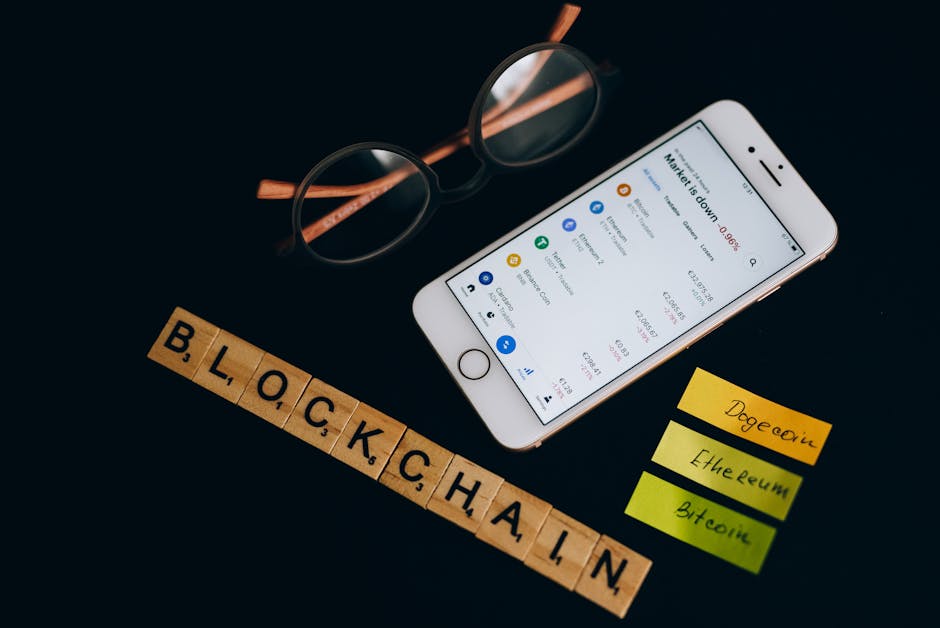
You open a crypto app and almost every number is red. Bitcoin is at $77,119 (-4.82%), Ethereum at $2,218 (-5.71%), Polkadot at $0.90 (-10.83%). This is normal crypto behavior, and it is the first thing a beginner should understand before spending a dollar.
Prices below come from real-time market data as of October 30, 2026. Aggregators such as CoinGecko publish the same kind of live data if you want to cross-check. This guide covers what crypto is, how to buy it, where to keep it, and which mistakes cost new buyers the most. It is education, not financial advice.
How cryptocurrency works
Bitcoin was described in a 2008 whitepaper by the pseudonymous Satoshi Nakamoto, and its network went live in January 2009. Its supply is capped at 21 million coins. Bitcoin was the first widely used cryptocurrency, and thousands of others now exist.
The core mechanics are simple:
- Blockchain: a shared public ledger. Thousands of computers keep copies, so no single company edits it.
- Wallet: software or hardware that holds the private keys proving you control your coins. Lose the keys and you lose the coins.
- Transaction: a signed message moving coins from one address to another. Bitcoin blocks arrive roughly every 10 minutes, and you wait for confirmations.
- Exchange: a platform where you swap local currency for crypto. Most beginners start here.
- Volatility: prices are set by open-market supply and demand, 24 hours a day, with no closing bell and no circuit breaker.
Crypto is not a bank deposit. There is no deposit-insurance promise attached to coins you buy, and transactions usually cannot be reversed. Those two facts drive most beginner losses.
7 cryptocurrencies beginners research first
This is a research starting list, not a buy list. It covers coins that are widely listed on major exchanges. Each entry states what the coin is for, which helps you tell a payment coin from an application platform.
- Bitcoin (BTC), $77,119, -4.82%. The original cryptocurrency, with a fixed 21 million supply. Most people treat it as a store-of-value bet.
- Ethereum (ETH), $2,218, -5.71%. Launched in 2015 as a platform for smart contracts, which are programs that run on the blockchain. It moved to proof-of-stake in September 2022. Many decentralized apps and tokens run on it.
- BNB, $694, -8.15%. The native token of BNB Chain, tied to the Binance ecosystem. Its fortunes are linked to that ecosystem.
- Solana (SOL), $94.64, -7.04%. A smart-contract blockchain whose mainnet beta launched in 2020, built for fast, low-cost transactions.
- XRP, $1.2200, -7.37%. The token of the XRP Ledger, pitched at payments and settlement. It is closely associated with the company Ripple.
- Cardano (ADA), $0.1867, -8.93%. A proof-of-stake blockchain that launched in 2017. A low per-coin price does not mean "cheap." Price per coin says nothing without the total supply.
- TRON (TRX), $0.3580, +8.75%. A blockchain launched in 2017 and widely used for moving stablecoins. It was the only coin in our set that rose today.
| Coin | Price (USD) | 24h change | Primary use |
|---|---|---|---|
| Bitcoin (BTC) | $77,119 | -4.82% | Store of value, payments |
| Ethereum (ETH) | $2,218 | -5.71% | Smart-contract platform |
| BNB | $694 | -8.15% | BNB Chain fees and ecosystem |
| Solana (SOL) | $94.64 | -7.04% | Smart-contract platform |
| XRP | $1.2200 | -7.37% | Payments and settlement |
| Cardano (ADA) | $0.1867 | -8.93% | Smart-contract platform |
| TRON (TRX) | $0.3580 | +8.75% | Smart contracts, stablecoin transfers |
Source: real-time market data as of October 30, 2026.
How to start in 6 steps
- Set a loss limit first. Pick an amount you could lose entirely without changing your life. Write it down. If you are still building an emergency fund or carrying high-interest debt, that comes before crypto.
- Choose a regulated exchange. Look for one licensed or registered in your country, with published fee schedules, two-factor authentication, and clear withdrawal rules. Our how to buy Bitcoin safely guide covers the checks in more detail.
- Verify your identity. Regulated platforms ask for ID and often proof of address.
- Secure the account. Use a unique password and an authenticator app instead of SMS codes where offered. Enable withdrawal address allow-lists if the platform has them.
- Buy a small first amount. At today's price, $100 buys about 0.0013 BTC before fees. Fees vary by exchange and payment method, and card purchases often cost more than bank transfers. Check the fee page before you confirm.
- Decide where to store it. Leave small amounts on the exchange, or move larger holdings to a wallet you control. See the next section.
If lump-sum timing worries you, many beginners split purchases into equal amounts on a schedule. This is called dollar-cost averaging, and our dollar-cost averaging guide explains its trade-offs. It reduces timing risk but does not remove price risk.
Exchange vs wallet: where your coins live

| Option | Who holds the keys | Best for | Main risk |
|---|---|---|---|
| Exchange account | The exchange | Small balances, active buying and selling | Platform failure, account takeover, frozen withdrawals |
| Software (hot) wallet | You | Using apps, moderate balances | Malware, phishing, lost recovery phrase |
| Hardware (cold) wallet | You | Long-term holding of larger amounts | Lost or exposed recovery phrase, buying from unofficial sellers |
The phrase "not your keys, not your coins" is shorthand for the exchange row: you hold a claim on the platform, not the coins directly. Our best crypto wallet guide compares wallet types in more depth.
Risks and scams
- Price risk: sharp daily drops like today's can happen in crypto. Smaller coins can fall further.
- Recurring patterns include promises of guaranteed returns, impersonation of celebrities or support staff, and fake investment platforms.
- Custody risk: exchanges can be hacked or fail. Self-custody shifts that risk onto you.
- Irreversibility: a transfer to a wrong address or wrong network usually cannot be recovered.
- Tax and regulation: rules differ by country. In many countries, selling or swapping crypto can create a taxable event. Check your own jurisdiction.
If you also hold stocks, compare how the two behave. Our stocks vs crypto for beginners comparison lays out the structural differences, such as trading hours and investor protections.
Editor's notes: details that trip up new buyers
Most beginner losses come from process errors, not market calls. Before sending any meaningful amount to a new wallet address, send a small test transaction first and confirm it arrives. Check that the network matches on both ends. A token sent on the wrong network, for example an Ethereum-based token sent to an address on another chain, may not show up and can be unrecoverable.
Wallet setup produces a recovery phrase, typically 12 or 24 words. Write it on paper or metal, store it offline, and never type it into a website, a chat, or a "support" form. Legitimate wallet makers and exchanges never ask for it. Do not photograph it or save it in cloud notes.
Exchange limits and fees differ by country, payment method, and account tier, so read the platform's current fee schedule instead of relying on a blog's numbers. Include the spread (the gap between buy and sell prices) in your cost estimate, not just the headline trading fee. Finally, keep records of every purchase, sale, and transfer with dates and amounts. You will need them for tax reporting in most countries.
Common mistakes and fixes
| Mistake | Why it hurts | Fix |
|---|---|---|
| Buying after a big price spike | You enter near a local peak and panic on the first dip | Split purchases over time and set a loss limit first |
| Judging a coin by its per-unit price | A $0.19 coin is not "cheaper" than a $77,119 coin without supply data | Compare market capitalization and use case |
| Keeping everything on one exchange | One breach or freeze affects all holdings | Move long-term holdings to self-custody |
| Sharing the recovery phrase | Anyone with it can empty the wallet | Store offline and never enter it online |
| Following social media tips | Promoters may hold the coin they are pushing | Research independently and check the project's documentation |
| Ignoring taxes | Unreported gains can lead to penalties | Keep transaction records from day one |
New to the broader category? The complete fintech guide places crypto alongside payments, banking, and trading tools, and more crypto articles cover exchanges, wallets, and market updates.
FAQ
What is cryptocurrency for beginners?
It is the basic knowledge needed to buy, hold, and use digital currencies that run on blockchains. A beginner needs to understand exchanges, wallets, private keys, volatility, and scam patterns before investing.
How to buy your first cryptocurrency?
Open an account on a regulated exchange, verify your identity, secure it with two-factor authentication, deposit funds, and place a small order. Check fees before confirming, then decide whether to keep the coins on the exchange or move them to a wallet.
Is it safe for beginners to invest in cryptocurrency?
It carries high risk. Prices can fall sharply in a day, as the 4.82% Bitcoin drop and the 5% to 11% declines in other major coins on October 30, 2026 show. Transactions are usually irreversible, and scams are common. Using regulated platforms, strong account security, and small amounts reduces risk but does not remove it.
Why do cryptocurrency prices move so much?
Crypto trades around the clock on open markets with no daily limits, and demand shifts quickly with news, liquidity, and sentiment. Many coins have small markets compared with stocks, so large orders move prices more.
How much money do I need to start?
Many exchanges let you buy fractions of a coin, so you can start with a small amount. Minimums vary by platform. The better question is how much you can afford to lose.
Disclosure: Pro Trader Daily and xpertrax.com are operated by the same owner. Links and pop-ups pointing to xpertrax.com promote our own products. This article is for information only and is not financial advice.