Why Cryptocurrency and Digital Asset Investment Strategies Matter Now More Than Ever
The decision to enter cryptocurrency and digital asset investing is no longer fringe behavior—it's becoming a standard component of diversified portfolios across retail and institutional investors worldwide. Yet most people approaching this space feel overwhelmed by the technical jargon, regulatory uncertainty, and fear of catastrophic losses. The truth is simpler: successful digital asset investing follows the same fundamental principles as traditional investing, with a few critical differences in execution and risk management.
If you've watched Bitcoin surge from $16,500 in January 2020 to $86,565 by October 2026, or observed Ethereum mature from a speculative altcoin to a settlement layer for trillions in value, you already understand that this asset class has moved beyond the realm of pure speculation. What separates profitable investors from those who lose money is not luck—it's a structured approach to portfolio construction, entry and exit timing, tax-efficient positioning, and psychological resilience during inevitable downturns.
What Are Digital Assets and Cryptocurrencies?
Digital assets are blockchain-based or cryptographically secured representations of value that exist entirely in digital form. Unlike traditional assets (stocks, bonds, real estate), they require no physical custodian and can be transferred globally in minutes with minimal friction.
Cryptocurrencies are the most well-known subset—decentralized currencies that function without central bank control, secured by distributed ledger technology (DLT). The blockchain is essentially a shared database maintained by thousands of computers (nodes) across the world, each holding an identical copy of transaction records. This redundancy eliminates the need for a trusted intermediary and makes the ledger resistant to tampering.
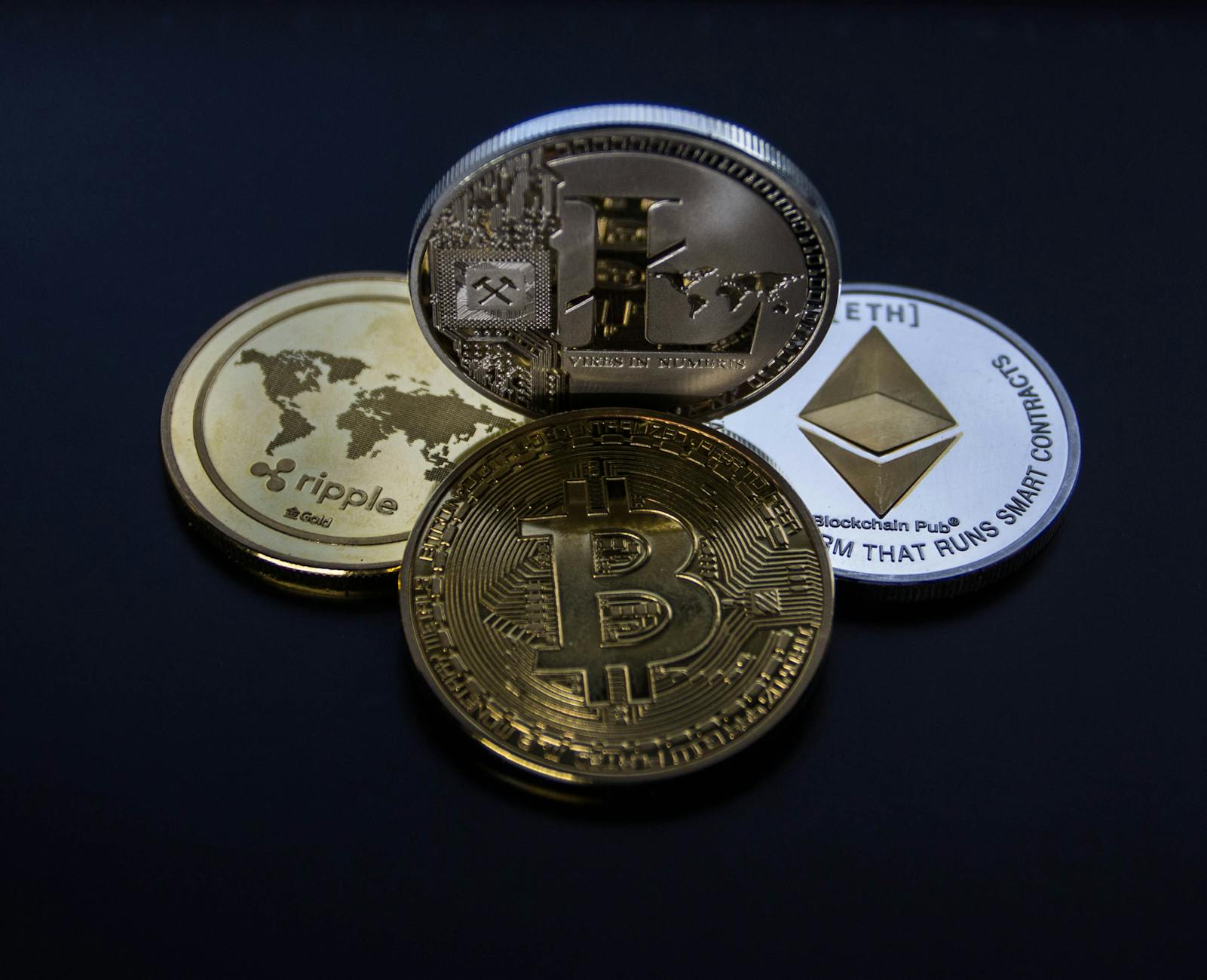
Bitcoin, launched in 2009, established the template: a peer-to-peer electronic cash system with a capped supply of 21 million coins. It remains the most recognized and largest by market capitalization at $86,565 per unit (October 2, 2026). Bitcoin's key innovation was solving the "double-spend problem"—ensuring that digital currency couldn't be copied infinitely—through a system of timestamped transaction blocks linked cryptographically.
Ethereum, introduced in 2015, extended the concept beyond currency to programmable smart contracts—self-executing code on a blockchain. At $2,745 per Ethereum token, it enables decentralized finance (DeFi), tokenized assets, and distributed applications that would be impossible on Bitcoin's more limited protocol. This fundamental difference explains why Bitcoin and Ethereum often move independently despite both being "cryptocurrencies."
Beyond these two, thousands of other digital assets exist—utility tokens (Solana at $122, Chainlink at $14.36), governance tokens (Uniswap at $9.07), staking tokens, and non-fungible tokens (NFTs) representing unique digital ownership. Each serves different purposes and carries different risk profiles.
Investment Rationale and Market Opportunity
The digital asset market has grown from pure speculation to a $2.5 trillion ecosystem with real utility and adoption curves. Several factors justify this expansion:
- Institutional Adoption: Spot Bitcoin ETFs approved by the SEC in January 2024 opened crypto to traditional wealth management platforms. Institutions now manage crypto holdings through regulated custodians like Coinbase Prime and Fidelity Digital Assets—removing counterparty risk concerns that previously deterred large allocators.
- Inflation Hedge Properties: Bitcoin's fixed supply (21 million maximum) makes it theoretically resistant to monetary expansion. During periods of fiat currency debasement, hard assets like Bitcoin and Ethereum have demonstrated correlation with traditional inflation hedges.
- Technology Maturation: Layer 2 solutions (Lightning Network for Bitcoin, Arbitrum for Ethereum) now process thousands of transactions per second at a fraction of previous costs. This technological progress reduces one of the primary criticisms—transaction fees and speed.
- Emerging Market Adoption: In countries with unstable currencies (Argentina, Venezuela, Nigeria), crypto adoption provides citizens with access to stable value stores without reliance on government monetary policy. El Salvador's adoption of Bitcoin as legal tender, while controversial, reflects this broader trend.
- Portfolio Diversification: Cryptocurrencies have shown low correlation with traditional equities and bonds, particularly during equity downturns. A 5-10% allocation to crypto in a diversified portfolio has historically improved risk-adjusted returns according to Modern Portfolio Theory principles.
According to industry data from CoinDesk, the institutional crypto market grew by 340% between 2022 and 2025, with corporate treasuries and pension funds now allocating to digital assets as an alternative to cash.
Risk Management and Diversification Strategies
Digital assets remain highly volatile compared to traditional markets. Bitcoin's standard deviation can exceed 80% annually, while Ethereum often sees 100%+ swings. This volatility is not inherently bad—it creates opportunity—but requires strict risk management discipline.
Position Sizing: The fundamental rule is never allocate more to crypto than you can afford to lose completely. Financial advisors typically recommend 5-15% of a diversified portfolio for retail investors with moderate risk tolerance. Aggressive traders may go 25-40%, while conservative investors may stay at 1-3%. Your position size should reflect your psychological ability to hold during 50% drawdowns without panic-selling.
Diversification Across Asset Types: Do not put all capital into Bitcoin. A balanced crypto portfolio might look like:
- 45-55% Bitcoin (most established, largest network effects)
- 25-35% Ethereum (second-largest, DeFi backbone)
- 10-20% mid-cap cryptocurrencies (Solana at $122, Polkadot at $1.22, Cardano at $0.2556)
- 5-10% emerging projects or smaller allocations
- 0-5% staking or yield-generating opportunities
Dollar-Cost Averaging (DCA): Instead of deploying capital in a lump sum, spread purchases over 6-12 months in equal intervals. This reduces the risk of buying at market peaks and psychologically removes the pressure to time the market perfectly. If you plan to invest $10,000, buy $833 monthly for 12 months regardless of price movement.
Stop-Loss Protocols: Define your maximum loss tolerance before entering a position. Many disciplined traders use 20-30% stop-loss levels for individual holdings. If an asset falls 30% from your entry price, you exit automatically. This prevents the trap of "hoping" the price recovers while watching your portfolio erode further.
Rebalancing: Once quarterly or semi-annually, rebalance back to your target allocation. If Bitcoin surges and becomes 70% of your portfolio (above your 50% target), sell 20% of Bitcoin holdings and reallocate to underweighted assets. This locks in gains and maintains your intended risk exposure.
Types of Crypto Assets and How They Differ
| Asset Type | Example | Current Price (Oct 2, 2026) | Primary Function | Risk Profile |
|---|---|---|---|---|
| Layer 1 Blockchain | Bitcoin (BTC) | $86,565 | Censorship-resistant store of value and peer-to-peer currency | Medium-High (established network, mature) |
| Smart Contract Platform | Ethereum (ETH) | $2,745 | Programmable contracts, DeFi backbone, token issuance | Medium (widely adopted, evolving roadmap) |
| High-Speed Layer 1 | Solana (SOL) | $122 | Fast, low-cost transaction processing | Medium-High (newer, concentrated validator risk) |
| Interoperability | Polkadot (DOT) | $1.22 | Cross-chain communication and parachain ecosystem | Medium-High (complex governance, unproven scaling) |
| Oracle Network | Chainlink (LINK) | $14.36 | Off-chain data feeds for smart contracts | Medium (infrastructure critical but adoption-dependent) |
| Exchange Token | BNB (Binance Coin) | $781 | Native token for Binance Smart Chain ecosystem | Medium (tied to exchange success and regulatory risk) |
| Meme/Community Token | Dogecoin (DOGE) | $0.0967 | Community-driven, no intended utility | Very High (sentiment-driven, no fundamentals) |
| Stablecoin | USDC, USDT | $1.00 (pegged) | Dollar-equivalent on-chain value transfer | Low (if properly collateralized; counterparty risk) |
The key difference: Layer 1 blockchains (Bitcoin, Ethereum, Solana) are the base networks themselves. Layer 2 solutions (Arbitrum, Optimism, Lightning Network) build on top of them to improve speed and cost. Smart contract platforms enable decentralized applications, while utility tokens grant access to specific services. Stablecoins reduce volatility for traders managing dry powder or collateralizing positions.
Getting Started: Step-by-Step Setup Guide
Step 1: Choose Your Investment Vehicle
Spot Bitcoin ETF (Lowest Friction for Beginners): If you're in a jurisdiction with approved crypto ETFs (US, Canada, some EU countries), this is the easiest entry point. You can buy Bitcoin exposure through your existing brokerage account without managing private keys or learning wallet security. Examples: Blackrock's iShares Bitcoin Trust (IBIT), Fidelity's FBTC. These trade like stocks and settle within your brokerage, eliminating counterparty risk. Fees range from 0.19-0.25% annually.
Centralized Exchange (Most Flexible): Platforms like Kraken, Coinbase, Gemini, and Bitstamp allow you to buy, sell, and hold cryptocurrencies. Pros: user-friendly, integrated fiat on/off ramps, insurance protections (some). Cons: you don't control private keys (exchange does), counterparty risk if exchange fails, KYC requirements. Fees typically 0.5-2% per trade depending on order type and volume.
Self-Custody Hardware Wallet (Maximum Security): Ledger Nano X ($79-119) or Trezor Model T ($180) store your private keys offline, making them virtually impossible to hack remotely. Setup: order device, initialize with a recovery seed (12-24 words), store seed offline, then transfer crypto from exchange to wallet address. Con: if you lose the seed and the device, your funds are permanently lost. Only recommended if you're holding $50,000+.
Step 2: Complete KYC Verification
All regulated exchanges require Know Your Customer (KYC) verification. Prepare: government ID (passport or driver's license), proof of address (utility bill or bank statement), and sometimes a video selfie. Processing takes 24 hours to 1 week. This is mandatory to comply with anti-money laundering (AML) regulations enforced by financial regulators worldwide.
Step 3: Link Funding Source
Connect a bank account or credit/debit card to your exchange. Bank transfers typically have no fees and lower daily limits ($10,000-$50,000 depending on account age). Credit cards charge 2-3% fees but fund instantly. ACH transfers (US) are free but require 3-5 business days.
Step 4: Execute Your First Purchase
Start small. Buy $100-$500 in your first transaction. Test the entire workflow: fund the account, execute a buy order, withdraw to a self-custody wallet (if applicable), and confirm receipt. Only after confirming the process works smoothly should you move significant capital.
Step 5: Implement Security Measures
- Enable two-factor authentication (2FA) using an authenticator app (Authy, Google Authenticator), not SMS when possible
- Use a unique, strong password (20+ characters, no personal information)
- If using self-custody, store private keys or recovery seeds offline (hardware wallets, safety deposit box, or encrypted USB)
- Never share your seed phrase with anyone. Legitimate support staff will never ask for it
- If holding significant amounts, use a multi-signature wallet requiring approval from multiple devices to move funds
Portfolio Allocation by Risk Tolerance
Conservative Investor (Low Risk Tolerance)
Total Crypto Allocation: 3-5% of Portfolio
- 70% Bitcoin (proven store of value)
- 20% Ethereum (established, reduced risk vs alternatives)
- 10% Stablecoin (USDC on Ethereum, for dry powder and yield opportunities)
Investment Vehicle: Spot Bitcoin ETF + Ethereum ETF (if available) or fractional shares on Kraken
Strategy: Buy and hold for 3-5 year minimum. Do not check prices daily. Rebalance annually.
Moderate Investor (Medium Risk Tolerance)
Total Crypto Allocation: 8-12% of Portfolio
- 50% Bitcoin ($86,565)
- 30% Ethereum ($2,745)
- 12% Mid-cap Assets (BNB $781, Solana $122, Polkadot $1.22, Cardano $0.2556)
- 8% Emerging or Newer Projects
Investment Vehicle: Mix of ETFs and exchange account for direct purchases
Strategy: Dollar-cost average for 6 months to build position, then quarterly rebalancing. Set 25-30% stop-losses on underperforming mid-cap holdings.
Aggressive Investor (High Risk Tolerance)
Total Crypto Allocation: 20-30% of Portfolio
- 40% Bitcoin (core stable holding)
- 25% Ethereum (established growth play)
- 20% Mid-cap and Layer 2 tokens (Arbitrum, Optimism governance tokens emerging in 2026)
- 10% Early-stage projects with strong developers or unique value propositions
- 5% Trading allocation for active short-term positions (0-6 month timeframe)
Investment Vehicle: Direct exchange accounts with self-custody hardware wallet for holdings over $10,000
Strategy: Lump-sum deployment if market is down 30%+ from previous highs (accumulation phase). Otherwise DCA. Use leverage cautiously (no more than 2:1) and only on established assets. Rebalance quarterly to lock in gains.
7 Proven Investment Strategies for Digital Assets
- Buy and Hold (HODLing): Purchase quality assets and hold for 4+ years, ignoring short-term noise. Bitcoin and Ethereum have generated 1,000%+ returns to long-term holders over 5-year windows. The catch: you must survive the 50-80% drawdowns that occur every 1-2 years without panic-selling. Requires a 3-5 year minimum time horizon and capital you won't need for immediate expenses.
- Dollar-Cost Averaging (DCA): Invest a fixed amount monthly regardless of price ($500/month for 12 months = $6,000). This automatically buys more when prices are low and less when they're high, reducing average entry cost and removing timing pressure. Mathematically outperforms lump-sum investing in volatile markets.
- Staking and Yield Farming: Ethereum and Solana allow token holders to earn 3-8% annual yield by participating in network validation or liquidity provision. Coinbase, Kraken, and Lido (DeFi protocol) offer delegation services handling staking mechanics. Risk: validators can be slashed (lose a percentage) for improper behavior, and DeFi protocols carry smart contract risk.
- Arbitrage Trading: Exploit price differences across exchanges. If Bitcoin trades at $86,500 on Coinbase but $86,600 on Kraken, buy on Coinbase, transfer to Kraken, sell, and pocket the $100 difference minus fees. Becomes profitable at scale but requires maintaining accounts on multiple exchanges and monitoring prices continuously. Suited for traders with technical experience.
- Rebalancing Systematically: Set a target allocation (50% BTC, 30% ETH, 20% alts), then rebalance every 3-6 months. When BTC rises to 60% of portfolio, sell 10% and buy underweighted assets. This forces you to "buy low, sell high" mechanically, removing emotion. Generates 1-3% annual outperformance versus buy-and-hold in sideways or cycling markets.
- Accumulating During Fear (Contrarian Strategy): When prices crash 50%+ and media declares "crypto is dead," aggressive investors increase allocation size. During Bitcoin's 2022 crash from $69,000 to $16,500, experienced investors accumulated aggressively. Bitcoin recovered to $63,000+ by 2023, rewarding those who bought at the lows. Requires strong conviction and dry powder.
- Tax-Loss Harvesting: Sell underperforming positions at a loss to offset capital gains from winners. If you buy Ethereum at $3,000 and it falls to $2,000, sell it, realize a $1,000 loss, then repurchase it after 30 days (avoid wash-sale rules). The loss offsets gains from Bitcoin or other positions, reducing tax liability. Available in most jurisdictions.
Tax Implications and Regulatory Compliance
Capital Gains Tax: Most jurisdictions tax crypto transactions as capital gains (profit from selling assets) just like stocks. In the US, short-term gains (held <1 year) are taxed as ordinary income (up to 37% federal + state). Long-term gains (held >1 year) receive preferential rates (0-20% federal + state). Many countries follow similar frameworks. Keep detailed records of every buy/sell with dates, amounts, and prices for tax filing.
Income Tax on Staking and Rewards: Staking yield is taxable as ordinary income when received, valued at the price on receipt date. If you earn $1,000 of Ethereum staking rewards when ETH is $2,745, you owe income tax on $1,000 regardless of whether you sold. Track all staking rewards received.
Wash Sale Rules: Some jurisdictions (US, UK) have wash-sale rules preventing you from claiming a loss if you repurchase the same asset within 30 days. Solution: wait 31+ days before repurchasing, or substitute a correlated asset (buy Bitcoin if you sold Ethereum, for example).
Regulatory Framework by Region:
- United States: Crypto is property under IRS classification. Financial reporting required through Form 8949 (Sale of Capital Assets). Exchanges file 1099-K forms to the IRS reporting transaction volume. According to the SEC, unregistered securities and certain exchanges face enforcement actions. Spot Bitcoin and Ethereum ETFs are now regulated investment products.
- European Union: Markets in Crypto-Assets (MiCA) regulation, effective June 2023, requires crypto service providers to be licensed and comply with AML/KYC standards. Tax treatment varies by member state but generally follows capital gains treatment.
- United Kingdom: Crypto is property for tax purposes. Disposal events (sales, swaps, transfers to non-custodial wallets) trigger capital gains tax. Staking rewards are miscellaneous income.
- Hong Kong and Singapore: No capital gains tax, but Inland Revenue Departments scrutinize frequent trading (treated as business income if pattern emerges). Hold-to-invest long-term crypto is generally untaxed.
- Australia: Crypto is property. CGT applies to all disposal events. Frequent trading triggers ordinary income treatment rather than capital gains. Keep meticulous records.
Consult a tax professional familiar with crypto in your jurisdiction before deploying significant capital. Tax-optimized strategies can reduce liability by 20-40% compared to naive approaches.
Common Mistakes and How to Avoid Them
1. Buying at Market Peaks — New investors often hear Bitcoin mentioned in mainstream media (which happens when prices surge), then buy when prices are already elevated. Bitcoin's media coverage peaks consistently 3-6 months after price peaks. Solution: invest via DCA or wait for 20%+ drawdowns before deploying capital.
2. Holding on Exchanges Instead of Self-Custody — "Not your keys, not your coins" is a principle repeated for a reason. When FTX collapsed in 2022, $8 billion in user funds became inaccessible. Users with self-custody lost nothing. For holdings under $5,000, exchange accounts are fine. Above that, move to a hardware wallet within 48 hours of purchase.
3. Over-Leveraging — Margin trading (borrowing to amplify position size) can generate 2-10x returns in bull markets but causes complete capital loss in crashes. Leverage of 5:1 means a 20% drop liquidates your position entirely. Avoid margin trading unless you have years of trading experience and can monitor positions constantly.
4. Chasing Altcoin Pumps — A token with 0 on-chain utility and 100% marketing hype will eventually crash. Dogecoin (now $0.0967) was a joke coin; holders who bought at $0.73 (May 2021) are down 87%. Stick to tokens with clear utility: Bitcoin (censorship-resistant money), Ethereum (smart contracts), Solana (fast settlement), Chainlink (oracle infrastructure).
5. Ignoring Regulatory Changes — Regulatory crackdowns can cause 30-50% price crashes overnight. China's crypto ban in June 2021 crashed Bitcoin 40% in one week. US SEC enforcement against specific projects has liquidated positions. Monitor regulatory news from your jurisdiction and major markets weekly.
6. Falling for Phishing Scams — Attackers send emails appearing to be from Coinbase or Kraken asking to "verify your account" by clicking a link and entering credentials. You then lose your account. Solution: never click email links; always go directly to the exchange website. Enable 2FA. Assume all unexpected emails are phishing.
7. Panic Selling During Crashes — The hardest part of investing is emotional. Every crash-then-recovery cycle creates psychological trauma that makes investors sell near lows. Bitcoin crashed 80% from $19,000 to $3,500 (2018), then recovered to $69,000. Those who panic-sold missed 20x returns. Define your plan before entering, then follow it automatically.
Frequently Asked Questions
What is the safest cryptocurrency to invest in?
Bitcoin and Ethereum are the safest by multiple metrics: largest networks (most nodes securing the blockchain), oldest track records (15+ and 11+ years), highest liquidity (easiest to buy/sell without price slippage), and institutional adoption (integrated into ETFs, managed by major banks). They still carry market risk (price can fall 30-50%), but counterparty and protocol risk are minimized. Avoid altcoins unless you understand their specific utility.