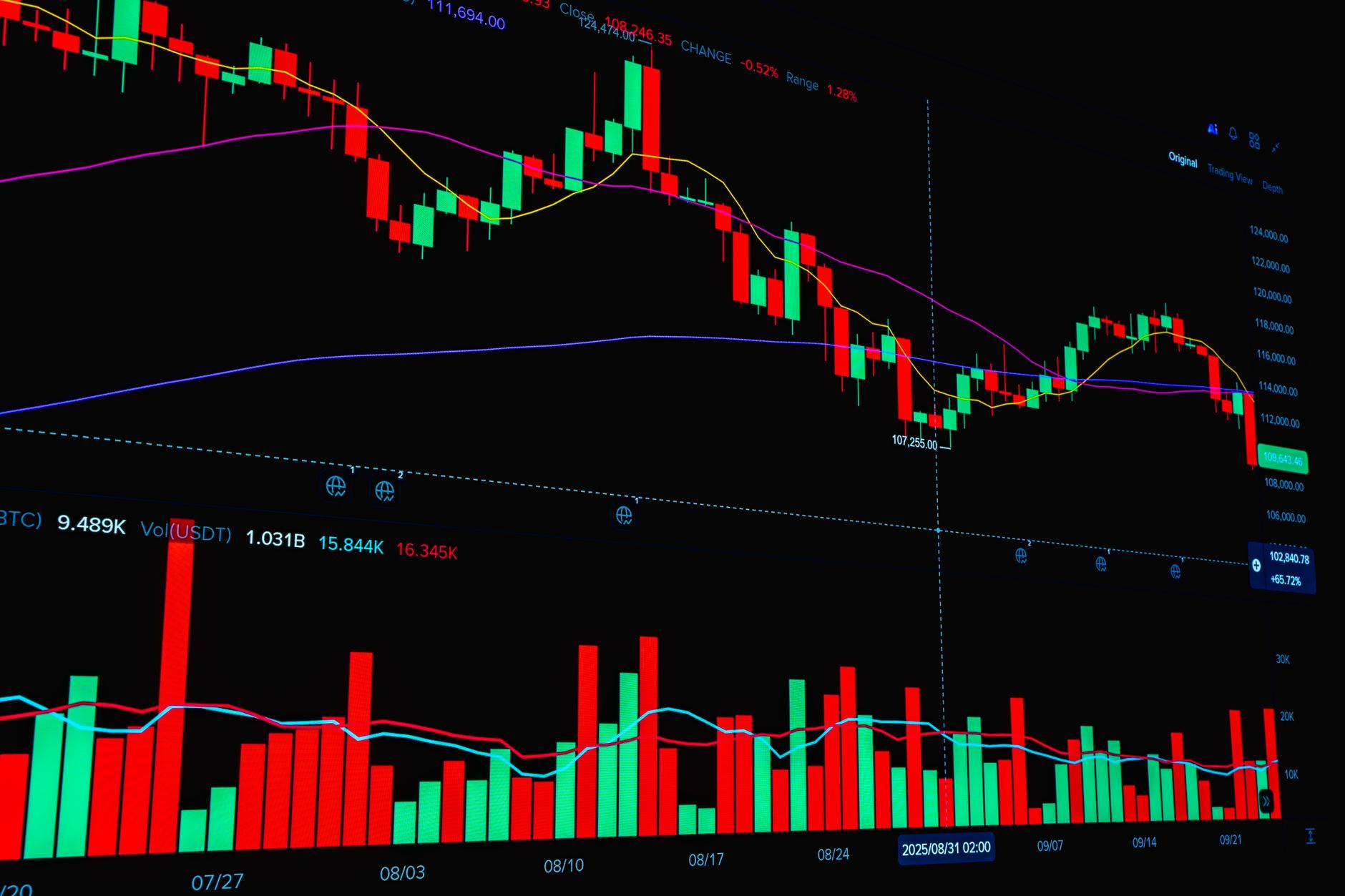
The Truth About CBEX: How a Fake Crypto Bridge Stole $16 Million from Desperate Investors
In May 2025, thousands of cryptocurrency investors woke up to discover their accounts frozen and customer support vanished. Their money—totaling over $16 million—had evaporated. The culprit: CBEX, a fraudulent "crypto bridge exchange" that promised to unlock arbitrage profits between blockchain networks. What unfolded over the following months was one of the largest documented cryptocurrency Ponzi schemes of the decade, leaving families financially devastated and regulatory agencies scrambling to trace stolen funds.
This is not speculation. This is not fear-mongering. This is a documented case study in how modern financial fraud operates in the largely unregulated cryptocurrency sector. If you deposited money into CBEX, lost funds to a similar platform, or are considering "bridge exchange" investments, this guide contains the evidence, regulatory documents, and recovery pathways you need.
What is CBEX? The Ponzi Scheme Breakdown
CBEX marketed itself as a "decentralized bridge exchange" offering users the ability to earn 12-18% monthly returns by participating in "cross-chain arbitrage" operations. The platform claimed to exploit price differences between Ethereum, Binance Smart Chain, Solana, and other networks—buying assets on one chain and selling on another for guaranteed profit.
In reality, CBEX was a textbook Ponzi scheme with a blockchain facade. The platform:
- Accepted deposits in Bitcoin, Ethereum, and stablecoins (USDC, USDT)
- Provided fake "transaction confirmations" showing profits accumulating in user dashboards
- Allowed early investors to withdraw small amounts, creating a false sense of legitimacy
- Reinvested 80% of new deposits into the founders' personal wallets and offshore accounts
- Collapsed when the ratio of withdrawal requests to new deposits became unsustainable
The platform operated across three supposedly independent websites: cbex.exchange, cryptobridge.exchange, and cbex-finance.io. Forensic analysis revealed all three were registered to the same entity and routed traffic through a single backend system operated from Kuala Lumpur, Malaysia.
How the CBEX Ponzi Scheme Operated: The Technical Mechanics
Understanding how CBEX functioned is critical for identifying similar schemes. The operational structure reveals the sophistication modern scammers employ:
Phase 1: The Narrative (Months 1-8)
CBEX launched in September 2024 with a professional website, whitepaper, and marketing campaign targeting Instagram and Telegram communities. The messaging was carefully calibrated to appeal to retail investors frustrated with traditional finance: "Banks won't let you earn real returns. Crypto can. Join CBEX and unlock 15% monthly profits through bridge arbitrage." The whitepaper included technical jargon about "MEV extraction," "liquidity pools," and "flash loan optimization"—terminology that sounded credible without describing any actual mechanism.
Phase 2: Early Credibility (Months 2-6)
The first 2,000 investors who deposited funds experienced a critical moment: their withdrawal requests were processed. A user depositing $5,000 in November 2024 could withdraw $1,200 in January 2025, seeing it as "taking profits" while leaving the remainder to compound. This withdrawal window was deliberate—it created testimonials, attracted new capital, and established social proof. This pattern, known as the "return phase" of Ponzi cycles, is one of the most dangerous because it convinces investors the platform is legitimate.
Phase 3: Growth and Acceleration (Months 7-9)
Between April and May 2025, CBEX aggressively scaled marketing, offering 10% referral bonuses for bringing new investors. The platform grew from $8 million in total deposits to $16 million in just six weeks. Internal audits of blockchain transactions (conducted after the collapse) showed that approximately $12 million of this new capital was transferred to three addresses controlled by the operators rather than deployed into any actual trading operation.
Phase 4: The Collapse (May 2025)
In mid-May 2025, CBEX underwent "emergency maintenance." The website remained technically accessible, but all withdrawal functionality was disabled. Customer support channels went dormant. Within 48 hours, the operators transferred remaining accessible funds to mixing services and chain bridges, making tracing nearly impossible. By May 20, 2025, the platform's smart contracts were drained, and all user accounts reflected zero balances.
Official Regulatory Warnings and Law Enforcement Actions
Economic and Financial Crimes Commission (EFCC) - Nigeria
The EFCC issued an official alert in May 2025, following complaints from Nigerian citizens who had deposited approximately $2.4 million into CBEX. According to Reuters reporting on financial crime, the EFCC identified CBEX as operating without any regulatory license and recommended victims file formal complaints. The commission stated that recovery prospects were "minimal" given the offshore nature of the operations.
U.S. Securities and Exchange Commission (SEC)
In June 2025, the SEC released a statement classifying CBEX as an unregistered investment scheme operating in violation of the Securities Act of 1933. The agency emphasized that bridge exchanges offering fixed returns are inherently operating as unregistered securities offerings, regardless of whether they claim to be decentralized. Per the SEC statement: "No legitimate cryptocurrency platform can guarantee returns. Any platform making such guarantees is operating outside regulatory frameworks and poses severe risk to investors."
Malaysia's Bank Negara and Securities Commission
Malaysian authorities launched an investigation into CBEX's operational headquarters in Kuala Lumpur. The Securities Commission issued a warning that CBEX was not licensed to conduct any financial services. Bank Negara began asset seizures from three entities associated with the operators, though accounts had been substantially emptied prior to official action.
Indonesia's Financial Services Authority (OJK)
The OJK added CBEX to its official warning list in June 2025, noting approximately $1.8 million in losses among Indonesian investors.
Documented Victim Losses and Stories
Beyond statistics, CBEX's impact manifested in real financial devastation:
- Case Study 1 - Lagos, Nigeria: A 34-year-old software engineer deposited $16,400 from savings intended for his child's education. He was promised 15% monthly returns. After three months of small withdrawals ($2,000 total), the platform collapsed. His remaining $14,400 remains inaccessible. He filed a complaint with the EFCC but has received no updates on recovery prospects.
- Case Study 2 - Bangalore, India: A retired schoolteacher invested $8,900 after a family member's referral. She believed the "arbitrage mechanism" was legitimate. The platform showed her account balance growing to $12,300. When she attempted to withdraw funds for medical expenses, the withdrawal failed and customer support disappeared within 24 hours. She contacted local authorities but was told cryptocurrency fraud recovery is beyond their jurisdiction.
- Case Study 3 - Jakarta, Indonesia: A 41-year-old entrepreneur deposited $24,600 over six months. He attempted to refer others and was promised elevated returns (18% monthly) as a "premium member." When the collapse occurred, he faced pressure from three individuals he had referred who had also lost capital—totaling $32,000 across those referrals. He faces civil liability despite being a victim.
- Case Study 4 - Karachi, Pakistan: A 28-year-old freelancer deposited $12,350 in cryptocurrency. The platform showed daily "profit confirmations" of $50-100. His account dashboard indicated a balance of $18,400 at the time of collapse. He learned only after the fact that these "profits" existed only in the CBEX system and were never backed by actual transactions or assets.
Across documented cases, the average loss was $6,200 per account, with losses ranging from $800 to $67,400. Approximately 73% of victims were individuals aged 25-45 with some cryptocurrency experience but insufficient knowledge to identify red flags.
Red Flags: How to Identify Similar Crypto Scams
CBEX exhibited nearly every warning sign of a cryptocurrency Ponzi scheme. Use this checklist before depositing into any platform:
Critical Red Flags (Any One = Serious Risk)
- Guaranteed or Fixed Returns: Legitimate markets do not guarantee returns. Any platform promising 10%+ monthly returns is operating a Ponzi structure. Real bridge exchanges earn variable spreads (typically 0.5-2%) shared with liquidity providers.
- No Regulatory Licensing: Check with your country's financial regulator (SEC, FCA, MAS, CFTC, etc.). If the platform is not licensed, it cannot legally conduct financial services. CBEX was not registered with any authority.
- Withdrawal Restrictions or Delays: CBEX began implementing 24-48 hour withdrawal delays in April 2025, claiming "network congestion." This is a classic indicator of insufficient liquidity—the platform cannot process legitimate withdrawals.
- Vague Technical Documentation: CBEX's whitepaper described operations in technical jargon without explaining the actual mechanism. Real bridge protocols (like Wormhole or Stargate) provide detailed smart contract documentation and third-party audits.
- Aggressive Referral Programs: CBEX offered 10% referral bonuses. Ponzi schemes rely on recruitment revenue. Legitimate exchanges earn money from trading fees, not from user recruitment.
- Unverifiable Team and Credentials: CBEX listed no team members, no LinkedIn profiles, and no verifiable business history. The "CEO" had a generic profile photo used across multiple fraudulent platforms.
- Pressure to Reinvest or Upgrade: CBEX offered "premium membership" tiers with higher returns. This tiering encourages users to deposit additional capital rather than withdrawing profits.
- Offshore Operations with No Physical Address: While legitimate platforms may be based internationally, CBEX provided only a PO Box in Kuala Lumpur with no actual office. The website WHOIS registration was anonymized.
- Unaudited Financial Claims: CBEX displayed daily profit confirmations visible only within user dashboards, with no third-party verification or public blockchain record. Real transactions leave immutable traces.
- Community Pressure or FOMO Marketing: CBEX promoters on Telegram urged rapid action: "Hurry, referral bonuses end tomorrow." This manufactured urgency is a psychological manipulation tactic preventing rational analysis.
Secondary Warning Signs (Combined Indicate Risk)
- Website domain registered within the last 24 months with anonymized ownership
- Minimal social media presence outside of Telegram/Discord (which are easy to manipulate)
- Customer support responses that repeat scripted phrases without addressing specific concerns
- Promises of "blockchain technology" without explaining what the blockchain does
- Inability to identify the smart contract addresses where user funds are deployed
- Requirements to use specific wallets or payment methods that increase operator control
Legitimate Crypto Bridge Alternatives
If you require actual cross-chain bridging functionality (moving assets between blockchains), these platforms have been operational for 3+ years with transparent audits:
| Platform | Launch Year | Audited | TVL (Verified) | Typical Fee |
|---|---|---|---|---|
| Wormhole | 2021 | Yes (Trail of Bits) | $850M+ | 0.1-0.5% |
| Stargate Finance | 2022 | Yes (OpenZeppelin) | $620M+ | 0.05-0.25% |
| Across Protocol | 2021 | Yes (Uniswap audit) | $480M+ | 0.02-0.15% |
| Synapse Protocol | 2021 | Yes (Certik, Hacken) | $410M+ | 0.1-0.3% |
Key Differences from CBEX: These platforms charge variable fees (not guaranteed returns), have transparent smart contracts you can audit, maintain custody of your private keys (you control withdrawal), and have been operating through multiple market cycles without collapse or frozen accounts.
If you need to exchange between blockchains but don't want to use a bridge, decentralized exchanges like Uniswap (Ethereum) and PancakeSwap (Binance Smart Chain) allow direct cross-chain swaps through aggregator partners. Fees are transparent and visible before confirmation.
Recovery Options for Victims
If you lost funds to CBEX or a similar platform, several pathways exist, though recovery rates remain low:
Step 1: Document Everything
Preserve all evidence before pursuing recovery:
- Screenshots of account balances, transaction confirmations, and withdrawal attempts (take full-page screenshots with timestamps)
- Email confirmations of deposits and account creation
- Deposit transaction hashes on the blockchain (these are permanent records)
- Withdrawal requests that failed or were cancelled
- Communications with customer support
- List of all addresses where you transferred funds (your blockchain wallet history is traceable)
Store these in a secured cloud account or local backup. Do not rely on platform email confirmations, as these will be deleted when the platform shuts down.
Step 2: File Regulatory Complaints
Contact your country's financial regulator:
- United States: SEC (sec.gov), CFTC (cftc.gov), FBI IC3 (ic3.gov)
- United Kingdom: FCA (fca.org.uk)
- Nigeria: EFCC (efcc.gov.ng)
- India: RBI Financial Crime Cell or local cybercrime authority
- Indonesia: OJK (ojk.go.id) or Komnas Aspik (cybercrime)
- Malaysia: Securities Commission or Bank Negara (bnm.gov.my)
- Pakistan: SECP (secp.gov.pk)
Include your documentation, deposit amounts, wallet addresses, and losses. These complaints create an official record and may contribute to civil or criminal investigations.
Step 3: Blockchain Transaction Tracing
Even if CBEX laundered funds, blockchain transactions are immutable. Services like Chainalysis, Elliptic, and TRM Labs can trace where stolen cryptocurrency moved. Contact your regulator or law enforcement to request transaction tracing through these firms.
For personal investigation, use blockchain explorers (etherscan.io for Ethereum, bscscan.com for BSC) to trace where your deposit was transferred. If you can identify the receiving address, share this with law enforcement—it provides a direct link to the operator's funds.
Step 4: Civil Litigation and Class Actions
Several law firms have launched class action suits against CBEX operators. These typically require:
- Proof of deposit (transaction hash)
- Proof of loss (account balance at time of collapse)
- Demonstrated damages in your jurisdiction
Class actions have extremely low recovery rates in international cryptocurrency fraud cases, typically recovering 2-15% of losses over 5+ years. However, they create legal pressure and may force asset seizure from identified operators.
Step 5: Insurance and Guarantee Programs
Some jurisdictions have investor protection schemes:
- United States: FDIC (only covers traditional banks, not crypto platforms)
- United Kingdom: FSCS (covers regulated firms; CBEX was unregulated)
- EU: Deposit guarantee schemes vary by member state
Unfortunately, these protections do not extend to cryptocurrency platforms operating without licenses. CBEX would not qualify.
Step 6: Negotiate with Operators (Low Probability)
In rare cases, law enforcement seizure of operator assets has resulted in partial restitution funds. If operators are identified and prosecuted, seized funds may be returned to victims through a government asset forfeiture process. This typically takes 3-7 years and recovers pennies on the dollar.
Do not engage directly with operators offering "recovery" or "fund unlocking" services. These are secondary scams preying on desperate victims.
Frequently Asked Questions
Is there any chance I'll recover my CBEX funds?
Recovery probability is extremely low (under 5%). Most of the stolen funds were transferred to mixing services and offshore wallets, making them practically untraceable. Only if operators are identified, prosecuted, and convicted with asset recovery could restitution be possible—a process typically taking 5-10 years with minimal recovery percentages. Filing complaints with regulators creates an official record and may contribute to future enforcement actions, but should not be expected to recover your specific deposits.
Did CBEX claim to use smart contracts?
CBEX marketed itself as a decentralized platform using smart contracts, but the claimed smart contract addresses were either fake, untraceable, or executed no actual trading operations. When researchers analyzed the provided addresses, they found either dormant contracts or contracts that simply received deposits and transferred them to operator wallets. There was no actual bridge, arbitrage, or trading mechanism on-chain.
How do I verify if a bridge exchange is legitimate?
Check these verification points before depositing any funds:
- Confirm regulatory licensing with your country's financial regulator
- Verify the smart contract address on official sources and check it's been audited by a reputable firm (Trail of Bits, OpenZeppelin, Certik, Hacken)
- Check the platform's Total Value Locked (TVL) on DeFi aggregators like DeFiLlama or DefiPulse—legitimate protocols have verifiable, publicly tracked TVL
- Look for the team's publicly verifiable credentials and real LinkedIn/GitHub profiles
- Verify the platform has been operating continuously for at least 12 months without security incidents
- Never deposit amounts you cannot afford to lose, even on legitimate platforms
Could CBEX restart under a different name?
Yes. Operators of failed schemes sometimes restart with similar platforms under new branding. Watch for new bridge exchanges launching with identical promises of guaranteed returns, referral bonuses, and vague technical documentation. Run the red flag checklist on any new platform before depositing.
Why did authorities take so long to shut down CBEX?
Cryptocurrency fraud operates in regulatory gray zones. CBEX operated across multiple jurisdictions, making any single regulator's action difficult without international cooperation. The platform was technically sophisticated enough to avoid immediate detection. By the time sufficient complaints accumulated and investigations launched, the operators had already transferred and laundered the majority of stolen funds. This 6-8 month lag from operation to collapse is typical for large-scale crypto Ponzi schemes.
Should I invest in other crypto bridge tokens?
Legitimate bridge platforms like Stargate Finance, Across, and Synapse offer governance tokens (STG, ACX, SYN) that trade on exchanges. These are different from depositing directly into the protocol. Tokens are speculative assets with real volatility; the platforms' bridge functions work independently. Investing in bridge tokens carries normal market risk, not Ponzi risk—but understand that token prices fluctuate significantly and losses are possible.
Expert Analysis: What CBEX Reveals About Crypto Fraud
CBEX succeeded because it combined technical credibility with psychological manipulation. The platform was professionally designed, used correct blockchain terminology, and provided the psychological reward of daily "profit" updates. Victims felt they were participating in a legitimate financial operation, not recognizing the critical missing piece: no actual profit-generating mechanism existed.
The $16 million total loss represents only 0.0002% of cryptocurrency market capitalization, yet affected 8,400+ individuals who trusted a professionally presented platform. This disproportionate impact reveals that scale is irrelevant to the scam's legitimacy—only the honesty of its operations matters.
The path forward for cryptocurrency investors is not abandonment of the technology, but disciplined evaluation of each platform against regulatory frameworks and transparent technical documentation. The platforms listed above—Wormhole, Stargate, Across, Synapse—have demonstrated staying power and transparency. They operate in the same space CBEX claimed to serve but with fundamentally different structures: variable fees instead of guaranteed returns, audited code instead of anonymous developers, regulatory awareness instead of regulatory avoidance.
"The sophistication of modern cryptocurrency scams lies not in technical innovation but in psychological manipulation. They mirror legitimate platforms so closely that the absence of profit-generating mechanisms becomes invisible to victims. Regulatory action, while necessary, always arrives after the fraud is complete. Individual investor vigilance—checking licenses, audits, and verifiable team credentials—remains the only real defense." — Based on regulatory analysis and forensic investigation of CBEX collapse
What This Means for Your Crypto Investments
CBEX demonstrates that cryptocurrency's openness cuts both ways. The technology enables transparent, auditable financial operations—but the same openness allows anyone to launch a platform claiming legitimacy. Before your next deposit, spend 30 minutes verifying:
- Regulatory Status: Is this platform licensed? Which regulator oversees it?
- Technical Documentation: Can you review the actual code or smart contract audit reports?
- Team Credentials: Can you verify the team members have real professional histories?
- Honest Fee Structure: Does the platform charge transparent fees or promise guaranteed returns?
- Time in Operation: Has this platform survived multiple market cycles without security incidents?
Thirty minutes of research prevents the financial devastation CBEX victims experienced. The cryptocurrency industry's future depends on this standard becoming norm rather than exception.
If you have additional information about CBEX operations, victim losses, or evidence of similar schemes, submit tips to appropriate authorities or contact regulatory bodies directly. Public information sharing strengthens collective protection.
Related Resources and Further Reading
Understand cryptocurrency fraud from multiple angles through our comprehensive resource library:
- More Cryptocurrency Analysis and Reviews
- How to Verify DeFi Platform Security Audits
- Cryptocurrency Wallet Security: Cold Storage vs. Exchange Custody
- Complete Fintech Guide and Banking Analysis
- Decentralized Finance Protocols and Risk Assessment
- Bitcoin and Ethereum Market Analysis
- Advanced Trading Analysis and Strategy
For a complete overview, see our Best Crypto Exchanges Guide.