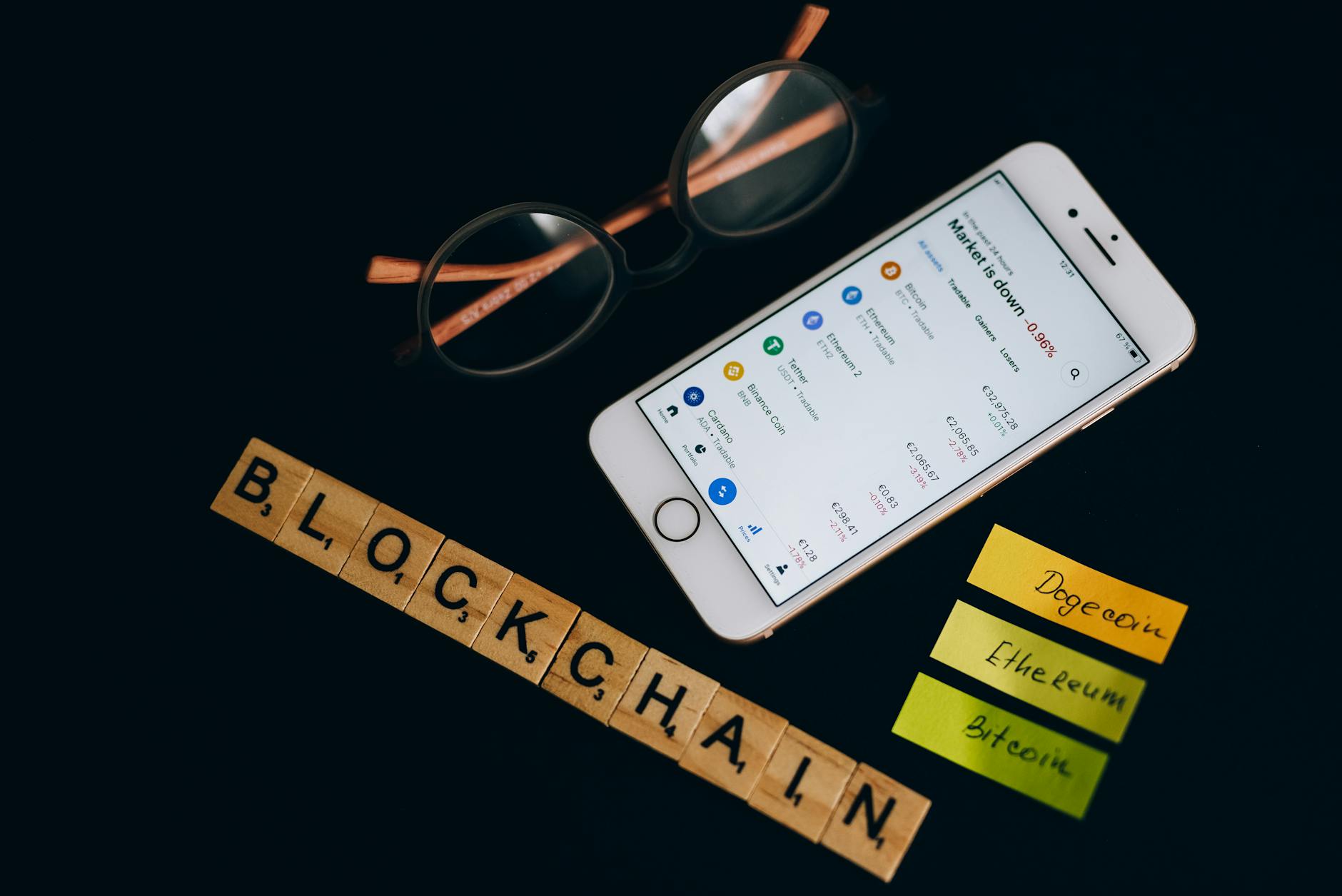
How to Build a Blockchain and Cryptocurrency Investment Strategy: Complete Risk Framework for Serious Traders
Most cryptocurrency guides gloss over the hard truth: 90% of retail investors lose money because they chase hype instead of managing risk. This guide strips away the noise and delivers what institutional investors actually use—volatility analytics, security protocols, tax considerations, and psychological frameworks that separate profitable traders from underwater bagholders.
If you're serious about entering crypto markets, you need a system. Not a tip. Not a hot coin. A system that survives bear markets and captures upside when sentiment shifts.
What Is Blockchain and Cryptocurrency?
Blockchain is a distributed ledger—a database replicated across thousands of independent computers (nodes) that validate and record transactions without a central authority. Each "block" contains transaction data and a cryptographic hash linking it to the previous block, creating an immutable chain.
Cryptocurrency is a digital asset that uses blockchain technology (or similar distributed protocols) to enable peer-to-peer transactions, store value, or execute smart contracts. Unlike fiat currency issued by central banks, cryptocurrencies are typically decentralized, transparent, and operated by network consensus rules.
Key differences from traditional finance:
- No intermediaries: Transactions settle directly between parties; banks and payment processors are optional, not required.
- 24/7 markets: No trading halts or weekend closures; markets operate continuously across all time zones.
- Transparent ledger: Every transaction is publicly visible (though not always linked to real-world identity).
- Censorship resistance: No single entity can freeze accounts or reverse transactions (design feature, not guarantee).
- Programmable money: Cryptocurrencies can execute conditional logic (smart contracts), not just transfer value.
Volatility Metrics & Risk Reality
This section separates theory from the harsh numbers. If volatility surprises you, you haven't sized positions correctly.
Current Market Volatility (August 21, 2026):
| Asset | Current Price | 24h Change | Annualized Volatility Range | Typical Monthly Drawdown |
|---|---|---|---|---|
| Bitcoin (BTC) | $77,196 | +7.80% | 65–75% | 8–15% |
| Ethereum (ETH) | $2,384 | +4.83% | 70–85% | 10–18% |
| Solana (SOL) | $90.88 | +5.07% | 90–120% | 15–25% |
| BNB | $679 | +5.85% | 75–95% | 12–20% |
| XRP | $1.4100 | +15.66% | 85–110% | 18–30% |
| S&P 500 (baseline) | N/A | N/A | 12–18% | 2–5% |
Translation: A $10,000 Ethereum position can lose $1,000–$1,800 in a single month during normal market conditions. In black swan events (regulatory shock, exchange collapse), losses exceed 50% in days.
Stop-Loss Discipline: Crypto traders who survive establish hard stop-loss rules before entering positions. Common frameworks:
- Conservative (10% stop): Exit if position drops 10% from entry. Minimizes catastrophic loss but triggers frequent false exits.
- Standard (20% stop): Exit if position drops 20% from entry. Balances risk control with volatility tolerance.
- Aggressive (35% stop): Exit if position drops 35% from entry. Acceptable only for positions sized at 1–2% of portfolio.
Types of Cryptocurrency Assets
Not all cryptocurrencies are created equal. Risk-adjusted returns vary dramatically by asset category.
Layer 1 Blockchain Networks (Highest Adoption, Lower Volatility Relative to Alts)
- Bitcoin (BTC): Store of value, longest track record, 16+ years operational. $77,196 as of August 21, 2026. Largest network effect; regulatory clarity highest among cryptos.
- Ethereum (ETH): Smart contract platform; hosts DeFi, NFTs, staking. $2,384 current price. Higher volatility than Bitcoin; dependent on application demand.
Layer 1 Alternatives (Higher Growth Potential, Higher Risk)
- Solana (SOL): $90.88 (August 21, 2026). Fast, low-cost transactions; history of network instability. High volatility: +5.07% 24h change.
- BNB: $679 (August 21, 2026). Binance ecosystem token; centralization risk tied to exchange operations.
- Cardano (ADA): $0.2164 (August 21, 2026). Academic approach; slower rollout of features; +11.00% 24h volatility.
DeFi Tokens (Decentralized Finance)
- Enable lending, borrowing, and trading without centralized intermediaries. Higher yields (10–50% APY) correlate with protocol risk.
- Smart contract vulnerabilities, liquidity crunches, and governance failures are common. Suitable only for 5–10% of portfolio.
- Examples: Uniswap (UNI) at $3.91, Aave, Curve Finance.
Altcoins & Emerging Projects (Speculation Category)
- Assets outside top 20 by market cap; 95% fail to gain sustained adoption.
- Use case: small speculative positions (0.5–2% of portfolio) only.
- Risk: total loss is realistic outcome; regulatory crackdowns can erase value instantly.
Real Portfolio Allocation Framework
This framework balances growth with capital preservation. Adjust percentages based on your risk tolerance and time horizon.
Conservative Allocation (For Capital Preservation, 5–10 Year Horizon)
- 60% Bitcoin (BTC): Core holdings; longest track record; regulatory acceptance.
- 25% Ethereum (ETH): Smart contract exposure; institutional adoption increasing.
- 10% Stablecoins (USDC, USDT, DAI): Hold for downturns; enables rapid reallocation without exiting markets.
- 5% Alternative Layer 1s (Solana, Polkadot, Cardano): Diversification; hedge against Bitcoin/Ethereum concentration.
Expected behavior: 15–25% annual volatility; 25–40% drawdowns in bear markets; recovery within 12–24 months historically.
Moderate Allocation (For Growth with Risk Management)
- 40% Bitcoin: Stability anchor.
- 30% Ethereum: Primary growth driver; DeFi exposure.
- 10% Alternative Layer 1s: Diversification (Solana, Polkadot, BNB).
- 10% DeFi Tokens: Higher yield; higher risk (Uniswap, Aave, Curve).
- 10% Stablecoins: Dry powder for dips; psychological buffer against panic selling.
Expected behavior: 30–45% annual volatility; 40–60% drawdowns in bear markets; 3-year CAGR target 15–25% (if entry timing favorable).
Aggressive Allocation (For Experienced Traders, 3–5 Year Horizon)
- 25% Bitcoin: Reduced core due to smaller overall portfolio exposed to crypto.
- 25% Ethereum: Smart contract focus.
- 20% Alternative Layer 1s & Layer 2s: Solana, Polkadot, Arbitrum, Optimism.
- 20% DeFi + Staking Tokens: Higher yields; compounding potential.
- 10% Emerging/Speculative: New protocols with product-market fit signals; treat as lottery tickets.
Expected behavior: 50–80% annual volatility; 60–80% drawdowns realistic; recovery time 18–36 months; requires psychological discipline.
Security & Custody Best Practices
More crypto is lost to user error than hacking. Security is non-negotiable; it's not optional.
Storage Hierarchy (By Safety Level)
- Cold Wallet (Hardware): Private keys stored offline on device (Ledger Nano X, Trezor, SafePal). Best for holdings >$10,000 or long-term storage. Cost: $60–$150 one-time. Setup time: 30 minutes. Risk: physical loss or damage requires seed phrase backup.
- Multisig Vault (Institutional): 2-of-3 or 3-of-5 signature requirement; keys held by different entities or devices. Best for holdings >$100,000. Cost: $0–$500/year (Unchained Capital, Casa). Risk: counterparty if using third-party custodian.
- Exchange Account (Hot Wallet): Funds held on trading platform (Coinbase, Kraken, Binance). Use only for active trading or holdings <$5,000. Risk: exchange hack, regulatory seizure, insider theft. Insurance coverage varies by platform.
- Software Wallet (Mobile/Desktop): Private keys stored encrypted on device with internet connection. Acceptable for active trading <$2,000. Risk: malware, phishing, device compromise. Only use reputable wallets (MetaMask, Trust Wallet, BlueWallet).
Operational Security Checklist
- Enable 2FA on all exchanges: Authenticator app (Google Authenticator, Authy) mandatory; SMS backup only.
- Backup seed phrases offline: Write 12–24 word seed phrases on paper; store in fireproof safe or safety deposit box. Never photograph or email.
- Use unique passwords: Different password for each exchange; use password manager (Bitwarden, 1Password).
- Verify addresses: Always verify withdrawal addresses match expected cold wallet; triple-check before confirming transfers.
- Regular security audits: Monthly check of account activity, connected devices, and API keys.
- Phishing awareness: Never click email links; always navigate directly to official websites via browser bookmarks.
Exchange Comparison & Fee Analysis
Fee structure directly impacts profitability, especially for active traders. Fees range from 0.05% to 1.00% per trade.
| Exchange | Taker Fee | Maker Fee | Withdrawal Fee (BTC) | Best For | Regulation |
|---|---|---|---|---|---|
| Kraken | 0.16–0.26% | 0.16–0.26% | ~0.0005 BTC ($38.60) | EU traders; fiat deposits | FCA (UK); FinCEN (US) |
| Coinbase | 0.50–0.60% | 0.40–0.50% | ~0.0004 BTC ($30.88) | US retail; regulatory clarity | SEC registered; NY BitLicense |
| Binance | 0.10% (base) | 0.10% (base) | ~0.0004 BTC ($30.88) | Active traders; low fees | No US operations (as of 2026) |
| Bitstamp | 0.24–0.50% | 0.24–0.50% | ~0.0004 BTC ($30.88) | EU traders; stability | FCA regulated |
| Gemini | 0.50–1.00% | 0.50–1.00% | Free | US retail; custody insurance | NY BitLicense |
Fee Impact Example: A $10,000 Bitcoin purchase on Coinbase (0.50% taker fee) costs $50 in fees immediately. On Binance (0.10% base taker fee), same trade costs $10. Over 10 trades annually, fee difference = $400 per year—significant on smaller accounts.
Recommendation: Use Kraken or Bitstamp for US/EU retail traders prioritizing regulatory safety; use Binance only if you manage security independently and accept geopolitical risk.
Regulatory Landscape by Region
Regulation is the single largest macro risk to cryptocurrency portfolios. Regulatory shock can erase 30–50% of asset value in weeks.
United States
- Classification: Bitcoin and Ethereum are commodity assets (CFTC jurisdiction); altcoins may be securities (SEC jurisdiction), subject to case-by-case analysis.
- Tax: All transactions taxable as capital gains or ordinary income; FIFO, LIFO, or specific identification methods allowed; reporting to IRS via Form 8949.
- Custody: Self-custody is legal; exchanges require BitLicense (New York) or FinCEN registration (all states).
- Risk: Staking rewards may trigger ordinary income tax; regulatory clarity for DeFi remains murky as of August 2026.
European Union
- Classification: Crypto is legal asset class; MiCA (Markets in Crypto-Assets) regulation effective January 2024; stablecoins have specific reserve requirements.
- Tax: Capital gains tax (long-term if >1 year: 0–27% depending on member state); VAT exempt for crypto-to-crypto trades.
- Custody: FCA-regulated providers (UK) and national financial authorities oversee exchanges.
- Risk: Medium; regulatory framework established but enforcement evolving.
United Kingdom
- Classification: Crypto is financial instrument under FCA jurisdiction since January 2021.
- Tax: Capital gains tax 10–20% depending on income bracket; income tax on staking rewards (ordinary income).
- Custody: FCA-regulated exchanges mandatory for retail trading.
- Risk: Medium-low; mature regulatory framework; political uncertainty post-Brexit creates minor risk.
Asia-Pacific (Singapore, Hong Kong, Japan)
- Singapore: Crypto legal under MAS regulation; capital gains tax exempt; custody regulated.
- Hong Kong: Crypto legal but heavily restricted for retail; accredited investors only for certain products.
- Japan: Crypto is legal asset; exchanges regulated by FSA; capital gains tax 15–55% depending on income.
- Risk: Low-medium depending on specific jurisdiction; regulatory frameworks maturing.
China & Russia
- China: Crypto trading banned for retail investors; mining largely ceased due to energy policy; geopolitical risk very high.
- Russia: Crypto legal but subject to Western sanctions; usage restricted for international payments.
- Risk: Very high; regulatory risk can trigger 50%+ drawdowns; avoid if you are China or Russia-based investor.
Geopolitical Risk Assessment: As of August 2026, the regulatory environment is shifting toward stricter stablecoin controls, anti-money laundering (AML) requirements, and potential central bank digital currency (CBDC) competition. Holdings larger than $50,000 warrant legal consultation with crypto-specialized tax counsel in your jurisdiction.
Tax Planning Essentials
Taxes are often overlooked until tax season; proactive planning saves 20–40% of gains.
Capital Gains Tax Optimization
- Long-term vs. short-term: In US, holdings >1 year qualify for long-term capital gains (0–20% federal tax vs. 10–37% short-term ordinary income). Plan exit timing around 12-month milestone.
- Tax-loss harvesting: Realize losses by selling underperforming altcoins; offset gains; subject to wash-sale rules (cannot repurchase same asset within 30 days).
- Staking rewards: Ordinary income tax at time of receipt, not at time of sale. Track basis separately for each staking reward transaction.
- DeFi farming: Liquidity pool fees, yield farming rewards, and governance tokens all taxable as ordinary income immediately upon receipt.
Record Keeping
IRS requires transaction-level documentation: date, amount, asset price at transaction, counterparty. Use specialized crypto tax software (CoinTracker, Koinly, ZenLedger) to automate IRS reporting.
Estimated Tax Liability
Active traders may owe quarterly estimated taxes (US) to avoid penalties. Calculate in Q1, Q2, Q3, and Q4; pay via IRS Form 1040-ES.
Investor Psychology & Bias Mitigation
Behavioral finance separates winners from losers in crypto more than fundamental analysis.
FOMO (Fear of Missing Out)
Pattern: Asset pumps 100% in weeks; you buy at peak; asset crashes 50%; you sell at loss.
Mitigation: Use dollar-cost averaging (DCA). Commit $500/month to fixed portfolio allocation regardless of price. Over 5 years, DCA smooths entry price and removes emotional timing.
Panic Selling
Pattern: Portfolio drops 30%; you panic sell at worst moment; price recovers 50% within weeks.
Mitigation: Define stop-losses before entering position. Remove emotional decision-making. Accept that 20–30% drawdowns are normal for growth assets; hold unless stop-loss triggered by pre-set rule.
Confirmation Bias
Pattern: You read bullish articles; ignore bearish warnings; miss exit signals.
Mitigation: Follow both bull and bear case for each holding. Set calendar reminders to review thesis quarterly. Update holdings list if thesis breaks (e.g., developer exodus, regulatory action, losing market share).
Anchoring Bias
Pattern: You bought Bitcoin at $60,000; it's now $77,196; you hold waiting for $100,000 while missing gains elsewhere.
Mitigation: Make reallocation decisions based on forward valuations, not past prices. Use Ichimoku Cloud or Moving Average Convergence Divergence (MACD) for technical signals; ignore entry price.
Frequently Asked Questions
What is blockchain and cryptocurrency in simple terms?
Blockchain is a digital record book that thousands of computers maintain together instead of one bank controlling it. Cryptocurrency is digital money that uses blockchain to transfer value directly between people without banks in the middle.
How do I start investing in cryptocurrency as a beginner?
Open account on regulated exchange (Kraken, Coinbase, Bitstamp). Complete identity verification (KYC). Deposit fiat currency. Buy Bitcoin or Ethereum first (simplest, lowest volatility). Transfer to cold wallet if holding >$10,000. Use dollar-cost averaging ($100–$500/month) rather than lump-sum buying to smooth entry price.
Is cryptocurrency investment safe?
Not safe in traditional sense. Volatility 65–120% annualized vs. stock market 12–18%. Regulatory risk can erase 30–50% of value. Exchange hacking risk exists. However: Risk is manageable with proper position sizing (5–15% of net worth maximum), cold storage, and stop-loss discipline. Not suitable for emergency funds or capital needed within 3 years.
Can I lose all my money in cryptocurrency?
Yes, if you invest more than you can afford to lose or hold highly speculative altcoins. Bitcoin and Ethereum have <5% risk of going to zero (high network effects, institutional adoption