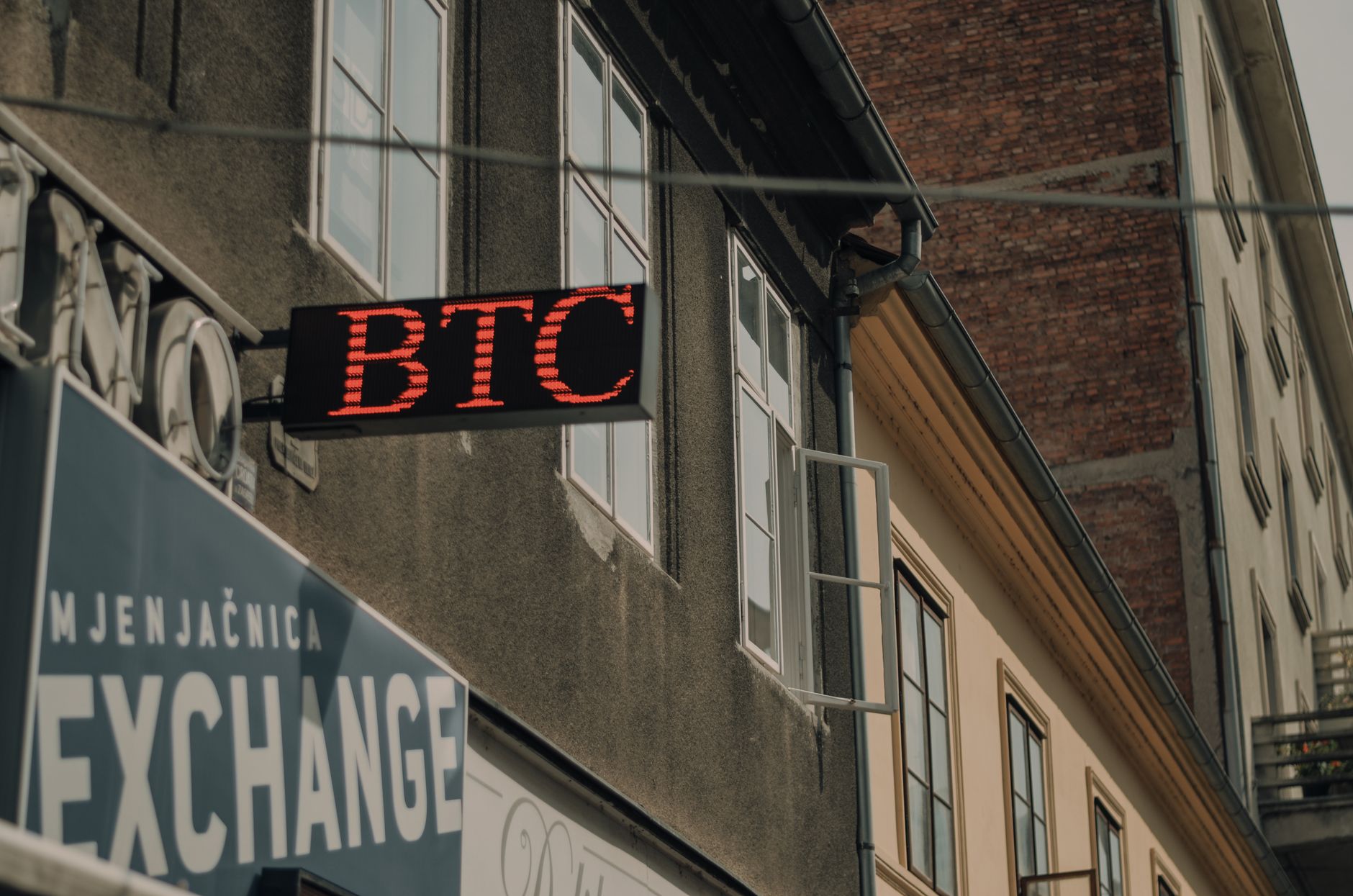
How to Choose the Best Cryptocurrency Exchange: Complete Comparison Guide for 2026
Selecting a cryptocurrency exchange is one of the most critical decisions you'll make as a trader or investor. The wrong choice can cost you thousands in hidden fees, expose you to security vulnerabilities, or lock you out entirely due to regional restrictions. With over 500 active exchanges worldwide, each with vastly different fee structures, security protocols, and supported cryptocurrencies, comparison is no longer optional—it's essential.
This guide walks you through the exact criteria professional traders use to evaluate exchanges, provides a side-by-side comparison of eight market leaders, and helps you identify which platform matches your specific needs. Whether you're a beginner making your first cryptocurrency purchase or an experienced trader executing complex strategies, you'll find actionable intelligence backed by real fee data and security certifications.
Why Compare Cryptocurrency Exchanges?
The difference between two exchanges on a single trade can exceed 2%. For a $10,000 transaction, that's $200 in unnecessary fees. Multiply this across dozens of trades annually, and poor exchange selection directly impacts your profitability.
Beyond fees, exchanges differ fundamentally in:
- Security architecture: Some use cold storage for 98% of assets; others keep excess reserves hot. Insurance coverage ranges from zero to $250 million.
- Regulatory status: US exchanges face SEC oversight; European platforms answer to FCA or BaFin. Asian exchanges operate under vastly different rules—or none at all.
- Supported coins: Coinbase offers 200+ coins; smaller exchanges list 50-100. If your target coin isn't listed, you can't trade it.
- Withdrawal methods: Binance offers 50+ fiat options; Kraken focuses on bank wire transfers. Geographic restrictions matter enormously.
- Account verification speed: Ranges from 5 minutes (some Asian exchanges) to 48 hours (US-regulated platforms).
- Trading tools: Beginners need simple interfaces; professionals require advanced charting, API access, and algorithmic order types.
- Customer support: Response times vary from 2 hours (premium support) to 7+ days (free tier).
Key Criteria for Comparing Exchanges
Professional traders evaluate exchanges across eight core dimensions:
1. Fee Structure (Maker/Taker/Withdrawal)
Trading fees are charged as percentage of transaction volume. Maker fees (for adding liquidity) are typically 0.01-0.20%; taker fees (removing liquidity) run 0.05-0.50%. Withdrawal fees range from free (Kraken) to 0.5-2% (smaller platforms). Volume discounts apply at higher trading levels—a $1 million/month trader pays 50-75% less than a $10,000/month trader on the same exchange.
2. Security Certifications & Insurance
Look for SOC 2 Type II compliance, ISO 27001 certification, and explicit insurance coverage. Coinbase maintains $250 million FDIC-style insurance; Kraken holds $100 million in digital asset insurance. Most unregulated exchanges offer zero coverage.
3. Regulatory Status & Geographic Availability
Exchanges licensed in multiple jurisdictions operate more safely. US Money Transmitter licenses (Coinbase, Kraken, Gemini) provide legal clarity. Restrictions apply: US citizens cannot access Binance.us with full feature set; some exchanges block entire regions.
4. Verification Timeline & KYC Requirements
Basic verification (Tier 1) takes 5 minutes and allows small trades. Enhanced verification (Tier 2) requires documents and takes 24-48 hours, unlocking higher withdrawal limits. Premium verification (Tier 3) may take 7+ days but offers institutional features.
5. Coin & Token Selection
Binance lists 1,000+ coins; Coinbase covers 200+; Kraken features 240+. If you need obscure altcoins, centralized exchanges often fail—you'll need specialized DEX platforms.
6. Mobile App Quality & Trading Tools
Beginners prefer simple interfaces (Coinbase app rates 4.7/5 on iOS). Advanced traders need professional charts, margin trading, and API access (Kraken Pro, Binance Advanced).
7. Withdrawal Methods & Speed
Crypto withdrawal speeds vary: Bitcoin usually confirms in 10-30 minutes, Ethereum in 2-5 minutes, Solana in seconds. Bank wire transfers take 1-3 business days; credit card deposits clear instantly but incur 2-4% fees.
8. Customer Support Quality
Response times range from 2 hours (Gemini, Kraken Pro Support) to 7-14 days (exchanges without dedicated support). Email-only support indicates lower priority; 24/7 live chat indicates premium service.
Interactive Exchange Comparison Table
| Exchange | Founded | Maker Fee | Taker Fee | Withdrawal Fee | Coins Supported | Regulatory Status | Insurance Coverage | Best For |
|---|---|---|---|---|---|---|---|---|
| Coinbase | 2012 | 0.40% | 0.60% | Free (crypto); 1.50% (wire) | 200+ | US regulated | $250M FDIC-equivalent | Beginners, US traders |
| Kraken | 2011 | 0.16% | 0.26% | Free (most coins) | 240+ | US, EU regulated | $100M digital asset insurance | Professional traders, EU users |
| Binance | 2017 | 0.10% | 0.10% | Variable (typically 0.0005 BTC) | 1,000+ | Unregulated globally* | Contingency fund only | Volume traders, altcoin hunters |
| Gemini | 2015 | 0.25% | 0.35% | Free (10/month); $2 each additional | 150+ | US regulated | Covered by insurance | Security-conscious traders |
| Bitstamp | 2011 | 0.50% | 0.50% | Free (SEPA); 15 USD (wire) | 180+ | EU regulated | MAS compliance | European traders |
| OKX | 2017 | 0.08% | 0.10% | Competitive | 500+ | Cayman Islands | Limited coverage | Asian traders, derivatives |
| Huobi Global | 2013 | 0.20% | 0.20% | Variable | 600+ | Singapore-based | Contingency fund | Asia-Pacific region |
| Bybit | 2018 | 0.10% | 0.10% | Free (most coins) | 400+ | BVI-registered | Contingency fund | Derivatives traders |
Note: Binance operates under regulatory scrutiny in multiple jurisdictions. Availability varies by region. Always verify current regulatory status at the exchange's official website before opening an account.
8 Best Exchanges Ranked by Category
1. Best Overall Exchange for Most Traders: Kraken
Kraken balances professional features with accessibility. Founded in 2011, it's among the oldest surviving exchanges and holds Money Transmitter licenses in the US and MAS approval in Singapore. The platform charges 0.16% maker and 0.26% taker fees—competitive but not the lowest. What justifies the slightly higher cost: $100 million insurance coverage, 24/7 US-based customer support (response time under 2 hours), and SOC 2 Type II certification.
The Kraken Futures platform handles advanced derivatives. The API supports algorithmic trading. Crypto withdrawals are free. The mobile app rates 4.4/5 on iOS. Account verification reaches Tier 2 (standard trading limits) in 24 hours for US applicants.
Downside: Limited fiat pairs compared to Binance. No native DEX. Margin fees add 0.02% daily if you use leverage.
2. Best for Beginners: Coinbase
Coinbase prioritizes ease of use and regulatory clarity. The Coinbase Custody product holds $250 million in FDIC-equivalent insurance for qualified deposits. Trading fees run 0.40% maker and 0.60% taker—expensive but transparent and all-inclusive.
New users complete basic verification in 5 minutes and can immediately buy up to $1,000 USD daily. The mobile app (iOS and Android) guides you through every step. Educational content is extensive: 50+ video tutorials on cryptocurrency fundamentals.
The Coinbase Pro platform unlocks maker fees at 0.40%—useful if you plan to deposit $500+ monthly. Crypto withdrawal fees are free. Fiat withdrawals via ACH cost $0.15 minimum; wire transfers charge 1.50%.
Downside: Highest trading fees among established exchanges. Limited coin selection (200 vs. Binance's 1,000+). Margin trading not available in most US states.
3. Best for Lowest Fees: Binance
Binance dominates on cost. Maker and taker fees both 0.10%—lowest among major exchanges. With BNB token holdings or high volume, fees drop to 0.075% or lower. The exchange lists 1,000+ coins, making it essential for altcoin traders.
Binance Futures handles derivatives with 1-125x leverage (depending on asset and risk). The API supports high-frequency trading. Crypto withdrawals are free. Fiat pairs available in 50+ currencies.
Downside: Regulatory uncertainty. US citizens cannot access Binance.com directly; Binance.us (US entity) offers limited coins and higher fees. No insurance coverage beyond contingency fund. Customer support delays common during market volatility.
4. Best for Security-First Traders: Gemini
Gemini (founded by Winklevoss twins) emphasizes regulatory compliance and insurance. The platform holds SOC 2 Type II, is licensed in New York, and maintains insurance coverage for digital assets. Fees run 0.25% maker and 0.35% taker.
The Gemini ActiveTrader interface supports advanced orders. All crypto withdrawals are free (10 per month without penalty). Fiat withdrawals via ACH cost $0.15; wire transfers run $2.50.
Account verification completes in 24 hours for standard US applicants. The mobile app rates 4.6/5. Customer support responds within 4 hours for account issues.
Downside: Fewer coins than competitors (150+). Smaller user base means lower liquidity on altcoins. Premium plans required for advanced tools.
5. Best for European Traders: Kraken EU / Bitstamp
Kraken operates under FCA and BaFin supervision in Europe, with SEPA withdrawal support and no regional blocking. Bitstamp (EU regulated) similarly offers SEPA transfers at no cost, plus wire transfers for €15.
SEPA transfers clear in 1-2 business days, making these exchanges faster than US-centric alternatives for European fiat access.
6. Best for Staking & DeFi Integration: Kraken / OKX
Kraken Staking offers 4-20% APY on 20+ cryptocurrencies (Ethereum, Solana, Polkadot, etc.), with low minimum stakes ($10 for most coins). OKX integrates with its own DEX bridge, enabling seamless movement to DeFi protocols.
7. Best for Derivatives & Leverage Trading: Bybit / OKX
Bybit and OKX specialize in futures and perpetual contracts, with up to 125x leverage (risk warning: most users lose on leverage). Perpetuals track spot price via funding rates, enabling short positions without borrowing. Order types include stop-loss, trailing stops, and grid trading.
Bybit charges 0.10% maker and 0.10% taker on perpetuals—same as spot. OKX fees run slightly lower for high-volume traders. Both offer free API access for algorithmic trading.
8. Best for Asian Markets: Huobi Global / OKX
Huobi (founded 2013, Singapore-based) and OKX dominate Asia-Pacific trading. Huobi offers direct CNY pairs and connections to mainland Chinese investors (via approved channels). OKX lists 500+ coins and supports over 100 fiat currencies, with strong adoption in Southeast Asia, India, and Japan.
Both exchanges offer competitive fees (0.10-0.20%) and high liquidity on regional coins.
Fee Structure Breakdown
Hidden fees destroy profits. Here's what to track:
Trading Fees (Maker/Taker)
You pay either maker or taker fee, never both:
- Maker fee: Triggered when you place an order that sits on the order book, adding liquidity. Ranges 0.08-0.50%.
- Taker fee: Triggered when you buy/sell immediately at market price, removing liquidity. Ranges 0.10-0.60%.
- Volume discounts: Trade $10,000+ monthly → tier 2 fees (5-15% reduction). Trade $100,000+ → tier 4 fees (30-50% reduction).
Deposit Fees
- Crypto deposits: Free on all major exchanges (except small minimum network fees paid to blockchain miners).
- Bank transfers (ACH/SEPA): Free on Coinbase, Kraken, Gemini. Some exchanges charge $2-10.
- Credit/debit card: 2-4% surcharge on most platforms. Fastest fiat funding method.
- Wire transfers: Flat $15-50 fee. Slowest but largest single deposit allowed.
Withdrawal Fees
- Cryptocurrency withdrawals: Free on Kraken, Gemini, most major exchanges. Variable on Binance (0.0005 BTC ≈ $31 at current price). Pays for network transaction.
- Bank withdrawals (ACH): $0.15-1.00 fee on most US exchanges.
- Wire withdrawals: $2-30 flat fee depending on exchange.
- Withdrawal limits: Beginners (unverified): $0-100/day. Standard verified: $10,000-50,000/day. Premium: unlimited.
Advanced Trading Fees
- Margin interest: 0.01-0.02% daily (compounds) if you borrow funds for leverage.
- Futures trading: 0.02-0.05% per transaction, plus funding rates (variable, 1-3% per 8 hours).
- API fees: Most exchanges charge $0-100/month for API keys; high-volume traders pay more.
Security & Insurance Coverage
According to CoinDesk, security breaches cost exchanges an average $30 million per incident. Your choice of exchange directly impacts breach risk.
Regulatory Insurance Coverage
Coinbase: $250 million FDIC-style insurance for qualified deposits (USD held in licensed US banks). Cryptocurrency holdings NOT covered by FDIC—held in segregated custody. Insurance applies to USD only.
Kraken: $100 million digital asset insurance policy. Covers cryptocurrency holdings against theft/hack (not user error like sending to wrong address). US Money Transmitter license required.
Gemini: Holds insurance for both USD (FDIC-equivalent) and digital assets. Explicitly covered against theft and operational losses.
Binance, OKX, Bybit: No regulatory insurance. Instead, they maintain "contingency funds" (off-balance-sheet reserves) to reimburse users after hacks. Contingency funds are voluntary and unregulated—no guarantee of recovery.
Technical Security Standards
- Cold Storage: Majority of assets held offline (non-internet-connected wallets). Coinbase: 98% cold. Kraken: 95% cold. Most Asian exchanges: 80-85% cold.
- Multi-Signature: Requires multiple private keys to move funds. Reduces single points of failure.
- SOC 2 Type II: Annual security audit by independent firm. Cryptographically verified. Coinbase, Kraken, Gemini all certified.
- ISO 27001: Information security management. Demonstrates risk control processes.
- 2FA (Two-Factor Authentication): Use authenticator apps (Google Authenticator, Authy) instead of SMS when possible. SMS-based 2FA is vulnerable to SIM swapping.
- Whitelisting: Approve specific withdrawal addresses before funds move. Prevents unauthorized transfers even if password compromised.
Hack History & Recovery
Major breaches:
- Binance (2019): $40 million BTC stolen. Fully reimbursed users from contingency fund.
- Kraken: No major breach since 2014 (early days, <$2,000 loss).
- Coinbase: No major platform breach. Isolated account takeovers recovered.
- Gemini: No major breach reported.
- OKX (formerly OKCoin): 2013 data leak; no fund loss. No breaches since recovery.
Regional Availability Guide
United States
Fully available: Coinbase, Kraken, Gemini, Bitstamp, Kraken, Bullish.
Restricted: Binance.com blocked for most features; Binance.us offers limited coins and higher fees.
Banned: OKX (executive crackdown 2023), some Asian exchanges.
Regulatory body: SEC (securities), CFTC (derivatives), FinCEN (money transmission).
European Union
Fully available: Kraken (licensed), Bitstamp (licensed), Gemini (in some EU countries), Coinbase (in some EU countries).
Restricted: Binance operating under regulatory scrutiny; some features limited.
Regulatory body: FCA (UK), BaFin (Germany), AMF (France)—each country differs.
Asia-Pacific
Singapore: Huobi Global, OKX, Binance (conditionally). Licensed exchanges face MAS oversight.
Japan: Limited to licensed exchanges (Bitbank, GMO Coin). Binance, OKX, Kraken restricted.
Hong Kong: Operating in gray zone; new regulations pending 2026.
India: No explicit ban, but banking partners reluctant. Kraken, Binance (limited), Bybit accessible.
Middle East & Africa
UAE: Licensed exchanges gaining approval (Bybit, OKX expanding).
South Africa: Binance, Kraken, OKX available. Limited regulatory framework.
Account Verification Speed Comparison
| Exchange | Tier 1 (Basic) | Tier 2 (Standard) | Tier 3 (Premium) | Deposit Limit (Tier 1) | Deposit Limit (Tier 2) |
|---|---|---|---|---|---|
| Binance | 5 minutes | 5 minutes | N/A | $100 | $10,000/day or unlimited BTC |
| Coinbase | 5 minutes | 24 hours | 5-7 days | $1,000/day (card) | $50,000/day (ACH) |
| Kraken | 10 minutes | 24 hours | 5-7 days | $500 | $10,000/day |
| Gemini | 15 minutes | 24 hours | 5-7 days | $500 | $5,000/day |
| OKX | 5 minutes | 10 minutes | 24 hours | $100 | $50,000/day |
| Bybit | 1 minute | 5 minutes | 10 minutes | $50 | $100 |