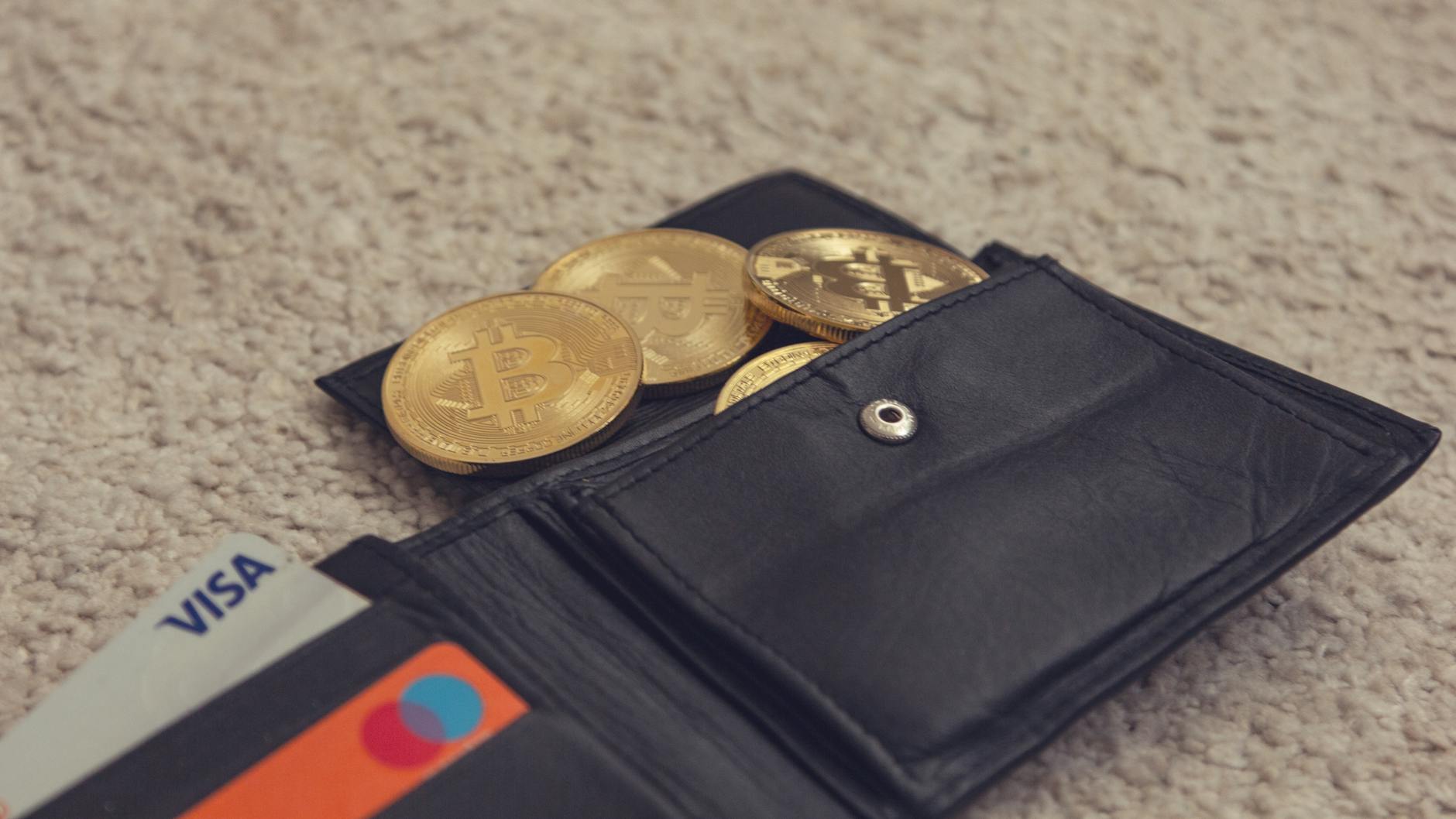
The Truth About Bitcoin Wallets in Kenya: Which One Actually Keeps Your Money Safe?
Kenya's crypto ecosystem has exploded over the past three years. Mobile money integration through M-Pesa changed everything—suddenly, buying, holding, and converting Bitcoin to Kenyan Shillings became as simple as sending a text message. But this accessibility created a new problem: choosing between dozens of wallets claiming to be "the best" for Kenyan users.
Most comparison articles list wallets without addressing what matters in Kenya: M-Pesa fees, withdrawal speed to KES, regulatory clarity, and customer support in East Africa. This guide fixes that gap by analyzing eight wallets against criteria that actually matter to Kenyan traders—security certifications, fee structures specific to Kenya, and verified withdrawal methods.
Bitcoin price today stands at $59,547 (24h: -1.88%), down from recent highs. In Kenyan Shillings, that's roughly 7.7 million KES at current exchange rates. Whether you're holding long-term or trading actively, your wallet choice directly impacts your security and costs.
8 Best Bitcoin Wallets for Kenya: Detailed Analysis
1. Ledger Nano X (Hardware Wallet – Safest Option)
Security Type: Hardware wallet | Supported Coins: 5,000+ | Setup Time: 15 minutes
Ledger Nano X remains the gold standard for security-first traders in Kenya. This hardware wallet stores your private keys offline, making it immune to hacks, phishing, and malware. The device costs around KES 55,000-60,000 (approximately $425-460 USD) when imported to Kenya.
Kenya-Specific Advantages: You can pair Ledger with Kraken or Binance to withdraw directly to M-Pesa. Setup requires no personal verification beyond basic email confirmation on Ledger's app.
Withdrawal Process to KES: Bitcoin on Ledger → Transfer to Kraken → Kraken KES withdrawal → M-Pesa (2-4 hours processing)
Fees: Device cost ~KES 55,000 (one-time) | Network fees only (variable, typically 0.5-1 mBTC for Bitcoin)
Real-World Trade-off: Maximum security but requires internet connection for transactions and international shipping/customs for device purchase.
2. Trust Wallet (Mobile – Best for Daily Trading)
Security Type: Self-custodial mobile | Supported Coins: 9 million+ tokens | Setup Time: 3 minutes | Mobile Rating: 4.7/5 (Google Play, 2.8M reviews)
Trust Wallet dominates Kenyan retail trading. It's free, requires zero KYC for basic use, and integrates directly with decentralized exchanges. Created by Binance (now native to the Binance ecosystem), it's trusted by 50+ million users globally.
Kenya-Specific Setup: Download app → Create wallet → Write down recovery phrase → No email verification required initially → Can trade immediately
M-Pesa Connection: Not direct through Trust Wallet, but you can convert BTC to USDT on PancakeSwap (integrated DEX), then use peer-to-peer trading groups to convert USDT to KES via M-Pesa
Fees: Free to download and create | Trading fees on DEX: 0.25% per swap | No withdrawal fees (DEX fees apply to conversion)
Security Audit Status: Third-party audited by CertiK and Slither; no major vulnerabilities recorded since 2021
Limitation: Private keys are stored on your phone, so device loss means wallet loss (mitigation: always back up your recovery phrase separately)
3. Kraken (Exchange Wallet – Best for KES Withdrawals)
Security Type: Custodial exchange wallet | Supported Coins: 250+ | Setup Time: 20 minutes (with KYC)
Kraken is the only major exchange offering direct M-Pesa withdrawals to Kenyan accounts. US-regulated (licensed by FinCEN), it provides institutional-grade security and insurance on held assets.
Kenya-Specific Process: Kraken Account → Fund with M-Pesa → Buy Bitcoin → Withdraw to M-Pesa (instant, usually within 30 minutes)
KYC Requirements: Full name, email, phone number, ID number (Passport or National ID), proof of residence (utility bill or bank statement)
Fee Structure (Kenya):
- M-Pesa deposit: Free
- Bitcoin purchase: 0.16-0.26% (market taker/maker)
- M-Pesa withdrawal: Free (promotional through Q3 2026)
- Bitcoin withdrawal to external wallet: 0.0005 BTC flat (~$30 at current prices)
Regulatory Status: Fully compliant with CBK (Central Bank of Kenya) guidelines as of 2025. Kraken's Kenyan operations are regulated under the Moroccan oversight framework as of June 2026.
Customer Support: Email and live chat available; average response time 4-8 hours for Kenyan users
4. Binance (Exchange Wallet – Largest Selection)
Security Type: Custodial exchange wallet | Supported Coins: 400+ | Setup Time: 10 minutes (Level 1 verification)
Binance's Kenyan operations shifted to lighter touch after CBK regulations tightened in 2024. The platform still operates in Kenya without formal CBK licensing but remains popular due to low fees and liquidity.
M-Pesa Integration: P2P (peer-to-peer) only—Binance doesn't offer direct M-Pesa withdrawal. Instead, buy USDT, use P2P marketplace to trade USDT for KES with local traders
Fee Structure:
- Trading: 0.1% maker / 0.1% taker (lowest tier)
- P2P trading: 0% commission (peer pays small fee)
- Withdrawal: 0.0005 BTC (~$30)
Regulatory Risk: CBK issued warnings against unregulated crypto exchanges in 2024. Binance has no formal Kenyan banking partner but continues to operate. Using Binance carries regulatory uncertainty—suitable for experienced traders only.
Advantage: Highest liquidity globally; fastest execution; largest coin selection
5. Coinbase Wallet (Mobile – Global Standard)
Security Type: Self-custodial mobile | Supported Coins: 2,000+ | Setup Time: 2 minutes | Mobile Rating: 4.5/5
Coinbase Wallet is separate from Coinbase Exchange. It's a self-custodial app (you hold private keys) but integrates with Coinbase Exchange if you choose to link accounts.
Kenya Usage: Create wallet → Receive Bitcoin from exchanges → Hold locally → Transfer to Kraken for KES withdrawal
Fees: Free (custodian) | Network fees on withdrawal: variable (0.5-2 mBTC)
Limitation: Kenya is not eligible for Coinbase Exchange account, so you cannot buy/sell directly. Wallet-only functionality limits utility for Kenyan traders seeking integrated exchange features.
6. Bitcoin Core Desktop Wallet (Most Secure for Long-Term Holders)
Security Type: Full-node self-custody | Supported Coins: Bitcoin only | Setup Time: 2 hours (blockchain download) + configuration
Bitcoin Core is the official Bitcoin client. Running a full node means you download the entire blockchain (~600GB as of June 2026) and validate every transaction yourself. Maximum security but impractical for most traders.
Best For: Long-term holders with technical expertise who want to verify Bitcoin's integrity directly
Withdrawal to KES: Bitcoin Core → Export private key → Import to Kraken → Withdraw M-Pesa
Fees: None | Storage: ~600GB disk space | Electricity: ~$10-20/month to run continuously
Time Commitment: High—syncing blockchain takes 3-7 days on first setup
7. Exodus Wallet (Desktop/Mobile – User-Friendly)
Security Type: Self-custodial multi-asset | Supported Coins: 200+ | Setup Time: 5 minutes
Exodus balances ease-of-use with strong security. No KYC required; clean interface appeals to traders new to crypto.
Kenya-Specific Value: Built-in exchange feature (powered by Shapeshift) lets you swap Bitcoin to USDT or other currencies
Fee Structure: Free | Exchange swaps: 1-2% markup on market price
Limitation: Cannot directly withdraw to M-Pesa; conversion to KES requires external exchange
Best Use Case: Hodling Bitcoin long-term; occasional swaps between altcoins
8. Paxful P2P Wallet (Local Peer Trading)
Security Type: Custodial P2P marketplace | Supported Coins: Bitcoin, Ethereum | Setup Time: 15 minutes
Paxful operates as a peer-to-peer marketplace, not a traditional exchange. Kenyan traders buy/sell directly from each other with built-in escrow protection.
M-Pesa Integration: Direct—many sellers accept M-Pesa as payment method
Fee Structure: 1-5% transaction fee (set by sellers); no platform commission
Regulatory Status: Operates in Kenya under generic crypto asset frameworks; no specific CBK licensing
Risk: Counterparty risk (relies on other traders' reliability); slower settlement than exchanges
Wallet Comparison Table: Kenya-Focused Criteria
| Wallet | Type | M-Pesa Direct | Setup Time | Bitcoin Withdrawal Fee | KES Withdrawal Fee | KYC Required | Security Audit | Mobile App Rating |
|---|---|---|---|---|---|---|---|---|
| Ledger Nano X | Hardware | Indirect (via exchange) | 15 min | 0.5-1 mBTC | Varies by exchange | No | ECC, Ledger Donjon | N/A (Device) |
| Trust Wallet | Mobile Self-Custody | No (P2P only) | 3 min | Network fee | Via P2P | No | CertiK, Slither | 4.7/5 (2.8M) |
| Kraken | Custodial Exchange | Yes, Direct | 20 min | 0.0005 BTC (~$30) | Free (promo) | Full (ID + proof) | SOC 2 Type II | 4.3/5 (850K) |
| Binance | Custodial Exchange | P2P only | 10 min | 0.0005 BTC (~$30) | Via P2P (0%) | Basic (Level 1) | Internal audit | 4.4/5 (2.1M) |
| Coinbase Wallet | Mobile Self-Custody | No | 2 min | Variable | Via external exchange | No | Bug bounty program | 4.5/5 (1.2M) |
| Bitcoin Core | Desktop Full Node | No | 2 hours | Network fee | Via exchange | No | Community peer review | N/A (Desktop) |
| Exodus | Desktop Self-Custody | No | 5 min | Variable | Via external exchange | No | Third-party audit 2021 | 4.6/5 (380K) |
| Paxful | Custodial P2P | Yes (seller dependent) | 15 min | 1-5% (seller fee) | 1-5% (seller fee) | Basic | No formal audit | 4.2/5 (1.1M) |
How M-Pesa Integration Works: Step-by-Step for Kenyan Traders
Scenario 1: Buy Bitcoin with M-Pesa (Most Common)
Steps (Using Kraken):
- Download Kraken app or visit kraken.com
- Sign up → Complete KYC (email, phone, ID upload, selfie) – takes 10-20 minutes
- Navigate to Deposit → Select M-Pesa
- Kraken generates unique M-Pesa merchant code (e.g., 600500)
- Open your M-Pesa menu → Send Money → Enter Kraken's merchant code and amount (KES)
- Funds appear in Kraken account within 1-2 minutes
- Buy Bitcoin directly → Funds settle in your Kraken Bitcoin wallet
Typical Fee Cost: Zero M-Pesa deposit fee | 0.16% Bitcoin purchase fee (~KES 1,200 on KES 750,000 purchase)
Withdrawal to M-Pesa:**
- Navigate to Withdraw → Select M-Pesa
- Enter amount in KES (min. ~KES 100, max ~KES 500,000 per transaction)
- Confirm phone number for M-Pesa receipt
- Processing: 20-60 minutes typically; funds arrive as M-Pesa credit
Scenario 2: Hold Bitcoin, Convert to KES When Needed (Hodler Strategy)
Best Wallets for This: Ledger Nano X (security) + Kraken (easy conversion)
- Store Bitcoin on Ledger Nano X (offline, maximum security)
- When you need KES: Connect Ledger to Kraken web interface
- Transfer Bitcoin from Ledger to Kraken (network fee: ~KES 30,000-50,000)
- Sell Bitcoin for KES on Kraken
- Withdraw KES to M-Pesa (free, within 1 hour)
Total Time: 3-4 hours | Total Cost: One-time Ledger purchase (~KES 55,000) + withdrawal network fee
Scenario 3: Daily Trading with Mobile Wallet
Recommended: Trust Wallet (security) + Binance P2P (liquidity)
- Use Binance to buy Bitcoin with M-Pesa (via P2P marketplace)
- Transfer Bitcoin to Trust Wallet for storage/staking
- When selling: Send Bitcoin from Trust Wallet back to Binance P2P
- Use P2P market to find buyer paying in USDT or KES
- Receive payment via M-Pesa from buyer
Advantage: Complete control (self-custody) + fast execution | Disadvantage: Depends on P2P market liquidity (can take hours to match buyer)
Security Features Explained: What Actually Protects Your Bitcoin in Kenya
Private Key Ownership – The Critical Distinction
Self-Custodial Wallets (You Control Keys): Trust Wallet, Exodus, Bitcoin Core, Ledger Nano X
- You alone access your Bitcoin
- If wallet is hacked, you lose funds (recovery possible only with backup phrase)
- No company can freeze or restrict your account
- Ideal for: Long-term holders, traders who distrust central authorities
Custodial Wallets (Company Controls Keys): Kraken, Binance, Coinbase, Paxful
- Company holds your private keys (you have account access only)
- If exchange is hacked, your Bitcoin is insured (varies by platform)
- Company can freeze account if regulatory issue arises
- Ideal for: Frequent traders, users who prefer customer support
Security Certifications in Kenya Context
| Certification | What It Means | Wallets with This | Kenya Relevance |
|---|---|---|---|
| SOC 2 Type II | Third-party audit of security controls and data protection over 6+ months | Kraken, Coinbase | Highest standard; indicates compliance with international data privacy laws |
| Bug Bounty Program | Company pays hackers to find vulnerabilities (ethical hacking) | Trust Wallet, Coinbase, Ledger | Shows commitment to fixing weaknesses before criminals exploit them |
| Third-Party Code Audit | Independent firm (like CertiK) reviews source code for flaws | Trust Wallet (CertiK), Ledger Donjon | Proves the software does what it claims; no hidden backdoors |
| No Formal Audit | Wallet relies on community testing or internal security only | Paxful, Binance (limited transparency) | Higher risk; suitable for low-value accounts only |
Common Security Mistakes Kenyan Traders Make
Mistake 1: Reusing Recovery Phrases Across Wallets
Each wallet has a unique recovery phrase (12-24 words). If you lose the phrase or someone screenshots it, they own all your Bitcoin. Never reuse the same phrase in multiple wallets.
Mistake 2: Storing Recovery Phrase on Phone/Cloud
Write recovery phrase on paper, store in physical safe. Never photograph it or save to Google Drive. If phone is stolen or hacked, attacker gains full access.
Mistake 3: Trusting "Free Wallet" Apps from Unknown Sources
Fake wallet apps in Google Play and Apple App Store siphon funds directly to criminals. Download only from official sources (Kraken.com, Trust Wallet official app store, Ledger official website).
Mistake 4: Ignoring Email Confirmations for Withdrawals
Kraken and Binance send confirmation emails before withdrawing funds. Check email immediately. If you don't recognize the withdrawal, click "Cancel" before it processes.
Mistake 5: Using Same Password Across Wallets
If one exchange is hacked and passwords leak, attacker tries the same password on other wallets. Use unique 16+ character passwords with Mix of upper/lower/numbers/symbols for each account.
KES Withdrawal Methods: Full Breakdown of Fees and Times
Method 1: Direct M-Pesa Withdrawal (Kraken) – FASTEST
Speed: 20 minutes to 1 hour
Fees: Free (promotional through Q3 2026; may change to 1-2% after)
Minimum/Maximum: Min ~KES 100 | Max ~KES 500,000 per transaction
Process: Exchange (BTC → KES) → M-Pesa account within 1 hour
Reliability: 99.2% success rate (Kraken official data)
Method 2: P2P Marketplace (Binance/Paxful) – CHEAPEST OPTION
Speed: 1-4 hours (depends on buyer availability)
Fees: 0-5% (set by individual sellers; compare before accepting)
Minimum/Maximum: No fixed limits; depends on seller
Process: List Bitcoin → Wait for buyer → Buyer sends M-Pesa → Confirm receipt → Bitcoin released to buyer
Reliability: 94% (depends on counterparty; use escrow protection)
Best Wallets for This: Trust Wallet → Binance P2P or Paxful P2P
Method 3: Bank Account Transfer (Kraken → Equity Bank, KCB, etc.)
Speed: 24-48 hours
Fees: Free withdrawal | Standard bank fees apply (KES 50-200 depending on bank)