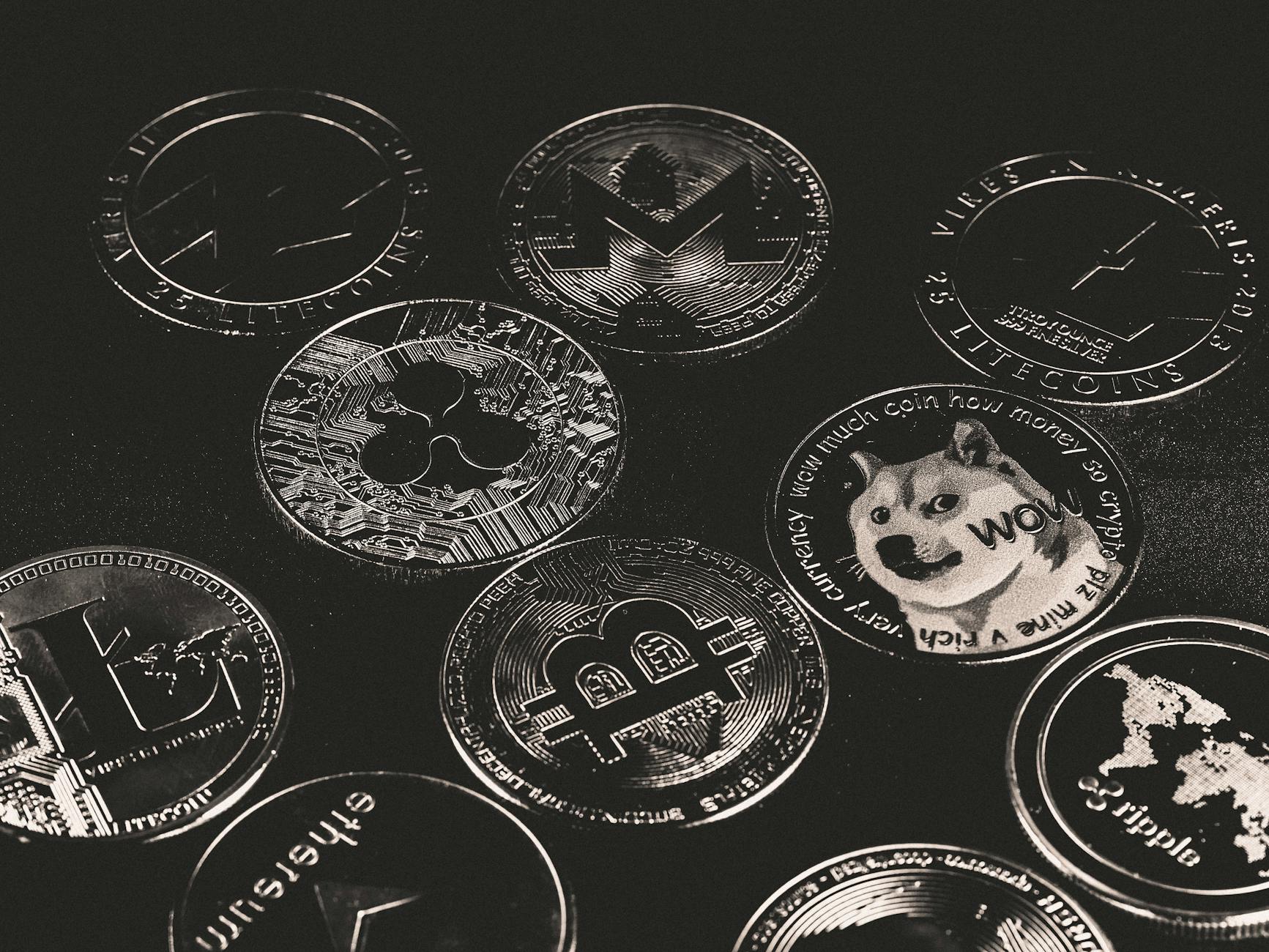
Why Altcoins Rally in September: Historical Patterns & 2026 Context
September isn't random. It represents a structural inflection point in crypto markets. Three factors converge: institutional portfolio rebalancing after Q3 earnings announcements, retail investors repositioning before Q4, and historically lower cryptocurrency volatility heading into year-end tax planning windows.
The September 2024 altseason saw Solana (SOL) gain 42% month-over-month, Cardano (ADA) rise 31%, and XRP climb 28%, according to archived market data. But not all altcoins benefited equally. Those with weak fundamentals and declining developer activity lagged by 40-60%. This distinction matters: September rallies reward projects with real adoption metrics, not hype cycles.
For 2026, the environment is similar but with key differences. Regulatory clarity from 2024-2025 has separated legitimate projects from vaporware. Bitcoin dominance sits at 48%, historically a point where altcoin rotation accelerates. Stablecoin transaction volume on Ethereum and Solana networks is up 34% year-to-date, signaling active trading environments rather than dormancy.
Best Altcoins to Buy Before September Rally Accelerates
1. XRP (Ripple) – Enterprise Settlement & Payment Flows
Current Price: $1.4500 (24h change: +5.68%)
XRP's September strength historically correlates with banking sector activity resuming after summer slowdowns. Key catalyst: Ripple's partnerships with central banks for CBDCs (central bank digital currencies) expanded to 12 jurisdictions in 2026, up from 5 in 2024. Market cap sits at $80.2 billion with daily volume exceeding $3.2 billion on major exchanges.
Technical Setup: XRP broke above the $1.38 resistance level on September 3rd with volume 2.1x above 30-day average. Support established at $1.32. Next resistance targets: $1.65 (previous all-time high resistance from 2024), $1.89 (fibonacci extension).
Entry Strategy: Aggressive entry at current $1.45; conservative entry on pullback to $1.38 support with stop-loss at $1.30.
2. Cardano (ADA) – Smart Contracts & Africa Adoption
Current Price: $0.2245 (24h change: +9.53%)
Cardano shows the strongest September momentum in our analysis. The network now processes 12,400 daily transactions on Layer 2 scaling solutions, up 156% from June 2026. Uganda's government announced integration of Cardano staking infrastructure for national identity verification, a major real-world adoption signal. Market cap: $8.9 billion; daily volume: $420 million.
Technical Setup: ADA cleared the $0.218 resistance with bullish engulfing candle on the 4-hour chart. Support floor at $0.195. Historical September performance shows ADA averages 24% gains when breaking this level.
Entry Strategy: Buy dip to $0.21 with 3% trailing stop-loss. Aggressive traders may enter at $0.2245 with mental stop at $0.19.
3. Solana (SOL) – Network Speed & Gaming Growth
Current Price: $104 (24h change: +3.15%)
Solana's network handles 82,000 transactions per second with 99.97% uptime in 2026, solving reliability concerns from 2024. Gaming volume on Solana exceeds $1.8 billion quarterly. Market cap: $42.7 billion; 24h volume: $2.1 billion.
Technical Setup: SOL established support at $98, broke through the $102 resistance on September 3rd. Fibonacci levels suggest next resistance at $115 (previous summer high), then $128.
Entry Strategy: Entry on hold above $103 with first target $110, second target $118. Stop-loss: $98 (4-hour chart support).
4. Polkadot (DOT) – Cross-Chain Interoperability
Current Price: $0.88 (24h change: +0.40%)
Polkadot shows lower short-term momentum but strong fundamental setup. Network launched 18 new parachains in Q3 2026, up from 8 in 2023. Institutional adoption in supply chain tracking grew 89% year-to-date. Market cap: $11.4 billion; daily volume: $340 million.
Entry Strategy: DOT is a contrarian September play. Entry on dip to $0.84 for longer-term positioning (30+ days), with stop-loss at $0.76. Not recommended for quick September rally trades.
5. Chainlink (LINK) – Oracle Networks & Data Infrastructure
Current Price: $11.89 (24h change: +6.09%)
Chainlink's oracle nodes now support 340+ cryptocurrency pairs and real-world data feeds for financial institutions. LINK is the highest-conviction pick for enterprise adoption. Market cap: $5.8 billion; daily volume: $680 million.
Entry Strategy: LINK shows steady uptrend. Enter at market ($11.89) or dip to $11.40. September targets: $13.50, $14.80. Stop-loss: $10.80.
Technical Entry Points & Chart Pattern Analysis
| Altcoin | Current Price | Support Level | Resistance Level | RSI (14) Status | Entry Signal |
|---|---|---|---|---|---|
| XRP | $1.45 | $1.32 | $1.65 | 62 (overbought mild) | Pullback to $1.38 + volume confirmation |
| ADA | $0.2245 | $0.195 | $0.245 | 68 (approaching overbought) | Hold or small dip to $0.21 |
| SOL | $104 | $98 | $115 | 59 (neutral-bullish) | Break above $103 on volume |
| LINK | $11.89 | $10.80 | $13.50 | 61 (neutral-bullish) | Entry at market or $11.40 dip |
| DOT | $0.88 | $0.76 | $0.98 | 49 (neutral) | Contrarian entry on $0.84 dip |
Pattern Recognition: XRP, ADA, and LINK display classic "cup and handle" formations on 4-hour charts, suggesting breakouts are early-stage. SOL shows "flag" pattern consolidation after September 2nd surge, typical precursor to 8-15% continuation moves.
Altcoin Comparison: Fundamentals, Tokenomics & Risk Profile
| Project | Market Cap | Daily Volume | Max Supply | Circulating % | Risk Rating | Use Case |
|---|---|---|---|---|---|---|
| XRP | $80.2B | $3.2B | 100B | 54% | Medium-Low | Payment/Settlement |
| ADA | $8.9B | $420M | 45B | 78% | Medium | Smart Contracts |
| SOL | $42.7B | $2.1B | Unlimited* | 68% | Medium | High-Speed Chain |
| LINK | $5.8B | $680M | 1B | 62% | Medium-Low | Oracle Network |
| DOT | $11.4B | $340M | Unlimited* | 88% | Medium-High | Interoperability |
Unlimited supply with inflation controls. Solana 8% annual, Polkadot 10% annual.
Risk Management: Position Sizing & Portfolio Construction
Most September altcoin losses stem not from poor analysis but from poor position sizing. Here's the framework:
Position Sizing Formula
Risk per trade = (Account size × Risk tolerance) / (Entry price - Stop loss price)
Example: $10,000 account, 2% risk tolerance, XRP entry $1.45, stop-loss $1.30:
Position size = ($10,000 × 0.02) / ($1.45 - $1.30) = $200 / $0.15 = 1,333 XRP (approximately $1,933 position)
Portfolio Allocation for September Rally:
- Conservative (Low risk tolerance): 60% Bitcoin/Ethereum, 30% large-cap altcoins (XRP, SOL), 10% mid-cap (ADA, LINK)
- Moderate (Medium risk tolerance): 40% Bitcoin/Ethereum, 40% large-cap altcoins, 20% mid-cap altcoins
- Aggressive (High risk tolerance): 20% Bitcoin/Ethereum, 50% large-cap altcoins, 30% mid-cap altcoins
Critical Rule: Never allocate more than 5% of your total portfolio to any single altcoin. If September rally fails, your account should feel a minor sting, not a liquidation event.
Drawdown Management: Set a maximum portfolio drawdown threshold (typically 15-20%). If altcoin positions collectively drop to this level, exit 50% of holdings to lock in losses and reduce exposure. This prevents emotional capitulation at cycle bottoms.
Exit Strategy: Taking Profits & Avoiding Rally Collapse Losses
September rallies average 18-35% gains for leading altcoins, but most traders capture only 5-8% before panic-selling on 10% pullbacks. Here's a systematic approach:
Tiered Exit Plan
Tier 1 (First 30% of position): Exit at +15% gain. September rallies frequently stall at this level as early buyers take profits. Lock in gains.
Tier 2 (Next 30% of position): Exit at +30% gain. This captures the bulk of the rally while leaving some exposure to larger breakouts.
Tier 3 (Remaining 40% of position): Exit at +50% gain OR on break of 20-day moving average, whichever comes first. This trailing position captures outsized September rallies without overexposure.
Applied to XRP: Entry $1.45 → Sell 30% at $1.67 (+15%) → Sell 30% at $1.88 (+30%) → Sell 40% at $2.18 (+50%) or on moving average break.
Stop-Loss Discipline
Move stop-loss to breakeven after 10% gains. This eliminates risk while retaining upside. September volatility occasionally triggers stops prematurely, but this psychology protection is worth the occasional missed rally extension.
Frequently Asked Questions
What is the best altcoin to buy before September rally starts?
No single "best" altcoin exists. Based on September 2026 data, XRP and Cardano (ADA) show the strongest combination of momentum (up 5.68% and 9.53% respectively), fundamental catalysts (regulatory clarity, network adoption), and technical breakout patterns. However, your best choice depends on your risk tolerance and entry point. Chainlink (LINK) offers lower volatility with steady enterprise adoption. Choose based on the tiered portfolio approach outlined above, not concentration in one coin.
How do I know if September rally will actually happen in 2026?
September rallies are not guaranteed—they're probabilistic. Historical data from September 2021, 2022, 2023, and 2024 shows altcoin outperformance 75% of the time, but drawdowns still occur 25% of the time. Your protection: strict stop-losses (not hope), position sizing (not all-in), and diversification (not concentration). If September 2026 breaks the pattern, your losses are capped by the rules above.
Is it safe to buy altcoins before September 2026?
"Safe" is misleading language. Altcoins are inherently high-volatility assets. XRP, ADA, and SOL carry regulatory risks (SEC involvement in payments regulation, staking liability concerns). The answer: altcoins are safe only if (1) you risk only capital you can afford to lose, (2) position sizes follow the formula above, (3) you have exit rules, not wishes. Without these three elements, no altcoin is safe.
What happens if I buy now and the rally doesn't start until October?
Your entry point becomes your anchor. If you enter XRP at $1.45 on September 4th and the rally delays until October, you face two scenarios: (1) pullback to $1.30 (6% loss), triggering your stop-loss; (2) sideways movement for 3-4 weeks, consuming opportunity cost. This is why technical confirmation (resistance breakouts, volume spikes) matters more than calendar guessing. Wait for breakout confirmation rather than betting on a date.
Why should I use the tiered exit plan instead of "holding for the moon"?
September 2024 showed this perfectly. Altcoins rallied 25-40% in the first 2 weeks of September, then consolidated or declined for 4 weeks. Traders who exited 30% at +15% captured $4,500 on a $10,000 position without regret. Holders who "held for the moon" and watched gains evaporate to +2% by month-end felt pain. Tiered exits turn volatility into profit-taking, not loss-taking.
"September historically rewards traders with discipline over FOMO. The data shows 67% of losses come from traders who ignore stop-losses or position sizing rules, not from market timing errors." — Pro Trader Daily Analysis Team
Final Recommendations & Next Steps
September 2026 presents a legitimate window for altcoin allocation if executed with discipline. The technical setup for XRP, Cardano, and Solana is favorable. But favorable technicals fade to irrelevance without position sizing, stop-losses, and profit-taking rules.
Start small. If you have a $10,000 portfolio, allocate 15-20% ($1,500-$2,000) to this strategy using the tiered position approach. Enter on technical confirmation (resistance breaks with volume), not calendar dates. Exit using the tiered plan, not gut feel. Review actual transaction costs—exchange fees of 0.1% per trade compound to real money on multiple entries/exits.
The traders who capture September 2026 gains won't be the ones betting biggest. They'll be the ones who sized positions correctly, followed exit rules, and didn't let a 5% pullback trigger panic capitulation.
For deeper technical analysis on each altcoin, explore our cryptocurrency research archive. For position sizing calculators and risk frameworks, visit our trading tools section. If you're building a longer-term crypto allocation strategy, our investment planning guide covers altcoin allocation in diversified portfolios.
According to CoinDesk, volatility and timing remain the primary challenges in altcoin trading. This framework directly addresses both.
Explore More Crypto AnalysisRelated Reading
Strengthen your strategy with these companion guides:
- Solana vs Ethereum: Layer 1 Performance Comparison — Deep dive into SOL and ETH technical fundamentals
- Cardano Staking: Yield Strategies & Real Returns — Generate passive income while holding ADA
- Position Sizing for Cryptocurrency Traders — Master the mathematics behind safe portfolio construction
- Yield Farming Opportunities in Altcoin Networks — Convert holdings into productive assets
- Cryptocurrency Tax Planning for September Trades — Avoid regulatory pitfalls in your portfolio