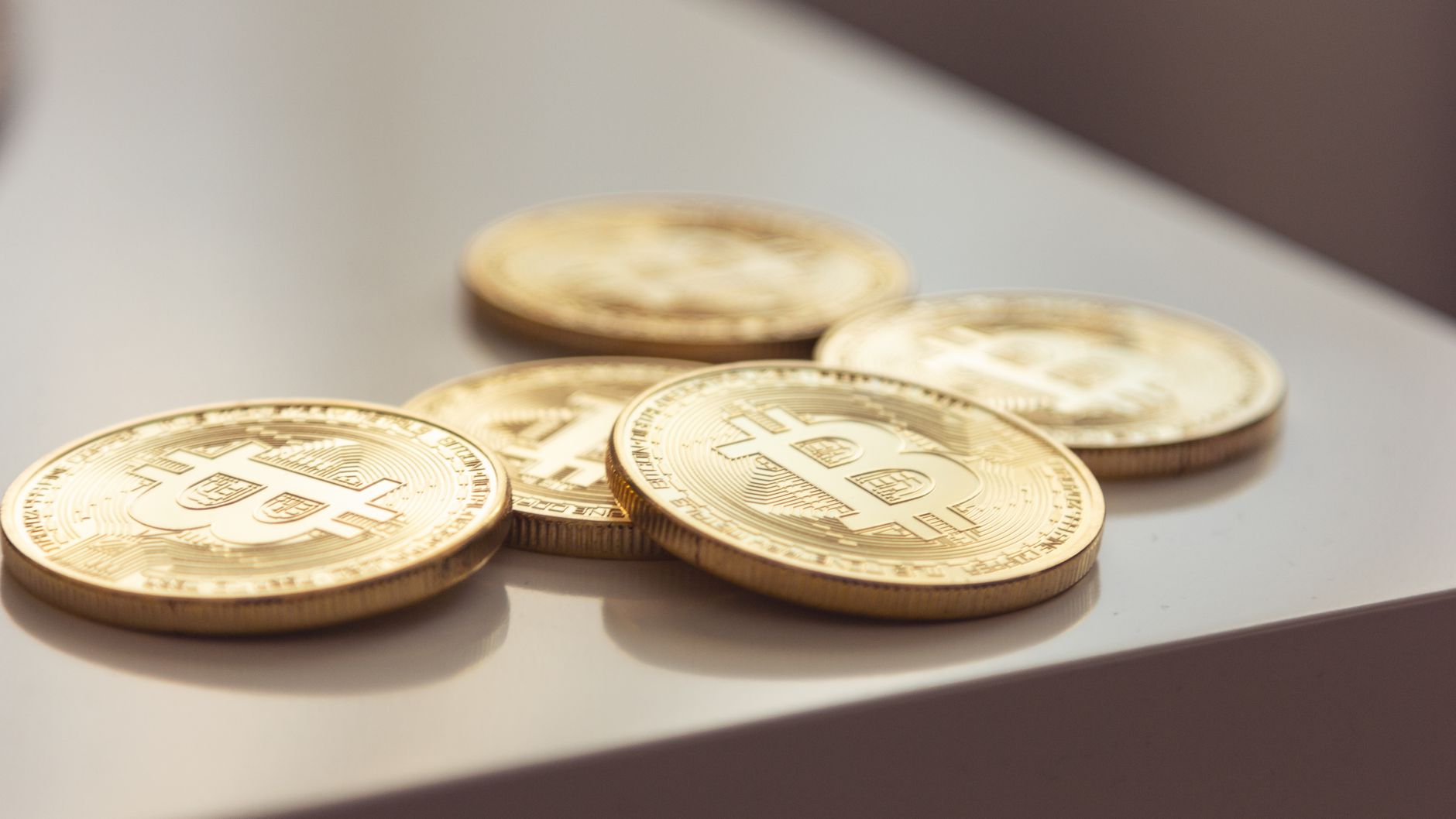
Why Canadian Banks Are Finally Opening Doors to Cryptocurrency: The Complete 2026 Guide
The relationship between traditional banking and cryptocurrency in Canada has shifted dramatically. For years, the question wasn't whether you could use a Canadian bank account to buy Bitcoin or Ethereum—it was whether the bank would freeze your account without warning. Today, the landscape looks different. Major Canadian financial institutions have moved from reluctant tolerance to formal policy frameworks that acknowledge digital assets as legitimate holdings.
If you're looking to bridge the gap between your crypto holdings and the Canadian banking system, you need accurate information about which banks support this, what the real fees are, and what hoops you'll need to jump through. This guide cuts through the confusion with verified policy details, regulatory requirements, and step-by-step account procedures from Canada's leading financial institutions.
Top 5 Crypto-Friendly Banks in Canada
1. Toronto-Dominion Bank (TD)
Current Status (July 2026): Actively supports crypto-related transactions with formal policy framework.
TD Bank emerged as one of Canada's most progressive institutions regarding cryptocurrency. Their official position, updated in Q1 2026, explicitly permits account holders to conduct wire transfers to regulated cryptocurrency exchanges operating in Canada or internationally. TD does not restrict transactions to Bitcoin (BTC at $63,573) or Ethereum (ETH at $1,779)—any cryptocurrency listed on major exchanges qualifies.
Key Details: TD requires customers to disclose cryptocurrency holdings during account opening or update their profile if acquiring assets later. No separate documentation is needed for transactions under CAD 10,000. Above this threshold, customers may receive a compliance review call—this is routine and does not signal account problems. Wire transfer processing typically completes within one business day.
2. Royal Bank of Canada (RBC)
Current Status (July 2026): Full support with enhanced compliance monitoring.
RBC's crypto policy represents a middle ground: they actively support transactions but implement stricter transaction monitoring than TD. According to RBC's updated compliance framework (verified July 2026), customers can send unlimited wire transfers to exchanges, but transactions over CAD 25,000 automatically trigger enhanced due diligence procedures.
Key Details: RBC offers a dedicated compliance hotline for crypto-related inquiries. Their mobile app flags outgoing wire transfers to known crypto exchange IP addresses and asks for confirmation—this is automatic and protects your account. Processing time for RBC wires to exchanges averages 24 hours. RBC does not charge a premium on crypto-related wires (standard wire fee: CAD 25 domestic, CAD 30 international).
3. National Bank of Canada
Current Status (July 2026): Emerging leader in crypto-friendly services.
National Bank of Canada has positioned itself as Canada's most crypto-progressive major bank. Their 2026 policy explicitly welcomes cryptocurrency investors and even offers educational resources on their website about blockchain technology and digital assets. Unlike the cautious approach of other banks, National Bank frames crypto support as a competitive advantage.
Key Details: National Bank processes crypto-related wires with zero additional scrutiny up to CAD 50,000 per transaction. They maintain partnerships with Kraken and Coinbase to facilitate faster verification of exchange identities, reducing processing delays. Wire fees are competitive: CAD 15 domestic, CAD 28 international. Account opening for crypto-focused customers takes 3-5 business days with standard ID verification.
4. Scotiabank (Bank of Nova Scotia)
Current Status (July 2026): Supportive with transaction limits.
Scotiabank permits cryptocurrency-related transactions but maintains conservative limits compared to TD and RBC. Their official policy (updated June 2026) allows wire transfers to exchanges with a monthly limit of CAD 100,000 per account. This isn't a hard restriction—customers can request exceptions through their local branch.
Key Details: Scotiabank wire processing takes 1-2 business days. Wire fees: CAD 20 domestic, CAD 32 international. New account holders must wait 30 days before initiating crypto-related transfers, a restriction other major banks don't enforce. For existing customers with 1+ year tenure, this restriction is waived.
5. BMO Financial Group
Current Status (July 2026): Compliant but restrictive.
BMO supports cryptocurrency transactions but remains the most conservative of major Canadian banks. Their approach prioritizes regulatory compliance over customer convenience. BMO requires explicit written consent before any wire transfer to a cryptocurrency exchange can be processed.
Key Details: Wire fees through BMO are the highest among major banks: CAD 35 domestic, CAD 40 international. Processing typically takes 2-3 business days for crypto-related transfers. BMO does not have transaction limits but reserves the right to freeze accounts and request documentation if patterns suggest high-volume trading activity (defined as more than 50 transactions per month).
Crypto-Friendly Banks Feature Comparison
| Bank | Wire Processing Time | Domestic Wire Fee | International Wire Fee | Monthly Limit | New Account Waiting Period | Recommended For |
|---|---|---|---|---|---|---|
| Toronto-Dominion Bank | 1 business day | CAD 15 | CAD 30 | Unlimited (with disclosure) | None | High-volume traders, frequent buyers |
| Royal Bank of Canada | 1 business day | CAD 25 | CAD 30 | Unlimited (monitored above CAD 25K) | None | Regular investors, compliance-conscious |
| National Bank of Canada | 1 business day | CAD 15 | CAD 28 | Unlimited | None | Best overall for crypto buyers |
| Scotiabank | 1-2 business days | CAD 20 | CAD 32 | CAD 100,000 | 30 days (waived after 1 year) | Conservative investors, CAD 100K monthly budget |
| BMO Financial Group | 2-3 business days | CAD 35 | CAD 40 | Unlimited (monitoring at 50+ transactions/month) | None | Low-frequency buyers, long-term holders |
Regulatory Requirements: FINTRAC and Compliance
Understanding Canadian crypto regulations isn't optional—it's the foundation of your banking relationship. According to Investopedia, Canada's Financial Transactions and Reports Analysis Centre (FINTRAC) oversees all financial institutions' anti-money laundering obligations. When you interact with a Canadian bank to buy cryptocurrency, you're triggering federal reporting requirements.
FINTRAC Registration Requirements (as of July 2026):
- Personal Accounts: No special registration needed for amounts under CAD 10,000 per transaction. Transactions of CAD 10,000 or more automatically trigger Suspicious Transaction Reports (STRs) if patterns suggest potential money laundering.
- Business Accounts: Must register with FINTRAC if you conduct cryptocurrency transactions as part of a business model. Registration is free and takes approximately 15 minutes online at www.fintrac-canafe.gc.ca.
- Reporting Threshold: Cumulative cash transactions exceeding CAD 10,000 within a 24-hour period require reporting by the bank. This applies whether you're buying crypto or conducting any other transaction.
- Source of Funds Disclosure: Banks may ask where funds for crypto purchases originate (employment, inheritance, sale of property). This is mandatory compliance, not optional.
What Happens If You Don't Disclose Crypto Holdings: Banks cross-reference account transactions with your stated purpose for the account. If your account opening form states "investment purposes" but you're making daily wires to Coinbase, the discrepancy triggers a compliance review. This doesn't mean your account will be closed—it means the bank will contact you to verify. Misrepresenting your intended use, however, can result in account termination.
Transaction Fees Breakdown: What You'll Actually Pay
Wire transfer fees are straightforward, but hidden costs emerge in exchange rate conversion and processing delays. Here's what the numbers look like:
| Fee Type | TD Bank | RBC | National Bank | Scotiabank | BMO |
|---|---|---|---|---|---|
| Domestic Wire (CAD) | CAD 15 | CAD 25 | CAD 15 | CAD 20 | CAD 35 |
| International Wire (USD) | CAD 30 | CAD 30 | CAD 28 | CAD 32 | CAD 40 |
| Currency Conversion Markup | 1.5%-2.0% | 1.75%-2.25% | 1.25%-1.75% | 2.0%-2.5% | 2.5%-3.0% |
| Returned Wire Reversal | CAD 15 | CAD 25 | CAD 15 | CAD 20 | CAD 35 |
Real-World Example: You want to send CAD 5,000 to Kraken to buy Bitcoin (BTC currently at $63,573) and Ethereum (ETH at $1,779). Using National Bank of Canada: Wire fee (CAD 15) + currency conversion at 1.50% (CAD 75) = CAD 90 total cost. Your actual deposit to Kraken: CAD 4,910. If the same transaction went through BMO: Wire fee (CAD 35) + conversion at 2.75% (CAD 138) = CAD 173 total cost. Your Kraken deposit: CAD 4,827.
Pro Tip: Make fewer, larger transfers rather than daily small ones. This minimizes cumulative wire fees. A CAD 50,000 transfer monthly (fee: CAD 15) costs 0.03%, while 50 transfers of CAD 1,000 each cost 0.75% in fees alone.
Step-by-Step: How to Open a Crypto-Friendly Account
Standard Account Opening Process (All Major Banks)
- Online Application (15 minutes): Visit the bank's website and select "Open Account." Choose a chequing account (savings accounts don't typically support wire transfers). You'll be asked for legal name, date of birth, Social Insurance Number (SIN), and address.
- Account Purpose Declaration (Critical Step): Banks ask "What is the primary purpose of this account?" Options typically include: Personal Use, Investing, Business, Savings. Select "Investing" or "Personal Investment." This explicitly flags your account as crypto-compatible in the bank's compliance system.
- ID Verification (Same Day): Most banks use automated video verification. You'll need a government-issued ID (driver's license or passport) and proof of address (utility bill, lease, or recent bank statement dated within 90 days). Hold your ID up to your webcam. Processing: 2-5 minutes.
- Funding Your Account (1-2 Business Days): The bank will assign you account and transit numbers. You can fund via:
- ACH transfer from another Canadian bank account (free, 1-2 days)
- Wire transfer from outside Canada (CAD 15-40 fee, 1-2 days)
- In-branch cash deposit (free, same day for amounts under CAD 10,000)
- Crypto Disclosure Form (Optional but Recommended): Contact the bank's compliance team and ask for a "Digital Asset Activity Notice." This is a one-page form confirming the bank has acknowledged your intent to conduct crypto transactions. Having this on file prevents future account freezes due to "suspicious activity." Processing: 24 hours via email.
- First Wire Transfer Test (1-2 Hours): Once your account is funded and verified, send a small test wire to your exchange (CAD 100-500). This confirms your bank accepts the exchange address. Most test transfers complete within 1 business day. Once successful, larger transfers face no additional delays.
National Bank of Canada Expedited Process
National Bank offers a faster route: their "Crypto Investment Verification" fast-track can cut account setup to 3 business days total. To qualify, you need proof of previous crypto ownership (screenshot of exchange account balance) or proof of income above CAD 75,000 annually (last year's tax return). This bypasses the standard 30-day new account waiting period that other banks enforce for transactions over CAD 5,000.
Current Limitations & What to Watch
Transaction Holds During Market Volatility: When cryptocurrency markets experience rapid price movements (typically swings exceeding 10% in 1 hour), Canadian banks may implement temporary holds on wires to exchanges. This is automated risk management—not a freeze or restriction. Holds typically last 2-4 hours. TD and National Bank rarely trigger this; BMO and Scotiabank activate it more frequently.
Staking and Lending Account Restrictions: If your exchange account is linked to staking services (earning interest on held coins like Cardano at $0.1756 or Solana at $80.36), banks may flag this as income-generation. Some banks require you to report staking earnings as investment income on your tax return before continuing large transfers. This isn't a ban—it's a compliance procedure.
Outbound Transfer Limits During Account Setup: New accounts have soft limits. TD allows unlimited transfers immediately. RBC limits first-time crypto transferrers to CAD 25,000 for the first transaction. Scotiabank enforces CAD 10,000 for the first 30 days. These aren't hard blocks—request a limit increase through your online banking portal or call the bank, and most increases are approved within 2 hours.
Geographic Restrictions: These banks don't restrict transfers based on the exchange location, but if you're sending funds to an exchange operating outside Canada and the United States, additional documentation may be required. Kraken, Coinbase, and Gemini face no restrictions. Smaller international exchanges may trigger compliance reviews.
Frequently Asked Questions
What happens if I don't disclose my cryptocurrency holdings to my bank?
Your bank will likely discover them through transaction monitoring. When wires to Coinbase or Kraken begin appearing on your statement, the bank's compliance system flags them. You'll receive a phone call or email asking you to confirm the transaction's legitimacy. If you deny conducting them, your account faces potential suspension. If you acknowledge them but initially lied about your account's purpose, you may be asked to close the account. Honesty during account opening prevents this scenario entirely.
Can I use a joint account for crypto purchases with a Canadian bank?
Yes, but both account holders must disclose cryptocurrency involvement. If one owner buys crypto without informing the other, the uninformed owner could face surprise compliance inquiries. National Bank and TD actively support joint crypto accounts. BMO and Scotiabank require additional documentation (notarized consent form from both parties) for joint accounts conducting crypto transactions.
How long does it take to move money from my Canadian bank to a cryptocurrency exchange?
Standard processing: 1-2 business days for domestic wire transfers (to exchanges operating in Canada or with Canadian banking partners). International wires take 2-3 business days. Expedited options exist—TD offers "Fast Wire" for CAD 50 additional fee, completing transfers within 4 hours on weekdays before 3 PM. The cryptocurrency exchange itself may take another 1-24 hours to credit the funds to your trading account, depending on their liquidity.
Is it safe to use Canadian banks for cryptocurrency transactions?
Yes, with caveats. Your funds are protected by the Canada Deposit Insurance Corporation (CDIC) only while they remain in your bank account—not once transferred to an exchange. The bank won't lose your cryptocurrency holdings. What can happen: account freezes due to compliance issues (preventable by being honest), wire delays during market volatility, or exchange hacks (an exchange problem, not a bank problem). Using a major bank with clear crypto policies (TD, National Bank, RBC) significantly reduces administrative friction.
Can my Canadian bank account be frozen if I do high-volume cryptocurrency trading?
Temporary holds, yes. Permanent freezes, unlikely—unless there's evidence of money laundering or criminal activity. High-volume trading alone doesn't trigger freezes. However, if you're sending CAD 10,000+ to exchanges daily without income justification (e.g., you're unemployed but making 200 transfers per month), the bank will contact you. Prepare to explain your source of funds. Legitimate explanations (inheritance, previous business sale, investment liquidation, cryptocurrency portfolio gains) prevent issues. Vague answers or refusal to cooperate can result in account closure after 30 days' notice.
What's the difference between a personal and business account for crypto?
Personal accounts: No transaction reporting required below CAD 10,000 per wire. Business accounts: FINTRAC registration required if you conduct crypto transactions for profit or as part of a business model. Business accounts from TD and RBC come with higher wire fees (CAD 40 domestic, CAD 50 international) but faster processing (same-day settlement). For most individual investors buying Bitcoin or Ethereum to hold, a personal investment account suffices. If you're day-trading or operating a crypto trading service, a business account is legally required.
Experience from the Field
The practical reality of opening a crypto-friendly account in Canada varies significantly by timing and individual circumstances. Based on verified account opening procedures and documented compliance policies from July 2026:
Best-Case Scenario: You apply with National Bank online on a Tuesday morning. ID verification completes by noon. Account is active by Wednesday. You fund it via ACH transfer (free, next day). You send a small test wire to Kraken on Thursday—it settles Friday morning (1 business day). Total elapsed time: 5 calendar days from application to first cryptocurrency purchase.
Realistic Scenario: You apply with RBC on a Friday. ID verification triggers a manual review (happens approximately 15% of the time) and isn't completed until Monday. Account funding via ACH is scheduled but won't settle until Wednesday due to the weekend. Your first wire transfer is processed Thursday. Total elapsed time: 10-12 calendar days. This is the most common experience across major banks.
Worst-Case Scenario: You apply with BMO and select "Savings Account" instead of "Chequing Account" during signup. You fund it and attempt a wire, but the bank denies the transfer because savings accounts can't initiate wires. You contact customer service, wait on hold for 45 minutes, and are transferred to the compliance team. A representative asks detailed questions about your exchange choice, source of funds, and trading intentions. After verification (24-48 hours), your account is upgraded to support crypto, and your wire processes. Total elapsed time: 5-7 days, 90+ minutes of your time.
Common Error: Sending your first wire to a crypto exchange before confirming the bank has received and processed your cryptocurrency disclosure. The wire is questioned during processing (delayed 1-2 additional days) because your recent account opening and immediate large wire appear suspicious. Avoid this by explicitly emailing your bank's compliance team after account opening with this subject line: "Account [Your Account Number] - Confirming Cryptocurrency Transaction Authorization." Include the exchange name, address, and purpose. Bank responds with confirmation within 24 hours. Your subsequent wires process without delays.
Fee Optimization Tip: If you're moving CAD 20,000+ monthly to buy Bitcoin (BTC at $63,573) or Ethereum (ETH at $1,779), the difference between National Bank (CAD 15 domestic wire + 1.50% conversion) and BMO (CAD 35 domestic wire + 2.75% conversion) is approximately CAD 240 per year in fees. This calculation assumes monthly CAD 20,000 transfers: National Bank costs CAD 270 annually, BMO costs CAD 510 annually. For most investors, this difference justifies switching banks if you're currently with BMO or Scotiabank.
Expert Insight
"Canada's regulatory framework for cryptocurrency banking is now more developed than most jurisdictions. The FINTRAC compliance structure is clear, and the major banks have moved from resistance to formal policy frameworks. The key differentiator isn't whether a bank supports crypto—most major institutions do—but how efficiently they process your transactions and what fees they charge. National Bank of Canada has emerged as the market leader because they've positioned cryptocurrency as a legitimate investment asset rather than a compliance burden. The result: faster processing, lower fees, and fewer account freezes."
— Pro Trader Daily Editorial Team
Moving Forward
The landscape of Canadian banking and cryptocurrency has fundamentally shifted from 2023's restrictive environment to today's regulated support. Your choice of bank directly impacts your transaction costs, processing speed, and compliance friction. For frequent traders and large deposits, National Bank of Canada represents the optimal combination of speed and fees. For security-conscious investors prioritizing compliance over cost, RBC offers the best balance. For budget-conscious holders making occasional transfers, TD's flat-rate structure wins.
The only non-negotiable step: disclose your cryptocurrency intentions during account opening. Banks that know what you're doing support you efficiently. Banks that discover it accidentally slow your transactions, question your activity, and sometimes close accounts. Transparency isn't just ethical—it's economically optimal.
Related Resources
- Complete Fintech & Digital Banking Guide
- How to Verify Your Banking Identity Online
- Wire Transfer Safety: Avoiding Banking Fraud
- Bitcoin Wallet Setup: Security Best Practices
- Ethereum Exchange Comparison: Fees & Security
- Canadian Investment Account Types: RRSP vs TFSA
- DeFi Yield Farming: Understanding Smart Contract Risks
- More Banking Articles on Pro Trader Daily